

The reader is probably already aware that today there is a generational debate in Spain. From different perspectives, but with inequality almost always at the center, this discussion has taken up an increasingly large space. And, as it grows in importance, so do the topics it carries: taxation, housing, child poverty, or the welfare model, among others.
To seek answers to so many questions, I spent an afternoon talking with Jesús Ruiz-Huerta. The Professor of Applied Economics has spent years working in this field from the Public Policy Laboratory of the Fundación Alternativas, where he directs the Informe sobre la Desigualdad en España. In this conversation, Ruiz-Huerta explains how concerns have changed: from pensions and minimum incomes to housing, child poverty, the situation of young people, and the concentration of resources at the top end of the distribution. He acknowledges that Spain has improved some indicators, but recalls that “we are still worse than other countries in our surroundings”.
Taxation also occupies a central place, and there rests his experience as president of the committee that drafted the White Paper for Tax Reform (2022). Against the idea that Spain has a very high tax burden, he responds that “you cannot say that Spain is a country where many taxes are paid”. The problem, he notes, lies in who contributes and who manages to stay outside that “everyone” on which the welfare state is built.
From there, he guides the conversation toward three public policy priorities to reduce inequality in Spain. In them, he focuses on much of what had been analyzed previously, with particular attention to child poverty, more egalitarian access to public services, and a tax reform capable of increasing revenue where wealth is most concentrated.
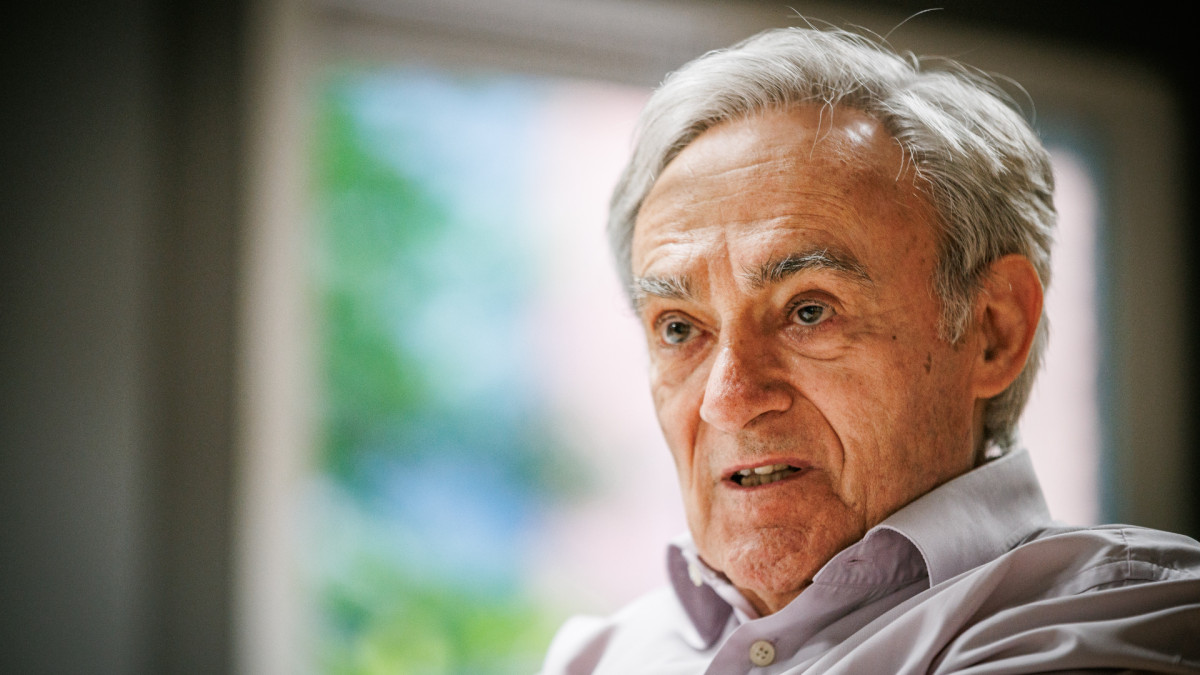
Jorge de Diego talks with Jesús Ruiz-Huerta about the evolution of inequality in Spain. Photo: Agenda Pública / Tania Sieira
You have been studying inequality in Spain for years. How has its evolution been in the last few years? Do we have today the same concerns as a decade ago?
Since 2013, the Public Policy Laboratory of the Fundación Alternativas has been producing the Informe sobre la Desigualdad en España, on a biennial basis. The reason for the continuity of this type of report is to maintain a continuous diagnosis on issues as important as inequality or democracy.
I will try to focus now on the questions asked. In 2013 we were still in the tail end of the Great Recession (2008-2014). At that time, alongside the collapse of the main macroeconomic variables, inequality, poverty and social exclusion indicators rose, and those problems began to worry analysts and citizens more.
Since then, there has indeed been a relevant evolution. In this year’s report, Luis Ayala prepared a first comparative chapter based on the exploitation of harmonized European living conditions surveys between 2005 and 2024. What is observed is that, between the two dates, Spain experienced a decrease in inequality indicators.
“Based on the data handled, one could argue for the existence of a certain convergence among countries in terms of inequality”
Data available from Eurostat tell us that, in Spain, and also in other European countries, there would have been a certain decrease in income inequality between 2005 and 2024, although this trend is not universal. Paradoxically, in central European countries, such as Germany, France or Italy, and also in the Nordic countries, classic references of consolidated welfare states, an increase in inequality is observed. Based on the data handled, one could defend the existence of a certain convergence among countries in terms of inequality.
In the Spanish case, a reduction in inequality, as well as in poverty and exclusion, is evident. The AROPE indicator, used by the European Union to measure the risk of poverty or social exclusion, shows some stability between the two dates in Spain, although after the Great Recession and the episodes of the pandemic and the inflation burst of 2022, the data show a downward path in recent years. Although there are no large differences between the years studied, the data illustrate a double dynamic: a significant rise in figures as a result of the financial crisis and a recovery from the more recent years, with some setbacks associated with the pandemic and 2022’s inflation.
Parallel to this, survey information and research on these topics indicate that concern about inequality—technical and civic—has risen. In other words, it seems that concern about inequality grows when some objective indicators improve. Citizens consider it an important problem, and so do specialists. Multiple recent works, from economics, sociology and political science, show how alive this debate remains.
Regarding the second question, while the basic problem of inequality continues to be a concern, surely the objects of attention have changed. On one hand, a decade ago the country was coming out of recession and, as noted earlier, income inequality had grown during the crisis years, while today we live in a broad period of economic growth, many jobs being created, greater job stability and a strong push for social investments, which has allowed an improvement in poverty and inequality indices. Nevertheless, we are still worse than other countries in our surroundings, which shows that it is not easy to reverse the portrait of our social structure in a short period.
“In other terms, it seems that concern about inequality grows when some objective indicators improve. Citizens consider it an important problem and so do the specialists”
As for the differential features of the two moments, one must recognize that the types of concern have changed, at least in terms of relative emphasis: from greater concern about the situation of older people we have moved to focus on poverty and inequality affecting young people and, particularly, children; in the same direction, from greater concern—then—about pensions and minimum incomes, today housing occupies a privileged place in citizens’ concerns and, likewise, today there is growing concern about the concentration of resources in a few hands and the behaviors of those at the top of the distribution.

Ruiz-Huerta explains how the rent, wealth, and housing intersect in the analysis of inequality. Photo: Agenda Pública / Tania Sieira
When we talk about inequality, we usually think directly of income. Are we underestimating? Which dimensions weigh more today: wealth, housing, education, health, territory, or age?
Initially, the works, especially those from economics, were very much based on studying income as a measure of economic capacity. Income is a reasonable variable to approximate well-being and it is logical to use it as a basic variable. Moreover, in recent years there has been good information about people’s incomes, the main components of income, and individuals’ living conditions, especially through life-condition surveys harmonized by Eurostat, which has allowed significant advances in the study and understanding of these phenomena.
But income is insufficient to provide a complete picture of inequality. Inequality spans many facets, as noted in the question: wealth, pensions, access to public services, territory, housing, education, health, and also gender. Gender inequality has gained importance over time, not only for equity reasons but also for efficiency reasons. Maintaining high inequalities between women and men has negative effects on economic efficiency.
“Income is insufficient to provide a complete picture of inequality. Inequality spans many facets”
On the other hand, in this area there is, more than in other areas, “intersectional inequality”: an immigrant woman faces a different situation from that of a non-immigrant woman; if she also enters the labor market under more precarious conditions, another type of inequality appears; and if she reaches retirement, it replays with the pensions. Origin, gender, age or employment status do not always act separately and, frequently, inequalities cross and accumulate.
In recent years, the dimensions that have gained the most weight in citizens’ concerns are wealth and housing. Housing is part of people’s patrimony and, therefore, is also an expression of wealth. What worries most is the accumulation of income and the concentration of wealth, which have been spectacular in the last years, as highlighted by Oxfam Intermón or the World Inequality Lab. This is not only a Spanish problem. In the United States, and among European countries, the enormous concentration of wealth in a few hands has been confirmed, so that this group now wields not only great economic power but that power also becomes a huge capacity to influence and control political power, as occurs in the United States and, certainly, not only there.
“What is especially worrying is the accumulation of income and the concentration of wealth, which have been spectacular in recent years”
This new drift is generating a certain shift in the emphases of the analysis. It cannot be said that interest in other manifestations of inequality has diminished, that classic problems of income inequality have disappeared, or that poverty and social exclusion problems have been solved. What happens is that, alongside those problems, the focus has moved to the upper tail of the distribution: how those who concentrate most of the income and wealth behave, and we must ask what could happen if this trend continues and consolidates.
Taxation has moved squarely into this debate. In Spain it is often said that too many taxes are paid. Is the problem that we pay too much or that we collect poorly to finance the welfare state we say we want?
The first thing we must clarify is what we mean by “paying too many taxes.” As a general criterion, we should pay the taxes we need to finance public spending. In the Congress of Deputies, citizens, through their representatives, decide which tax rates and the volume of public services they want, and those goods and services must be financed.
“In a majority of EU countries citizens pay more taxes than the Spanish, and in some Union countries they pay quite a bit more”
A while avoiding radical positions in this framework, we must not forget that the starting point is the one I just stated: what goods and services do we want and how do we finance them. If we compare ourselves with similar countries, a sensible method to answer the initial question is that Spain is not a country where taxes are high. In the OECD, Spain sits around the average value if a weighted average is used, but below if an arithmetic average is used. In the European Union, Eurostat data indicate that we have moved somewhat toward the average, but remain below. In short, in a majority of EU countries, citizens pay more taxes than Spaniards, and in some EU countries they pay quite a bit more.
Another issue is how fiscal pressure is distributed, or in other terms, how the funding of public services is shared among citizens. The majority of the population pays taxes in a reasonable way. The design of the tax system is not far from European averages and revenue collection works reasonably well: both the State Tax Administration Agency and the autonomous community agencies collect their taxes. It is also worth remembering that we are not only talking about major state taxes, but also autonomous and local taxes, even some magnitude, such as IBI (property tax).
The problem appears when we discover who does not pay taxes or who pays much less. The Constitution, in its Article 31, says that “everyone shall contribute to the maintenance of public expenses according to their economic capacity, through a just tax system inspired by the principles of equality and progressivity, which in no case shall have confiscatory effect.” The most important word in the paragraph is, in my view, “everyone.”
“We must remember that we are not only talking about major state taxes, but also autonomous and local taxes, even of significant magnitude, like IBI”
The reality is that a sector of the population, especially at the top end of the distribution, has started to withdraw from that “everyone.” There are also fraudulent behaviors at that and other rungs of the distribution, and even today not everyone pays VAT, but that does not mean there is a general awareness against paying taxes. People know that they must pay them. The most questionable is that those with large fortunes can end up paying less taxes than an average worker.
Ruiz-Huerta defends that financing the welfare state requires the contribution of those who concentrate more wealth. Photo: Agenda Pública / Tania Sieira
How can we begin to correct that situation?
First, with a great deal of reasonable information and the proper explanations. We must explain what is happening with tax compliance or non-compliance by those who evade or avoid their obligations and, in particular, those who concentrate wealth and, yet, do not pay or pay very few taxes. It is important that people understand the problem and that, from school, citizens understand that safeguarding basic rights and freedoms and maintaining high-quality public services requires the contribution of “everyone” and particularly the wealthiest.
In addition to disseminating information and education, we must seek special formulas to address the behavior of groups most reluctant to participate in funding public spending. One of the best-known proposals is Gabriel Zucman’s: a minimum tax of 2% for taxpayers with more than €100 million. The idea is simple: since we know they do not pay what they owe, at least they should pay that limited amount. Zucman argues that 2% is a reasonable figure and not an arbitrary concept to make these people contribute more proportionally if compared with the rest.
“Safeguarding basic rights and freedoms and maintaining high-quality public services requires the contribution of ‘everyone’ and particularly the rich”
Although these kinds of initiatives seem difficult to implement, it is worth recalling that they are not about “punishing” anyone, but about complying with the rules of a society that has endowed itself with a welfare state “agreed during the Transition” and enshrined in the Constitution. If we agree to that model, as long as it is not modified, it is important to guarantee its financing and one cannot argue that those with the greatest economic capacity are left out of the agreement.
On the other hand, in Spain, as in most similar countries, capital incomes are taxed more favorably than labor incomes in the tax system. As is known, the IRPF has a general tariff for most incomes and a savings tariff to tax capital incomes. This separation is usually justified by the specific nature of those incomes and by the pressure from international competition, but it is a questionable discrimination that, as argued in the White Paper for Tax Reform, should raise the progressivity of the savings tariff and promote a convergence path between the two tariffs.
Our tax system is fundamentally based on labor incomes and consumer spending. Although this is a common pattern in European tax systems, there is also a broad consensus in favor of giving a greater role to capital incomes in the collection of income tax and corporate tax, to ensure a greater balance of taxes across the three bases of taxation to fund public goods and services. Additionally, a deep reform of wealth taxation seems essential.
Another major problem of the tax system is the existence of many tax expenditures, i.e., exemptions that, at times, excessively limit tax revenue: exemptions, deductions in the base or in the rate, or the overuse of reduced rates. This accumulation of allowances — which has led some authors to speak of a “hidden welfare state” — empties the revenue of some relevant taxes and limits the public sector’s financial capacity.
“There is a majority opinion in favor of giving a greater role to capital incomes in the collection of income tax and corporate tax”
In the area of wealth taxes, the creation of the temporary solidarity tax on large fortunes was a way to prevent the disappearance of resources and the wealth tax itself, as a result of harmful downward tax competition. The 100% exemption of the wealth tax quota by a regional government, in practice, is equivalent to the abolition of a tax approved by the Congress, which, in my view, implies a breach of the principle of institutional loyalty.
In the case of VAT and indirect taxes, one must remember their basically revenue-raising character. Attempting to implement social policy through VAT is tricky, because reduced rates applied to certain basic consumer goods and services benefit low-income groups but also other taxpayers, so rate reductions end up benefiting mainly those who spend more, usually the better-off. For years, European institutions have highlighted the significant revenue cost of maintaining many reduced rates.
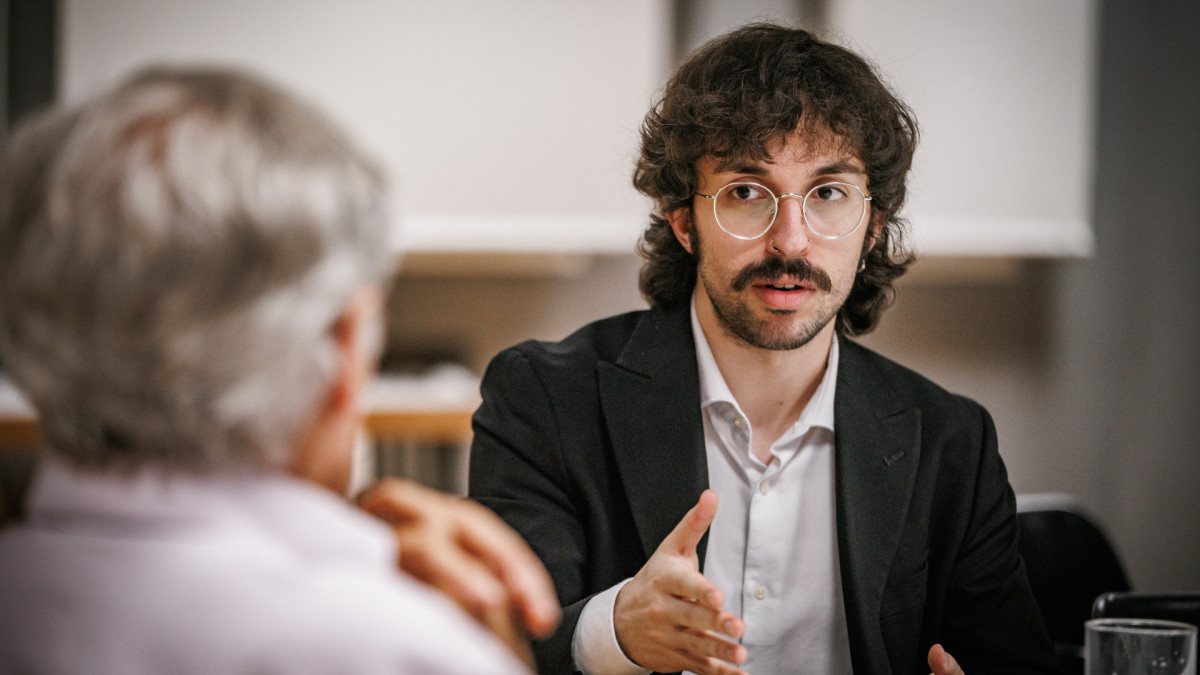
Jorge de Diego questions the redistributive capacity of the Spanish public sector. Photo: Agenda Pública / Tania Sieira
Does the Spanish public sector reduce inequality sufficiently, or does it arrive late and with low intensity?
In Spain and in other European countries with more or less developed welfare states, the public sector does indeed redistribute. From national accounting, we obtain information about gross income and its distribution, and inequality indicators are very high because the ability to generate income varies greatly among people. However, when moving from gross income to disposable income, i.e., incorporating the state’s intervention through taxes and budget expenditures, inequality declines significantly.
Nevertheless, most of the distributive effect of the public sector is not through the tax system, but through public services, pensions, and income transfers, such as the minimum vital income or the child allowance. The personal income tax shows some redistributive capacity as a direct and progressive tax, and, much more modestly, wealth taxation also produces a small redistributive effect, but the main effect of reducing inequality comes from spending.
“Most of the distributive effect of the public sector is not through the tax system, but through public services”
In complex societies like ours today, it is essential to have a public sector with decision-making capacity. It is not about advocating a “big” public sector, but about a state that plays an important role in providing public services, supporting disadvantaged groups, and supplying public goods that the private sector does not address. And to finance all these activities, resources are needed.
When you hear views strongly opposed to taxes or the meaning of the public sector, it is good to remember that public services are costly and depend on public resources. These are concrete examples that can help understand what the public sector is for.
In that bottom-up adjustment there has been much debate about deflating the IRPF, also in relation to the rise of the minimum wage. They say inflation would impoverish those lower incomes. What is your view on that debate?
The IRPF seeks to tax people’s economic capacity, but in times of inflation, if the rate is not updated, one can end up taxing an economic capacity that has not actually increased due to rising prices. Therefore, there is a principled justification to update the IRPF rate and deductions. Some countries have various formulas to update the IRPF and avoid what has been called “cold progressivity.”
But there are also arguments to defend that a general update benefits relatively more those who pay the most. If you want to pursue a redistributive or progressive policy, it may be worthwhile to introduce, where appropriate, a differentiated update by brackets or to focus on the lower end of the distribution, through deductions, reductions, or other mechanisms that protect the lowest incomes. Some of this is what has been done with the issue of the minimum wage (SMI).
“There are countries that have diverse formulas to update the IRPF and avoid the so-called ‘cold progressivity'”
The application of the capacity-to-pay principle can justify inflation indexing, but, since we are dealing with very different economic capacities, perhaps it is worth differentiating the various groups and introducing mechanisms that take into account the more delicate situation of those at the bottom of the distribution, instead of a generalized update for all, and at the same time use the resources obtained from the so-called inflation tax to fund necessary social policies.

Ruiz-Huerta analyzes the economic malaise that persists despite macroeconomic data improvement. Photo: Agenda Pública / Tania Sieira
Spain grows, creates jobs and improves some macroeconomic indicators, but at the same time a sense of economic unease persists. What explains the gap between macro data and everyday life for many households?
Undoubtedly, macroeconomic data have performed well over the past few years. Recently, the EU’s Economic European Semester reminded us that in 2025 GDP grew by 2.8%, the first among the major EU countries. Employment also rose notably, with meaningful changes in job quality; the number of contributors to Social Security increased significantly, and the unemployment rate fell below 10%, something not seen since 2008. On the other hand, last year’s public deficit was 2.2%, which allowed a mild reduction of debt, though it remains high.
“Citizen perception carries the impact of the 2022 and 2023 price hikes”
There are several reasons to explain this contradictory behavior of citizens’ perception compared to real data. The labor reform has certainly had positive effects. The arrival of immigrant populations has also contributed to economic growth, though it has increased tensions in some areas, such as housing. But above all, citizen perception is driven by the inflation increases of 2022 and 2023. Many people, given the cost of living, difficulties in accessing housing, or the limited growth of real wages, consider the situation negative despite production and employment growth. In 2022 there was intense inflationary pressure and prices rose a lot; after 2022 prices moderated, but in a sense many citizens feel that rise has persisted over time, in the context of uncertainty generated in the international context. It is true, however, that as a consequence of inflation, a portion of wages or other incomes grew less than prices, thereby losing purchasing power.
Additionally, other political and social factors can help explain these citizen perceptions. There are sectors and networks that insist the situation is chaotic because prices keep rising and the Government is ineffective. It is not true that they keep rising as they did then, but that perception sticks, along with uncertainty and a negative view of political life. Hence, part of the malaise relates to accumulated inflation and another part to the political and ideological framework in which data are interpreted.
Regarding inequality, what can Europe offer us and what can Spain contribute from its experience?
From my point of view, Europe provides us, first of all, with a common project that cares about equality of people and, of course, about guaranteeing democracy and the rule of law. Perhaps the main advantage of the European model, with all its problems, is that it respects laws and rights, including social ones, a crucial issue not always ensured in non-democratic countries.
“The main advantage of the European model, with all its problems, is that it respects laws and rights, including the social ones.”
A Spain that learns from what happens in Europe and participates in European projects is beneficial. In inequality, for example, Europe also provides measurement instruments. AROPE is the European indicator for measuring poverty and social exclusion, and it serves to evaluate the effects of social policies on the poor or excluded population. The ability to compare is greatly enhanced thanks to Eurostat’s harmonization efforts and the periodic publication of harmonized statistics.
Even in the realm of taxation there is increasing interaction. Tax management and fraud issues are often shared and affect several countries, making cooperation between administrations essential. Although social policy remains a matter for the member states, it is also relevant that Europe can learn from other countries in service delivery and that they can learn from the improvements introduced in Spain.
Is there today a generational fracture in Spain? Does our welfare state protect older people much more than the young?
Sometimes this debate is framed as a great generational clash, as if the battle over the distribution of income and wealth were between the young and the old. In my view, it makes little sense to blame the elderly for the bad situation of the youth. Framing groups in this way does not seem defensible either politically or rationally.
It is true and must be acknowledged that there are some serious problems that particularly affect young people, mainly regarding access to housing and their integration into the labor market. Young people can integrate, but in many cases with real wages lower than in other times. Their situation does not seem easy. High indicators of child poverty have also attracted interest compared to other times, and they have persisted for several years. Moreover, it is reasonable to advocate for the development of specific programs for youth and, in any case, there is a broad demand for the need (and urgency) to revise housing policies to greatly facilitate youth access.
“The housing problem is, above all, a problem of social scale and social distribution”
But from my point of view, the housing problem is, above all, a problem of social scale and social distribution. When we analyze the situation of the wealthiest, as I have reiterated, we see that their income and wealth accumulation grows a lot, and moreover in recent years there seems to have been a compositional effect: those at the top of the income distribution hold more and more real estate among their assets, and not only, or mainly, financial assets, as happened in earlier periods.
On the other hand, not everything is resolved from the perspective of the elderly. Some problems they must face include the future of pensions, healthcare issues, dependence, or unwanted loneliness. It should also be remembered that the generations that are currently retirees also had to face when they were young many problems and difficulties in integrating into the labor market or accessing the public goods and services available today. That is why I do not think it makes much sense to blame the elderly for the youth’s difficulties. There are other factors that weigh much more and demand regulatory policies, specific policies to help young people leave their difficult situation, and in general, major reforms that require broad consensus, now sadly unattainable.
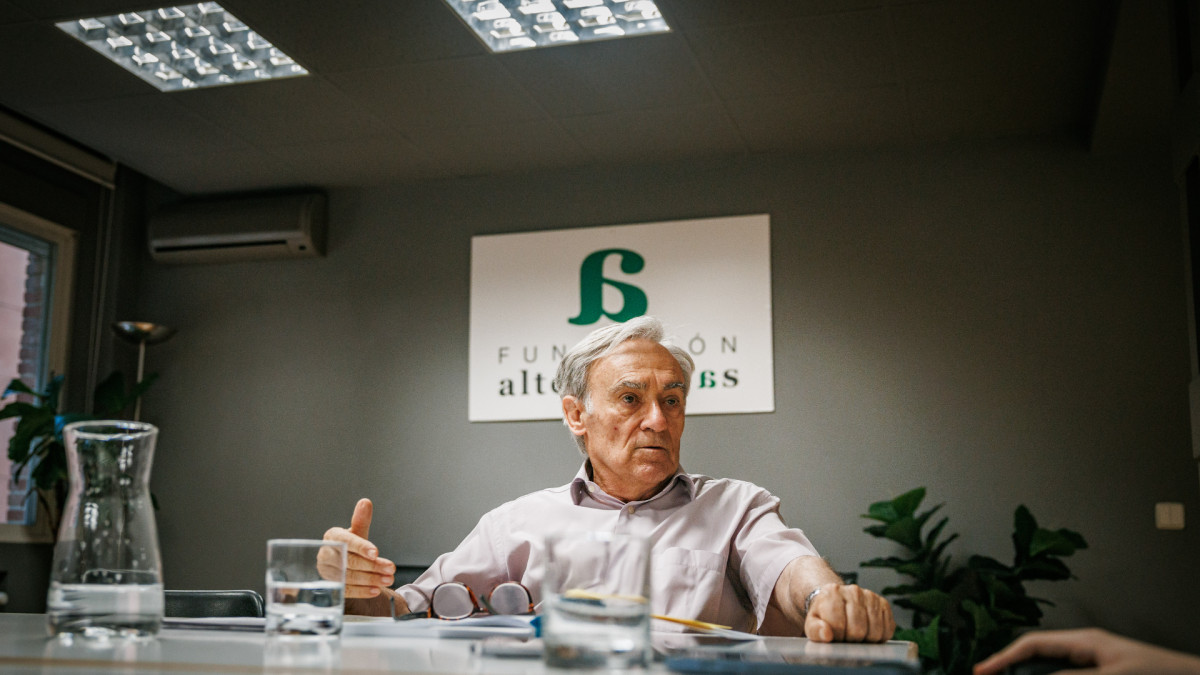
Ruiz-Huerta addresses the generational debate and territorial tensions of the welfare state. Photo: Agenda Pública / Tania Sieira
Spain is a decentralized country. Is fiscal competition between autonomous communities weakening the redistributive capacity of the State?
I think the analysis of decentralization and the functioning of social policies and the welfare state is an important issue. In Spain, the basic features are enshrined in some key articles of the Constitution. There is, therefore, a constitutional component that must be respected, even though the scope and intensity of the coverage of the main social public services are debated, because guaranteeing and protecting social rights is not only a matter of solidarity or economic efficiency, but also of complying with constitutional rules.
“In the near future it will be essential to seek paths of approximation and convergence between the foral model and the regime common one”
For its part, although the Spanish decentralization model has been, in some respects, exemplary, it is not immune to serious problems. Perhaps one of the gravest is the asymmetry between the outcomes of the foral model and those of the regime common, which implies important differences in decision-making capacity and funding. In the near future it will be essential to seek paths of approximation and convergence between both models.
On the other hand, regarding the question, specialists and many citizens highlight concern that decentralization could be weakening the Welfare State due to autonomous communities failing to implement social policies decided in the Spanish Parliament. The alternatives to solve this issue are difficult, but it is necessary to seek formulas that respect what most of the population understands as the Welfare State, even accepting that there are debates about its scope. And, once that is clarified, the effective application of the principle of constitutional loyalty is key.
In this context, the 2009 autonomous financing model, with all its flaws, has allowed the financing of essential Welfare State services to be guaranteed through the Fund for the Guarantee of Fundamental Public Services, which aims to ensure equivalent financing for health, education and social services for all people, regardless of the territory in which they live. In the reform project presented by the central government at the beginning of the current year, the basic features of the system remained.
Moreover, large public monetary transfers, such as pensions, the minimum vital income, or unemployment insurance, remain the responsibility of the central government, and play a balancing or compensatory role for the decentralization of major social services.
“Specialists and many citizens express concern that decentralization could be weakening the Welfare State”
Now, the game of parties and governments at the center and in the autonomous communities can affect the development of social policies and their financing. Therefore, if the principles of the Welfare State are to be defended, it is necessary to ensure a certain degree of consensus among the agents about its extension and coverage intensity, to ensure that the agreements signed in 1978 and contained in the Constitution are maintained.
If you had to choose three priority reforms to reduce inequality in Spain over the next decade, what would they be?
The first would be aimed at combating child poverty, which I mentioned earlier. It seems to me a promising line of work to study the proposal of linking social policy and tax policy. The Tax Agency is an institution that has earned an image of efficiency, and it might act in connection with other institutions to bring social policies closer to those who truly need them. If a family with children and low income file its tax return and the result is negative, it could receive a transfer, as happens with the current maternity deductions. That would also make it possible to apply an explicit support policy to the most vulnerable families.
“If a family with children and low income files its tax return and the result is negative, it could receive a transfer, as is the case with the current maternity deductions”
Moreover, these transfers can have effects on consumption; if low-income families have additional resources, they may spend more, which generates an effect on economic activity and leads to higher indirect tax revenue. In the same vein, government support for expanding and funding early childhood education, in addition to addressing a relevant educational need, can also help ease the situation of families with children facing greater economic difficulties.
The second reform would be to guarantee proper access of citizens to public services. I mean healthcare, education, housing, and also pensions. In healthcare, for example, thoroughly addressing waiting times seems essential. It is a regrettable calling card for the public healthcare system that someone asks for an appointment in June and is offered only for the early months of 2027.
Additionally, there should be a rigorous debate about what role private provision of public services should have relative to the public one. Private healthcare can play a relevant role as a complement to the public one, but it is necessary to clarify whether it is truly a complement or if it is replacing the public. If waiting lists push people to buy private insurance, we need to analyze whether the reasons are lack of resources, a decision by an autonomous government that prefers to allocate resources to private healthcare, or management problems in the institutions responsible for its provision.
In cases of other public goods and services such as pensions, education, care, or housing, it is necessary to evaluate them rigorously, periodically and independently, to detect the main problems, which change over time, and to decide accordingly to meet the demands of citizens and the professionals working in each sector.
“There should be a rigorous debate about what role private provision of public services should have relative to the public”
The third reform is tax reform. There are a set of pending tax reforms to face, such as a thorough review of tax expenditures of the different taxes and, in particular, the imposition on wealth, estates, large inheritances and fortunes. One possibility would be to reform wealth and inheritance taxation in depth with formulas that involve both the central government and the autonomous communities, with an application similar to what happens with the IRPF, whose regulatory capacity, in addition to its revenue, is shared.
And, of course, we should help seek suitable formulas to subject large fortunes to taxation: call it the Zucman tax, a minimum tax, or a specific contribution from the super-rich. The accumulation of economic power also, as mentioned at the beginning, implies the capacity to influence political power. If the dynamics we have experienced in recent years continues in this direction without limits, the democratic system and the functioning of the welfare state could be seriously affected.
Thank you very much.
In collaboration with the “la Caixa” Foundation
