
The outrageous court order issued by Judge Peinado has raised, if anything, the level of partisan confrontation and the stifling political climate. Worse still than the heatwave. At this point, the Government and the PSOE have seen an opportunity to seize on the excess of the PP’s harassment and its ultra allies, as well as the monstrous errors of Peinado in the Begoña Gómez case, which have prompted the CGPJ to intervene urgently. All of this, the PSOE closes ranks and taps into the emotional chord of the disheartened progressive population.
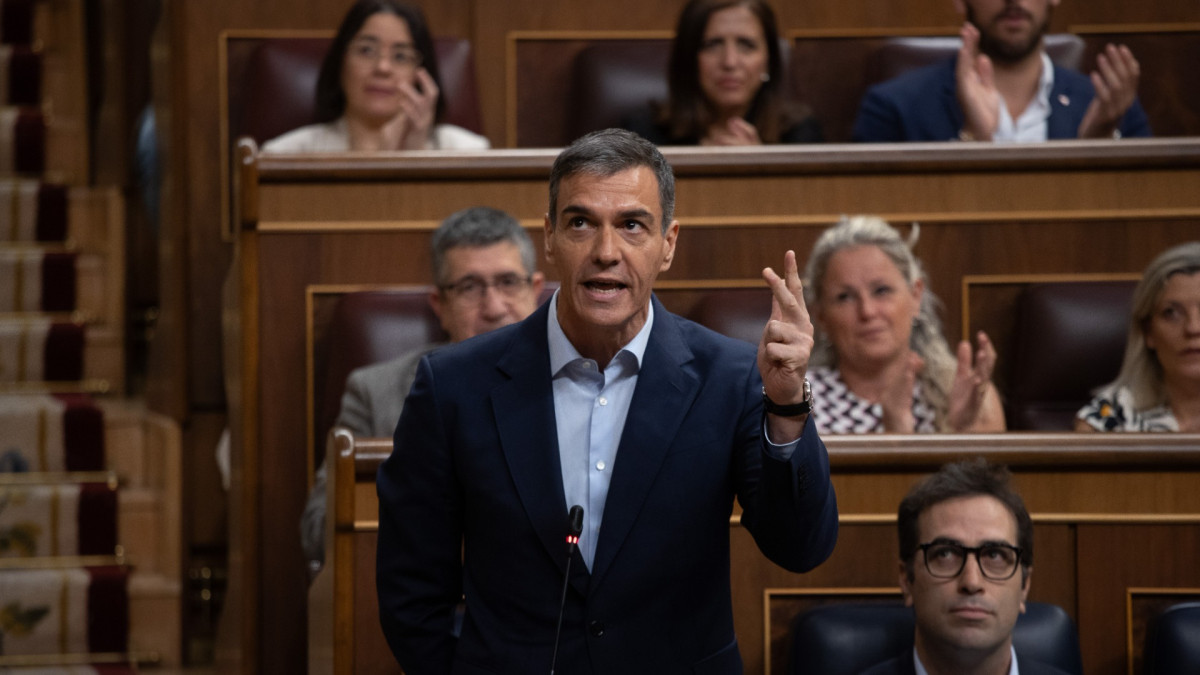
They in Moncloa think that Peinado, whether unintentionally or not, has thrown them a lifeline that President Sánchez will wield in his difficult appearance tomorrow in Congress, putting at the forefront of his speech the unheard-of criminal accusations and the absurd precautionary measures against his wife. And, in passing, to defend with more arguments Zapatero’s integrity. Although the harsh ruling against Ábalos and Koldo over the commissions tied to the sale of masks will totally complicate his narrative.
The ramblings of Judge Peinado, which do affect the credibility of the judiciary, cannot hide the existence of other corruption cases that directly affect the PSOE nor the fundamental problems that the left-wing government, already weakened after losing the support of some groups, must contend with.
“What Pedro Sánchez needs in this devilish scenario is not a victimhood speech nor the ‘and you are worse’ retort, not even enough to remind people of the achievements of his tenure”
I am convinced that what Pedro Sánchez needs in this devilish scenario is not a victimhood speech nor the “and you” retort, nor will it be enough to recall the achievements of his tenure. To regain credibility and trust, he must adopt exemplary, deeply democratic decisions in Parliament. It sounds naive, but I will try to explain myself.
Eight years ago, the Socialist group’s presentation of a motion of censure against M. Rajoy, after the Gürtel verdict on the PP’s illegal financing, brought Pedro Sánchez to government with a central commitment to regenerating political life. I witnessed that in the Congress, and two years earlier I was one of the rebellious Socialist deputies who voted against Rajoy’s investiture. The use of that constitutional instrument, the constructive motion of censure, applied in a context that had an absolute justification, is something Feijóo has not learned because he does not act according to the rules of democracy.
There are ample reasons to ask today about the state of the quality of our democracy, the degree of fulfillment of the commitments and regeneration measures Sánchez announced then, the level of citizens’ trust in the democratic system, and the credibility that the population deserves from the various state institutions.
What’s clear is that eight years on there are those who use the media megaphone and the networks to try to convince us that the story of corruption repeats itself. In that narrative they insert as a new piece the case of former president Rodríguez Zapatero, over the Plus Ultra affair and, especially, the inexplicable collection of jewels that has come to light. This latter, in my opinion and from an assessment of ethical conduct in politics, marks the political loss of someone who had been a benchmark of personal ethics for the left and a decisive support for Pedro Sánchez.
“Many young people will maintain for years a distrust of the PSOE, which is the one governing, beyond the coherent role in international politics developed by Sánchez”
We are witnessing an enormously disappointing panorama that Spain’s progressive voters will need years to overcome. Moreover, the judicial timetable will not help, although the Kitchen case and Ayuso’s boyfriend’s escapades may serve as consolation to some. The reality is that many young people will maintain for years a distrust of the PSOE, which governs, beyond the coherent role in international politics that Sánchez has shown in this time of genocides, Trumpist discourses, and the ultra wave or the favorable macroeconomic data for this country. Because neither the government’s merits nor the real threats of political and social backsliding will make the youth forget the grave difficulty of obtaining housing to plan their lives.
In this juncture, another constitutional instrument, the vote of confidence (Articles 112 and 114 of the Constitution), represents the best democratic answer to apply in a scenario of governmental deadlock, instability and growing distrust of politics. Because a strategy of resistance, until something lights the way for voters, to be useful, should not entail such a long agony for the left.
In the framework of the upcoming appearance of President Sánchez, this Wednesday in Congress, where, in addition to the necessary explanations he will provide, which may be enough for some but will not help him escape the harassment by the PP and its reactionary allies installed and operating on all fronts of the State, he has the opportunity to deliver an immediate “democratic jolt,” to take an exemplary decision with diverse positive consequences.
“A motion of confidence would mean accountability for the government’s management when the majority of Parliament that supported the investiture has disappeared”
It is in Congress where he should announce the introduction of a motion of confidence. It would mean accountability for the government’s management when the majority of Parliament that supported the investiture has disappeared, clarifying whether there is political responsibility in vigilando for the corruption cases of PSOE leaders and, ultimately, strengthening his legitimacy and the stability of the Government.
The left and this country need “a democratic jolt”. It would amount to a demonstration of democratic coherence by moving from words to regenerating political action, from the PSOE’s and the Government’s mere stance of resistance to the president taking a bold and indisputable initiative before Parliament.
It would represent an undeniable contribution to improving the overall climate of coexistence and, who knows, to a change in the electoral landscape, beyond the immediate result of the vote on the motion of confidence, which only requires the vote in favor of the simple majority of the deputies.
