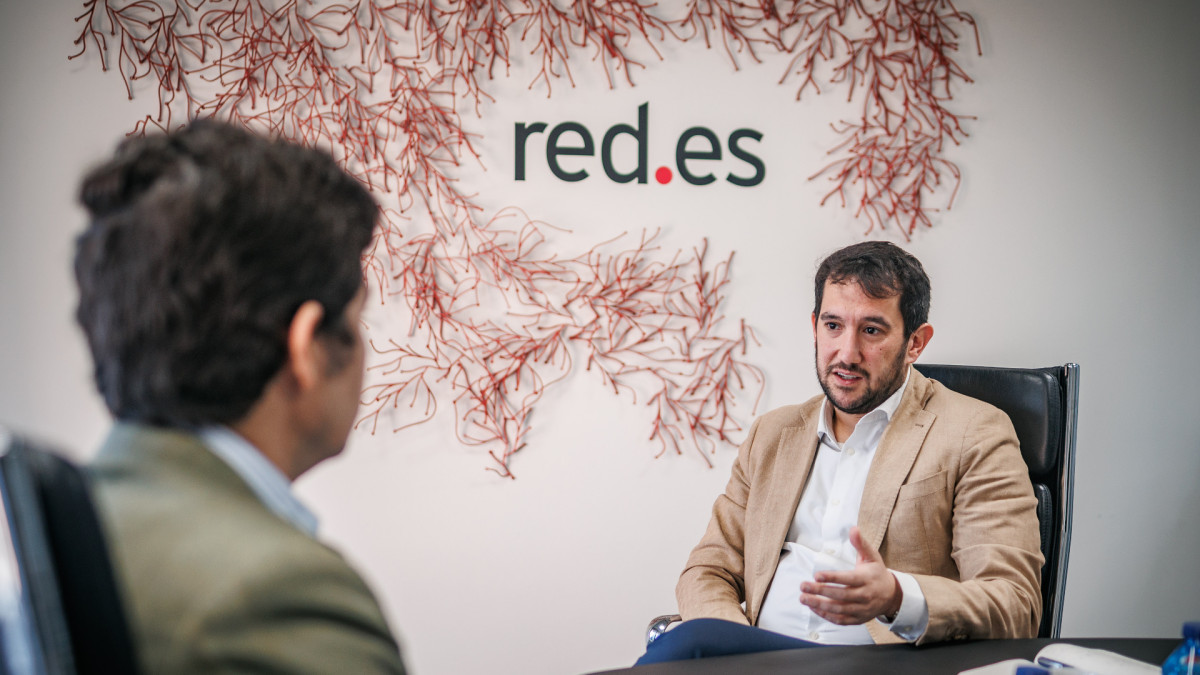
A family-run honey producer that, “thanks to a marketplace,” is currently “selling all over Spain.” Another company whose logistics network was shattered by the DANA storm, and which managed to become “the largest supplier of oranges outside its own territory” thanks to its digital presence and advertising on social networks. A third that monitors livestock. These are three of the examples that Red.es’s chief executive, Jesús Herrero, cites when asked to personify the beneficiaries of Kit Digital.
According to him, with more than 3.4 billion euros distributed among 880,000 freelancers and small and medium-sized enterprises, it has been “the most ambitious program in terms of volume, intensity and project typology” that the agency has ever managed. The challenge, he asserts, was “to get SMEs to begin a real digital transformation process and to understand that it is not just about adopting technology, but about changing the way they manage, relate to customers and identify new possibilities.”
For Herrero, digitalization is important for all companies and for Spain’s competitiveness because “technology takes on a clearly geopolitical and geostrategic value.” In his view, Europe has finally understood that “we are talking about global influence capacity” and, although “we still have difficulties” — in areas like infrastructure — steps are being taken in “development, talent and corporate capabilities.”
Now they are taking stock of Kit Digital. To date, more than 3.4 billion euros have been distributed, making it the most ambitious program managed by
Red.es in its history…
No doubt about it. Although the agency has twenty-one years behind it, this has been the most ambitious program by volume, intensity and project typology. The Administration has a great capacity to distribute resources, but doing so through micro-subsidies is very complex. We typically managed subsidies of 400,000 euros, one million or one and a half million. This has been something unique in the history of public administration in Spain.
Beyond the amount of European funds, I also understand that the challenge was to reach a large number of companies and workers…
We have reached close to 880,000 SMEs and freelancers. The application window is now closed, but in November 144,000 applications came in. Normally programs lose momentum over time, but here the opposite occurred: the last month was the highest in volume. Now, with the entry door closed, we must manage the pending applications and see how they are granted and how the services develop.
“Normally programs slow down over time, but here the opposite happened: the last month was the highest in volume”
The structural challenge was enormous — 3,067 million euros and 676,000 companies as a minimum target — but the hardest thing was what had to happen afterward: that SMEs begin a real digital transformation process and understand that it is not just about incorporating technology, but about changing the way they manage, relate to customers and identify new possibilities.
Earlier, while waiting for the interview, he spoke about Kit Digital and who could be the typical beneficiary, and it turns out that Tania, our photographer, is an example. What would be the face of the program?
We have surpassed 550,000 self-employed beneficiaries and, when we talk about the self-employed, we are talking about very diverse profiles. For example, a family with a honey business that now, thanks to a marketplace, sells across Spain. Or a company whose logistics network was wrecked by the DANA and, thanks to a digital presence and social media advertising, managed to become the largest orange supplier outside its territory. Or there are cases in taxi services. Following the murder of a taxi driver in Alcalá de Henares, cameras installed in the vehicles — funded through the program — helped identify the perpetrator. Sectors such as hospitality, construction and manufacturing have also been major beneficiaries. Even in livestock: biometric collars that measure vital signs, livestock tracking, or digital monitoring of reproductive cycles…
Herrero details that Kit Digital has helped more than 550,000 self-employed. Photo: Agenda Pública / Tania Sieira
880,000 subsidies granted and 2.8 million employees affected. Do you have a forecast for concluding with this latest tranche?
We will be close to one million concessions. To reach these figures, we processed about 30% more applications, which ultimately do not become beneficiaries. The administrative process requires meeting more than thirty requirements: being up to date with Social Security and tax obligations, being a company, proving real ownership… We process all subsidies, including those that are denied. In total we have managed around 1.2 million applications.
The need to digitalize SMEs is evident in a country where they account for more than 90% of the productive fabric. What impact does this have on our competitiveness?
It is essential. We saw this during the pandemic and in other crises: small businesses are the ones that suffer the most because their focus is on keeping the business afloat. The adoption of digital solutions adds a layer of intelligence; a CRM allows you to see how customers operate, identify demand peaks or star products; digital presence opens new audiences, and all of this makes the SME think strategically, not just day-to-day.
“We are between ten and fifteen points above the European average in basic SME digitalization. In AI adoption, one and a half points above”
The indicators reflect this. We are between ten and fifteen points above the European average in basic SME digitalization. In AI adoption, one and a half points above. Three million people have begun using technological tools thanks to the program. And, in addition, we have reduced SMEs’ fear of the Administration; they have seen that it can add value.
Sometimes we say that Spain is a country of SMEs, but perhaps we do not do enough to help them grow. What role should the Administration play?
Perhaps we should ask whether it is optimal to have such a distributed economic system. Large companies have decades of experience with the Administration and have grown around it: construction tied to public works, highly regulated banking, tech companies with public participation… All have ongoing relationships with the public sector, access to financing, and have professionalized their processes thanks to that interaction.
The Administration is a demanding partner, but it helps: it introduces standards, obliges to organize processes, meet deadlines and have more professional management. Now we must extend that relationship to SMEs and the self-employed, understanding that they can and should be the public objective of our policies.
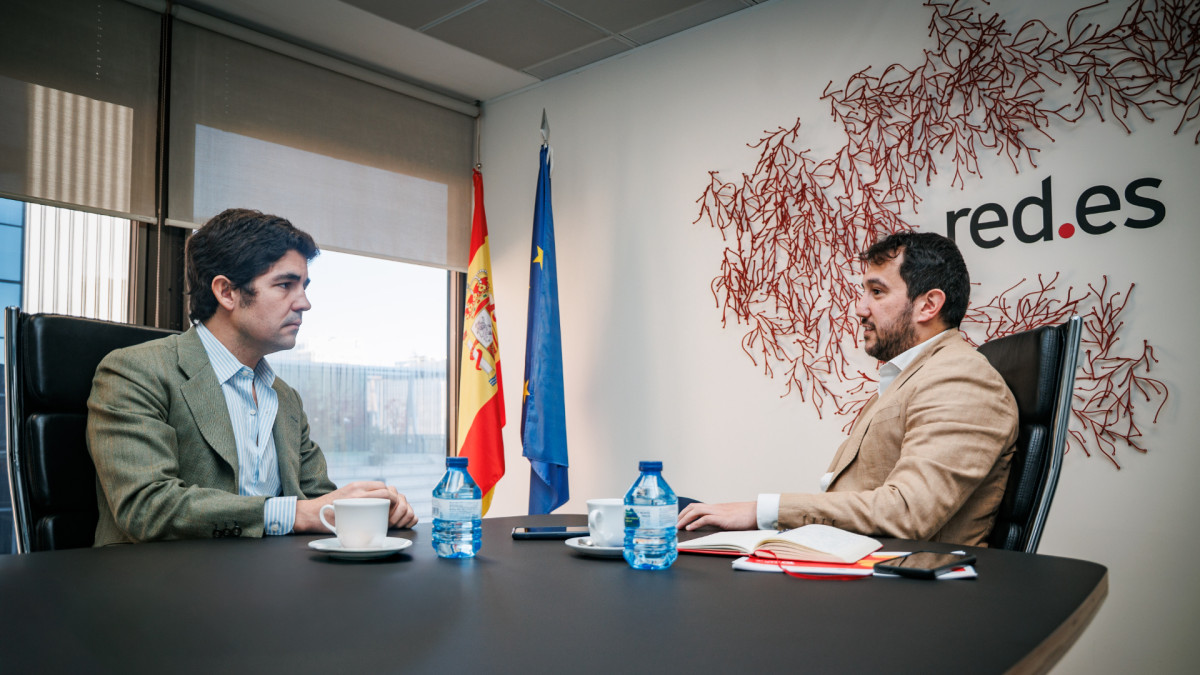
Pinedo questions Herrero about the idea of Spain as a country of SMEs. Photo: Agenda Pública / Tania Sieira
What lessons does the Administration draw from these relationships?
Many. The legal language must be translated. To support, one must be present and understand the other’s reality. We have had several million phone interactions: more than 1.7 million calls received and 700,000 initiated by us.
As an example, one of the requirements was to have at least six months of tenure. Many companies requested the aid earlier. We recorded the date and, when the term was met, we called to inform them that they could apply. With the digital agents, we did something similar: when we detected that many were getting stuck at the same justification point, we organized workshops at the chambers of commerce to explain how to resolve it.
“Any public administration that considers its momentum could be decisive for the self-employed in its territory or competency area can count on us”
For the Administration to be capable of managing a program like this, a suitable model is required. We, a public entity with 217 employees, have been able to process 1.2 million applications and handle them all. How? By incorporating technology, identifying improvement opportunities and engaging with associations such as ATA, UPTA or UATAE, which represent the self-employed. In the end, it is also about wanting to do it. I believe we have fulfilled that pioneering role: being first always costs more, but we are already underway. And I want to make clear that any public administration that considers its momentum can be decisive for the self-employed in its territory or area of competence can count on us. We are willing to share all the experience accumulated during this process.
Returning to Kit Digital, how does it fit with another program, Kit Consulting?
Kit Digital covers areas such as cybersecurity — for example, having the right licenses —, having a website and a properly positioned online presence, managing social networks in a semi‑professional or professional manner, incorporating process management tools or identifying product improvements. In short, these are elements that enable a first phase of digital transformation to be advanced.
Kit Consulting goes a step further. It offers strategic analysis with specialized consultancy to determine how to integrate artificial intelligence, strengthen security, improve process management or work on product management. All of this helps to plan an orderly process of technology adoption, with a milestone map and a personalized adoption itinerary. Because, if technology is introduced without considering the professionals who will operate it, it may not work.
However, there are probably basic issues that a company has not yet normalized within its own digital transformation process. That is why technology adoption must be tailored: each company needs something different and will use technology for different purposes. Kit Consulting helps precisely to resolve this.
Moreover, it generates a virtuous dynamic. Many companies have already lived the Kit Digital experience with a trusted supplier in whom they entrusted their first transformation. Added to that now is a strategic analyst who helps them understand, in the medium and long term, how technology will influence their company. That strengthens capabilities and solidifies stronger foundations: two external partners who accompany the business’s growth trajectory.
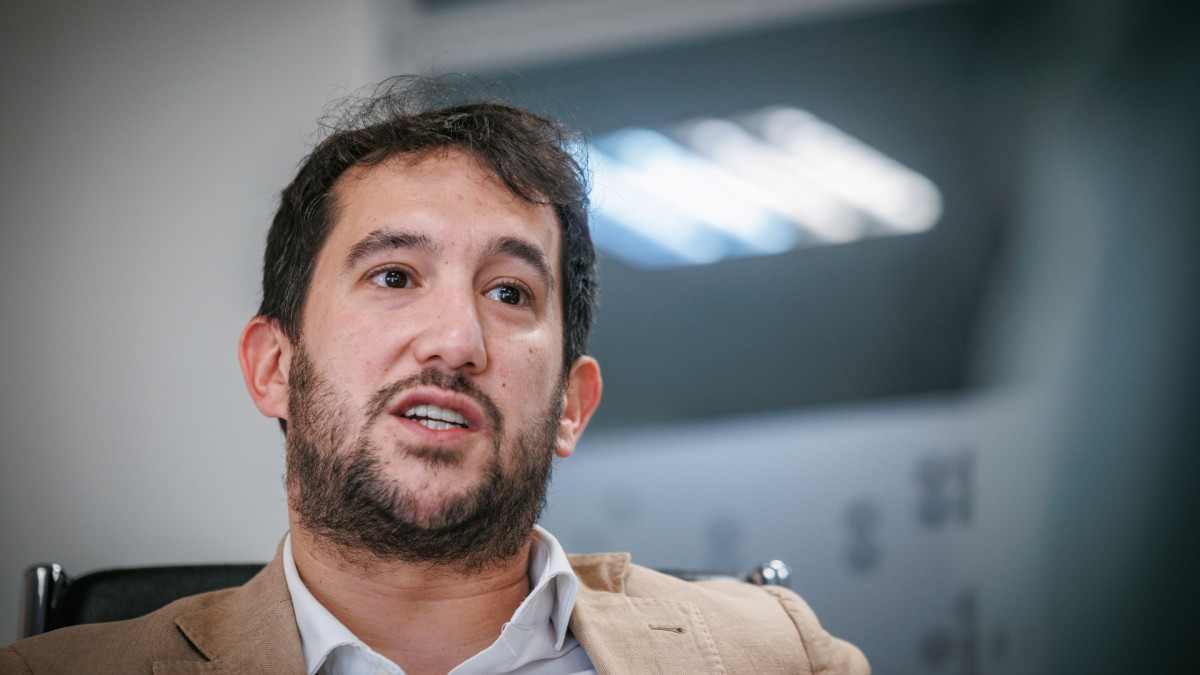
Jesús Herrero considers the digital transformation process very important. Photo: Agenda Pública / Tania Sieira
What type of companies are the beneficiaries of Kit Consulting?
Companies that have already had a positive experience with Kit Digital. Typically with more than ten employees, consolidated and capable of integrating strategic consultancy. Their main concerns are cybersecurity, the incorporation of AI and the improvement of processes and products. It is a demanding program: it requires hours of consultancy and a detailed report — diagnosis, itinerary, solution analysis —.
Now they have launched a public data platform for Kit Digital…
All that has been learned must be made public. Whoever has to manage a similar program can use it as a reference, including identifying aspects that do not work. In addition, the resources are public and citizens must know where they go.
All of this has been possible thanks to constant monitoring of the project and to understanding data as a decision-making tool. We have also wanted to demonstrate that presence. If we translate into time the calls attended, they equal thirteen years of conversations.
“All of this has been possible thanks to constant monitoring of the project and to understanding data as a decision-making tool”
We have held more than three hundred events across the country. We would go, explain the program and answer all questions. I remember an event in Pinto, my municipality. There was a question from the public that I could not resolve at that moment. I called Alberto, the former director general of the agency, live. I handed him the mic and asked him to respond. He did so right there, live, and he resolved the question. Although it is hard to reach everyone, the Administration must have the ambition to be present in people’s day-to-day lives.
What challenges lie ahead?
This has changed us forever. We no longer design public policies from inside the Organization, but from what happens outside. What happens in people’s lives should matter more than what happens inside the Administration.
Today we train half a million people in basic digital competencies. We have six hundred courses running simultaneously for seniors, people with disabilities or at risk of exclusion. We have 374 young people in centers such as the CSIC (Consejo Superior de Investigaciones Científicas), CNIO (Centro Nacional de Investigaciones Oncológicas) or the National Center for Supercomputing researching how to integrate AI in heritage, oceanography, genomics or health.
There are 45,000 professionals — lawyers, doctors, nurses — training on how AI will impact their work. There are 146 Acelera Pyme offices active. Spanish companies are traveling to Mexico to bring technology to institutional and corporate operators, AI initiatives in health, 5G programs for tech parks… Digital transformation is happening everywhere, and we must be everywhere.
Asked by Pinedo, Herrero highlights the AI challenge. Photo: Agenda Pública / Tania Sieira
Technology drives progress, but it also carries the risk of leaving someone behind. How do you address this?
A definition that an AI gave about Kit Digital was “technology within everyone’s reach.” That sums it up well. There is a cultural aspect — understanding that everything changes — and a technical one. We work simultaneously with workers, companies, citizens and administrations, also incorporating ethical and regulatory dimensions.
“It’s not enough to advance with isolated, sequential or patchy actions. We are there if it is necessary for workers to adopt technological concepts in their activity, for citizens to understand technology, or for administrations to transform. The same goes for regulation: we work to integrate a human-centered view into the regulatory framework and to make innovation one of the levers of the business model. In short, it’s about advancing not only without leaving anyone behind, but giving each person what they need. That is one of our working keys.”
In an uncertain world, this also helps to gain competitiveness and move toward greater strategic autonomy…
The situation is challenging, yes. We are seeing how technology takes on geopolitical and geostrategic value. And we have moved beyond the simplifications that sometimes circulate in the digital sphere: “Europe regulates, China copies, and the United States innovates.” That is not the case.
Europe also innovates. Modern artificial intelligence has European roots. The United States is indeed innovative, but its strength goes beyond that: it has more than 600 AI-related laws across federal, state and local levels, while Europe is now rolling out its first regulation. Moreover, Americans exercise evident power. There you have Trump’s image, in his second term, surrounded by the heads of the major tech powers: it shows that we are not just talking about innovation or corporate dynamism, but about power. And Europe has understood that we no longer just discuss entrepreneurship or talent, but global influence capacity. I think we are helping Europe take this very seriously.
A Stanford study on AI recently noted that Spain already accounts for 10% of Europe’s tech talent. This year we have surpassed one million AI specialists. And we have companies poised to become major European players in this field. For a country like ours, with a very particular culture — because culture strongly influences technological development — this is an extraordinary opportunity.
It is true that we still face difficulties: infrastructure issues or the need for a major European cloud provider. These are structural elements. But in development, talent and corporate capabilities, Europe — and Spain within Europe — is advancing decisively.
Thank you very much.
Kit Digital is a program of the Government of Spain, managed by Red.es, an entity attached to the Ministry for Digital Transformation and Public Function through the Secretariat of State for Digitalization and Artificial Intelligence, and with the Spanish Chamber of Commerce as a collaborating entity. The program, financed by the European Union through the NextGenerationEU funds, within the framework of the Plan for Recovery, Transformation and Resilience, has been designed to digitalize SMEs and freelancers from all sectors.