
As is known, the expression of these demands was frequently suppressed with violence, highlighting the conflictive dimension of building democracy. It is also known that this construction was grounded in forgetting (of many victims of Francoism) and fear (of returning to non-democratic scenarios). In other words, dialogue and agreement occurred within a context of intense social conflict. Naturally, not all actors achieved their maximum program, nor did almost anyone end up completely unsatisfied with the result. Therefore, our democracy fits what Richard Hofstadter identified as a harmonious balance of mutual frustrations.
“Dialogue is a crucial element of any democracy, for it rests on recognizing the plurality of positions and on the willingness to take them into account”
Without wishing to glorify or sanctify any past period, at the present moment I think it is appropriate to highlight a fact of the Transition and the years immediately following that is rare today: political dialogue from perspectives and visions of those excluded actors with maximalist or extreme positions. Dialogue is a crucial element of every democracy, for it rests on recognizing the plurality of positions and on the willingness to take them into account. This is also the legacy of Ernest Lluch, whose assassination is commemorated on its 25th anniversary. Today it seems that political dialogue among rivals is not abundant. I point out a few elements that make it difficult today and two nuances.
Why political dialogue is harder today
For political dialogue between rival politicians to take place, a prerequisite is required: that the actors recognize themselves as legitimate interlocutors who have the right to be heard. In other words, that they see themselves as political rivals, not as enemies. In another article it was noted that the friend-enemy dynamic in politics erodes democracy, as it reinforces the delegitimization and dehumanization of the rival. How do our political elites view themselves?
In a survey of parliamentarians whose fieldwork we have just completed, it was asked how they regarded representatives of different parties: colleagues with whom to collaborate for the common good, rivals with whom to reach agreements, opponents with whom it is rarely possible to reach agreements, or enemies with interests opposed to mine. I present the data for the four main national parties. The representatives of the PP are seen as enemies by 13% of PSOE members and 23% of the Sumar/Podemos space. But no one in Vox considers them as such. Those in Vox are seen as enemies by 4% of PP, 81% of PSOE and 97% of representatives of the Sumar/Podemos space. Similarly, PSOE parliamentarians are seen as enemies by 11% of PP and 43% of Vox. No one in the Sumar/Podemos space perceives them as enemies. To the parliamentarians of Sumar/Podemos, they are perceived as enemies by 45% of PP and 70% of Vox. No one in PSOE understands that they are its enemies.
These data could anticipate an optimistic scenario if it were not for the fact that 61% of PSOE parliamentarians perceive the PP as “opponents with whom I can rarely reach agreements” and 41% of PP members reciprocally perceive PSOE in the same way. In short, within the two major parties, the segment of parliamentarians who position themselves as unreceptive to agreement (and dialogue is usually a prerequisite) is 60% in the PP and 74% in the PSOE.
“When electoral results are disputed or not accepted, as has recently happened, democracy is put on a path of decline”
In addition, for political dialogue what Sartori called a “procedural consensus” is required; that is, agreement with the rules of the game and, therefore, with the results of their application. When electoral results are disputed or not accepted (something that has occurred in the recent past), democracy is put on a path of decline. In the same way, when certain basic values shared across all democracies (mutual tolerance, inclusion, respect, self-restraint in the management of institutions, institutional loyalty) cease to operate as guides for political conduct, the space for political dialogue narrows and democracies tend to suffer and wander into unknown paths that may end badly.
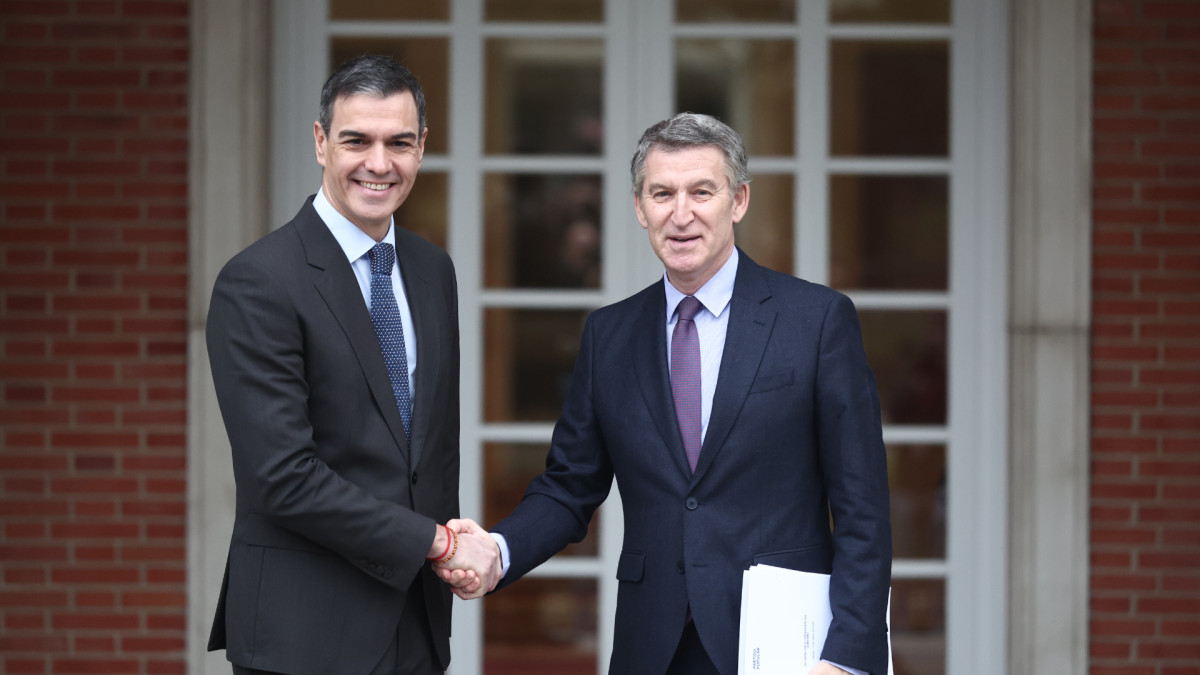
The media ecosystem does not greatly favor the measured exchange of ideas that would contribute to improving the common good. On the contrary, the permanent exposure of the politician and the emphasis on the comeback, the cutting remark, the loud declaration, the viral glory moment, the low blow to the rival, the “and you more” become a constant background noise that makes political dialogue difficult. In the eyes of the public, it seems that only permanent quarrel exists. The incentive structure shifts: the outburst and confrontation are rewarded more than approaches to seek acceptable common ground. Party leaders perceive high costs to dialogue and agreement and, it seems, are not willing to bear them, as happened, for example, with Suárez advocating for the legalization of the PCE or with Fraga presenting Carrillo at the Club Siglo XXI in 1977. Mutual distrust doesn’t help. Ask yourself: how would the militants of your parties or the most fanatical citizens react if Feijóo called Sánchez (or vice versa) to discuss hot and important governance issues of our country?
Intrabloque political competition (spurred by long electoral periods such as the one starting on December 21 in Extremadura) fosters increasingly distant positions among the most relevant actors of the ideological blocs (PP and PSOE). Almost everything now enters electoral competition and any element is worth to wear down the rival, even if it may generate disaffection or distrust among citizens toward parties and institutions. In these circumstances, dialogue, agreement, or pact do not provide electoral returns as substantial as direct and ongoing confrontation, insults included. Dialoguing with the rival is penalized, which ends up creating a certain orphanhood of the average voter, usually moderate.
“Intrabloque political competition fosters increasingly distant positions among the most relevant actors of the ideological blocs”
But there are a couple of elements that temper this scenario that do not bode well for the functioning of our democracy. Despite everything, however, it seems that there is indeed dialogue and agreement in the invisible politics on some topics, as shown in this other article where evidence continues to support the paradox of theatricalization: there is brawl, but also broad agreements when legislating. It is true, however, that this legislature presents an index of agreement that is among the three lowest of the democratic period.
It is also noteworthy that a good portion of our parliamentarians understand that “in politics it is desirable to reach agreements with rival politicians, even if ideologically distant”. And, on average, they are more in favor of this than their declared voters. I focus on the four largest parties — grouping Sumar and Podemos —.
On average, parliamentarians tend to be more prone to agreement than their voters, although voters from left-wing parties are more inclined toward dialogue than those who vote for the PP and Vox. This points us toward the idea that the cost of dialogue and agreement between rivals is high for certain leaders. Among our parliamentarians there are notable differences. The average PSOE representative is the one who most considers dialogue and agreement desirable (7.4), followed at some distance by the PP (6.8) and by Sumar/Podemos (6.4). Vox shows the lowest average at 4.8, making it the state party whose parliamentarians, on average, are more opposed to the idea of dialogue and agreement with rivals. Nearly two-thirds (63%) of parliamentarians place themselves in the higher end of agreement with the stated phrase (positions seven to ten), but while in PSOE 76% are in that space of dialogue and agreement, in the PP it is 62%, almost half in Sumar/Podemos (49%), and Vox stands far behind at 28%, the group of parliamentarians least inclined to dialogue and agreement.
Hard times lie ahead for those who believe that, from the natural disagreement in a modern society, tolerance, contrast of ideas and positions, respectful dialogue, and inclusion within the framework of the law are the axes of how democracy operates. A long electoral cycle begins where the noise will make understanding difficult. Patience.
