
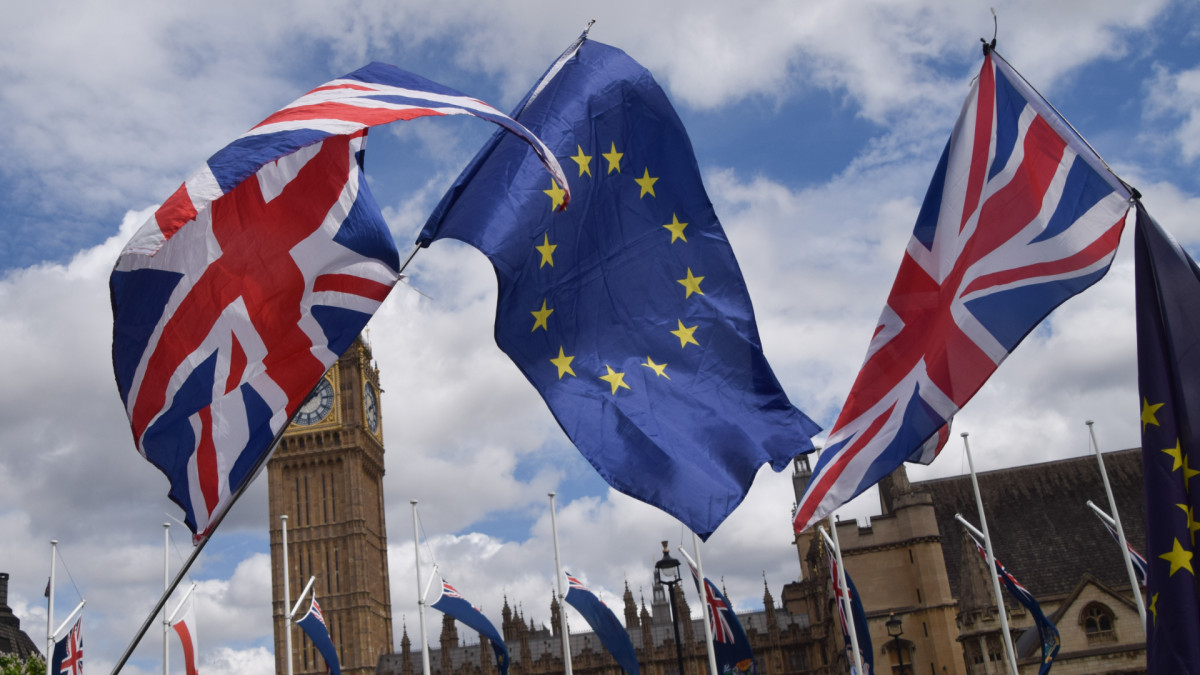
When on June 23, 2016 a majority of Britons voted to leave the European Union, few could have imagined that ten years later the United Kingdom would still be immersed in a crisis of political and institutional adjustment of such depth. Brexit was presented as a historic opportunity to regain control, to restore national sovereignty, and to open a new era of economic prosperity. However, a decade later, the balance seems to point in a different direction. The United Kingdom has not only failed to become the “European Singapore,” but is today a country more polarized, more politically unstable and with greater difficulties in defining its role in an increasingly competitive and uncertain international environment.
The recent resignation of Keir Starmer, barely two years after taking power with a large parliamentary majority, constitutes the latest episode of a decade marked by political volatility. Since the referendum, the country has chained a succession of prime ministers unable to stabilize the political system or provide a convincing response to the structural problems accumulated since Brexit. Who governs in Westminster is important, but one might ask why no leadership, however different, seems capable of consolidating support.
“The United Kingdom is today a more polarized country, more politically unstable and with greater difficulties in defining its role in an increasingly competitive and uncertain international environment”
The United Kingdom has been regarded by many as a model of institutional stability. The strength of its parties, the discipline in Parliament, and the predictability of its political processes were some of the defining features of the so-called Westminster model. However, Brexit deeply altered those balances. It began as an internal Conservative Party dispute, but escalated to become a factor tearing apart the entire British political system. Arend Lijphart would hardly recognize what is happening.
The exit from the European Union forced the management of complex trade, regulatory, and territorial negotiations for which neither the Government nor the institutions appeared fully prepared. Since then, British politics has lived installed in a dynamic of constant exceptionalism. Theresa May failed to push through an withdrawal agreement that satisfied her own party; Boris Johnson culminated the process, but ended up devoured by scandals; Liz Truss presided over one of the most unstable financial episodes in the country’s recent history; Rishi Sunak sought to restore market confidence, and, finally, Keir Starmer came to power with the promise of returning competition and stability to public management. None has managed to close the chapter opened in 2016.
This inability to rebuild durable political consensus reflects a deeper problem. Brexit could not resolve the fractures existing in British society, but it also made them more visible. Territorial, generational, educational and socio-economic divisions that ran through the referendum continue to condition the country’s political life.
The economic difficulties have contributed to feeding this sense of uncertainty. Although the most catastrophic forecasts did not materialize, neither did the prosperity promises associated with Brexit. The British economy has shown over these years a growth systematically below expectations, with persistent problems of productivity, investment and competitiveness. Likewise, the withdrawal from the single market and the customs union has increased costs for numerous exporting firms, especially small and medium-sized enterprises, while sectors such as agriculture, logistics or care have suffered from a reduction in available European labor.
There are also problems that are not exclusively attributable to Brexit, but which it has contributed to aggravate: the growth of territorial inequalities, the deterioration of public services after years of austerity and the difficulty of finding a new growth model in a global context marked by geoeconomic competition and trade tensions.
Particularly significant has been the weakening of one of the major arguments of Brexit supporters: the idea of a Global Britain capable of compensating its distance from Europe through greater global projection. Ten years later, that strategy has not produced the expected results. Trade agreements signed with third countries have had limited impact, while economic proximity with the European Union continues to be an indispensable factor. Geography continues to impose its own rules.
“The idea of a ‘Global Britain’ capable of offsetting its distance from Europe through greater global projection has not produced the expected results”
The territorial consequences have not disappeared either. Scotland remains one of the main challenges to the cohesion of the British state. The fact that a clear majority of Scots voted to remain in the European Union keeps alive the independence claim, which continues to find in Europe an important political and symbolic resource. Meanwhile, in Northern Ireland, the complex agreements reached to avoid a physical border on the island have allowed stability to be preserved, but have not eliminated the tensions arising from an extraordinarily delicate institutional situation.
The British crisis is, therefore, simultaneously economic, political and territorial. But it is also a crisis of representation. A growing portion of the citizenry feels that the political elites have been unable to offer effective solutions to problems that affect their living conditions. The distrust of institutions and the rise of populist forces such as Reform UK reflect precisely this accumulated unease.
Among all these issues appears Andy Burnham, one of the names that has begun to resonate most strongly as a potential leader to guide the Labour Party’s next phase. His possible ascent does not respond solely to a matter of generational renewal or leadership. It also represents the search for a political alternative capable of reconnecting with social groups that have progressively moved away from the traditional major parties.
Unlike Starmer, whose image has been associated with technical competence and institutional profile, Burnham has built his political career from the local level. As mayor of Greater Manchester he has developed a discourse centered on territorial cohesion, public investment, and decentralization, issues that connect directly with some of the fractures that Brexit laid bare.
In this sense, perhaps his main asset lies precisely in his ability to interpret the discontent outside London. In recent times, a large part of the British political debate has revolved around an overly London-centric perspective and the dynamics of the major metropolitan areas. Nevertheless, Burnham represents a different vision, more attentive to the demands of the industrial cities of northern England and to those territories that have experienced more intensely the effects of deindustrialization and regional inequalities.
In any case, it would be a mistake to think that a leadership change alone can resolve the problems accumulated over the last decade. Thus, the challenge for the next British Government will not only be to regain political stability, but to redefine the United Kingdom’s place in relation to the EU and to the world as a whole. Although the possibility of returning to the European Union is not part of the immediate political debate, it is becoming increasingly evident that the relationship with Brussels tends toward a redefinition.
“It would be a mistake to think that a change of leadership alone can resolve the problems accumulated during the last decade”
Thus, a decade after the referendum, Brexit remains the great political fact that structures British public life. Not because it continues to occupy the daily headlines, but because many of the issues it triggered remain open. Starmer’s resignation is a reminder of this. More than the failure of a particular leader, it symbolizes the difficulty of finding a new political balance after a decision that deeply transformed the country. The great paradox is that the United Kingdom left the European Union to regain control of its destiny. Today it still seeks a way to exercise it.
