
The Mediterranean corridor between Almería and Alicante has become a stronghold of the right in Spain. While Almería and Murcia are two strongholds where Vox shows great strength, a bit further north, Alicante is the PP’s stronghold in the Valencian Community.
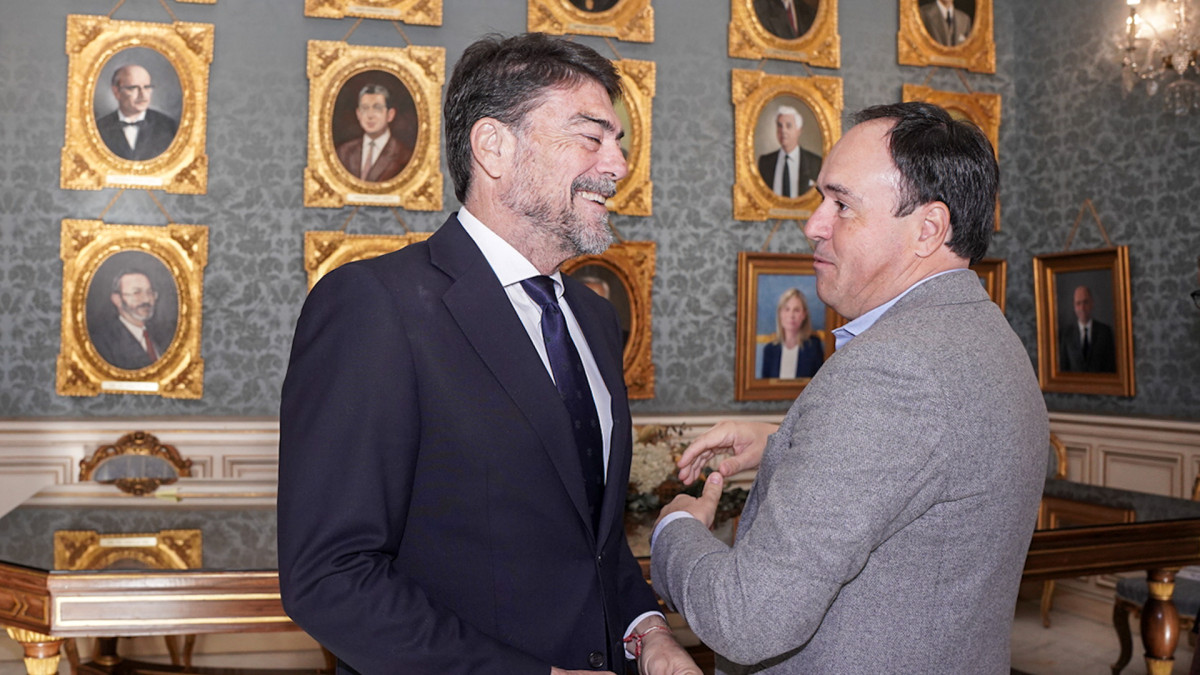
In the Alicante capital, so far this century, the PSOE has governed only three years, between 2015 and 2018, and could not complete the mandate after the mayor, Gabriel Echávarri, resigned when charged with prevarication. In the council meeting that was to designate the new socialist mayor, a councilor from Guanyar Alacant broke party discipline and, as a result, handed the mayoralty to the PP (which had been the most-voted list). Luis Barcala took the mayor’s baton and in May 2027, when he stands for reelection, he will have spent nine years in office.
The tenure in Alicante has been marked by the scandal over the allocations of protected housing in Les Naus. The fraudulent process of allocating a portion of the 140 homes in the public development to friends and relatives of PP officials and municipal staff led to the resignation of the Urban Planning councillor, Rocío Gómez, and a parliamentary investigative committee has even been created in Les Corts Valencianes.
“The tenure in Alicante has been marked by the scandal over the allocations of protected housing in Les Naus”
With less than eleven months to the elections, the PP has already ratified Barcala as its candidate for reelection, while the PSPV, led by a local managing committee, debates between the current municipal spokesperson, Ana Barceló, and the regional deputy and spokesperson for the managing committee, José Díaz. The organizational weakness of the Socialists has not allowed them to capitalize on the PP’s housing allocation corruption.
The third party in the council and a hinge for the election of Barcala, Vox, has not yet ratified its candidate. The current municipal spokesperson, Carmen Robledillo, is waiting to be crowned just like Vox’s other candidates in the provincial capitals across Spain. In any case, everything suggests that the councillors Vox obtains will again be decisive for the investiture. And they could even help offset the wear on the PP caused by the Les Naus scandal.
Compromís has not yet greenlit its candidate either. The fourth group in the council, with two councillors, is a coalition formed by Iniciativa, Més and Els Verds and, for now, only Iniciativa, the party of the current spokesperson, Rafa Mas, has ratified its candidate. In any case, Compromís, a rising force in Valencia at the expense of the PSPV, has in Alicante its weakest territory.
Finally, Esquerra Unida, with a single councillor, has confirmed Manolo Copé, its current regidor, as candidate for mayor.
“Everything points to Vox councillors once again being decisive for the investiture”
The current right-wing majority stands at eighteen councillors, three above the required majority, so nothing suggests a change of color in the municipal government, which will continue grappling with hot topics such as tourism and its impact on daily life, the lack of housing, the integration of the port into the city, and Alicante’s growth. PP and Vox captured 55% of the votes in the latest municipal elections and, if Ciudadanos’ result is added, they approach 60%. With these numbers, the left’s challenge to win the mayoralty seems very distant.
Formally, Barcala’s objective is to secure the 15th councillor to give him an absolute majority. His argument to defend that possibility is that in 2023 Ciudadanos achieved a not insignificant 3.2% that was not enough to enter the council, but that represented a notable result. The PSPV, which in 2023 lost a councillor, hopes to have hit bottom and lay the groundwork for a comeback, which all signs indicate will have to wait until 2031.
