
Since the onset of the Industrial Revolution, modern society has depended on its ability to extract and use energy for its own benefit. Now, the world faces the most radical energy shift in over a century, the “era of electrotechnology”: the simultaneous emergence of new ways to produce and consume electricity that allow fossil fuels (dominant until now) to be displaced in most uses. These electric energy technologies (such as heat pumps for heating and electric motors for mobility) are roughly three times more efficient than their fossil counterparts (gas boilers and internal combustion engines), reducing to about a third the energy required to achieve the same effect.
Of course, these technologies do not emit greenhouse gases, and thanks to replacing steady streams of fossil fuel imports with renewable energy, the economy is shielded from the swings of the international energy market. Solar energy equipment can be produced domestically and, even when imported, lasts for several decades and can be recycled at the end of its life to produce the next generation of equipment locally.
“The electrotechnology revolution is not only climate policy, but also geopolitics and a matter of national security”
For these reasons, the electrotechnology revolution is not merely climate policy; it is also geopolitics and a national-security measure, especially at a time of convulsed energy markets due to the closure of the Strait of Hormuz. By 2025, the new photovoltaic and wind installations essentially covered the entire increase in global electricity demand, and for the first time renewables surpassed coal as a global energy source. And the crisis in the Middle East has only reinforced the trend.
In this context, Spain stands in a privileged position: its abundance of solar and wind resources is turning the country into a major renewable power. This simultaneously reduces greenhouse gas emissions and electricity prices, both for citizens and for businesses, improving the quality of life and the competitiveness of the Spanish economy. But to push this revolution forward, Spain faces multiple problems in its energy system that must be addressed with sound policies.
The Demand Problem
First of all, in a sense Spain’s renewables are dying of success. The falling costs of renewable energy equipment, combined with the country’s substantial renewable energy potential, have led in recent years to an onslaught of installations (primarily solar) that has completely altered the energy landscape.
“Spain is in a privileged position: its abundance of solar and wind energy resources is turning the country into a great renewable power”
Because of the marginal pricing mechanism of the Spanish electricity system, the massive connection of renewable generation sources is causing large fluctuations in the price of a megawatt-hour (MWh). On the one hand, during the sunniest hours of the sunniest months, the wholesale price collapses below twenty euros per MWh, sometimes even hitting zero or negative prices. This is very positive for consumers, who enjoy much lower prices during the middle of the day.
However, between dusk and dawn, and in months with fewer daylight hours, prices rise quickly above seventy euros per MWh (and often exceed one hundred euros), as natural gas remains the technology that still provides the last MWh of demand (and thus sets the price for the entire system).
Thus, the Spanish market is increasingly cheap, but increasingly volatile, with less price stability both intraday and over the year. Prices approaching zero for more and more hours of the year are already hindering renewable installations due to the collapse of profitability, and the slowdown in renewables prevents the displacement of fossil fuels during nights and winter days.
Therefore, there is an urgent need to accelerate the installation of energy storage on the grid: s systems that absorb energy during the times of day with the highest renewable production and lowest prices (providing demand during those hours and slightly raising prices) and feed it back to the grid during the hours of lower production and higher demand (thereby lowering prices).
Although some deployment of storage is already under way, it is urgent to accelerate these installations, in order to restore the profitability of renewables installations to continue the decarbonisation path of the grid and the decline of average prices. First, the rapid drop in battery prices makes hybrid installations (batteries plus renewables) cheaper than fossil fuels in many places, allowing energy to be moved from daylight hours to nights.
“It is urgent to accelerate the installation of energy storage on the power grid”
Meanwhile, pumped hydro storage allows taking advantage of our country’s mountainous terrain and to store energy for longer periods (up to weeks) to balance prices between days of higher and lower demand. Together with the European Union’s recent approval of Spain’s energy storage subsidies (the “capacity market”), Spain is ready for a deployment of storage systems that will help reduce and stabilise electricity prices and continue decarbonising the electricity system.
The rapid spread of renewables and their low prices are also the ideal trigger for the next virtuous circle: the electrification of the economy. As discussed, replacing fossil systems with their electric equivalents not only reduces carbon dioxide emissions, but it is far more energy efficient and reduces imports of fossil fuels, improving the competitiveness of the Spanish economy and its resilience to external energy shocks.
Around here, the two main objectives should be residential heating consumption and transport. On the residential side, installing heat pumps and community heating networks would substitute fossil consumption with electric, while renovating older buildings would reduce heating and cooling needs at the base. Finally, the production of renewable biomethane would decarbonise the remaining natural gas consumption.
The advancement of electric vehicles, on the other hand, will depend on the continued fall in battery prices (which is already bringing electric vehicles to price parity with combustion engines) and the deployment of the charging network, with Spain lagging behind other countries.
A Power Grid Prepared for the Future
However, the electrification of the Spanish economy also presents new challenges. The expansion of renewable energy plants and biomethane is meeting increasing opposition in rural areas, where residents often do not see enough economic benefits, but rather a radical change to their landscape (renewables) and are affected by unpleasant odours and enormous increases in road traffic (biomethane).
To prevent slowing the expansion of these new energy sources (crucial for our decarbonisation and competitiveness), measures are urgently needed to distribute the benefits of these initiatives more equitably. In that regard, the recent Galician law that obliges new wind plants in that region to sell half of their production to local consumers at reduced prices, and to require repowering (replacing old wind turbines with modern ones that produce more energy with far fewer turbines), is very positive.
Biomethane companies should also make greater efforts to explain their projects and listen to the residents of the areas where they intend to install, in addition to complying rigorously with environmental legislation, given the poor reputation and lack of transparency of their industry regarding environmental impacts. A model of small, decentralized plants should be prioritized over the current one, which concentrates waste, vehicle traffic, and environmental impact (but also the jobs created) in a few locations that are disproportionately affected.
“The Galician law obliging new wind plants to sell half of their production to local consumers at reduced prices is very positive”
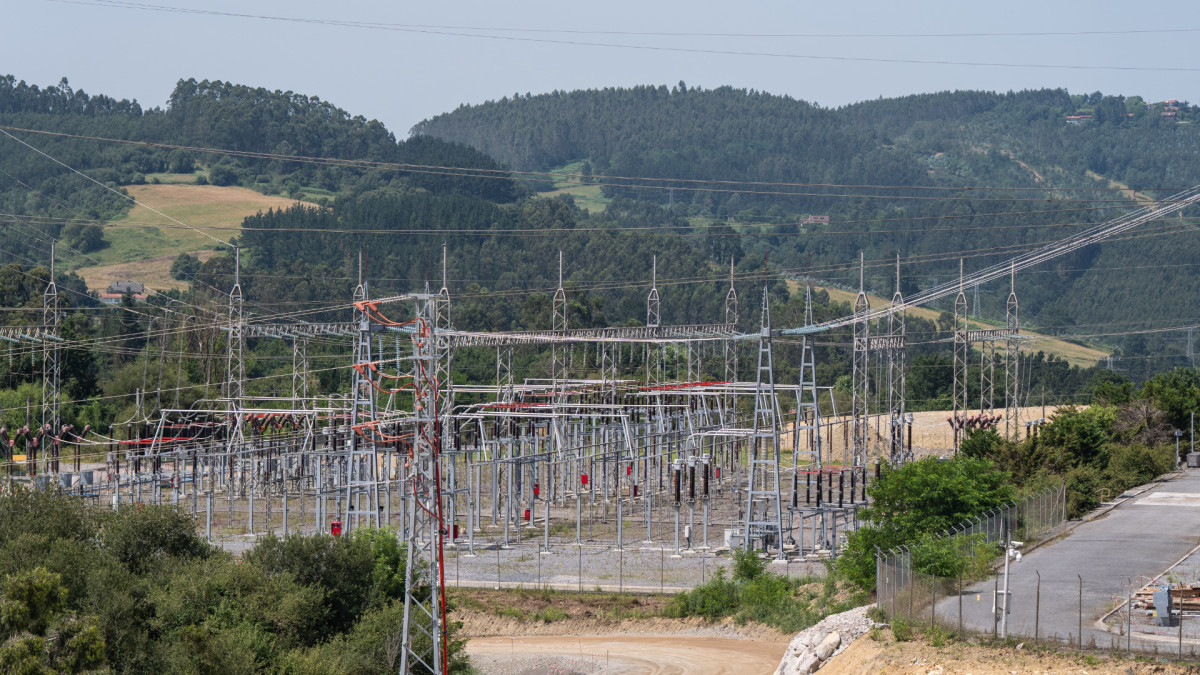
But the major current problem of Spain’s electricity grid lies in the low electricity prices, which are catalysing a boom in new hydrogen production plants and data centres (also powered by the AI fever), which, together with the emerging industrial revival and the need to accelerate housing construction, is pushing the grid to its limit: there is not enough grid capacity to move all the energy demanded.
Recent sector data indicate that 83.4% of the electricity grid nodes are saturated (between power already in use and approved new projects), affecting both the installation of new renewable generation and new large consumers. The situation is not yet critical, since part of the saturation is explained by projects still in process, but if Spain wants to maintain momentum for its industry and competitiveness and continue attracting strategic industrial investments, it must rapidly expand its electricity grid to meet the new demand.
In this sense, it is positive that the Government has raised investment authorisation in transmission networks (managed by Red Eléctrica de España) and distribution networks (managed by private electricity companies) to record levels to speed up their deployment. The National Commission on Markets and Competition (CNMC) has also increased the remuneration for electricity networks in line with the demands of large electricity companies, though not as much as they had proposed.
These measures should appropriately incentivise the expansion of grid capacity. And although both lead to higher costs for network management on citizens’ and businesses’ electricity bills, the effect should be neutralised by the rise in electricity consumption (which expands the base over which network remuneration costs are divided) and by the upcoming end of the tariff deficit surcharge. However, it would be of interest to explore measures ensuring that the higher remuneration for electricity networks is accompanied by a real increase in investment and does not become merely a rent extraction, although it seems the interest of electricity companies in network investments is real.
“It would be prudent to explore measures that ensure that the higher remuneration for electricity networks is accompanied by a real increase in investment”
But, as the 2025 Iberian blackout demonstrated, the grid faces not only a saturation problem but a stability problem. Although, as expert reports showed, the blackout was not caused by a stability problem with renewable plants (as claimed without evidence by some sectors), the truth is that today’s electricity grid is far more complex than in the past, and therefore requires additional measures for control and stability.
In this sense, changes such as allowing renewable sources to participate in grid voltage control will both provide greater stability to the electricity network and better remunerate renewables to encourage their installation. Further improvements in power electronics and data collection and management will also help to have a safer, cheaper-to-operate grid; part of what failed in the blackout was the lack of real-time data at Red Eléctrica de España and the slow reaction due to lack of automation.
But the main difficulty facing Spain in stabilising and monetising its grid is the lack of international interconnections, since it depends on trans-Pyrenean connections with France to link its grid to the rest of the European market. In recent years, France has facilitated this isolation by delaying the construction of new interconnections, jealously guarding that Spain’s cheap Iberian renewable energy would be too fierce a competitor for its nuclear fleet.
“Changes such as allowing renewables to participate in the control of grid voltage will provide greater stability to the electricity network”
This is a serious problem for Spain and Portugal, as it isolates the Iberian grid from the European one (depriving it of the greatest stability offered by a larger grid) and greatly limits Iberian energy exports. Therefore, in addition to relying on European institutions (which repeatedly call for improving the trans-Pyrenean connection) to obtain funds and political support for the connection with France, Spain must seek alternatives to bypass it, such as connections with Ireland or Italy.
In summary, the Spanish energy sector is managing to align the reduction of greenhouse gas emissions with falling prices and fossil fuel imports. It faces multiple challenges, but with the right mix of public policy it is possible to bolster the sector as one of Spain’s best current competitive advantages, while continuing to move toward climate neutrality.
