
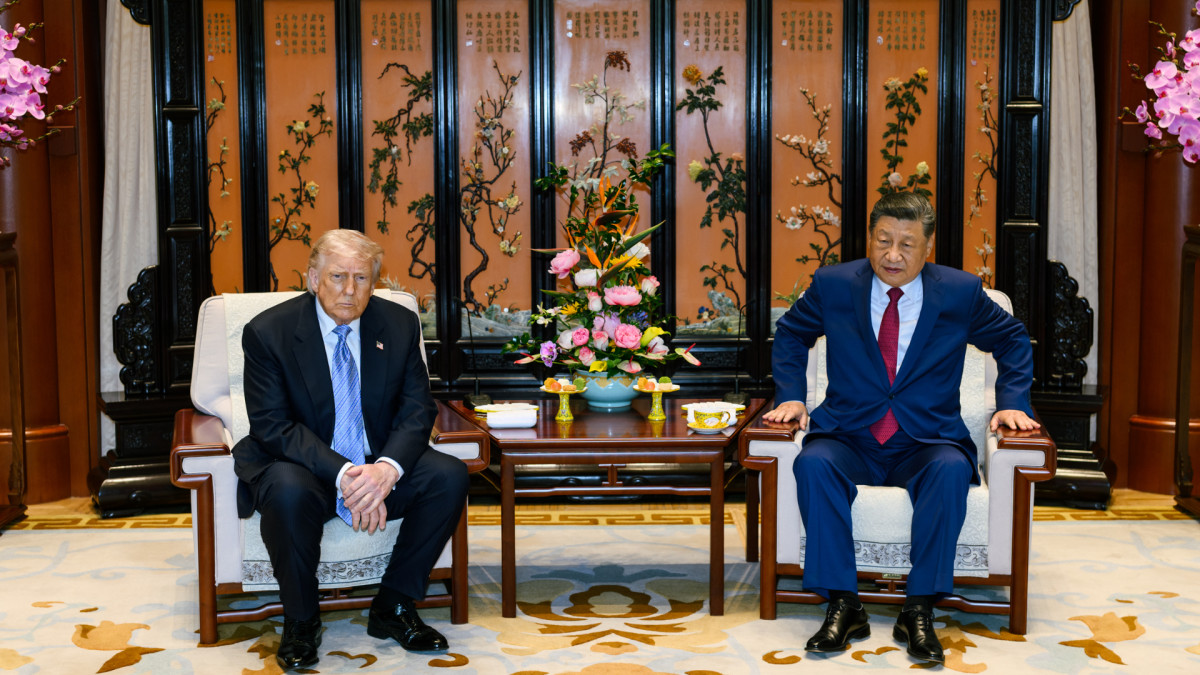
For years, the competition between the United States and China in Latin America has been understood primarily as an economic dispute. Beijing boosted its trade with the region, financed infrastructure, expanded its corporate footprint and persuaded several countries to sever diplomatic ties with Taiwan in order to recognize China. Under that logic, economic clout was supposed to translate gradually into political influence. Yet, that premise is increasingly less evident.
The trade between China and Latin America reached in 2024 a record level of about 518.47 billion dollars, compared with only 12 billion dollars in the year 2000. China has become an indispensable commercial actor for a large part of South America, especially in countries like Brazil, Chile and Peru. However, that economic centrality does not automatically equate to the capacity to align politically.
“The competition between Washington and Beijing in Latin America seems to be entering a new phase”
The core hypothesis of this article is that the competition between Washington and Beijing in Latin America appears to be entering a new phase. China continues to compete mainly through trade, investment, infrastructure and financing. The United States, by contrast, seems to be rebuilding influence through political tools: support for ideologically aligned candidates, security cooperation, migration policy, selective financial backing and diplomatic pressure.
It is worth avoiding an exaggerated interpretation: China is not losing Latin America. Chinese firms will continue to operate in the region, trade will keep growing, and Latin American governments have no incentives to abandon an economic relationship that offers markets, financing and infrastructure. What seems to be changing, however, is Beijing’s ability to turn that economic presence into lasting political alignment.
The influence of China in Latin America amid the regional political shift
Honduras offers one of the clearest examples. In 2023, the government of Xiomara Castro broke ties with Taiwan and established connections with China. For Beijing, the decision represented a new diplomatic victory in Central America. It also reinforced the idea that the promise of trade, investment and development could alter the international orientation of countries that had historically maintained relations with Taipei.
The Honduran political situation, however, changed after the election of Nasry Asfura, a candidate publicly backed by Donald Trump. Since then, Honduras has moved closer politically to Washington. The new government has revisited deals signed under the previous administration, and debates have arisen around telecommunications projects linked to Huawei, as well as the possibility of replacing Chinese technology with American alternatives. In other words, diplomatic recognition of Beijing did not guarantee a durable political alignment.
Peru offers a second example, perhaps more economically significant. The Chancay port is among the most consequential Chinese infrastructure projects in Latin America. Developed by Cosco Shipping, the megaproject aims to turn Peru into a Pacific logistics hub and facilitate trade between South America and Asia. From the Chinese perspective, Chancay is far more than a port: it embodies Beijing’s ability to build strategic infrastructure, connect supply chains and expand its commercial footprint in the Pacific.
“Infrastructure can create commercial dependence without necessarily generating political loyalty”
Nevertheless, the economic importance of Chancay does not prevent Peruvian leadership from seeking a closer strategic relationship with the United States. A large-scale Chinese investment can remain intact, be commercially valuable and coexist with the incoming government of Keiko Fujimori, who has chosen to move closer to Washington. The Peruvian case demonstrates that infrastructure can create commercial dependence without necessarily producing political loyalty. Beijing may build ports, fund projects and become a central economic partner, but it does not control the outcome of elections or the strategic orientation of subsequent governments.
Chile confirms the same tension from another angle. Few Latin American countries are as economically tied to China as Chile. China buys almost 40% of Chilean exports, especially copper, a key resource for electric vehicles, power grids, renewable energies and advanced manufacturing. Yet, the election of José Antonio Kast signals a political shift to the right and closer to Washington.
That shift does not imply that Chile will drastically reduce its trade with China. Beijing will remain a major buyer of Chilean copper and other strategic products. The important point is that the political orientation of the Chilean government will move significantly closer to the United States, even within a relationship deeply marked by the Chinese market.
The trend does not end with these cases. Argentina represents another instrument of American influence. Washington intensified its backing of the government of Javier Milei through a currency swap of 20,000 million dollars and the purchase of Argentine pesos. The move aimed to bolster the economic stability of a government considered strategically aligned with Washington.
El Salvador presents a different, but equally revealing example. The cooperation between Nayib Bukele and the Trump Administration on migration and security shows that geopolitical competition can also unfold through political agreements. El Salvador’s willingness to host deportees from the United States strengthened the bilateral relationship and turned security and migration into instruments of regional influence.
The United States and China contest political influence in Latin America
Viewed together, these experiences reveal a pattern that until a few years ago was hard to discern. China continues expanding its economic footprint, while the United States seems increasingly focused on reclaiming political influence. The difference is significant because many analyses had long assumed that China’s economic expansion would inevitably yield permanent political alignment.
“China continues to expand its economic footprint, while the United States seems increasingly focused on reclaiming political influence”
Recent developments suggest something more nuanced. Trade, investment and infrastructure create lasting economic ties, but they do not, on their own, determine the strategic orientation of governments that come to power through elections. Politics responds to different incentives: security concerns, migration, drug trafficking, inflation, public discontent with previous governments, or ideological shifts can alter foreign policy far more quickly than any trade agreement.
In this context, the American strategy appears significantly less costly than attempting to compete directly with Beijing in infrastructure or financing. The United States does not need to build ports to compete with Chancay. If it succeeds in solidifying political coalitions with governments that share its strategic priorities, it can maintain a privileged position even in countries deeply integrated economically with China.
Beijing is not losing Latin America, but its ability to translate economic presence into stable political influence is no longer as evident as it was a few years ago. From this perspective, the competition between the United States and China is entering a new phase: China’s economic weight remains strong, while the competition on the American side is becoming more overtly economic and strategic.
It remains unclear which of the two dimensions will prove more decisive in defining the balance of power in Latin America over the coming decade. But if the recent cases in Honduras, Peru, Chile, Argentina and El Salvador confirm a broader trend, Beijing may discover that maintaining markets is considerably easier than sustaining political influence. That may well be the principal lesson Latin America is beginning to offer about this new stage of competition between the two great powers of the twenty-first century.
