
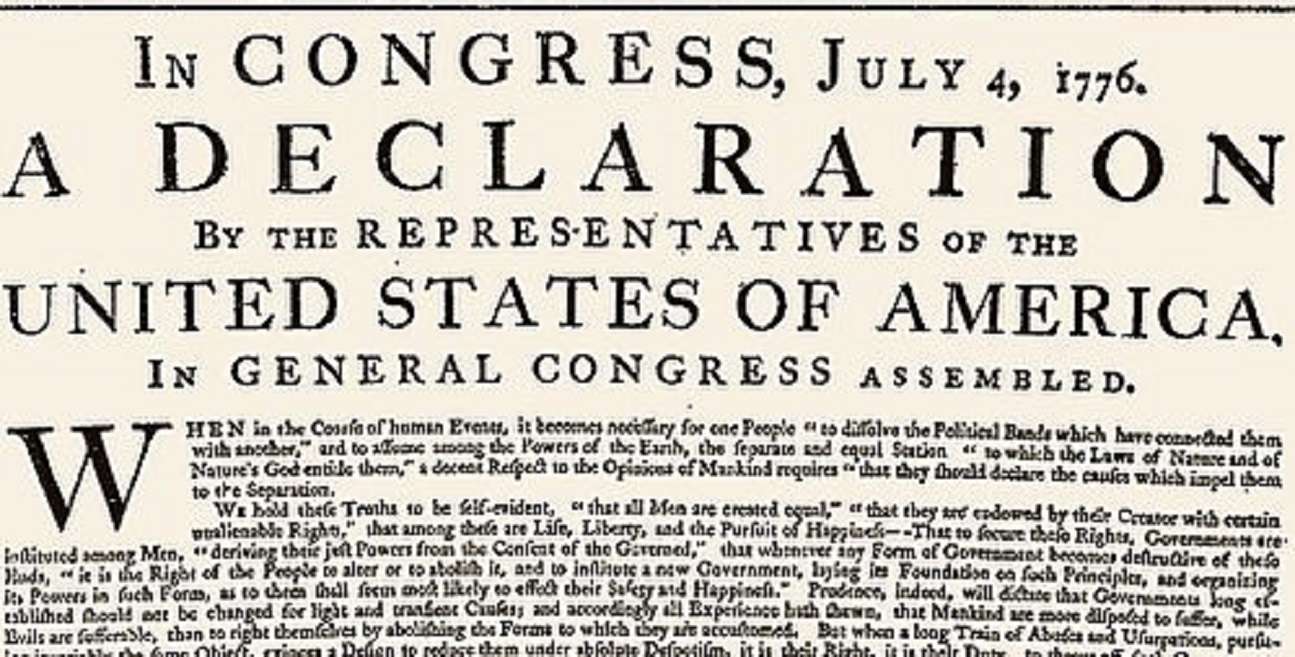

Today marks the 250th anniversary of the Declaration of Independence.
Over the years, I have produced a number of posts and essays exploring the American Revolution and the ideals embedded in the Declaration and the broader founding of the United States. Some of these writings retain direct relevance to ongoing debates about identity politics, nationalism, immigration, the lingering impact of slavery in American history, and other related topics. In particular, several pieces emphasize the liberal universalist vision underlying the Founding and its stance against ethno-nationalist tendencies, which feels especially pertinent in current political discourse.
This post is an expanded version of a similar roundup published last year.
I hope these links prove useful and prompt reflection on the core principles enshrined in the Declaration. Unless noted otherwise, all of the pieces below originally appeared as posts on the Volokh Conspiracy blog. They are presented here in chronological order:
“The Declaration of Independence and the Case for Non-Ethnic Secession,” July 4, 2009. An examination of why the American Revolution stood apart from most present-day movements for independence and secession.
“Frederick Douglass on Immigration,” April 10, 2014. An exploration of Douglass’s landmark 1869 speech arguing that American ideals require openness to newcomers.
“The Declaration of Independence and the Case for a Polity Based on Universal Principles,” July 4, 2017.
“The Universalist Principles of the Declaration of Independence,” July 4, 2019. Why it matters that the Declaration elevates universal liberal values above racial, ethnic, and cultural particularism.
“The Case Against the Case Against the American Revolution,” July 4, 2019. A rebuttal to enduring claims—made by critics on both the right and the left—that the Revolution did more harm than good.
“Slavery, the Declaration of Independence and Frederick Douglass’ ‘What to the Slave is the Fourth of July?'”, July 4, 2020. Douglass’s renowned oration illuminates some of America’s gravest evils—while also highlighting the profound positive changes brought about by the Revolution and the Founding. I would argue that Douglass’s speech stands as perhaps the greatest Fourth of July address ever delivered.
“Juneteenth and the Universalist Principles of the American Revolution,” June 19, 2021. Why there is no conflict in celebrating both July 4 and the abolition of slavery; in fact, the two commemorate and reinforce each other.
“Immigration and the Principles of the Declaration of Independence,” July 4, 2021. This piece explains why the Declaration and the Founding principles call for free migration as a fundamental right.
“Juneteenth Celebrates a Great American Achievement,” June 19, 2023. An extension of several key points from my 2021 Juneteenth discussion linked above.
“The Declaration of Independence Promotes Individual Liberty More than Collective Self-Determination,” July 4, 2023. The liberty asserted by the Declaration centers on individual freedom rather than a majority’s power to govern others, or the power of ethnic groups to control “their” territory.
“The Case Against Nationalism,” National Affairs, Winter 2024 (with Alex Nowrasteh). This piece provides a broader critique of nationalism, including a section arguing that nationalism runs counter to the ideals of the Declaration and the Founding.
“Trump vs. the Declaration of Independence,” July 4, 2025. Several items in the Declaration’s list of grievances against George III still apply to Trump today—most notably on immigration, trade, and deportation without due process. Like King George, he is “unfit to be the ruler of a free people.”
“Gordon Wood on America as a “Creedal Nation” Open to all Races and Ethnicities,” Nov. 22, 2025. My analysis of a speech by the eminent historian of the American Founding on the universal nature of the Founding’s ideals.
“1776 All-Stars: Why George Mason Is Extremely Underrated,” Reason, July 2026. My discussion of the contributions of a pivotal Founding Father.
“My House Judiciary Subcommittee Testimony Against the “Preserving a Sharia-Free America Act,” Feb. 9, 2026. Summary of my testimony before the US House of Representatives Judiciary Committee’s Subcommittee on the Constitution and Limited Government, explaining why discrimination against immigrants based on their speech and religion is unconstitutional and contrary to the Founding’s ideals. The full testimony is available here.
