
The Institut Montaigne occupies a space in France that appears atypical from Spain: it is a privately funded hub, supported by companies, which collaborates with experts, policy-makers and economic actors to influence the shaping of public policy. Marie-Pierre de Bailliencourt has steered it since 2022, bringing a notably pragmatic grasp of how the work should function. She wants the institute to be more than a mere factory of reports: “I’m aiming to turn a think tank into what I would call, at least in part, a do tank,” she explains.
The discussion starts there, focusing on the role such an institution can play in a nation heading toward a decisive presidential contest. De Bailliencourt believes France is moving toward 2027 with a clear rift between elites and citizens, eroded trust in institutions, and a public debate that has lost the link between decisions and their consequences. Her remedy is to illuminate public policy more clearly: “We’re not telling people what they should choose. We’re simply explaining the consequences of each option,” she says.
The conversation then shifts to the key questions shaping that election and France’s role in Europe: semiconductors, economic security, industry, China, the United States, energy and strategic autonomy. De Bailliencourt does not equate Washington and Beijing, but she insists that Europe must learn to think in terms of power. “The United States is a crucial ally. But it is also a competitor,” she contends. And regarding China, the diagnosis is equally clear: “France cannot effectively compete with either China or the United States on its own.”
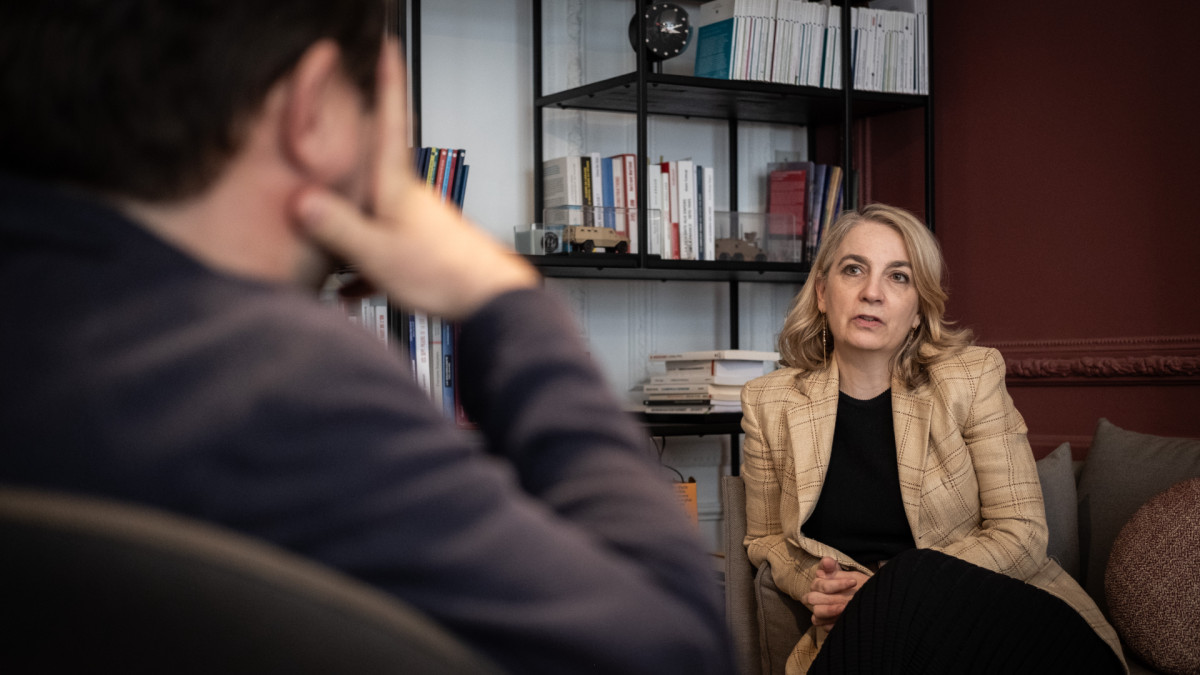
Marie-Pierre de Bailliencourt, director of Institut Montaigne, at the French think tank’s headquarters in Paris. Photo: Agenda Pública / Bruno Arbesu
What do you think about the heat here in Paris over the past few weeks?
I approach the climate topic with a certain skepticism. A cartoon once circulated online showing a map of France around 30 degrees with a TV host praising “beautiful weather in France.” That was from the 1980s. Then the same map appeared again today, still at the same temperatures, but now accompanied by heat warnings and health advisories. My skepticism isn’t about the reality of heat or climate change, but about how we discuss these things and shape public perception.
This time, however, authorities were much better prepared. France endured a traumatic event in 2003, when an extraordinary heatwave caused a sharp rise in mortality among the elderly. That trauma explains much of our current approach. We must cope with heat, stay vigilant and educate people about its implications.
In Spain, Portugal and North Africa, people relate to weather differently. France has been exceptionally fortunate with a temperate climate. We aren’t accustomed to extreme heat or cold. In many ways, we have been blessed: we don’t face hurricanes, we suffer few earthquakes and we aren’t habituated to major climatic shocks.
“France went through a traumatic experience in 2003, when an exceptional heatwave caused a sharp increase in mortality among elderly people”
We are learning how to manage this. At times we may overreact a touch, but the climate is changing and we must adapt, mitigate its effects and continue to cut emissions. Paradoxically, France stands out as one of the leading nations in climate policy and in industrial decarbonisation. That is one of the many French paradoxes: we have suffered less than many others, yet we are among the loudest in voicing concern about climate change. At the same time, we are taking constructive steps. We boast one of the lowest carbon footprints among industrialised nations, we have been highly proactive on ESG and CSR compliance, and we are on a path that is more advanced than many peers. Even so, there remains a persistent feeling that more could be done. That is the French paradox.
Let me ask you about the role of the Institut Montaigne in the French public debate.
The Institut Montaigne is a private, independent and non-partisan think tank. We do not receive public funding, which is rather unusual in France. Our finances come entirely from membership fees paid by our members—small, medium and large companies. Those firms support Montaigne because they want to ensure that economic considerations are properly reflected in public policymaking.
Twenty-five years ago, Claude Bébéar, the former chairman of AXA, believed that it was a mistake to leave businesses outside the policy debate. He thought that companies possessed practical knowledge that could enrich public action, which is why he founded the Institut Montaigne. Today, we are among France’s leading think tanks and we also maintain a permanent presence in Brussels.
I have been at the helm for the past four years, and I have deliberately steered the organisation toward something far more operational. My conviction is that ideas abound, but reports, conferences and publications abound too, while action and impact are relatively scarce. I come from industry, so I am deeply focused on execution. Together with my team, I have sought to identify the critical points where intervention can genuinely alter outcomes.
For instance, we flagged semiconductors as a strategic vulnerability for French and European economies. We recognised how dependent we had become on external suppliers and concluded that this issue required attention. With Mathieu Duchâtel, our Director of International Studies, we developed what has become the leading European initiative on semiconductor resilience: the Chips Diplomacy Initiative.
The initiative inventories supply chains, assesses regulatory frameworks, spots strategic weaknesses and proposes concrete risk-mitigation steps. We collaborate closely with Japan and South Korea, while coordinating at the European level with the Netherlands and ASML, and with France, with Italy via STMicroelectronics, with Germany and with other partners. The aim is not only to diagnose problems but to act on them.
“We realised how dependent we had become on external suppliers and concluded that the issue of semiconductors had to be addressed”
Another illustration concerns public health after COVID-19. Many firms are increasingly worried about the impact of mental health on their workforce and society at large. I believe Spain faces analogous challenges. We studied international best practices, especially in the United States, and devised a new approach to organising mental healthcare.
We then launched a pilot programme in the Yvelines, near Versailles, bringing together hospitals, doctors and patients. The results have been very encouraging: fewer relapses, reduced use of psychotropic drugs and a higher rate of return to work and normal life. At first, the Institut Montaigne financed the entire pilot itself. After observing these results, we asked Parliament to provide public funding so the programme could expand to five departments. We still have about six months left in the pilot phase, but if final results confirm what we’ve seen, the programme could eventually be rolled out nationwide.
“Ideas matter, but what matters even more is ensuring that they become concrete action. Companies, whether small, medium-sized or large, play an essential role in that process”
I am striving to transform a think tank into what I would call, at least in part, a do tank. Ideas matter, but the crucial thing is making them concrete in action. Companies of all sizes have a voice in that process: they tell us what they confront daily—how they manage their workforce, their supply chains, regulatory burdens and strategic risks. The Institut Montaigne is therefore a forum where businesses, experts and policymakers collaborate to identify both problems and practical solutions. That collective approach matters to me because it lends our work a legitimacy that governments are willing to heed.
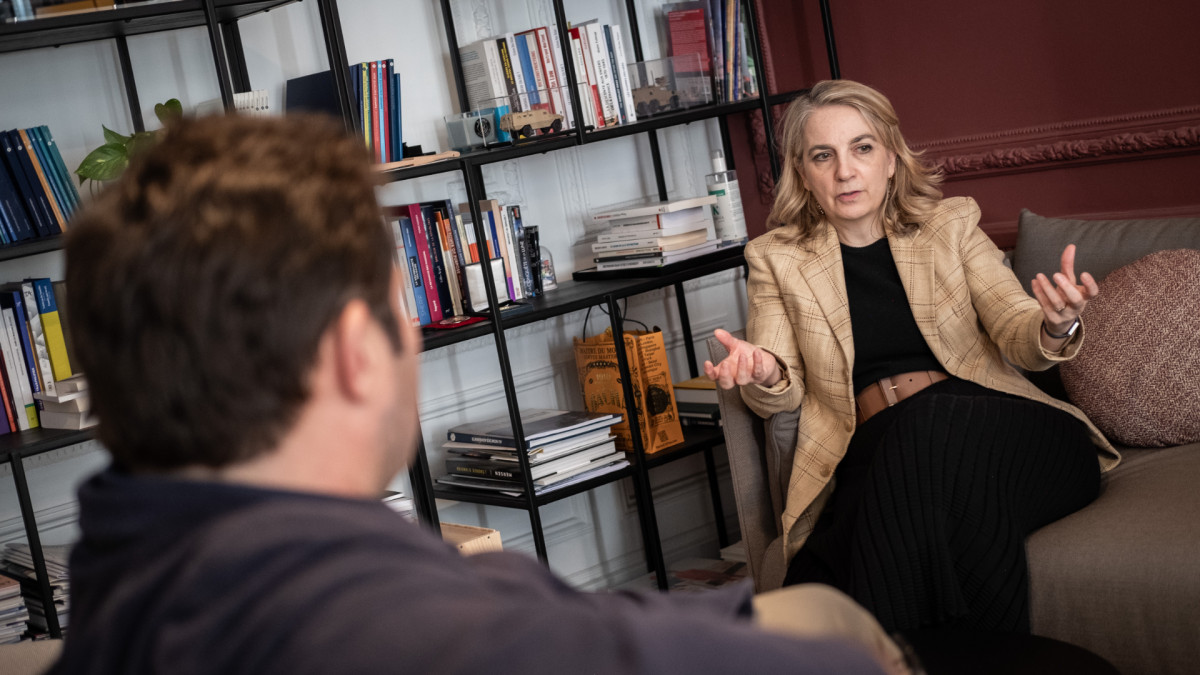
Marc López Plana talks with De Bailliencourt about the role of think tanks in the French public debate. Photo: Agenda Pública / Bruno Arbesu
France will hold presidential elections in 2027, and Spain is also expected to hold elections that year. What is the best way to engage citizens in the debate, not only about politics, but about public policy? I have the feeling that we are living through a period in which politicians talk more about politics than about policies. And I think it is increasingly important to engage citizens in discussions about public policy.
That is a crucial question. I can share what we are attempting. I don’t claim it is the sole method, but it is the path we have chosen. We began from a straightforward observation: today there is a substantial gulf between elites and citizens. Trust in institutions has steadily diminished. I’m not certain the situation is identical in Spain, but in France there is a deep sense of mistrust.
That mistrust stems from three principal factors. First, people no longer grasp what is happening. The world has grown too complex, it is changing too rapidly, and no one has taken the time to explain it adequately. Second, people no longer trust what they are told. They feel politicians have lied to them repeatedly over the years, that they no longer listen, and that, as a result, they are not credible. Third, social media has amplified what we call confirmation bias. People are constantly exposed to information that confirms what they already believe. Consequently, they are not challenged by opposing views, and society becomes increasingly polarized and radicalised.
“The world has become too complex, it is changing too quickly and nobody has taken the time to explain it properly”
Our response is to do the opposite. We do not tell people what they should think or what is right or wrong. We aim to provide them with tools to make their own decisions: well-informed choices. And an informed decision requires understanding the consequences of the available options.
For the presidential election, we have structured our work around three pillars. The first is to explain the current situation in France and, above all, how that situation affects people’s daily lives. When we discuss economic security, we avoid abstract terms. We pose practical questions: can you still obtain antibiotics for your children? Can factories keep running because they have access to essential components? Last year France faced shortages of antibiotics for children, and several factories had to slow or halt production due to disruptions in global supply chains. The same applies to innovation, social protection, healthcare or any other major public policy issue. We always begin with the concrete impact on citizens’ everyday lives.
The second pillar is explaining how we arrived at the present situation. This is essential because people often forget that today’s circumstances stem from political decisions made years earlier. The link between cause and effect has disappeared from public debate, and our aim is to reconnect those elements. For instance, if someone proposes to retire at 62, that is perfectly legitimate. But the consequences must be explained: what it means for pension levels, for contributions and for public finances. We’re not telling people what they should choose; we explain the consequences of each option.
We also lay out the constraints we face. The French pension system rests on intergenerational solidarity. If births decline while the number of retirees rises, the system will eventually hit its limits. In reality, we reached that point several years ago. Today we borrow money simply to finance current pensions, rather than investing in future growth. That means increasing public debt to preserve the status quo, which is unsustainable.
Alongside those constraints, we point to France’s strengths: the assets we can build on and the opportunities available. We also compare ourselves with other countries. How have Germany, Italy, Canada or Japan responded to similar challenges? Looking abroad often helps people understand that France isn’t facing unique problems.
Finally, we devote substantial attention to correcting misconceptions, what we call idées reçues. Many assumptions circulating in public debate simply lack evidence. Whenever possible, we correct these misunderstandings with facts, scientific evidence and a non-judgmental approach.
“The link between cause and effect has disappeared from public debate and our objective is to reconnect those two elements”
Only once we have completed all of that do we move to the second stage. At that point we say: “Now that you understand the situation, let us examine the different public policy options available.” We have identified 25 major themes, including purchasing power, defence, housing, healthcare, innovation, energy and the environment. For each, we present the different policy choices that could realistically be pursued by a future president.
Every proposal we analyse must satisfy four conditions: it has to be operational, financially credible, implementable and legally feasible. Constitutional or legislative reforms are possible, but everything must stay within the rule of law. We present the options, without telling citizens which path they should take. We show them what is realistic.
The third pillar is distinct. After laying out the facts and the available options, we explain how we would approach the decision. Not because we think people should follow us, but because every public decision involves trade-offs. We assess policies according to three criteria: impact, feasibility and acceptability. A policy may be economically sound, but if society rejects it completely, it becomes impossible to implement. Our aim is not to push reforms that would spark social unrest but to discover the right balance between impact, feasibility and public acceptance.
“A policy may be economically sound, but if society rejects it completely, it becomes impossible to implement”
For the presidential election, we will publish these analyses very widely. Ultimately, our approach rests on respect for citizens. That means making a genuine effort to explain complex issues in plain language, free from technocratic jargon and devoid of political posturing. We focus on identifying policies that can realistically be implemented during the next presidential term and that can deliver the greatest possible impact.
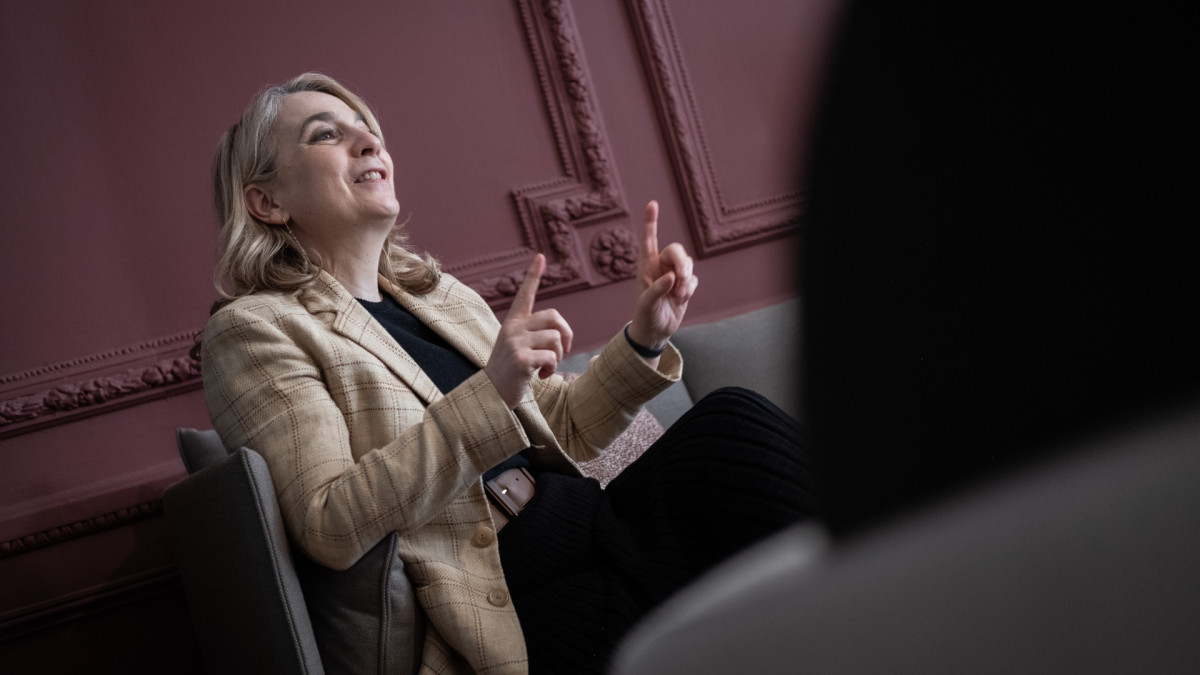
De Bailliencourt explains how the Institut Montaigne wants to reconnect public decisions and their consequences for citizens. Photo: Agenda Pública / Bruno Arbesu
Did you follow the same approach during the last presidential election?
No, not at all. We had never done it before. What has become part of the Institut Montaigne’s tradition is our financial analysis of the presidential candidates’ programmes.
The presidential election will occur in May, but candidates typically publish their programmes in January or February. When they do, we analyse them and estimate their cost. This has become one of our reference areas because political parties often do not conduct a rigorous financial assessment of their own proposals. Consequently, our estimates are widely recognised as an independent benchmark for evaluating the cost and credibility of campaign promises.
“Political parties often do not carry out a rigorous financial assessment of their own proposals”
Of course, we will continue performing that work. But before assessing the financial cost of the candidates’ programmes, it is essential to ensure that the public debate is conducted properly. During the 2022 presidential election there was very little substantive debate. The context of Russia’s invasion of Ukraine overshadowed much of the campaign. We believe France must consciously choose its future, and to do that citizens need to understand the different options available. That is what we are trying to contribute.
To maximise our reach, we work closely with television channels, newspapers, radio stations and social media platforms. Our objective is to enrich the public debate by making citizens aware of the range of choices available.
France, like Spain, does not make decisions in isolation. When people vote today, they are not voting only about France: they are also voting in a European context. And, beyond Europe, many of the forces that determine our future originate elsewhere, especially in China. To me, understanding this new international environment is becoming essential if citizens are to make informed electoral choices.
I don’t think you can present it to people in those terms. When French citizens vote in a presidential election, they believe they are electing the president of France. They do not see themselves as voting for Europe. Ironically, it is almost the opposite in European Parliament elections: many people vote there primarily to send a message to the French Government, rather than to influence European politics. It is a rather paradoxical situation.
I agree with the substance of your point. There are many external forces affecting France and, unless citizens understand them, they cannot make informed decisions. The way we have chosen to address this is to organise our work around specific public policy themes.
“There are many external forces affecting France and, unless citizens understand them, they cannot make informed decisions”
Take economic security as an example. Economic security cannot be achieved if France acts alone. Given the scale of today’s challenges and the commitments embedded in the European treaties, cooperation is inevitable. When we present public policy options to citizens, one possibility is to strengthen economic security through deeper European integration. Another option, which is also part of the political debate, is to build what some would call a national fortress.
One position holds that France cannot effectively compete with either China or the United States on its own. Only the scale of the European Union provides sufficient leverage in negotiations with major powers such as China. Another position argues exactly the opposite: its supporters believe that Europe is too slow, too divided and too ineffective. From that perspective, France should strengthen its own national resilience and become more self-sufficient.
There is also a third approach, perhaps a more pragmatic one. Rather than choosing between Europe and national sovereignty, it proposes selecting the most appropriate level of cooperation on a case-by-case basis. Depending on the issue, France could work with the European Union, with Canada, with India or with any other relevant partner. The objective is to identify which partnership best serves French interests.
We devote an entire section of our work to the relationship between France and Europe. There is growing scepticism towards the European Union in France, but that does not necessarily mean people reject the European project itself. More often, they question the way Europe currently functions. So we ask a simple question: how can France and Europe create mutual benefits? Again, we do not give a single answer. We present the different options.
“There is growing scepticism towards the European Union in France, but that does not necessarily mean people reject the European project”
The same approach applies to defence. Should it primarily be organised at the European level? Or should France rely more heavily on its own national capabilities? These are legitimate political choices. Talking about Europe in very broad, abstract terms is often ineffective. It is a conversation that appeals mainly to elites. Most people do not wake up in the morning thinking about the balance between the global, European, national and regional levels. They think about whether they feel safe, whether their company can continue operating, whether they can access healthcare or find work. Our role is not to tell them what they should believe, but to explain how all those levels of governance are interconnected and how they affect everyday life.
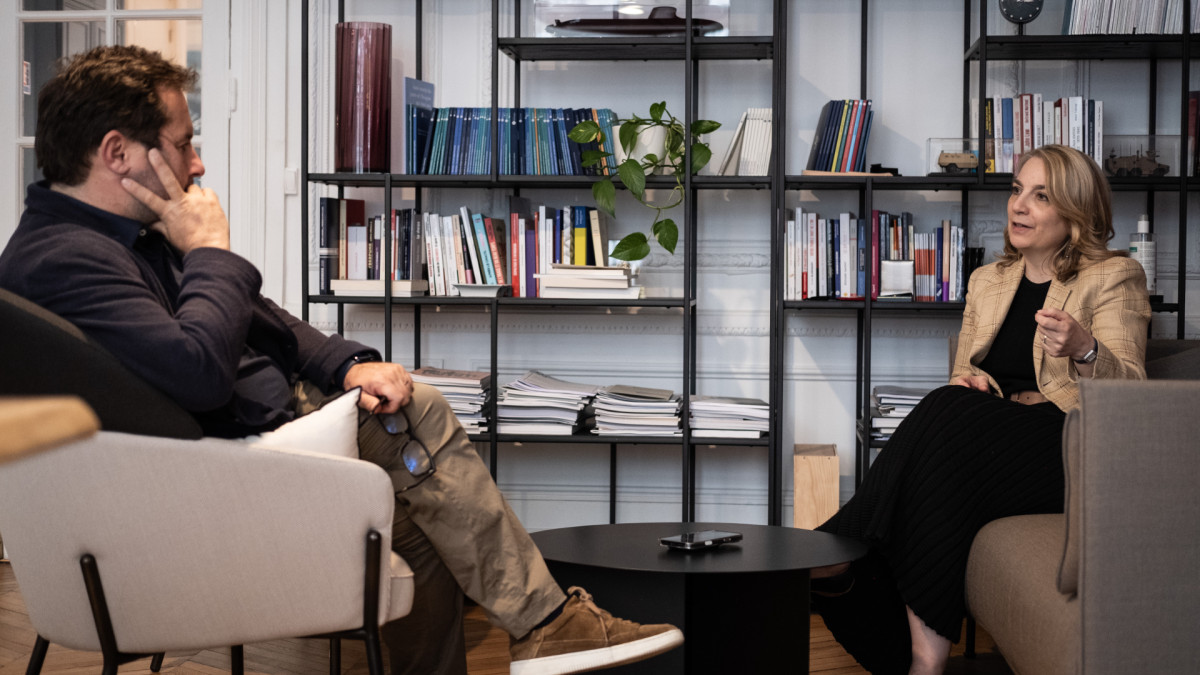
López Plana asks about the place of France and Europe in the next French presidential election. Photo: Agenda Pública / Bruno Arbesu
You are the director of the Institut Montaigne, which, as you explained, is funded by private companies. What are the main concerns of French businesses today?
Several issues stand out. Just yesterday we published a report on regulatory burden, one of the top worries for firms. Many people complain about European regulation itself, but a closer look often reveals that the real problem lies in the way European directives are transposed into French law. In many cases, the French implementation goes far beyond Europe’s requirements.
That is why we strive to stay evidence-based and data-driven. We want to identify where the real problems lie. Regulation is certainly a major concern. Another key issue is economic security. Companies are increasingly worried about resilience, supply chains, customs duties, tariffs, the weaponisation of interdependence and the extraterritorial reach of foreign laws. More broadly, they want to stay competitive in a world that is becoming more fragmented, more confrontational and more unpredictable. That is arguably their number one concern.
“Many people complain about European regulation itself, but we often find that the real problem lies in the way European directives are transposed”
The second major matter concerns people: talent, skills and human capital. Firms are asking how they should adapt to deep societal shifts. This includes mental health, especially among younger generations, new management practices, demographic changes and the impact of artificial intelligence. AI is transforming organisations, and companies are trying to grasp how to adapt.
There is also the question of robotics and what we refer to as physical AI. How can automation boost productivity while staying socially acceptable? These are fundamental questions. Finally, there is institutional stability. Businesses need a predictable environment in which to invest: fiscal and regulatory stability and confidence in long-term planning. I would summarise their main concerns as three blocks: economic security, adapting to technological and societal transformations, and institutional stability.
What worries French businesses most about China? And, in this framework, does France currently have a coherent policy toward China?
That depends quite a bit on the size of the company. For a small business, the main worry is unfair competition. For a large multinational, the concerns shift: weaponisation of interdependence, supply-chain vulnerabilities, extraterritorial legislation, IP theft and market disruption.
“How can automation improve productivity while remaining socially acceptable? These are fundamental questions”
We know, for instance, that China is stockpiling several strategic materials, not only for domestic use but also to influence global markets. Large companies operating internationally are acutely aware of those risks. Smaller firms experience Chinese competition mainly through subsidised production and price distortions. They perceive competitors benefiting from state support that European firms do not receive. That creates a considerable competitive disadvantage.
As for your second question, yes, France does have a stance toward China. There is a French policy and a European policy. France has long been among the most advanced European nations on economic security. For many years we have paid particular attention to intellectual property protection and to technology transfer. We are relatively advanced in these areas, though our policies remain largely defensive.
At the European level, France is among the countries pressing hardest for a tougher response to China’s economic strategy. This Wednesday I had lunch with the French Minister for Industry, and we discussed at length the distinction between “Made in Europe” and “Made with Europe.” France strongly favours the former. Germany leans toward the latter. That difference mirrors Germany’s greater dependence on Chinese components and supply chains. Germany therefore finds itself in a particularly difficult position.
Interestingly, today I was invited to lunch by the Chinese Ambassador, who said: “I’d like to discuss everything you’re currently working on.” It is clear these issues are drawing attention. France also played a significant role in promoting the European Industrial Act because we believe Europe must reindustrialise.
Our main critique is not that Europe is doing nothing, but that Europe reacts too slowly. The pace is insufficient, governance is inadequate, and the scope of action remains too limited. Europe continues to operate mainly in a defensive rather than an offensive mode. Its decision-making processes are too slow to meet today’s strategic challenges. As you know, European decisions require broad political consensus, and a relatively small number of Member States can block important initiatives on industrial policy, sanctions or other strategic matters.
“Our main criticism is not that Europe is doing nothing, but that Europe reacts too slowly. The pace is wrong.”
At the Institut Montaigne, we believe Europe needs a much stronger industrial strategy. We advocate for a genuine Buy European Act and a stronger preference for products produced in Europe. The aim is not to become hostile toward China, but to acknowledge that China pursues a long-term strategic plan and to stop being naive. Europe also needs its own strategy. The challenge, however, is that some European countries remain highly exposed to Chinese economic pressure, which makes it harder to sustain a unified European stance.
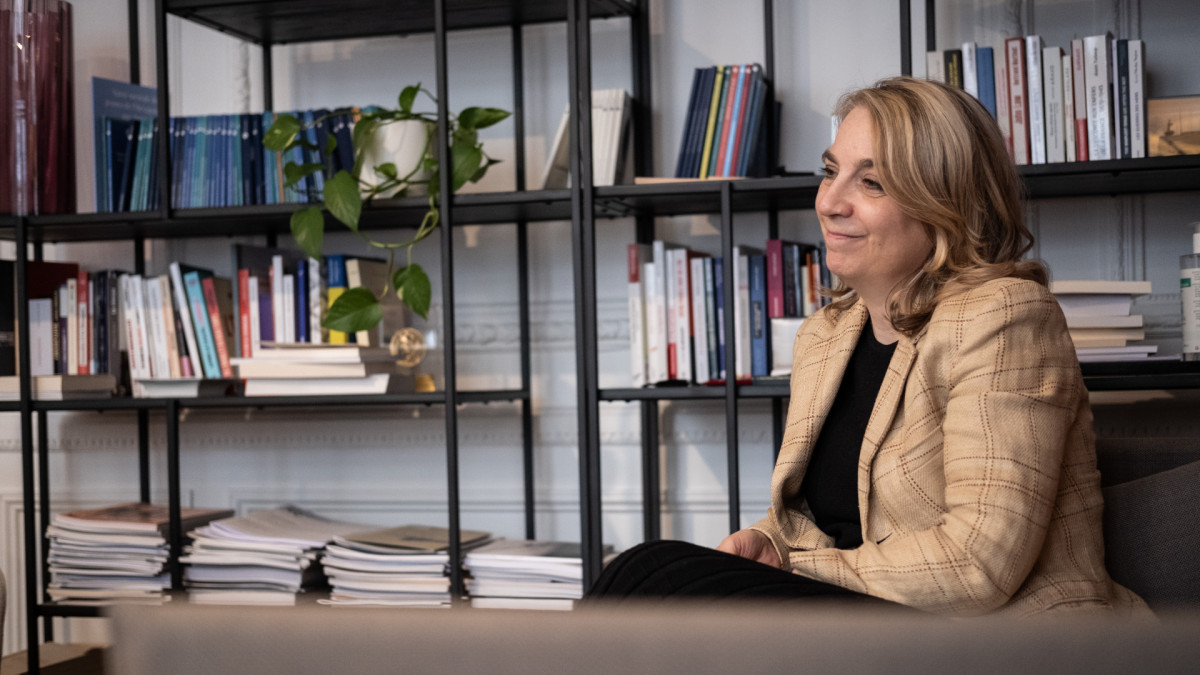
De Bailliencourt analyses Europe’s strategy towards China, the United States and economic security. Photo: Agenda Pública / Bruno Arbesu
China and the United States are engaged in an increasingly sharp strategic contest, and Europe finds itself situated in the middle. Both players attempt to exploit cleavages within Europe. How do you perceive the United States from the vantage point of France and the Institut Montaigne? In political terms and among businesses in each country.
I view the United States today in much the same way I did three years ago, or even ten years back. It remains a crucial ally, but also a competitor. As we often say, nations don’t have friends; they pursue interests. That remains unchanged.
“Some European countries remain highly exposed to Chinese economic pressure, making it increasingly difficult to maintain a unified European position”
What has altered is that recent U.S. developments have accelerated Europe’s awareness of its own dependencies. This is especially true in the digital sphere, but also in defence, finance and several other strategic sectors. We have become much more conscious of how vulnerable we are to the choices of our allies, suppliers and partners. That awakening is vitally important. At the Institut Montaigne, we are working to help shape a European response that reduces those vulnerabilities.
That said, I do not treat China and the United States as if they were on identical footing. One is a democracy and the other is not. If Europe were ultimately forced to choose, my personal stance is clear. Yet President Macron has opted to define France as a balancing power, a puissance d’équilibre, positioned between China and the United States. It is an intellectually intriguing stance, but also an exceptionally difficult one to sustain. I have always approached the role of referee with caution. After all, when neither side is satisfied with the outcome, the instinct is to blame—or even remove—the referee.
“I do not place China and the United States on exactly the same footing. One is a democracy and the other is not”
The reality remains extraordinarily intricate. We must maintain a constructive relationship with the United States while also pursuing greater strategic autonomy. We must reduce our dependence on China without provoking unnecessary confrontation, because our economies are still deeply intertwined. In many respects, Europe is in a tough position. The positive aspect is that we are now fully aware of that reality. There is also a growing willingness—at least in certain corners of Europe—to alter it.
The situation is especially delicate with regard to Germany. Germany remains heavily dependent on the United States for security, on China for large parts of its industrial base, and, until recently, on Russia for energy. That combination has left the country particularly exposed. Today, Germany appears increasingly focused on protecting its own interests. It is rebuilding its capabilities and becoming more inward-looking. In some respects, it is pursuing a more national path than a genuinely European one. That inevitably weakens Europe’s collective response.
France, by contrast, tends to take a more strategic and longer-term stance. Perhaps we are somewhat less reactive, but there remains a substantial amount of work to do. At the Institut Montaigne, we devote considerable attention to European energy policy, industrial strategy and technological sovereignty.
That brings us to energy. You are well aware that there is an ongoing debate—especially between countries like France and Spain—about nuclear energy versus renewables.
The debate is often framed incorrectly. I do not view nuclear energy and renewables as opposing options, but as complementary ones. We need both. Each has its strengths and weaknesses.
“Demand for electricity is not going to decline, but will continue to grow. Instead of arguing endlessly about which source of energy is preferable, we should recognise that Europe needs a diversified energy mix”
What is beyond dispute is that we are entering an increasingly electricity-intensive world. Demand for electricity will not go down; it will rise. Rather than bickering over which energy source is best, we should acknowledge that Europe requires a diversified mix. We also need a genuinely integrated European energy network. We must strengthen our grids, bolster resilience and coordinate demand. Those are the true priorities.
Returning to the United States, has it become harder for French firms to operate there than in the past?
Not really. Americans are, above all, pragmatic. Business comes first. If your company stays competitive, innovative and performs well, there remains ample opportunity to do business in the United States. I certainly don’t foresee French firms retreating from the American market. On the contrary.
The incentives to invest in the United States remain highly attractive. Many French firms are expanding their American operations or reorganising their activities there. I don’t see a significant withdrawal. What I do observe is a heightened focus on risk management. CEOs are paying closer attention to geopolitical risk and reorganising their international operations accordingly. But that is different from disengagement.
More broadly, I don’t think it serves the United States’ interests to drift away from Europe. Likewise, many American companies remain firmly committed to maintaining a presence in Europe. That relationship continues to be strategically important for both sides.
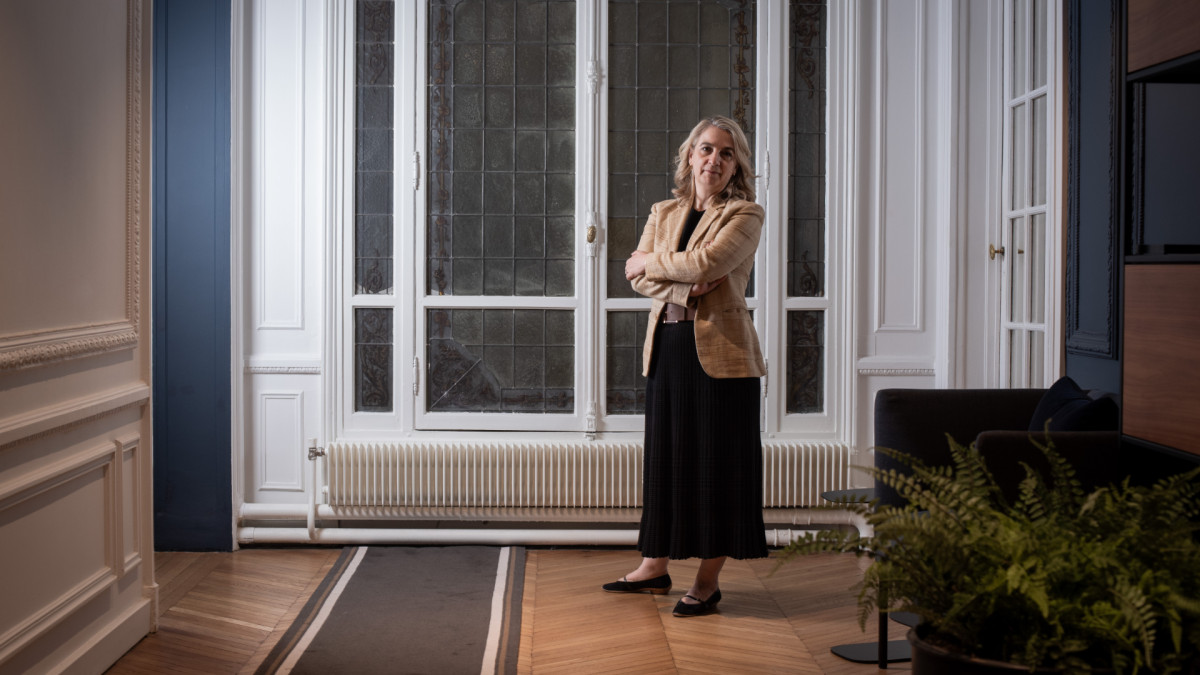
De Bailliencourt argues that the French presidential election should revolve around projects, not only personalities. Photo: Agenda Pública / Bruno Arbesu
My final question concerns the upcoming presidential contest. Numerous polls suggest a potential second round featuring candidates from the extremes, but my question goes beyond that. Is there still genuine political competition in France? Are there real ideological differences today between figures like Emmanuel Macron and Jordan Bardella, or has French politics become more about personalities than about programs?
There are indeed meaningful differences. First, it’s essential to recall that France operates within the Fifth Republic, a rather singular political framework. When people discuss the presidential election, they often focus exclusively on choosing the president. Yet that is only part of the equation. What truly matters is how the next president will govern, and that depends just as much on parliamentary elections as on the presidential vote. If the parliamentary dimension is ignored, a fundamental aspect of how power actually operates in France is missed.
“What really matters is how the future president will govern, and that depends just as much on the parliamentary elections as on the presidential election”
The French are frequently portrayed as revolutionary, but in truth they are rather conservative. Regardless of who wins the presidency, Parliament will increasingly serve as a counterweight. That wasn’t necessarily the case fifteen years ago—back then it was almost assumed the president would command a parliamentary majority and govern effectively. Today the situation is quite different. Even if a candidate from one of the extremes were elected, Parliament would provide a crucial institutional balance.
At this juncture, no one knows for sure what will happen. Everything remains open. We are awaiting a court decision regarding Marine Le Pen. The ruling, due on 7 July, will determine whether she can stand for the presidency. That decision could fundamentally reshape the campaign. If she is barred, the immediate question would be whether Jordan Bardella takes her place. From that point on, the political landscape could shift very quickly.
We are already seeing signs of political realignment. Just yesterday, Laurent Wauquiez, speaking on behalf of Les Républicains in Parliament, and despite internal party dynamics, signaled a willingness to cooperate with Édouard Philippe. That suggests politicians are already positioning themselves for potential new alliances.
Almost anything remains possible. Let us not forget that Emmanuel Macron entered the 2017 race relatively late. He emerged as what we often call the “third man,” completely transforming the campaign. Many now speculate that another outsider could appear toward the end of this year. It is possible.
Beyond domestic politics, we must also consider the international backdrop. What if France endures an exceptionally deadly heatwave? What if a major terrorist attack occurs? What if another geopolitical crisis erupts? Events of that magnitude could entirely reshape the campaign.
“Ultimately, this election should not simply be about personalities or party labels. The real question is much more fundamental: what project do we want for France?”
I do not think anything has been decided. The election remains entirely open. That is precisely why, at the Institut Montaigne, we are placing so much emphasis on enhancing the quality of the public debate. Our aim is to ensure that France discusses the issues that truly matter. Ultimately, this election should not simply be about personalities or party labels. The real question is much more fundamental: what project do we want for France?
Thank you very much.
