
I met Enma López a few months ago in Granada, at the NextGen Forum organized by Agenda Pública and TALEÑTO ESPAÑA. I listened to her for a little over an hour, and when I returned I wrote a note in one of my work notebooks with a lingering intuition: parties do not find new leadership by seeking consensus candidates, but when someone is able to interpret better than anyone what their militants expect.
Listening to this conversation, I have returned to that idea. López explains that she decided to take the step “after having heard from countless militants” asking her to run. She says she understood that “the moment had arrived” and that, after months of reflection with some of the world’s best political strategists, she discovered that “the only thing that made my eyes light up was the Madrid mayoralty.” These are responses that do not speak of an organic operation, but of a political conviction.
While I was listening, it was hard not to recall Pedro Sánchez’s 2017 primary campaign. He won because he understood something that many PSOE leaders failed to see: the militants were not looking for an agreement among those who ran the party; they were looking for a project to believe in again.
I have the impression Enma López is trying to do exactly that in Madrid. Her message does not focus on internal balances, nor on backing from this or that faction, but on directly calling on militants to participate. “Primaries are a democratic and inspiring process,” she asserts. And she adds a line that reveals how she understands this process: “Day one is the primaries; day two, everyone united to win the elections.”
That is why the last answer in the interview is probably the most interesting. I ask her if she is doing “a Sánchez or a López.” She smiles and responds: “I am doing a López.” She immediately clarifies: “Sánchez has been, is, and will be a reference.” There is no contradiction. There is a declaration of intent. Just as Pedro Sánchez did “a Sánchez” when he decided to address the militants directly to change the PSOE’s course, Enma López seems convinced that “doing a López” means convincing Madrid’s socialists that, by electing her, they are voting for a project to win the elections in Spain’s capital, Madrid.
If PSOE’s internal logic prioritizes political calculus over internal balances, the outcome of these primaries will hinge on a very simple question: does Madrid’s PSOE want to manage the present or build an alternative to govern the capital.
< div class="divimatgeeditor" id="divimatgeeditor_7661" style="width:1200px; ">
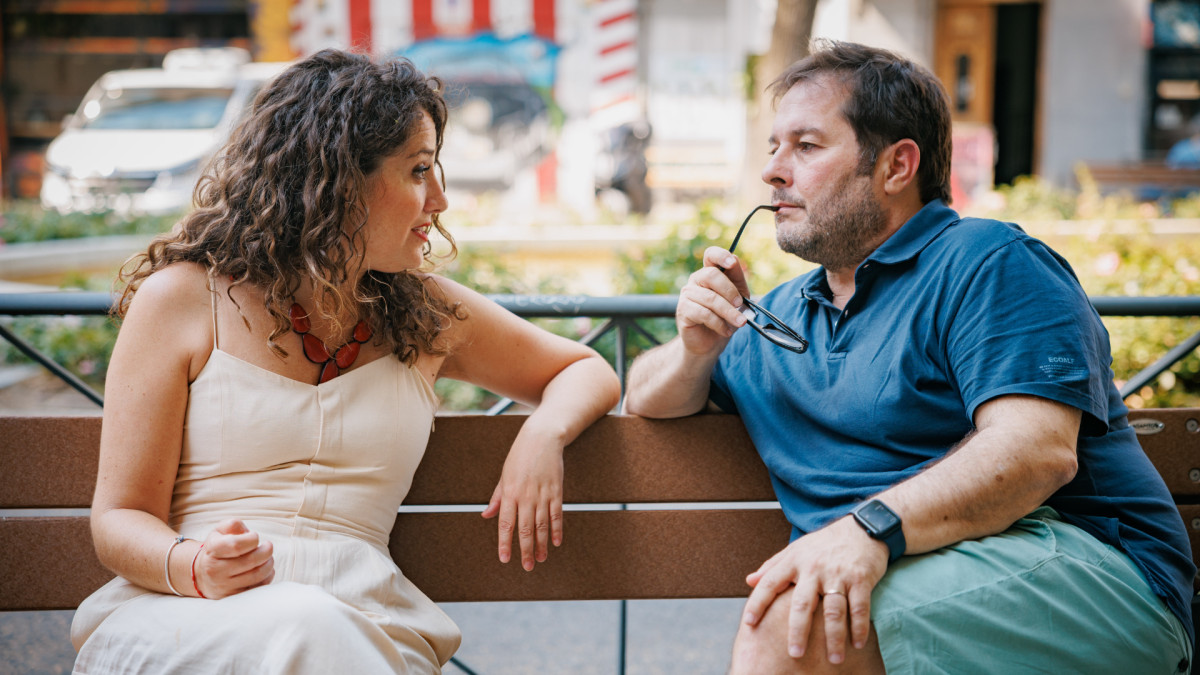
Enma López explains why she has decided to contest the socialist primaries for the Madrid mayoralty. Photo: Agenda Pública / Tania Sieira
Why decide to run?
After eight years wandering Madrid, after eight years studying every budget, every clause of the budget, after having traveled around the world, after meeting other mayors of big cities, after listening to many militants asking me to take the step, I have felt that the moment had arrived when I could truly contribute something to this party and also to this city. So it was the moment and it was about time.
Who has influenced you?
I have been influenced by many militants. Every time I have gone to the associations, after I left they would tell me: “Enma, you have to step forward. Enma, we want to vote with enthusiasm.” And in the neighborhoods I have met people who would like to vote for us but don’t, and they would say: “I would vote for you.”
“I felt it was the moment when I could really contribute to this party and also to this city. So it was the moment and it was about time”
Recently, on a terrace, a waiter named Roque, at a place I go to regularly, told me: “Are you going to run, right?” I replied: “I don’t know.” And he said: “I’ll only vote for you if you run, because I know you.” That, in the end, is a strong pressure and you feel that, indeed, there is a moment to take a step forward. And I do it with a lot of enthusiasm and energy.
I know the decision also has a significant element of international influence.
Indeed, they have carried weight. Jacinda Ardern, the former prime minister of New Zealand, runs a program with a group of twelve women selected each year. I was the first Spanish woman in the second edition, which just ended in July of this year, and we gather to try to provide ourselves with tools and to foster a leadership that is more empathetic, more compassionate, a different way of leading.
They held a retreat in Como, where we stayed almost a week. Michelle Bachelet was there as well, and we talked a lot about who we were, how we had arrived at this point, what moved us to be here, and what our next challenges would be.
“The only thing that made my eyes light up was the Madrid mayoralty”
Perhaps it was the moment when I could reflect most seriously on this, surrounded by very powerful professionals from political campaigns around the world—people who have run campaigns for Bernie Sanders, Mamdani, Obama. Speaking with them, looking at the paths they pursued, one of those paths was the Madrid mayoralty, and there were others. But they told me, and I think they were right, that the only thing that made my eyes light up was the Madrid mayoralty.
Since then, something that had always been latent began to gain force, more and more, until one day it tipped. In fact, Jacinda Ardern is one of the first people I told. It was funny because, when I told her the slogan, she told me that It’s time, which would be roughly the translation of “ya toca,” was the seventy’s slogan of one of her heroes from the Labour Party of New Zealand. Quite a sign.
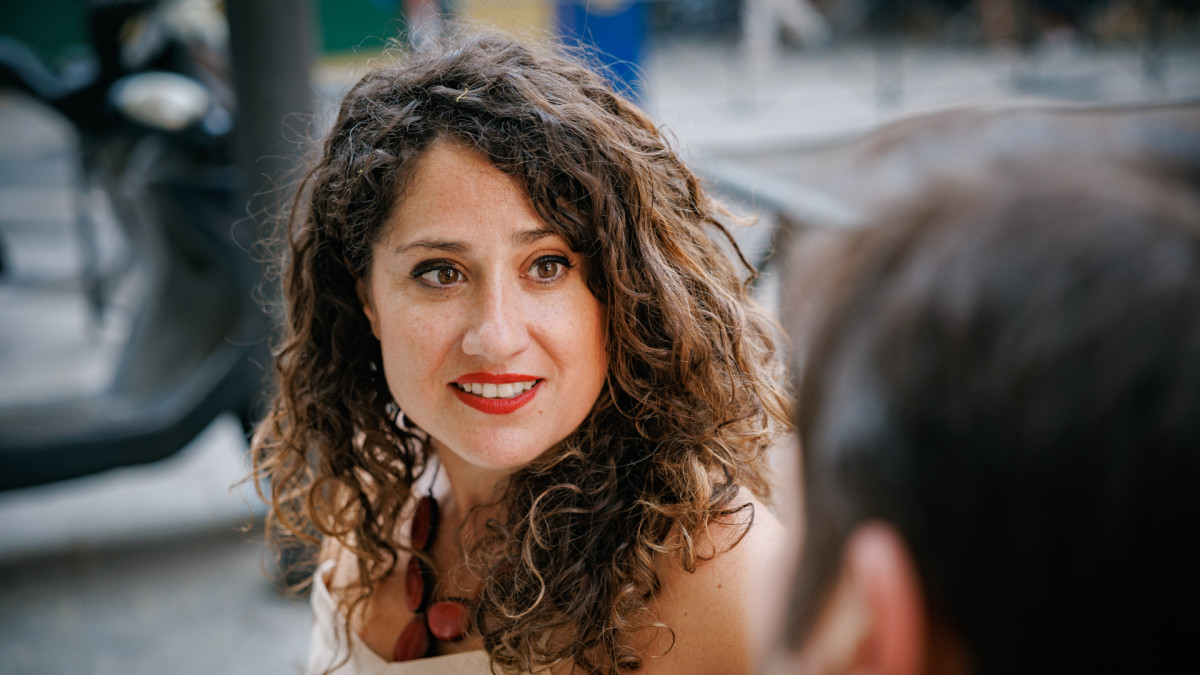
López recalls the influence of Jacinda Ardern, Michelle Bachelet and several international strategists on her decision. Photo: Agenda Pública / Tania Sieira
Madrid inward and Madrid outward. Inside, we have a problem: the heat.
We have many problems; heat is one of them. Madrid is a city not prepared for heat. Almeida has done nothing about the heat in these last eight years, and it feels like nothing has changed.
I remember when I moved to Madrid twenty years ago: we had some weeks of 40 degrees, a heatwave, August was hard and that was it. Today we have grown used to living in a near-permanent heatwave from May to October. That requires making many decisions: creating shade, planting trees, spraying water, adapting schedules.
In Madrid, one person dying from heat stroke, a worker, a public employee, had to happen so that some measure could be taken. Moreover, Madrid is becoming a more difficult city. You leave your home, get scorched in the face by heat, you wait for the bus, the bus takes twenty minutes and you have to stand in the sun without shade.
You get home and many houses are poorly insulated. The City Council should help with that rehabilitation. If you have air conditioning, you fear turning it on because of the bill, and that is where the City Council should help as well, with energy communities that make that bill bearable and allow us to be comfortable inside our own homes.
“Madrid is going to turn into a desert in which we won’t be able to live for four or five months a year”
It makes no sense for parks to close as the heat rises. If there is a problem with trees, you need to check them one by one, but we cannot abandon the few lungs we have within Madrid. We must move in the exact opposite direction: to green the city, to cool it in every possible way, because otherwise Madrid will become a desert in which we won’t be able to inhabit four or five months a year.
How do you build a global city like Madrid without affecting the daily life of the people who live in Madrid?
Putting Madrileños at the center, which is something Almeida has not done. Almeida builds against Madrileños. A big project comes, he goes into his office, lays out plans, shows the benefits that those people will obtain, and the only question asked is: “What do you need?” There, that tailored urbanism is done, those tailored special plans. Madrid should not be that.
Madrid will be a global city because it is its destiny, because it is one of the great European capitals and because that is the role it must play. But it must play it without losing its identity, without losing its small businesses, without displacing Madrid’s residents.
We already saw it during the pandemic, when suddenly the tourists vanished and the center of Madrid felt ghostly. It must be built with a commercial planning framework, with a city-wide vision, to enrich Madrileños, not to enrich anyone at the expense of Madrileños. With a vision of what we want to devote ourselves to, with a reindustrialization of the city that adds value, with a commitment where we truly attract talent.
I would like a Madrid where any young person in the world, when asked which city they would dream of living in, would say Madrid. And right now that is very difficult, among other reasons because anyone who comes to live in Madrid won’t have a place to live, and that is known. And they won’t have a place to buy, and that is known too.
That also harms our gastronomic culture, for example, which is something we cannot afford to abandon. It requires caring for our municipal markets. In Barcelona new markets are opening, and in Madrid they are closing. It doesn’t help to tell me there is a shift in habits because that’s not true.
“I would like a Madrid in which any young person in the world, when asked where they would dream of living, would say Madrid”
Those are the issues a mayor should be taking charge of: positioning Madrid in the world. And I don’t see it. I don’t see an Almeida who travels, I don’t see an Almeida who forges alliances with other cities. That is being a global city, but a global city understood well. A city that plays a role in the world, a city that sets an example for the world, not a city that absorbs everything the rest of the world doesn’t want.
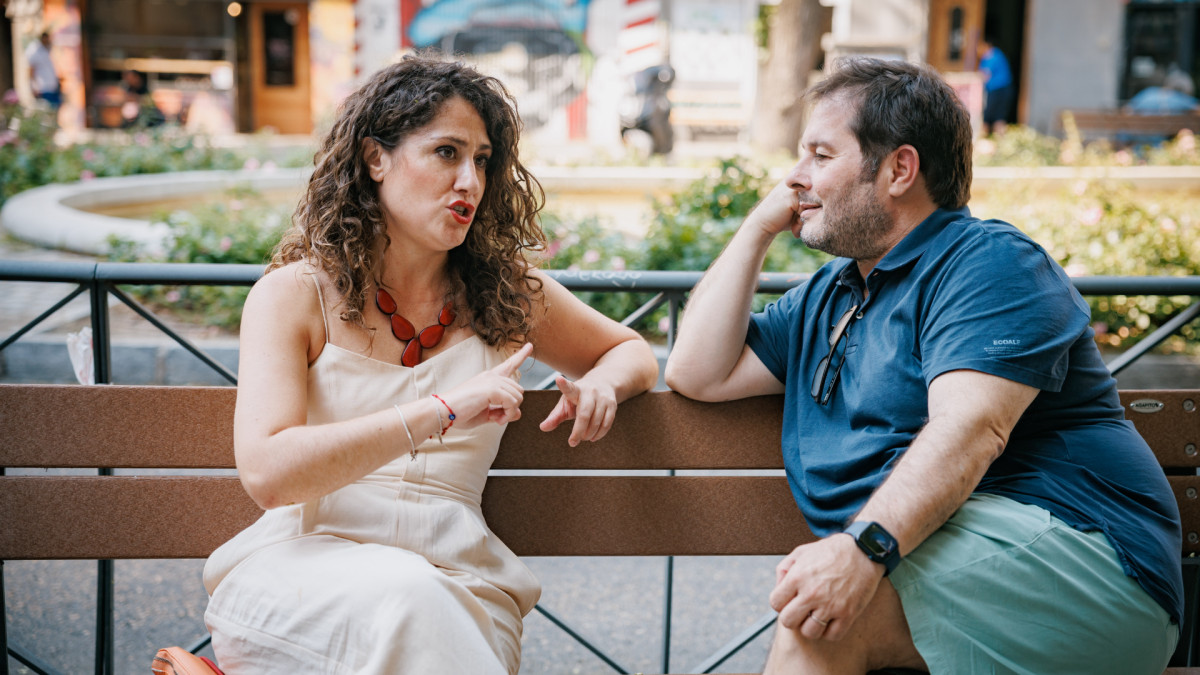
Marc López Plana asks Enma López about Madrid’s role within Spain and the regularization of migrants. Photo: Agenda Pública / Tania Sieira
And Madrid in Spain? What should its role be?
I strongly believe in decentralization. It makes no sense to hoard a single megacity at the expense of Madrileños who, at the same time, drain resources from all around them.
We need much more sustainable growth, which also generates wealth in our surroundings. We must adopt a much broader, more metropolitan vision, more like the Île-de-France region or Greater London. We should move in that direction, not toward a small center that absorbs everything and drains. Because what they don’t realize is that it is not only draining the surrounding municipalities or the rest of the country; it is draining Madrileños themselves.
Madrid remains a political center of Spain. The future mayor of Madrid cannot renounce taking positions on what happens in the country. Right now we are debating a topic: regularization. What is your position?
I believe it is one of the major measures Pedro Sánchez has approved in this legislature. There are many, but this one perhaps is one of them: to grant rights and recognize people who are already in Spain, who are already contributing, who are already making Spain a better place.
It is a matter of justice, not only for them but also for the rest of Spaniards, to provide dignified living conditions. We are talking about people who can truly earn the national minimum wage, that wage which has risen by almost 70% in recent years, and thus to prevent unfair wage competition that only harms us all.
We are talking about living with dignity with their families, something that, for people who have made the difficult decision to leave their countries, is essential to build a stable environment and have a prosperous life.
I think it is Madrid’s hallmark: a city that welcomes you, that never asks where you are from, where we all have dual nationality. You can be Galician-Madrid citizen, Colombian-Madrid citizen, Venezuelan-Madrid citizen, Catalan-Madrid citizen. I think it is one of our greatest riches.
“We must have a much broader, more metropolitan vision, more like the great Île-de-France”
And here, in addition, the Partido Popular has made a mistake, because it goes against everyone: against common sense, against business owners, against social partners. Madrid cannot go against; in fact, Madrid should not go against anything. Madrid should be that great engine that goes in favor of Spain, that goes in favor of Madrileños, that goes in favor of an integrated Europe.
That should be Madrid. And I think regularization is another example of how the Partido Popular is wrong by using Madrid against many things, as a battering ram, and not as the inspirational source it should be.
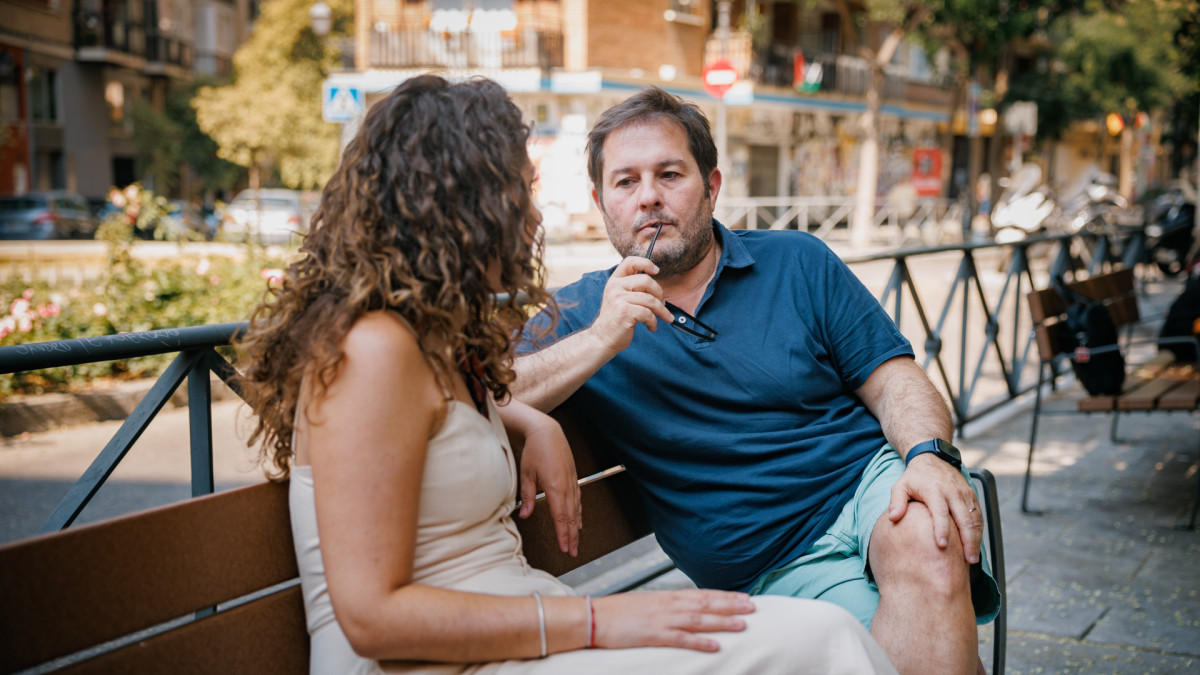
The conversation addresses electric mobility, public transport and traffic jams in the capital. Photo: Agenda Pública / Tania Sieira
Let’s talk about the electric car.
Electric cars are important within the entire framework of electric mobility, but for me, electric public transport is more important. I think we must make a very strong commitment to buses. We have routes designed since the 1960s and, as the city grew, all we did was add more and more stops.
A few years ago, you would stand at a bus stop and a bus would pass every three or four minutes. Now we have become accustomed to frequencies of almost twenty minutes. In Madrid there are two hundred buses purchased by Madrileños that stay in depots for lack of drivers, which is something quite hard to explain when you tell it.
We have to rethink all those lines. They are lines designed to go from the neighborhoods to the center and, in reality, they should be lines designed through heat maps to cover the needs of people living in those neighborhoods. Where do they need to go? Do they need to go to the hospital? Then we have to put a line that gets them there in a reasonable time, twelve or fifteen minutes.
“In Madrid there are two hundred buses bought by Madrileños that stay in depots for lack of drivers, which is something quite hard to explain”
That will prevent many traffic jams, because electric cars may help the environment, but they will not help reduce one of this city’s major problems: traffic jams. What I want is that, when someone says “I’m going to take the car,” the rest of the world looks at them and asks, “But why? You’ll get there much faster by public transport, much better by bus, much better by bike, because there will be bike lanes, infinitely better by metro.”
Metro, by the way, speaking of heat, yesterday on Line 1, where I move around, there was no air conditioning. I cannot tell you how hot it was. That is a neglected city and Madrid needs to be cared for in every way: from cleanliness, which seems basic, to looking after its trade, its residents, its elderly, those who are completely ignored.
They are a fundamental part of the city; they must be part of decision-making and they have the right, after having worked and contributed all their lives, to aging actively, out of institutions, close to their neighborhoods, to not be uprooted from their neighborhoods. These are all things we must talk about.
About housing: what is your position regarding tourist apartments? In Barcelona there is a very heated battle on this issue.
First, I think all illegal tourist apartments must be closed. Right now some have been closed thanks to the registry that the Ministry released. Now, a ruling has said that this is the competence of the autonomous communities and that it cannot be done, but it was shown that it was an effective tool. I think this is something that should be recovered.
There was a time when more than 95% of tourist-use housing was illegal. I used to analogize it to imagining 95% of cars without insurance, taxis without licenses, shops without licenses. It would seem crazy. That’s the issue.
Besides, we are talking about flats that could be housing for Madrileños and that, in reality, are putting even more pressure on the market. We will start by closing that, which is a long path to go, but not the only thing.
On housing I think there is a lot more to do. We must rehabilitate, we must densify with a social purpose, not so that the developer makes much more profit, but to improve, on the one hand, the construction quality of many of our neighborhoods. These are homes built in the sixties and seventies that need a good hand, where the City Council can help and where we can take advantage to add a couple of public floors. Among other things, for example, to help the children of those people living in those houses to become independent.
“In housing, I think we have to do a lot more. We need to rehabilitate, we need to densify with a social end”
We must implement a much more multi-faceted project, bolder, leaning more toward industrialized construction, which is much faster and has exactly the same quality. We must stop living in a city that remains the same as in the sixties, because the world has changed, cities have changed, but Madrid seems stuck and only receives bad novelties, never the good ones.

The socialist candidate defends open primaries and calls on the militants to back a project to win Cibeles. Photo: Agenda Pública / Tania Sieira
What would you tell a party member in Madrid who has to sign a backing and asks himself: “Where does this lead us?”
I would tell him that primaries are an inspiring, democratic process. A good open primary, with debate, with proposals, enriches the party.
It is very important to remember that Day One is the primaries and Day Two we are all united to win the elections, which is what we are here for. We have very recent examples. I’m not only referring to Pedro Sánchez, who is certainly a reference, but also to Extremadura, where initially there were five candidates and now there is only one general secretary who is doing incredibly well and who has managed to unite the party.
I was at the congress and the atmosphere was one of contagious enthusiasm. And it is truly the same contagious enthusiasm that we are experiencing here, where you go on Twitter and what used to be a wave of hate is now a wave of enthusiasm, of eagerness and of “this is what I want.”
That is what I am experiencing with many colleagues who are getting excited and who send me the backing they just signed, with the eagerness and the feeling of being part of something transformative that will truly change our city.
“I would like to insist that all militants, even those who are writing to me now, perhaps feeling discouraged for some time, back it”
I would like to insist that all militants, even those who are writing to me now, perhaps feeling discouraged for a while or who haven’t stopped by the association in a long time, back it. Back it online, which is confidential, and that backing today will be the key to winning Cibeles next year.
It may seem a small gesture, but it is the great power of Socialist Party militants: the power to choose transformative projects, the power to choose inspiring directions, and to do so entirely confidentially on the web.
Are you doing a Sánchez or a López?
I am doing a López, of course. It’s always a López. Another thing is that, of course, Sánchez was, is, and will be a reference.
Thank you very much.
