
Little should be anticipated from Zohran Mamdani’s Commission on Government Efficiency.
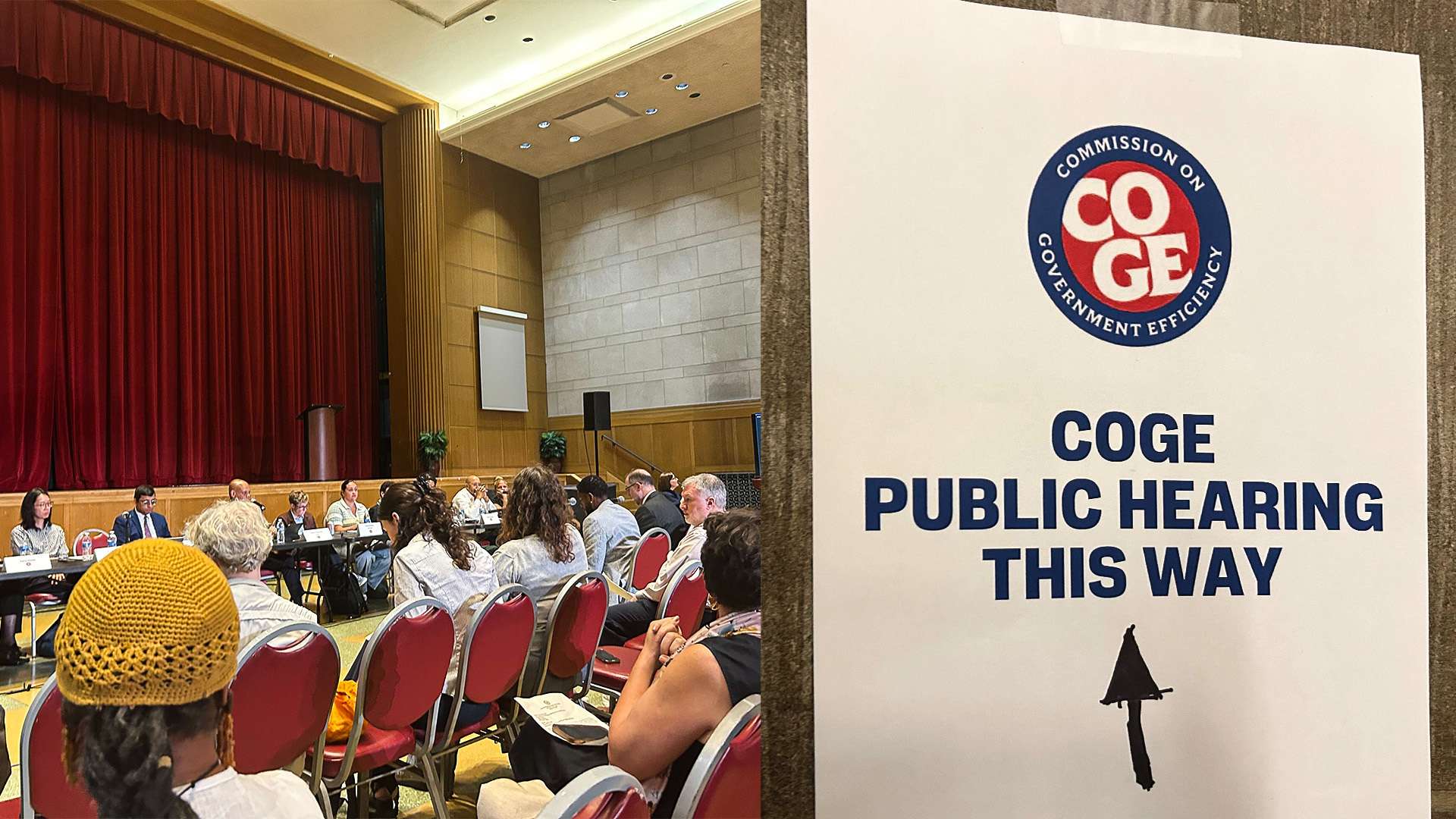
Around six weeks ago, New York City’s mayor, Zohran Mamdani, announced the launch of COGE, the Commission on Government Efficiency. While the acronym might evoke memories of Elon Musk’s now-defunct federal DOGE initiative and invites visions of a blunt, cutting reform drive targeting the city’s $125.8 billion budget, the body so far has resembled a standard governmental task force.
Prior to proposing any charter revisions, COGE is conducting a lineup of 11 meetings to solicit input from elected officials and the public on improving how government works. On Wednesday evening, I attended the penultimate COGE gathering inside the auditorium of the historic Riverside Church in Morningside Heights to observe COGE at work. The session began roughly twenty minutes late. When the commissioners finally settled in, a solitary audience member started clapping, and others gradually followed suit.

The woman to my right explained she was told there might not be time for her to testify during the session because city officials were delivering presentations. The initial hour of the meeting was indeed dominated by extended presentations. Comptroller Mark Levine urged the commission to establish explicit rules for the city’s rainy day fund so emergency money can be better shielded and reserved for fiscal downturns. The public advocate, serving as the city’s elected watchdog, then spoke about gaining easier access to information from city agencies. Ahmed Tigani, the Buildings Department Commissioner, newly returned from addressing a Midtown building crisis, discussed strategies to speed up safe construction projects. Tigani’s colleague then presented recommendations from the SPEED task force, which aims to “expedite equitable development” — in other words, to accelerate the creation of affordable housing.
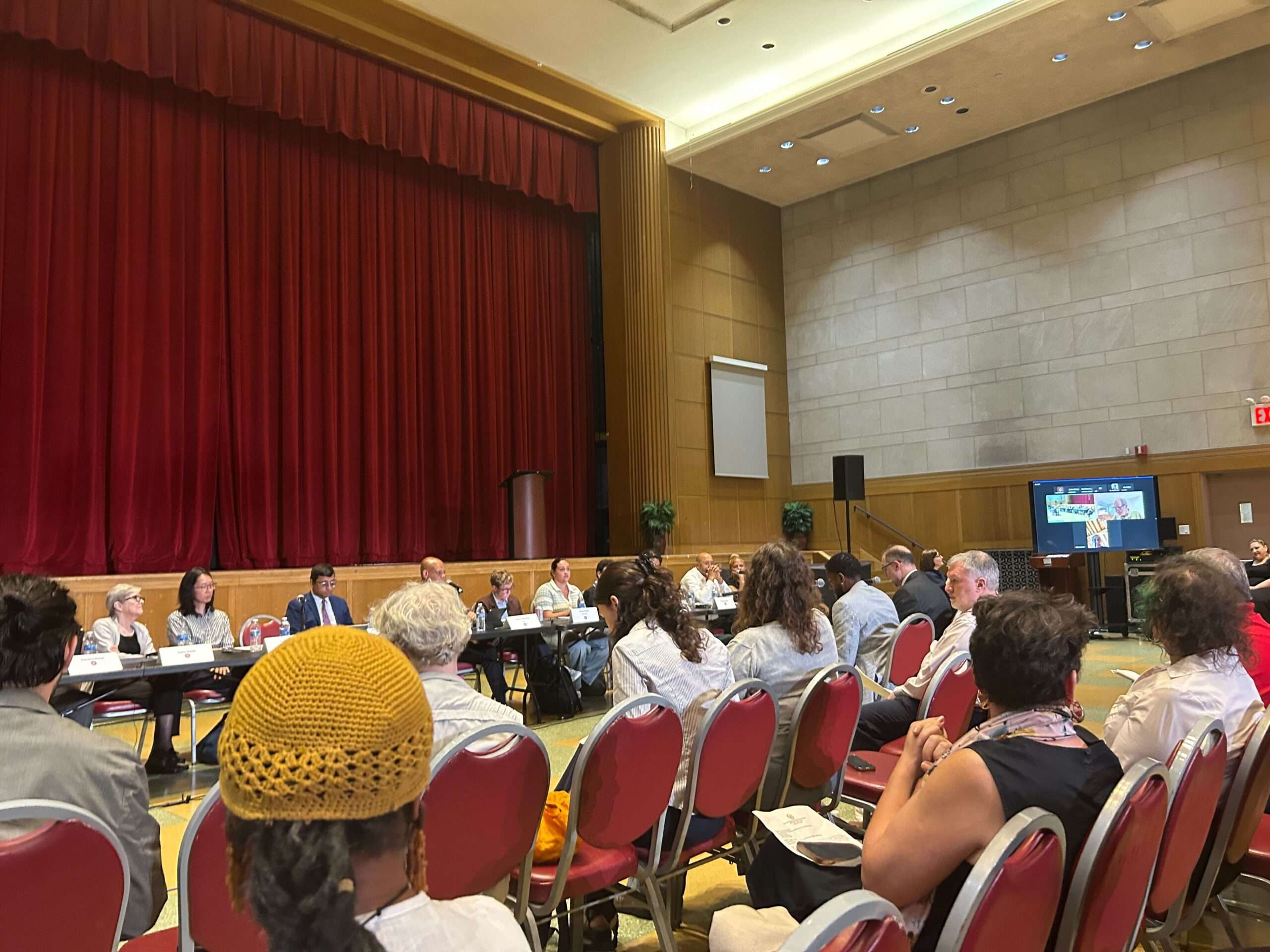
After the officials and experts testified for more than an hour, members of the public were invited to the front of the auditorium in pairs, each person allotted three minutes to spell out concerns and suggestions. The woman beside me departed before she could testify.
The session’s focus was on streamlining permitting, yet participants raised issues ranging from street safety complaints to teachers’ difficulties in procuring supplies (despite the NYC Education Department’s $45 billion budget). Some submissions came via Zoom, and others were filed online in writing. One man complained that the city was not issuing tickets on cars parked along his street. In keeping with COGE’s aims, no one called for outright defunding of agencies, but many proposed ways to refine current procedures.
As with any public forum, the Riverside Church gathering attracted a self-selected crowd. They weren’t neighborhood eccentrics like those sometimes seen at Parks and Rec meetings; they were largely leaders of civic groups and associations, including the Times Square Alliance. Those present appeared upbeat, applauding after each speaker (though I did notice a couple of people dozing). It was encouraging to witness New Yorkers who care enough about efficiency to attend a three-hour governmental hearing on a warm summer evening.
Maybe improving government efficiency in New York City requires a long, winding process like this. Yet it’s worth noting that several of those guiding COGE come from long-standing careers in city—and, in some cases, federal—government. These commissioners seem to place strong faith in the government’s ability to solve problems (if only it were more streamlined), and they have little motivation to cut the programs they have spent decades building. And while COGE may be well-intentioned, its approach falls short of challenging inefficiency at its root—the sheer size and reach of government itself.
