
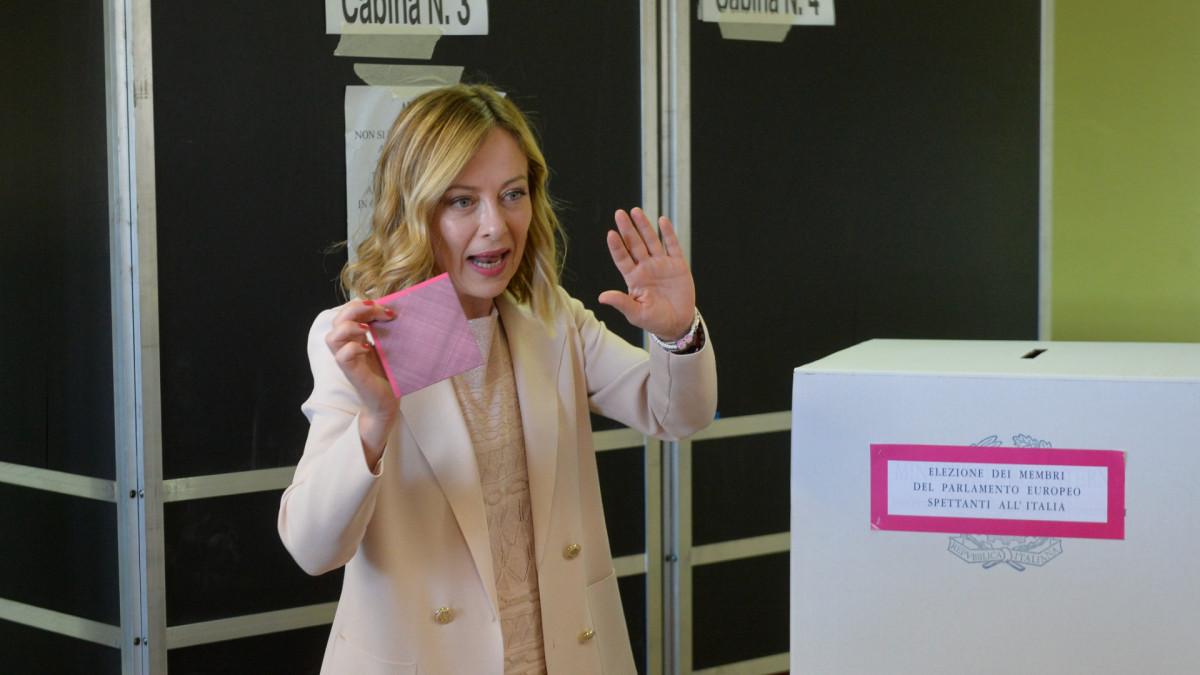
In recent years, the rise of parties commonly regarded as populist, such as the National Rally in France, Fratelli d’Italia in Italy or Vox in Spain, has transformed political competition, parliaments and governments in Europe. Although there are differences among them, populist parties share some characteristic features. One of the most notable is the tendency to frame society as divided between an honest citizenry and corrupt elites and out of touch with citizens’ problems. From this view, populists often present themselves as defenders of public ethics against elites they deem morally questionable, thereby trying to differentiate themselves from traditional parties.
“Populists often present themselves as defenders of public ethics against elites they consider morally questionable”
However, populism in Europe no longer speaks only from outside power. Although some of these parties continue to be opposition forces, others are already part of national governments. This shift led us to ask what happens when those who habitually accuse traditional politicians of unethical behavior move to govern their countries. In our article “Populism in the EU and the trade-off between ethical claiming and mainstreaming”, published in West European Politics, we analyze this question based on three questions: Do populists pay more attention than traditional parties to issues of public ethics, such as corruption, conflicts of interest, revolving doors, or the lack of protection for whistleblowers? Do they reduce their focus on these topics when they govern? Does their behavior change depending on whether criticisms target Brussels elites or national ones?
To answer these questions, we analyzed the parliamentary questions submitted by MEPs during the previous term of the European Parliament (2019-2024). Focusing on the European Parliament allowed us to study parties from all member states within the same institutional context. We selected questions related to public ethics and analyzed how many belonged to MEPs from populist and traditional parties, also taking into account whether their parties were in government or in opposition in their country. Finally, we distinguished between criticisms directed at national actors and those directed at Union actors.
The results show that, from the European Parliament, populist parties ask more questions about ethical issues than traditional parties. However, unlike the latter, the behavior of populists on public ethics turns a corner when they govern in their country. In that situation, they drastically reduce such questions to be on par with traditional parties. This change may reflect a logic: governing requires more pragmatism, more commitments, and greater exposure to accountability. The accusations that previously served to differentiate themselves can become uncomfortable or compromising.
“From the European Parliament, populist parties ask more questions about ethical issues than traditional parties”
What happens with traditional parties? In general, they pose fewer questions about ethical issues than populists. They also show less activity of this kind when they are in government than when they are in opposition, but the difference is much smaller, because they already display low levels and therefore have little room to reduce such questions.
This overall picture is nuanced when we focus on the type of actor being criticized from the European Parliament. When criticisms target national actors, populists and traditional parties behave similarly: they present more questions about ethical issues when their parties are in opposition and moderate when they govern.
However, when their criticisms are directed at Union actors (primarily the European Commission), the difference is much more pronounced. Traditional parties, whether or not they govern in their country, tend to avoid ethical confrontation with Brussels, which is coherent with their greater integration into European institutions and their reluctance to turn the EU into a target of political confrontation. By contrast, populist parties find in criticizing the Union’s executive actors fertile ground to deploy their anti-elite and euro-sceptic discourse, but only while they are out of government. Once in government, populist parties reduce that Brussels scrutiny to a minimum.
“Once in government, populist parties reduce that Brussels scrutiny to a minimum”
In short, the results show that when populist parties come to power, they moderate ethical denunciation, a hallmark of their discourse, to the point of no longer differentiating themselves from traditional parties. This suggests that their resort to ethical denunciation has, at least in part, an instrumental component. The study also helps to better understand how these parties adapt to the demands of multinivel institutional politics in the EU when they shift from denouncing power to exercising it.
This analysis is based on the article “Populism in the EU and the trade-off between ethical claiming and mainstreaming”, published in West European Politics. The study is part of the PEUTRANSP project and is funded by the Ministry of Science, Innovation and Universities (MICINN; ref. PID2022-136330NB-I00).
