
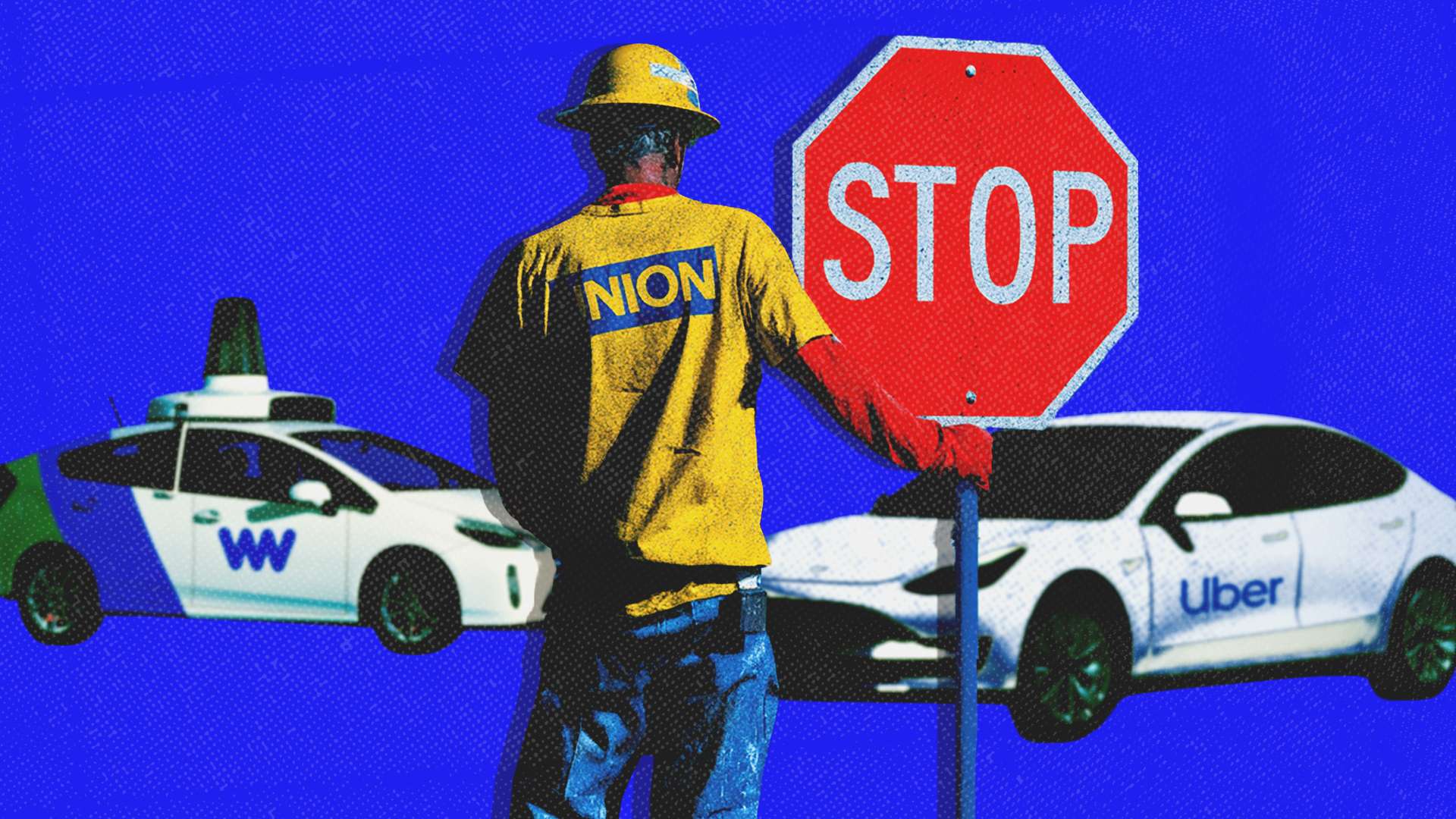
Labor unions typically prioritize preserving unionized employment over the adoption of innovations that would save time, cut costs, and improve safety.
Democrats confront a union dilemma. Their political strategy has become entangled with unions—both public and private—in ways that amplify internal rifts and hinder both progressive and centrist aims. This isn’t only a challenge for the party; the Democratic tendency to defer to unions creates economic frictions nationwide—affecting nearly everyone outside the union ranks, and even some within—because today’s labor organizations often block the pathways to the future.
To grasp the party’s dilemma, it helps to note that the two most influential terms in Democratic discourse in 2026 are abundance and affordability. Each term maps to a distinct faction within the party.
The abundance faction comprises a largely young, educated, urban cohort of policy wonks, reporters, and activists who contend that the party has overstressed identity politics and drifted too far left on economic policy, especially on urban management and housing. They tend to back technological progress and measurable improvements in efficiency. A central insight of this faction is that Democrats, who effectively control America’s major cities, must deliver better governance and a higher standard of living for their residents—and that achieving this requires embracing deregulation, private enterprise, market-based solutions, and rigorous policy analysis.
Housing sits at the heart of this argument. Regulation around housing has become so stringent that it suppresses supply, driving up prices in and around America’s most coveted cities. The core problem is a supply-and-demand dynamics: policymakers have often chosen to constrain supply while subsidizing demand. In the abundance view, the remedy is straightforward—permit more housing construction, primarily through market-driven mechanisms that empower developers to build. Expanding supply would ease demand pressures and lower prices.
From this premise—that markets are an efficient and essential means to deliver more goods at lower costs—an entire policy framework has flourished. What if market mechanisms could deliver not only housing but a broad array of goods and services? What if the key players in these markets—developers, entrepreneurs, and business leaders, often quite wealthy—could drive widespread prosperity through building and innovation? What if there were a comprehensive policy agenda designed to realize these gains via those processes? Perhaps it could be described as an abundance agenda.
Those who advocate abundance aren’t libertarians. They typically support some level of social welfare spending. They sometimes argue that government should excel at creating and operating things—like high-speed rail—though even they concede that, in general, government is not inherently adept at doing everything. Much of this movement reads as a modern reinvention of Adam Smith, grounded in the observation that Democratic governance has at times been a fiasco. Better late than never.
On the other side stand the affordability advocates. Yes, the abundance crowd may occasionally deploy the term, but affordability is more closely associated with figures like Zohran Mamdani, a youthful voice in the Democratic Socialists of America who has now become mayor of New York City. Mamdani’s highly social-media–savvy campaign helped elevate affordability to a central political talking point.
Affordability partly arises as a left-flank counterweight to the abundance critique, and at times it comes with a grudging concession that new housing construction may require allowing developers to actually build. But for the most part, it functions as a rhetorical hedge—a marketing device that lets the socialist-leaning wing and its allies, the Bernie Sanders–Elizabeth Warren axis, dodge accountability for some of the party’s missteps while advocating for deeper state interventions in the economy.
Abundance is the ideology behind wins like a modestly priced one-bedroom near amenities, while affordability represents programs like subsidized child care and city-run grocery stores.
Although these two camps clash, they share a critical assumption: that contemporary life has grown too expensive for ordinary people, especially in urban America. One major barrier to delivering abundance and affordability is labor unions. Democrats profess a desire to bring both abundance and affordability to the nation, yet ceding to union demands risks making both goals unattainable.
Driverless Cars, Deadhead Ubers, and Expensive Groceries
Public-sector labor unions are central engines of bloated spending, underperformance, and general inefficiency at the state and local level. Private-sector unions have repeatedly sought to block labor-saving technologies, to impose legal hurdles on new construction, and to champion tax policies that would stifle innovation and entrepreneurship, particularly in tech.
For the affordability faction—favoring robust, centralized solutions and top-down planning—unions are a positive force, a generator of well-paid middle-class employment and partisan political leverage. For the abundance faction, labor is a long-standing piece of the Democratic coalition, an interest group to be occasionally criticized but largely kept inside the tent. Some abundance-aligned writers have taken a sterner stance against union-driven economic rigidity, but very few prominent Democrats have shown willingness to openly oppose organized labor, especially in deeply blue urban districts and states.
The party’s entrenchment with labor interests is especially evident in conversations about robots and automation in the economy. Take Massachusetts, where 2023 saw more than 134,000 car crashes, averaging over 367 per day. Some crashes are minor, but others are severe, and tragically some end in fatalities.
In 2022, more than 430 people died in traffic incidents in Massachusetts. Since then, fatalities have declined somewhat, but hundreds still perish each year in the Bay State on account of automobile accidents. A sizable share of fatal crashes likely involved drivers impaired by drugs or alcohol. Driving yields obvious public benefits for personal mobility and freight, yet it remains a risky activity—largely because of flawed human judgment: impairment, distraction, or slow or imperfect reactions in emergencies.
Until recently, eliminating human judgment from driving was not feasible. Only human beings could operate a vehicle, with all their imperfections.
That is no longer the case. Waymo, the autonomous-vehicle subsidiary of Alphabet (Google’s parent company), runs self-driving taxis that increasingly navigate streets independently. Waymo began limited operations around San Francisco in 2021 and now operates fleets in at least ten cities, with further expansion planned. Other firms, including Tesla, are pursuing autonomous driving with varied results.
While the technology isn’t flawless, it is advancing quickly. The clearest evidence of its potential lies in safety metrics: Waymo vehicles are vastly safer across major safety indicators than human-driven cars. As society shifts more trips to robot-driven vehicles, roads could become safer overall.
Nevertheless, after Waymo started mapping Boston’s streets in preparation for a launch, a coalition formed to oppose it, led by the local Teamsters. They argued safety concerns regarding autonomous vehicles and backed a city ordinance that would impose broad regulatory oversight on self-driving cars. Waymo contends the ordinance would effectively ban the service in the city, calling it an “unprecedented curb on a technology.” The coalition’s name—Labor United Against Waymo—suggests that the objective was, in practice, a prohibition on the tech, rather than a genuine safety measure.
“Driverless cars and trucks pose a serious threat to public safety, our communities, and the livelihoods of the many dedicated men and women who work as drivers across the Commonwealth,” stated Tom Mari, president of Teamsters Local 25, in October 2025. Given Waymo’s extensive safety record, it is hard to take such safety concerns at face value. The real concern, in their view, was preserving jobs, even if that meant opposing a technology that demonstrably enhances safety.
They aren’t alone. In California’s gubernatorial contest, both former Attorney General Xavier Becerra and Tom Steyer—progressive-leaning voices within the party—backed union positions that opposed automated trucking.
“AI shouldn’t replace California truckers to boost Big Tech profits,” Steyer posted on X. “As governor, I’ll roll back the DMV’s autonomous trucking rules and keep human drivers on the road.” Similarly, Becerra argued that “when it comes to automation, jobs and safety come first. Trucks still need drivers.”
In March, a leading official for the California Federation of Labor, affiliated with the AFL-CIO, posted with evident satisfaction about expectations that Becerra would back “our position on Autonomous Vehicles” and welcomed what she saw as near-unanimity among Democratic candidates on the issue. It was a public celebration of a labor-led push against new technology, framed as progress. One could reasonably view the situation as the opposite of progress, given the promise and potential of autonomous trucking.
Waymo has not yet launched a long-haul autonomous trucking fleet. There are, however, demonstrations and pilot projects—such as one in Texas—that hint at the possibility of fully autonomous semi-trucks. Large trucks contribute disproportionately to road fatalities, and autonomous versions would almost certainly be safer than human-operated counterparts. Yes, autonomous systems can err, but they cannot fall asleep, become intoxicated, or become distracted.
Autonomous trucks would not only be safer; they would also be cheaper to operate and more efficient, potentially driving down consumer prices for goods, especially groceries.
Even the most accomplished human drivers must sleep. An autonomous truck, in contrast, could operate around the clock without breaks for rest or meals, slashing delivery times. Analysts expect these trucks to be more fuel-efficient, reducing both costs and environmental impact. They could also help alleviate worker shortages: the American Trucking Associations has suggested the industry is short tens of thousands of drivers. While the exact figure is debatable, it is clear that fewer human drivers would push transportation costs higher, a burden that could be passed on to shoppers. A 2026 Steer study, commissioned by Aurora, predicted that by 2035, self-driving trucks could yield up to $9 billion in annual consumer savings under an optimistic scenario.
Self-driving trucks would also threaten many unionized drivers’ jobs; a truck running nonstop could replace multiple human roles. That is why the Teamsters advocate for rules that require a human driver even in vehicles that operate autonomously. If Steyer opposes autonomous trucks, he would effectively be transferring costs from consumers to organized labor, raising prices and compromising road safety for everyone.
This pattern appears widely: unions oppose robotics and automation that would deliver broad gains in quantity and efficiency to the general public.
The United Food and Commercial Workers union, representing grocery checkers, opposes automated self-checkouts. These systems reduce theft and lower grocery costs; but the union’s demand, in effect, is to push prices up and keep more jobs manual.
A 2024 strike by dockworkers with the International Longshore and Warehouse Union (ILWU) was framed as a wage dispute, yet it primarily targeted automation. The stoppage increased costs for retailers and posed risks to the broader economy, with J.P. Morgan estimating daily costs in the billions. In the end, then-President Joe Biden backed the union, reportedly commissioning research favorable to the Longshoremen and convening industry leaders to advocate for the union’s stance.
More than anything, the union sought an outright ban on automation. “The ILWU stands firm against any form of automation—full or partial—that displaces jobs or alters core tasks,” the union declared in an unsigned October 2024 statement. They had been offered a 50 percent pay raise, but that was not enough. “We will not accept job loss and the erosion of our members’ livelihoods due to automation. Preserving jobs and the integrity of traditional work functions is non-negotiable.”
Even for a union communication, this was unusually blunt. Yet safeguarding jobs and traditional tasks—i.e., resisting cost- and labor-saving technologies—is a central objective for many unions. If left to a horse-and-buggy era mindset, Americans might still travel by horse and carriage.
Rather than horses and buggies, contemporary unions often press for expensive Uber-like services burdened by artificial scarcity created by law. In Seattle, the city’s ride-hailing union pushed for a statutory minimum wage for ride-share drivers. Once enacted, Seattle became one of the most expensive places in the country to hail an Uber, with some trips rising by 50 percent or more. As demand for ride-share surged, drivers faced longer stretches without passengers, a phenomenon known as deadheading. In response, the union called for a pause in onboarding new drivers to reduce unnecessary deadheading miles and to establish rules that would balance the market so that driver supply grows in line with ride demand.
The union’s wage mandate, in effect, ended up harming its own members by making the market less affordable and less abundant. Rather than acknowledging the policy’s self-defeat, the union pushed for further constraints on new driver recruitment, effectively raising barriers for newcomers.
Closed Shop
Unions frequently complicate the operation of almost any business, whether small or large. Achilles Heel, a well-regarded Brooklyn bar, shut its doors just three days after workers formed a union, citing financial difficulties in The New York Times. Similarly, Barboncino, a Brooklyn pizzeria, closed following a union vote, with management pointing to rising costs and falling sales as the culprit.
Unions tend to drive up operating costs and complicate management of small-margin enterprises, and they can also hinder the ownership and operation of large firms.
In California, the Service Employees International Union (SEIU) has proposed a one-time wealth tax on billionaires. Pro-union groups estimate it could raise roughly $100 billion over five years, though some analysts contend the figure greatly overstates the impact. Across the state, residents will vote on the measure later this year. If adopted, it would apply retroactively to 2025. Some mega-wealthy individuals have already left California, though not all for tax reasons. Critics warn that because the tax targets “paper wealth”—such as stakes in companies that have yet to undergo a liquidity event—it could compel founders to sell their firms, potentially depriving the state of those ventures altogether.
In the construction industry, California unions have long wedded environmental rules—especially the 1970s-era California Environmental Quality Act (CEQA)—to slow or block new projects, a tactic known as “greenmailing.” The aim is not necessarily environmental protection but to implement costly delays and legal wrangling to pressure developers into hiring union labor. Environmental concerns become a cover for union demands that are financially self-serving.
May brought a moment of near-comic irony when a union representing state attorneys and administrative law judges threatened CEQA litigation in response to a return-to-office demand. The union’s stance suggested environmental considerations for commutes; more plausibly, it reflected a desire to avoid returning to the office itself.
Litigation against unions is costly, but yielding to their demands is not cost-free either. Projects organized with union labor tend to be more expensive. A RAND study from 2021 found that project labor agreements—which specify union-backed hiring rules—tend to add about 15 percent to the cost of affordable housing. The higher costs are deliberate: unions demand higher wages for the same work, which makes affordable housing even less affordable.
Blue State Blues
California, New York, and Massachusetts have long been strongholds of Democratic governance, particularly in their urban cores. They are also among the priciest places to live in the United States, with housing, transportation, and energy costs well above those in many red states. These are precisely the places that could benefit most from abundance or at least genuine affordability.
Yet senior Democratic leaders in these states have often behaved with notable deference toward unions. In New York City, Mamdani stands out as perhaps the most pro-union mayor in decades, openly linking inequality to “union density”—a phrase more commonly associated with labor organizers. In 2024, Massachusetts Governor Maura Healey delivered a speech at the Massachusetts Building Trades’ annual convention, presenting herself as “the proud daughter of union members” and announcing the creation of a Labor Advisory Council—the state’s first in more than half a century. California’s Gov. Gavin Newsom signed Assembly Bill 1228, boosting the minimum wage to $20 per hour for large fast-food chains, a policy strongly backed by unions, with Newsom presiding over the ceremony at SEIU Local 721’s Los Angeles offices.
Some abundance advocates argue that Democrats should occasionally part ways with unions on certain issues. For instance, Matt Yglesias has suggested that unions could benefit from embracing an abundance agenda, and The Argument—an outlet that often favors abundance—has criticized blue-state politicians for resistance or slow-walking on robot taxis. It has also published a lengthy piece by Nicholas Bagley and Robert Gordon arguing that public-sector unions prioritize jobs over merit, dragging down public services. Their prescription is stark: Democrats should fire underperforming teachers and bad cops.
The same dynamic frequently plays out with private-sector unions. While there is value in thinkers and writers advocating for smarter policy, in practice many leading Democrats rarely confront union demands head-on.
President Biden has claimed to be “the most pro-union president” in U.S. history. At one point he proposed what amounted to a $400 billion SEIU slush fund within an infrastructure package to fund home health workers, contingent on states allowing federal wage dictates and permitting unionization. The plan did not pass, but the idea underscored a willingness to leverage federal largesse to bolster union power.
Moderates such as Virginia Governor Abigail Spanberger have broken with unions on certain issues, such as collective bargaining laws, but the cohort of rising Democratic stars—especially those from solidly blue regions—often shows deference rather than defiance.
Newsom appears poised for a presidential bid, and Mamdani is hailed as the progressive bloc’s brightest future. Both have endorsed steps to streamline housing production—concessions to the abundance faction that could marginally improve the housing market. Yet it is difficult to envision a Democratic Party posture that would meaningfully resist union demands—demands that consistently prioritize union jobs over technologies that save time, money, and lives. Unions do not espouse affordability, and their version of abundance typically centers on protecting union employment for a select few. Until Democrats recognize this, achieving either abundance or affordability will remain out of reach.
