
The German economy has now seven years of stagnation. The outlook is even bleaker when the components of gross domestic product (GDP) are broken down: investment keeps falling and public consumption is the only component making a meaningful positive contribution. Many had hoped that the easing of the debt brake in March 2025 —which had effectively prevented funding public investment through borrowing— would mark a turning point. Yet forecasts for 2026 point to very modest growth, barely 0.5%.
This poor performance is due to several causes. The succession of global shocks —COVID-19, the war in Ukraine, Trump’s tariff war, and, this year, the war in Iran— has hit a highly industry- and export-dependent economy like Germany particularly hard. At the same time, the automotive sector faces the so-called “China shock”, unable to compete with the technologies developed by China in areas such as electric batteries and digitalization.
In recent weeks, the German government —a coalition between the Social Democrats and the conservative CDU/CSU alliance— has sought to reverse course. To this end, it has announced far-reaching reforms of the social protection system and a package of measures to stimulate the economy: the Growth and Employment Programme.
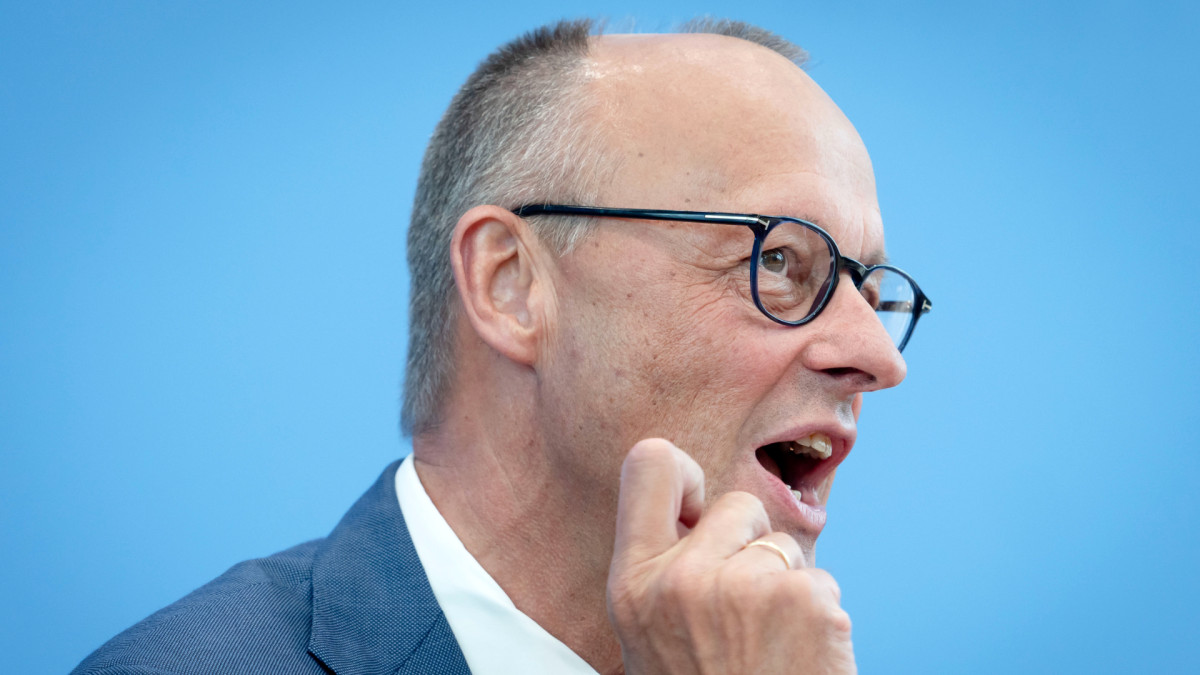
“We want to get Germany back on track, and now it is clear that we can do it,” said Chancellor Friedrich Merz on July 2, during the presentation of a “growth and employment program” composed of 34 measures.
A Pension Reform Aimed at the 2040s
A large part of the chancellor’s optimism stemmed from the recommendations of a Pension Commission (Alterssicherungskommission), created by the government in December 2025 and in which I participated. Its thirteen members unanimously approved a package of 33 proposals. The most far-reaching is to obligately allocate 2% of wages to a public pension fund, following the Swedish model. Among the other recommendations are gradually raising the statutory retirement age, from 67 years expected for 2031 to 67 and a half in 2041, and cutting the advantage that allows retirement two years early for those who have contributed for 45 years.
“The most significant proposal consists of mandating 2% of wages to a public pension fund, following the Swedish model”
Although the pension system is a central pillar of the social market economy, the effects of the recommendations would be felt mainly during the 2030s and 2040s, when retirees could benefit from the returns on the capital accumulated. In the short term, however, the mandatory contributions required to establish that fund will curb economic activity already weighed down by higher social contributions, especially in 2028.
The Institute for Macro-Economic Policy (IMK) calculates that, in the five years following the rise in contributions, GDP will be one percentage point lower and around 250,000 jobs will be lost. Moreover, this saving will not help finance German companies: the resources accumulated through these mandatory contributions will be invested largely abroad in search of higher returns.
A Plan that Falls Short on Investment
But will the Growth and Employment Programme be enough to achieve the expected turn? The measure with the most immediate effect could be the reduction of the income tax, aimed primarily at families with children. At the same time, as a modest gesture toward greater social justice, the top marginal rate has been raised from 45% to 47%.
In total, the tax cuts planned for 2026 amount to €10 billion, about 0.25% of GDP. Moreover, much of the relief is limited to offsetting the inflation effect. The reductions planned for 2027 and 2028, taken together, would not even offset the hidden rise in the tax burden caused by inflation, the so-called “cold progressivity”.
One of the most controversial measures is the plan to eliminate sickness absence notes processed by telephone. Sick workers will have to present from day one a medical certificate of incapacity. The measure will be difficult to implement in practice, as in Germany it is hard to secure a medical appointment promptly.
“The reductions planned for 2027 and 2028, taken together, would not even offset the hidden rise in the tax burden caused by inflation”
It may be debated whether the sickness absence rate is too high, but this measure is unlikely to spur the economy. Rather, it will increase precisely the bureaucratic burdens that are considered one of the main obstacles to growth and that the programme itself promises to reduce: “We are reducing the bureaucratic burden on citizens and businesses, strengthening competitiveness and ensuring a socially balanced approach”.
Another growth prescription typically associated with neoclassical thinking consists of eliminating protection against dismissal for those earning more than €170,000 a year. Since the number of workers affected is relatively small —around 300,000 people—, the impact of the measure will also be limited. In addition, one might ask whether it would improve the functioning of companies when managers must fear immediate dismissal whenever they disagree with their superiors.
As the chart shows, the main drag on the German economy is the fall in business investment. The situation is even more worrying because, to compete on a global scale, Germany needs a deep technological transformation and new business models.
The programme expressly recognizes this need: “We will continually promote future-oriented sectors”, among them automotive, chemical and pharmaceutical industries, clean technologies, the circular economy, mechanical engineering, battery cell and semiconductor manufacturing, and all the realm of artificial intelligence.
“To compete on a global scale, Germany needs a deep technological transformation and new business models”
But these promises do not come with concrete budget commitments. In the 2027 budget of the Special Fund for Infrastructure and Climate Neutrality (Sondervermögen), the allocation for research and development amounts to a mere €1.7 billion. That does not prevent the Finance Ministry from presenting it as a 60% increase over the still more insufficient €1.1 billion allocated in 2026.
Taken together, there is no clear way to see how the reforms and the Growth and Employment Programme can achieve a real turning point in the German economy and, above all, drive the technological transformation the country urgently needs. The lack of clear incentives for investment is a symptom of a broader problem: Germany lacks a comprehensive innovation and transformation strategy.
Unfortunately, German economic orthodoxy does not seem to consider that this absence of strategy is a major problem. Clemens Fuest, president of the ifo Institute, for example, focused his assessment of the programme on reproaching that neither corporate taxes nor public subsidies were reduced.
Increased public spending on defense and infrastructure could generate some growth in the coming years. However, the German economy continues to move forward without a clear vision of its future. Market-oriented economists still believe that this is the right path. But aren’t seven years of meager results enough to show that, in the choppy waters of the global economy, ships do not find their course on their own?
This article was originally published on Social Europe under the title ‘Germany’s Seventh Year of Stagnation Exposes a Missing Strategy’.
