
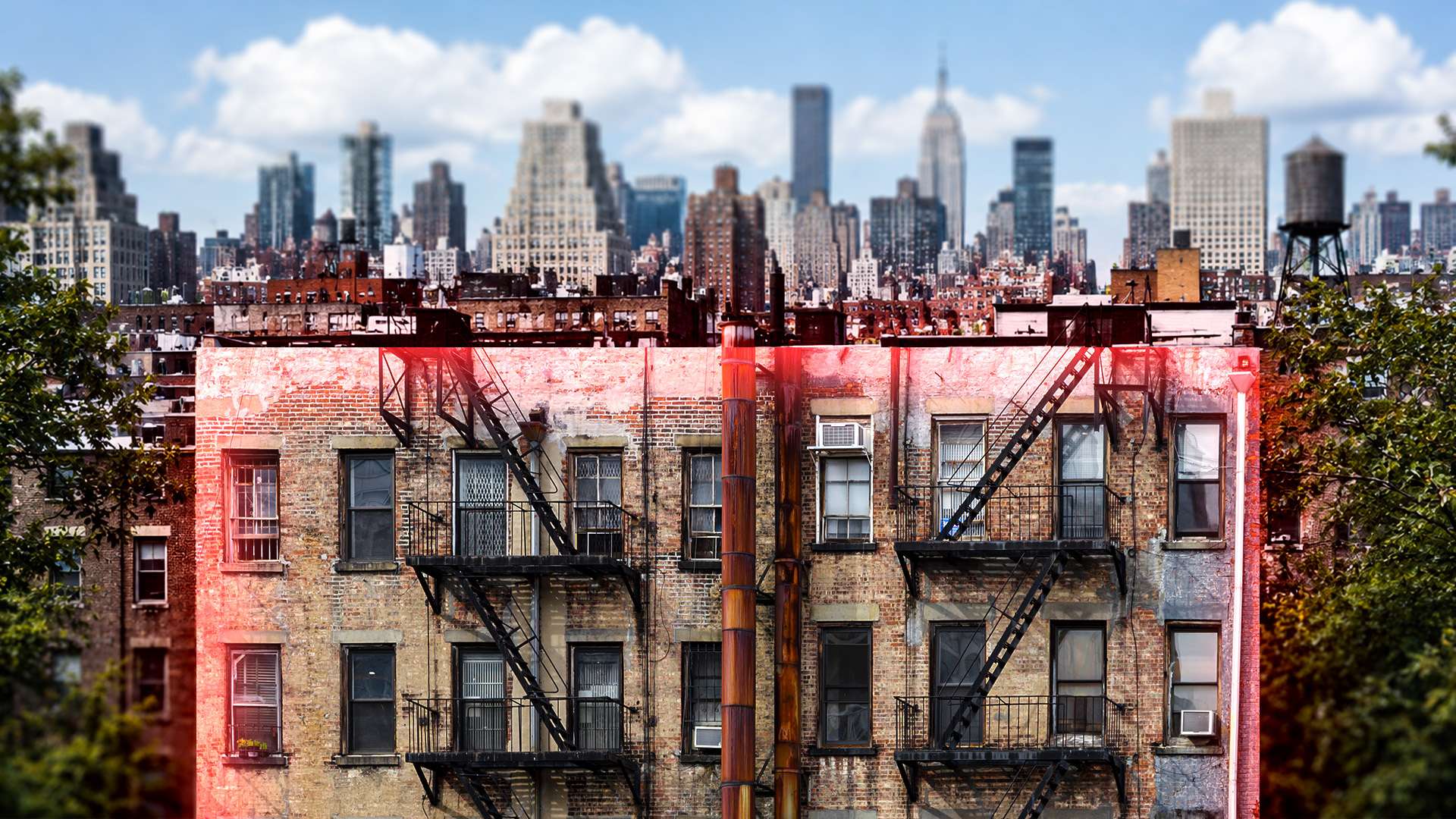
This year’s rent freeze marks another regulation driving New York City’s rent-stabilized housing toward financial strain and physical decline.
Sophia, a landlord in New York City, notes that the numbers just don’t add up. Her major costs—insurance, labor, energy, and property taxes—are climbing, and she can no longer offset these increases by raising rents on her units.
When the Rent Guidelines Board (RGB) gave final approval to a 0% rent increase in June, the city’s new mayor celebrated with a frozen treat. A short video circulated online showing Zohran Mamdani pulling an ice cream bar from a freezer while declaring that the board, which is meant to be independent, held rents steady for the 2 million tenants in NYC’s nearly 1 million rent-stabilized apartments. Approximately one in three homes in the city falls under rent stabilization.
“It’s hot outside, but the rents are frozen,” read the video caption on Instagram.
For the mayor, the vote was a significant political win. His leftist platform encompassed everything from no-cost child care to free city bus rides, yet tight budgeting has largely kept him from fulfilling many expensive promises. The rent freeze stood out as a major policy achievement he could push through without immediately adding to a red balance sheet.
But the freeze isn’t without cost. Instead of adding red ink to the city’s books, the burden shifts to the balance sheets of rent-stabilized buildings, a growing portion of which are operating at a loss each year.
Nearly 10 percent of New York’s rent-stabilized buildings run at a loss, with operating costs exceeding revenues. That figure has nearly doubled financial distress within five years. Almost 60,000 rent-stabilized units sit empty because owners can’t afford to renovate them and bring them back online. Bankruptcies among rent-stabilized properties continue to climb with no apparent slowdown.
Meanwhile, city records and academic research show a steady deterioration in the physical condition of the rent-stabilized housing stock.
The financial and physical decline of New York’s rent-stabilized buildings can be traced to a 2019 law that aggressively tightened the state’s rent-regulation framework. The reform removed most ways for owners to pull apartments out of rent stabilization. It also largely eliminated the ability to raise rents to cover repairs and capital improvements and to align rents with market rates on vacant units.
Those changes set many buildings on a path to bankruptcy. It’s within this climate of suppressed revenues and surging operating costs that the Rent Guidelines Board—whose majority was appointed by Mamdani—voted to freeze rents.
“[It’s] not as if a single decision, this year’s rent freeze, suddenly put us on this path. We’ve been heading in this direction for most of a decade,” says Kenny Burgos, CEO of the New York Apartment Association.
For socialist activists inside and outside Mamdani’s circle, the financial ruin of privately owned rent-stabilized housing is a desirable outcome. They view it as a corrective to the alleged “speculation” that pushed building values too high. If the market collapses for some properties, they argue, nonprofits or the city could take them over.
But even nonprofits are struggling to maintain rent-stabilized buildings as costs rise and rents remain frozen. The rent freeze contributes to another set of headaches for the mayor—perhaps worse than an ice-cream brain freeze.
Zombie Apartments
Before issuing its final decree on rent increases, the RGB conducts a series of public hearings each year.
Tenant activists opposing any rent increase turn out in force, often turning the proceedings into a spectacle. This year’s gathering in Brooklyn, however, looked more like a horror show.
At the RGB’s Brooklyn hearing in mid-June, anti-eviction protesters were joined by a group of zombies—actors hired by the Gotham Housing Alliance, a landlord association, to portray “zombie” rent-stabilized apartments. The message: these units sit idle because owners cannot profit from repairing and reintroducing them to the market.

Public records cited by The City Reporter indicate that in 2025 roughly 57,000 rent-stabilized apartments stood vacant in New York City. About 5.6 percent of rent-stabilized units housed no one—five times higher than the vacancy rate reported by the Census Bureau’s 2023 Housing Vacancy Survey.
To some, this vacancy seems counterintuitive: why would under-market rentals remain unoccupied in a market with some of the world’s highest rents? Owners offer a straightforward explanation: the 2019 rent laws removed the “vacancy bonus” rent increases that could be charged on vacant units.
That change made it economically unfeasible to bring into service apartments that become vacant after long-tenured occupancy.
A well-established consequence of rent control is that tenants tend to stay longer in place. For tenant advocates, this stability is a central benefit: people who might otherwise move out due to rent hikes stay put.
In New York, the longer a rent-stabilized unit remains occupied by the same tenant, the greater the gap between the legally permissible rent and what the apartment would fetch on the free market. Before 2019, a vacant unit could trigger an automatic 20% vacancy rent increase, and renovation costs could be folded into the rent for the next tenant.
But the 2019 reforms eliminated vacancy bonuses and capped renovation costs that could be passed on—initially at $15,000, later raised to $50,000 for renovations on vacated units. These costs were to be amortized over 15 years, yielding a maximum monthly rent increase of $347.
“The [vacant] units face an exceptionally low rent cap. They often require hundreds of thousands of dollars in renovations just to meet code and be legally rented again,” says Robert Johnson, an attorney with the libertarian Institute for Justice. “Taken together, tens of thousands of units sit empty.”
The Institute for Justice has sued New York state, New York City, and the Rent Guidelines Board on behalf of several rental-property owners, arguing that the rent caps are so low they render it unprofitable to renovate or re-lease vacant units.
One plaintiff owns a vacant unit requiring $100,000 in upgrades to meet code, yet the maximum legal rent for that unit tops out at $710 per month.
Because only a portion of those renovations can ever be recovered through rent increases spread across 15 years, it becomes cheaper to leave the apartment empty.
Thaws and Freezes
This year’s rent freeze isn’t the RGB’s first. The board has previously limited increases to 0% for one-year leases in 2015, 2016, and 2020. Yet the 2026 freeze carries far more weight, given the additional burdens imposed by the 2019 statute.
For decades, beginning in the early 1990s, New York’s rent regulations were comparatively flexible. Landlords could raise rents by 20% on vacant units, cover renovation costs with rent increases, and even deregulate rent-stabilized units to charge whatever rents the market would bear once the stabilized rent threshold was surpassed.
Those 1990s reforms helped stabilize the financial health of rent-stabilized buildings in New York.
In 1991, roughly 13.9 percent of rent-stabilized buildings were financially distressed—operating costs exceeded income. By the end of the decade, this share had fallen to about 6 percent.
A sharp property-tax increase near 20 percent in the early 2000s, followed by the Great Recession, rekindled distress in the rent-stabilized sector. Yet by the mid- to late-2010s, the share of distressed buildings hovered around 5 percent.
As market rents climbed in the 2000s, the relatively flexible regulatory framework attracted substantial capital to rent-stabilized housing from investors eager to deregulate these units. Buyers would purchase deteriorating buildings, renovate them, and use vacancy bonuses and improvements to push rents above deregulation thresholds.
RGB data show that from 1994 through 2019, New York experienced a net loss of 145,312 rent-stabilized units, the bulk of which exited the system via high-rent deregulation or conversion to condominiums or co-ops.
There are two ways to view this deregulation story. One emphasizes a positive conversion of aging buildings into more valuable, market-rate stock; more deregulated units could theoretically lower rents across the board. Critics, however, argued that landlords exploited “loopholes” to raise rents and that tenants faced harassment to push them out to secure vacancy bonuses.
In 2018, progressives—many aligned with the Democratic Socialists of America—helped flip the state Senate from Republican control.
The following year, these progressives enacted the Housing Stability and Tenant Protection Act, which ended the deregulation of the 1990s. Vacancy bonuses were eliminated, the ability to claim rent increases for renovations or capital improvements was strictly capped, and nearly every mechanism for removing a unit from rent stabilization was shut down.
Bankrupt Buildings
New York’s so-called zombie apartments stand as the most visible symptom of the 2019 law’s impracticality. But the underlying health of occupied buildings has not looked much better.
When the law passed, Greg Corbin, president and founder of Northgate Real Estate Group, predicted that these buildings would lose about 30 percent of their value overnight. In practice, he says, the situation proved far grimmer.
Many owners borrowed to acquire rent-stabilized properties with the plan to renovate vacant units and push rents higher through deregulation. The 2019 reform shut down this playbook, leaving units with legal rents that fail to cover rising operating and financing costs.
The cash-strapped owners began selling in bankruptcy proceedings. When bankruptcy sale prices underscored a steeper decline in building values, it pushed valuations down even further.
This created a vicious cycle: more owners pursued bankruptcies, more property values fell, and the downward spiral continued.
Today, about 9.2 percent of rent-stabilized buildings are considered financially distressed, meaning their operating costs exceed rents. That figure excludes the financing costs born by owners, so the real trouble is even more widespread.
An estimated 460,000 units reside in buildings where 90 percent or more of the apartments are rent stabilized.
“In my view, at least half of these buildings are unhealthy, and something must be done,” says Corbin. His firm alone is actively managing 60 bankruptcy or foreclosure sales of rent-stabilized properties.
New York University’s Furman Center also notes a decline in the volume of sales involving rent-stabilized buildings as lenders and investors grow wary about financing these deals. Some 4 percent of heavily rent-stabilized buildings carry substantial unpaid property, water, or sewer bills, according to the Furman Center.
Cea Weaver, a left-leaning tenant activist whom Mamdani placed to lead his Office to Protect Tenants, told The New York Times Magazine in March that declining building valuations are a favorable outcome of the 2019 laws.
“There was a business model rooted in speculation. Now there needs to be a new model grounded in the reality that these buildings remain rent-stabilized and will stay that way,” she argued.
“Loopholes” in the pre-2019 rent laws enabled purchases at inflated prices; those loopholes are now closed, and the speculative bubble is deflating.
Whether one agrees with that assessment, the post-2019 landscape has spawned its own form of speculation. Corbin notes that today’s primary buyers of rent-stabilized properties are “generational” real estate investors who plan to hold for the long term, betting on policy changes down the line. They assume that New York’s rent laws cannot stay this restrictive forever—and that when deregulation eventually occurs, distressed rent-stabilized buildings will yield windfalls.
“If the law changes, people will say they wish they’d bought every building they could in 2027,” Corbin adds.
Warning Signs and Off-Ramps
A shift in New York’s rent laws in favor of building owners will require policymakers and the public to view property owners more leniently than they do today.
The 2019 law makes that shift unlikely. By suppressing rents, it reduces landlords’ incentives and ability to keep buildings in good repair. As a result, building quality declines, provoking tenant grievances against individual landlords and broader anger toward landlords as a whole.
This vicious circle—bad policy fueling hostile attitudes—was evident at the RGB hearings. Landlords claimed they cannot fix anything because costs are soaring. Tenants demanding a rent freeze questioned why they should pay more when the building isn’t properly maintained.
Under the 2019 law, the RGB’s annual increases are the only realistic mechanism for raising rents. This year, seven of nine members, six of whom were appointed by Mamdani, voted to close that channel as well.
One RGB member, Christina Smyth, who had been named by Mayor Eric Adams to represent building owners, resigned in protest before the final vote. In her resignation letter, Smyth wrote that the RGB order of the year was determined last year during the campaign and that the mayor’s rent freeze crossed a “legal line” by ignoring the data.
The sole dissenting vote against the freeze came from Arpit Gupta, an associate professor of finance at New York University. Gupta told Reason that he believed the Mamdani administration did not pressure the board to vote a particular way.
In one sense, that is encouraging: the RGB isa legally independent body, and it behaved as such. Yet Gupta notes that the board, while independent, still faced data showing rising tenant income, faster-rising costs for owners, and mounting distress among landlords—and nonetheless chose a rent freeze.
“What I don’t have a clear answer for is what data would compel them to decide differently in the future?” he asks.
If the RGB keeps freezing rents year after year while owners’ costs continue to rise, Gupta warns, New York could revert to the old days when owners abandoned insolvent buildings that aren’t even worth the property tax bill.
New York’s previous struggles with abandoned structures occurred amid high crime, sluggish economic growth, and population loss. Today, the rent laws threaten to replicate those conditions within rent-stabilized buildings even as the city as a whole prospers.
Mamdani has floated several so-called off-ramps to preserve rent-stabilized housing without rewriting the 2019 statute. His proposals include stepped-up code enforcement and transferring ownership of the most troubled properties to nonprofits or to the city itself.
At the RGB hearings, Gupta heard from nonprofit owners who, despite not paying property taxes (the largest single expense for most owners), are failing to make the numbers work: “Even the nonprofits who don’t pay [property taxes] come to us saying, ‘Look, we can’t make these buildings work. The math simply doesn’t add up.’”
In today’s political climate, where socialist ideas are ascendant, market-oriented reform of the state’s rent laws seems unlikely. Without reform, the city should anticipate continued rent freezes and a deteriorating stock of buildings.
For the foreseeable future, the arithmetic will not add up.
