
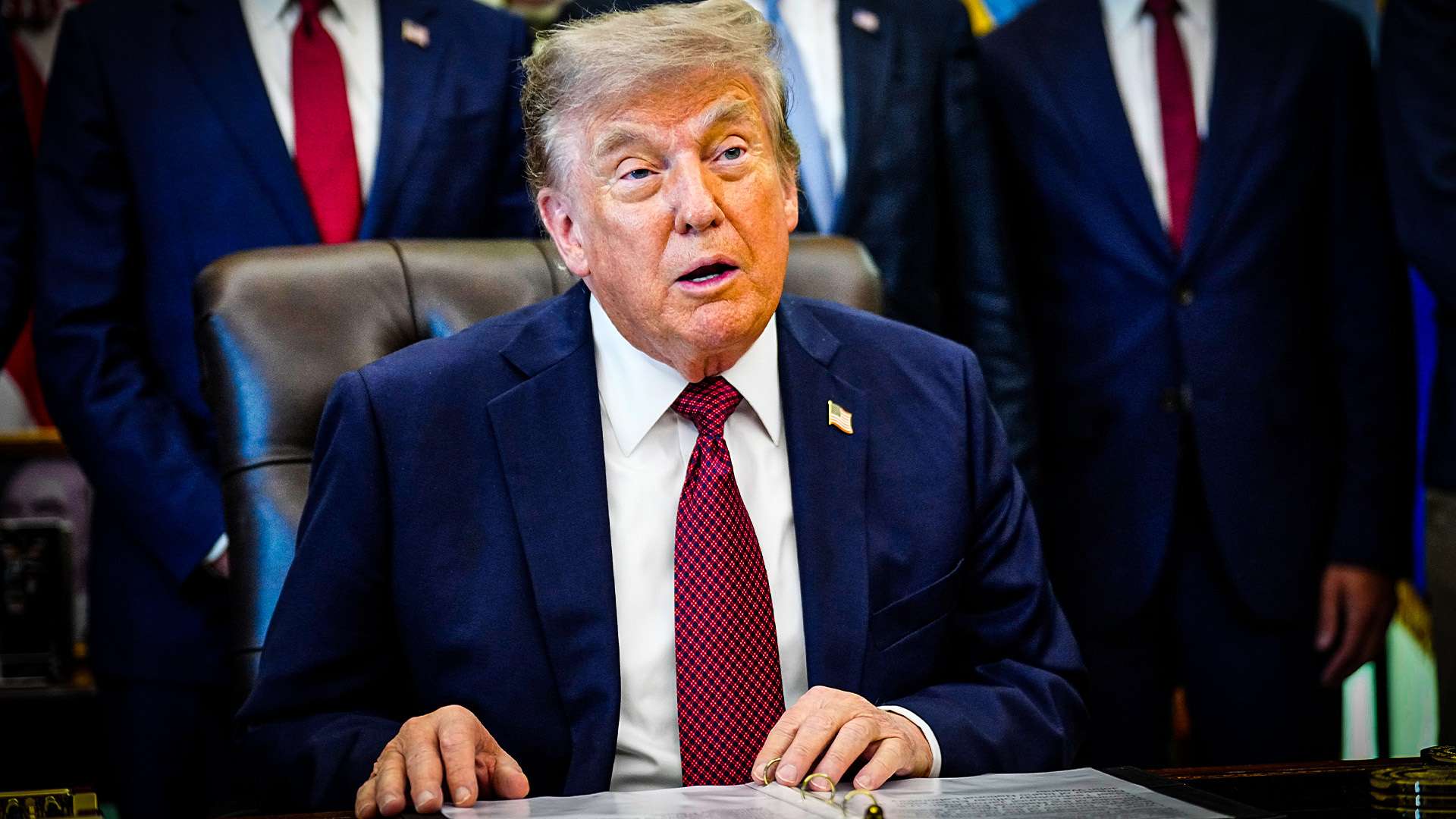
This month the administration rejected thousands of clemency petitions.
“For two and a half centuries, the United States has presented itself as a nation that believes in the potential of its people,” the Trump administration said in a statement a few months back. “When I returned to the presidency, for the first time ever, I established a White House Pardon Czar to lead our clemency efforts with a clear emphasis on both opportunity and accountability…. The story of America is filled with individuals who have shown real change in their hearts and earned a second chance.”
However, many will not be so fortunate. This month, President Donald Trump denied roughly 6,000 clemency petitions after White House aides had recently floated granting 250 pardons to mark America’s semiquincentennial.
That plan never materialized. It isn’t unusual for presidents to hesitate when it comes to using the pardon power. Yet Trump’s approach to clemency stands out not so much for hesitancy as for its lack of a coherent, transparent process.
The president began his term by issuing about 1,600 clemency grants to those connected to the January 6 riot, including some convicted of violent offenses. He called this a correction of “a grave national injustice,” which could start “a process of national reconciliation.” It’s hard to argue he achieved that, though, when these were blanket grants rather than a case-by-case assessment weighing specific prosecutorial excesses on the merits.
As of November 6, the Justice Department reported, about 600 people had been charged with “assaulting, resisting, or impeding law enforcement agents or officers or obstructing those officers” during the riot, Reason’s Jacob Sullum wrote last year. “They included 169 defendants ‘charged with using a deadly or dangerous weapon or causing serious bodily injury to an officer.’…Trump’s professed support for law enforcement and opposition to violence are hard to discern in his blanket clemency, which encompasses defendants who flouted both principles.”
The president, meanwhile, has become notorious for extending mercy to individuals with political and financial connections. When Trump pardoned Scott Jenkins—a disgraced former sheriff convicted of stark corruption—U.S. Pardon Attorney Ed Martin did not mince words about the rationale. “No MAGA left behind,” he posted on X. “Thank you, @potus Trump, for pardoning Sheriff Jenkins!”
This seems to be a feature, not a bug. “Perhaps the most crucial aspect of the pardon playbook is finding a way to capture Trump’s attention,” Gabe Kaminsky wrote for The Free Press in December. “That strategy paid off for [Juan Orlando] Hernández, the former Honduras president who was convicted last year of conspiring with drug traffickers to import over 400 tons of cocaine into the United States.” Trump freed him from a 45-year prison sentence after a letter from Hernández, who addressed the president as “Your Excellency,” reached Trump through adviser Roger Stone. The following month, the administration would move to arrest Venezuela’s Nicolás Maduro on similar charges.
That isn’t to say Trump hasn’t issued sound clemency decisions. The pardon czar invoked in his April statement is Alice Marie Johnson, whose draconian life sentence for nonviolent drug offenses was commuted by Trump during his first term before he issued her a full pardon. One wonders whether another Johnson might have appeared within his most recent batch of about 6,000 cases.
