
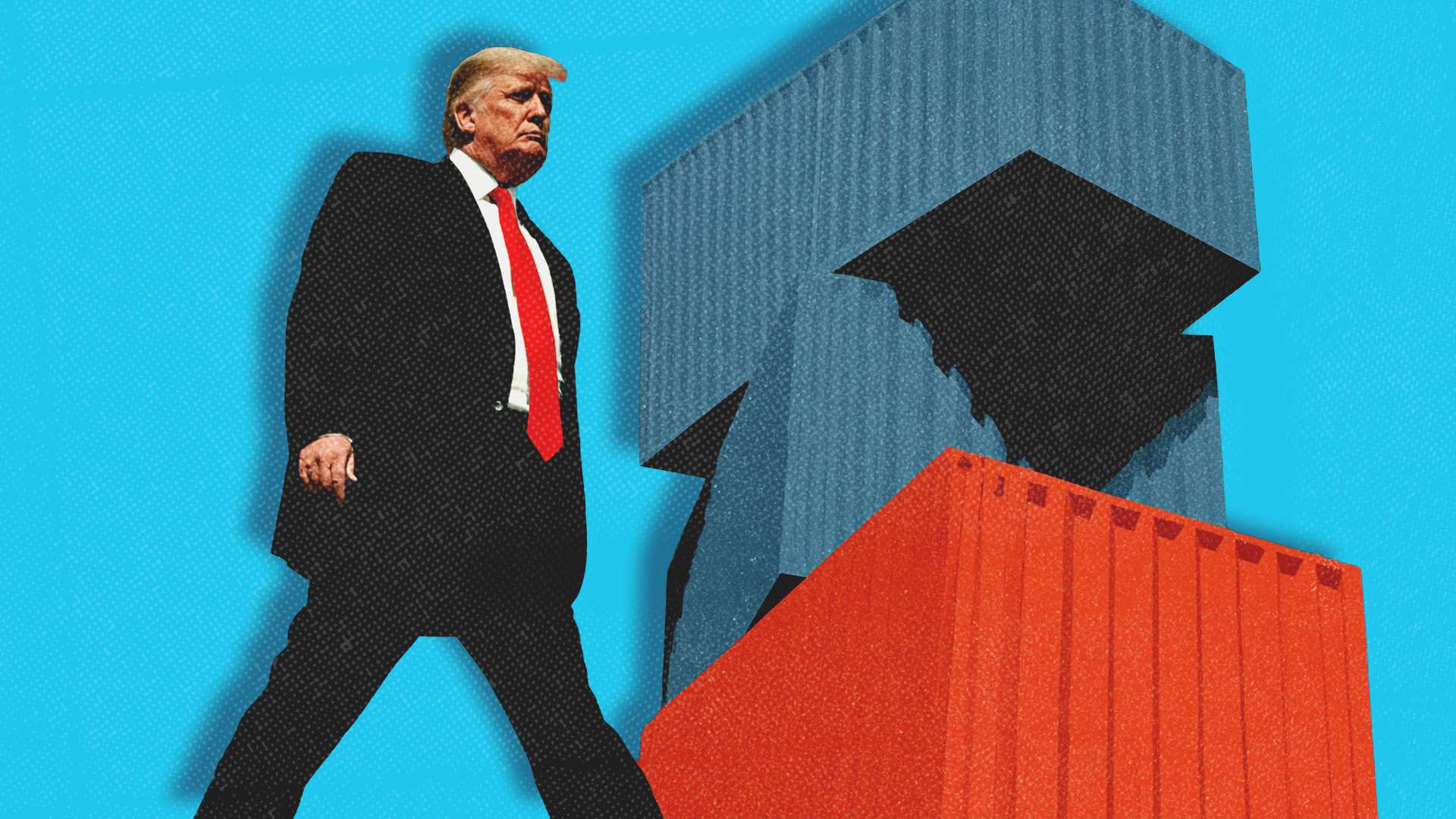
The president’s most recent set of sweeping import duties, like the two before it, treats the statutory footing as an afterthought.
When policy is decided first and then a legal justification is sought to back it up, the ground beneath it becomes unstable. President Donald Trump demonstrated that point once again last week by unveiling a third wave of broad tariffs after federal courts struck down his first two attempts.
Not long after taking office last year, Trump asserted that he had uncovered a dormant delegation of tariff authority within the International Emergency Economic Powers Act (IEEPA), a 1977 statute that does not mention import taxes and had never been used to levy them. Under IEEPA, he argued, he could tax imports of any goods he chose from any country he selected, at any rate he deemed appropriate for any duration he believed was necessary.
That claim was rejected by every court that reviewed it, including the Supreme Court, which in February ruled that IEEPA does not authorize tariffs at all. Yet Trump had a fallback plan: immediately after that ruling, he announced another wide-ranging tariff package, this time grounded in Section 122 of the Trade Act of 1974.
That provision authorizes tariffs in response to “fundamental international payments problems” caused by “serious United States balance-of-payments deficits.” In May, the U.S. Court of International Trade ruled that the new tariffs were illegal because Trump had failed to “identify balance-of-payments deficits within the meaning of Section 122.”
Although that ruling was stayed pending appeal, Trump’s Section 122 tariffs—which carried a 150-day statutory limit—expired last Friday. He then pivoted to Plan C, invoking Section 301 of the Trade Act, which authorizes tariffs in response to a foreign “act, policy, or practice” that is “unreasonable or discriminatory” and that “burdens or restricts United States commerce.”
The latest tariffs are framed as targeting countries that have not “imposed and effectively enforced a prohibition on the importation of goods produced with forced labor.” Because of that alleged failure, U.S. Trade Representative Jamieson Greer says, American firms face unfair and unethical competition from foreign rivals that rely on forced labor to hold down costs and prices.
The roster of supposed offenders runs long. Greer tallies “60 economies,” but that count includes the European Union, which comprises 27 member states, so the true figure stands at 86, covering nearly all U.S. imports and subject to a 10 percent or 12.5 percent duty.
In a lawsuit filed last Friday by the Liberty Justice Center (LJC) on behalf of the domestic businesses that would bear the Section 301 duties, the underlying findings behind Greer’s list are described as severely lacking. In large measure, they fail to specify exactly how each country falls short, how those alleged shortcomings burden U.S. commerce, or why the new tariffs—which do not distinguish between goods made with forced labor and those that aren’t—are expected to fix the problem the administration says it is addressing.
The LJC complaint contends that the forced-labor issue is “simply a pretext” for reinstating Trump’s “invalidated global tariff regime.” That reading is reinforced by Treasury Secretary Scott Bessent’s vow of “virtually unchanged tariff revenue,” his remark that Greer’s “Section 301 studies” would produce “tariffs at the previous level,” and Greer’s promise that the new taxes would “address many of the issues at the heart of the President’s reciprocal tariff program.”
According to the LJC, this approach conflicts with Section 301, which was designed to remedy specific practices by specific trading partners, rather than to justify broad tariffs aimed at narrowing the gap between imports and exports. Interpreting Section 301 to sanction the latter would contravene the “major questions” doctrine, which requires explicit congressional authorization for policies of vast economic and political significance, and would permit an unconstitutional delegation of legislative power.
That lawsuit may not be a guaranteed win. But given that the Liberty Justice Center led the successful challenge to Trump’s IEEPA tariffs, the president has reason to fear that history could repeat itself here as well.
© Copyright 2026 by Creators Syndicate Inc.
