
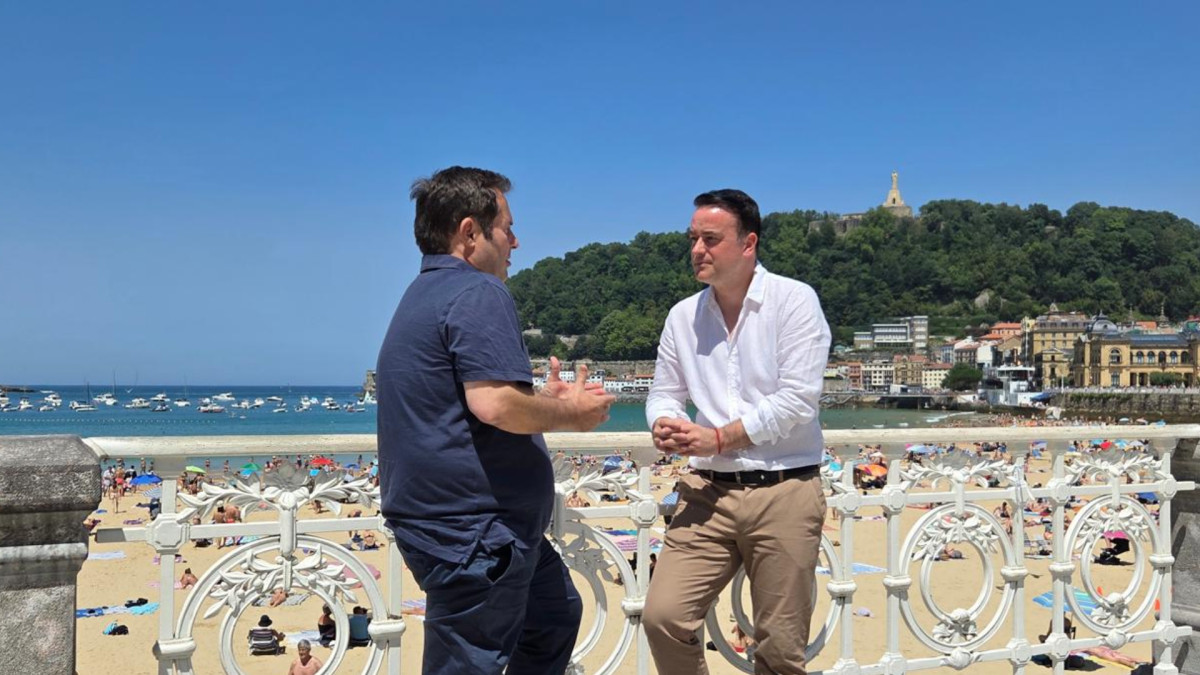
San Sebastián is one of those cities that helps reveal the personality of the people who have lived there. Here Iván Redondo was born, and here he continues to find, far from Madrid’s constant noise, a place from which to think and work. We find ourselves on a quiet morning, with La Concha beach as the backdrop and his book The Manual as backdrop. It is the book in which he reconstructs his “first vital act”: from his beginnings as a political consultant to the years when he led the Office of the Presidency of the Government alongside Pedro Sánchez.
Five years have passed since his departure from La Moncloa. Time has allowed him to take a step back, organize memories and turn an exceptional experience into a reflection on leadership, decision-making and the exercise of power. But also on Spain. Because, even though the book looks to the past, much of our conversation inevitably centers on the future: the new political cycle that, in his view, is starting, the need to rebuild convivencia, the fragmentation of the party system, the role of Catalonia, the transformation of Pedro Sánchez’s leadership and the challenges faced by Alberto Núñez Feijóo as well.
Yet that first act has now given way to another. Five years after leaving La Moncloa, Redondo has built a business group that has just strengthened itself with the purchase of the majority of Grupo Norclamp, a move that shows how his activity has ceased to be limited to political consulting and has extended to corporate strategy and sectors considered essential for the country’s strategic autonomy.
Redondo responds with the blend of strategic analysis and personal conviction that has always characterized him. He talks about presidencies, campaigns, institutions and majorities, but also about determination, about teamwork and about politics understood as a form of building. More than a conversation about the past, this is an interview about how he believes Spain will be governed over the next decade. In fact, and although he says his current position is at the Redondo Group, I would ask you to keep in mind a slogan: “Spain is a country to live in.” Could it become Pedro Sánchez’s campaign motto in the next general election?
Why did you decide to write a book?
People had been urging me for many years. They say we have three acts in life. This book captures my first act, and I wanted Nahia, my daughter, who is already three and a half, to be able to meet the first act of her fathers. That was all.
Even a small impact on someone else would count as a triumph to me. I know the book is resonating widely, but the motive was simply that. Some time ago I started my second act and I’ve tried to gather experiences, ideas, anecdotes and readings. I don’t know if they will be useful, honestly. I’ve also tried to explain what I learned from all those people I encountered.
Anyone who reads the book and reaches the end realizes it is a tribute to many people and a way to understand life, as well as politics, as a team sport.
What did you learn from Pedro Sánchez?
From everyone I’ve worked with, a lot. I think in the book, when we reach the stage just before La Moncloa, I describe well his qualities and some of the lessons learned.
But if I had to pick one, it would be determination. It is something I’ve always had by nature, but with him I saw it in another dimension. There is a lot of talk about the Manual of Resistance. The manual is something else entirely: there have been many resilient presidents, at almost any moment. But presidents with Pedro Sánchez’s determination? not. Among the seven Spanish presidents, in my view he is number one in that category.
What does it mean to be the chief of staff to a president?
Being head of the Office of the Prime Minister or an advisor means gathering information to transform it into knowledge that helps in decision-making for a prime minister. From there, you’re interested in all kinds of information: everything that can be measured and, at times, also what cannot be measured.
The goal is for the president to have the Cabinet’s criteria when making decisions. Regardless of whether you have twenty-two ministers, there is only one head of the office. The presidential criterion is formed by what the Council of Ministers proposes and what the presidential cabinet contributes.
“Presidents with determination have existed, many of them. But presidents with the determination of Pedro Sánchez? none”
That is the cabinet’s task: to make recommendations, offer advice and raise alerts, not to make the decisions. Cabinet members are midfielders who seek to generate play, forever in a state of constant scrutiny: we seek disagreement, nuance, that detail that can give the prime minister a few tenths more.
We are often in agreement at 93% with what a minister proposes, but there are times when we are not. It’s like the Pareto principle, the 80-20: we try to find the 20% of issues that determine 80% of the prime minister’s success.
It’s a daily, tireless task. Any cabinet member devotes themselves to it. It has nothing to do with the work of politicians, even though people sometimes want to equate them. The advisers grasp quickly what I’m saying. It’s a passion. You have to enjoy it.
What did you learn from the former chiefs of staff?
I already had experience because I had worked in the government of José Antonio Monago in Extremadura. I knew what public practice was like and I knew perfectly what I could transfer from private practice. I also knew La Moncloa from outside and from having visited it previously.
I regarded the former chiefs of staff as true icons. Some knew me since I was a kid, so we were able to speak with a lot of trust. It wasn’t only about what I learned from them, but also what they advised me to do.
“We’re often in agreement at 93% with what a minister proposes, but there are times when we’re not”
The cabinet we built would have been impossible without the input of the previous chiefs of staff. They explained the footprints, the issues you fear will never happen, the scars and the cracks that exist in the building and that you will inevitably encounter. They also helped me think about how to build a cabinet through which the president could govern, if he wished, as happened during that first stage of Pedro Sánchez.
There were many changes related to national security. We are talking about 2018, and it’s enough to look at the present to understand their importance. There were changes also in the Economic Office and in the Secretariat of State for Communications. If you’re going to take on responsibility for communications, you have to coordinate it. You cannot leave that function to the Vice Presidency or the press office: you must incorporate it into the cabinet.
We also professionalized and digitized the communications department with citizens, following a path already opened by previous teams. It was a position that began modestly and grew over time. I became the tenth cabinet chief in the history of the democracy.
“If you’re going to take on the blame for communications, you have to coordinate it. You can’t leave that function to the Vice Presidency or the press office”
I wasn’t a civil servant nor a party member. I had even worked previously for another party. Precisely because my appointment was unlikely, I had the opportunity to speak with everyone. When I speak of my predecessors, I’m talking about people from the PP and the PSOE with whom I could converse with complete naturalness. Some returned to politics later, but then they were out or in different positions.
I’m enormously grateful to have been able to implement a structure I sensed, but with the input of those who had done that work before me. In some matters they told me: “Correct this part.” In other matters: “You’re going in the right direction.”
One of them told me: “Don’t forget you’re 37. One day write a book.” I swear. This doesn’t appear in The Manual, but you’re making me remember it now. I thought: “What a drag!” But one of them told me so.
Was that first cabinet and you the first chief of staff of a phase of hyper-presidentialization in Spain?
There are several interesting points. The first is that it was a moment of low expectations and a surprising government. It was the first victorious censure motion in democracy. The constitution’s Article 113 was applied successfully for the first time. It was unprecedented in Spain.
Now, in the Redondo Group, I continue to bring in people from that era and from earlier cabinets. For different reasons and due to the low initial expectations, in the following months many began to interpret that as the best cabinet in history. I’m not saying it’s my opinion or that it’s true, and certainly not that everyone had to share it. But that perception existed among many people in Madrid’s political scene. After the government of Mariano Rajoy Brey, there was a sense that something entirely new had arrived.
That also happened to the president, who is the main person responsible for deciding what cabinet he wants. That would be the first point.
The second point is that the cabinet broke the fourth wall that the previous ones had tried to cross. There was strategic continuity. Not everyone could reach that point, as the former chiefs of staff explained to me. That’s why they gave me good counsel. They were aware that there exists a professional lineage of chiefs of staff and of La Moncloa. My question was how I could push a little further.
“We reached a point where people thought that cabinet was the best in history. I’m not saying it’s my opinion or that it’s true”
To break that fourth wall, some of the functions I’ve mentioned had to be incorporated. Let me give you another example of a major change relative to the previous cabinet: the General Secretariat led by José Manuel Albares. In the international arena, the term global security was already in use. He was a true secretary-general.
The structure integrated the dimensions of domestic and foreign policy as part of the same view. A minute after I took office, the president said to me: “Let’s rescue the Aquarius.” It helps to understand the connection with the cabinet concept he wanted. When we spoke of a total vision, we meant a global one.
It was a conquest pursued by the predecessors but one they hadn’t been able to reach. Pedro Sánchez did want that model.
The third point is that there have been different phases in the president’s trajectory. The phase I lived through lasted three and a half years. I call it the Pedro Sánchez Castejón phase, between 2018 and 2021. Between 2021 and 2023 came the Pedro Sánchez phase, when there was something like a referendum on his figure and a brutal dehumanization: sanchismo against antisanchismo.
I don’t know who hasn’t realized yet that that phase has already ended. Now another phase begins in which Pedro Sánchez must become Pedro. And that is already starting to happen.
During Pedro Sánchez’s phase, there wasn’t so much presidentialism. We were a deeply parliamentary government. We had 84 deputies, 84 brave people who had to sustain a minority that was very difficult in Congress. Then came the first progressive coalition government in 90 years, since the Second Republic. We are also talking about the London Hotel, where one of the era’s historic pacts took place.
Everything was very novel, but then the pandemic arrived and afterwards I left. For me, the most presidential turn begins in the second phase, the sanchismo and antisanchismo phase. I don’t think it stemmed from a deliberate strategy, but from the events themselves.
“We were a deeply parliamentary government. We had 84 deputies, 84 brave people who had to sustain a majority very difficult in Congress”
I think now we’re going back to the beginning. The best strategy for the Socialist Party is to technically recover some elements from the first phase, but transform them into something new: the humanization of politics, the restoration of institutions, the return of the country to its citizens and the reestablishment of the elements of democracy in which we believe.
There isn’t yet a clear perception because there’s a lot of noise, political fighting and polarization. But I think we’re headed there. The current team’s challenge is to move beyond presidential plebiscite. If they manage it, there is a clear path to reelection.
You were in the government when the pardons were proposed. One of the reasons Pedro Sánchez may go down in history is for moving from being a man of Article 155 to becoming the symbol of reconciliation and greater convivencia in Catalonia. When and how was this change decided?
This is my position and the way I explain it. The president tells it differently. I like to speak of a total reunification policy in three phases: punishment, forgiveness and oblivion.
The punishment, at that moment, was Article 155. No one wanted to approve it, and it was very difficult, but any violation of legality must receive some form of response.
“The challenge for the current team is to move beyond presidential plebiscite. If they succeed, there is a clear path to reelection”
A policy of total reunification then has a second mandatory phase. At some point there had to be pardons and, at some point, an amnesty. In other words, forgiveness and oblivion. I’d like to quote Santos Juliá, may he rest in peace. When he spoke of the Transition, he used to say that it involved sweeping things under the rug, as if there were a suitcase into which things could be deposited.
I believe the president always understood that his policy and agenda were those of total reunification. Before the pardons, we already brought the two governments together in Barcelona, at a very difficult moment, at the end of 2018. What came out of that? The reunification agenda.
Everyone can advocate for different paths and timelines. I have mine. But the wonderful thing about working for a prime minister is that he decides the timing. Sometimes he will be right and other times not, but the destiny has always been the same.
I believe the president was very clear that, sooner or later, pardons and amnesty would occur. That’s my view, even though he doesn’t explain it that way. At that moment there was a meeting with Quim Torra at the Palau de Pedralbes, with a lot of theatrical flourish, and there was also a Cabinet meeting in Barcelona, in a very difficult context. There the reunification agenda was already on the table.
There has always been an origin and a destination. After eight years as Spain’s prime minister, Pedro Sánchez will go down in history for this policy of total reunification, not only for its beneficial effects in Catalonia but also for the rest of the country.
Every time you discuss Catalonia you are talking about Spain. Sometimes it’s forgotten, and I want to affirm it: talking about Catalonia is talking about Spain, and that is always good policy. It must be done without fear.
“Pedro Sánchez will go down in history for this policy of total reunification, not only for its beneficial effects in Catalonia but also in the rest of the state”
Behind it, in my opinion, is the idea of a Spain that can accommodate more Spaniards, versus another where there is room for only one idea of Spain. Since 1996, if Euskadi and Catalonia did not vote, the right would always win. But the reality is that, for me, Basques and Catalans are Spaniards, and with much honor. When they vote, they can tie or decide the direction. This is the reality.
Why do you think a substantial portion of Spain does not share that vision?
I resist that idea because I am a clear defender, and the president knows it perfectly, that they do understand it. Those categories are over. I’ve been defending this position for all these years. I’m 45, and anyone who knew me before or after La Moncloa knows I think this way.
You can see it in the national squad. That Spain, which some call the Spain of the many Spains, is the plurinational Spain. It is plurinational within its territories, across the state as a whole, and of course thanks to all those people who come to contribute to our country.
“Every time you talk about Catalonia you are talking about Spain. Sometimes it’s forgotten, and I want to affirm it”
That reality is there and it is unstoppable. It’s not a matter of left or right. We must write and describe the categories that already exist in society. The political grammar with which these issues are debated in Madrid’s political circles belongs to 2023 and the last few years, but it does not correspond to where the street stands today. It is one of the elements we must correct. We must be bold again.
I believe we are in a moment very similar to 2018, when a political cycle began. For me, the cycle from 2018 to 2023, with its extensions to 2024, 2025 and 2026, is over. From 2027 a new cycle begins. The question is where you want to be.
As happens in Spain when a new political cycle begins, we can talk about many topics. We can talk about the economy, now that unemployment is below 10%. We can talk about international politics, with a president recognized around the world. He will like it more or less, but it is very difficult to travel to another country, whether you are left or right, and not see the recognition given to human rights policies defended by Pedro Sánchez.
But domestic politics, where votes are, where elections are won and where projects are refined, is still to be built. And every time a new political cycle begins we want to talk about Spain again. That’s how we are.
“Total reunification does not mean that nothing has ended. Everything starts again. The question is who you want to guarantee democratic coexistence in your country”
Total reunification does not mean that nothing has ended. Everything starts again. The question is who you want to guarantee democratic coexistence in your country.
For me, Spain is a country to live in. In every sense. Of course, a country to live in needs housing you can afford and still faces many challenges. But it is a country recognized around the world that must renew, during this political cycle, its project for Spaniards.
Can this be done from the Government? Yes. Is it common for an opposition-to-government alternative to do it? Also. But the current alternative has a problem: it is tied to a one-nation idea of Spain that no longer even corresponds to the view of a large portion of right-leaning voters. If it ever did, which I doubt.
The Transition proves that when the right shifts toward a more plurinational idea, it finds support. This is one of its major pending tasks, but Vox keeps the PP tethered.
RELATED ARTICLES
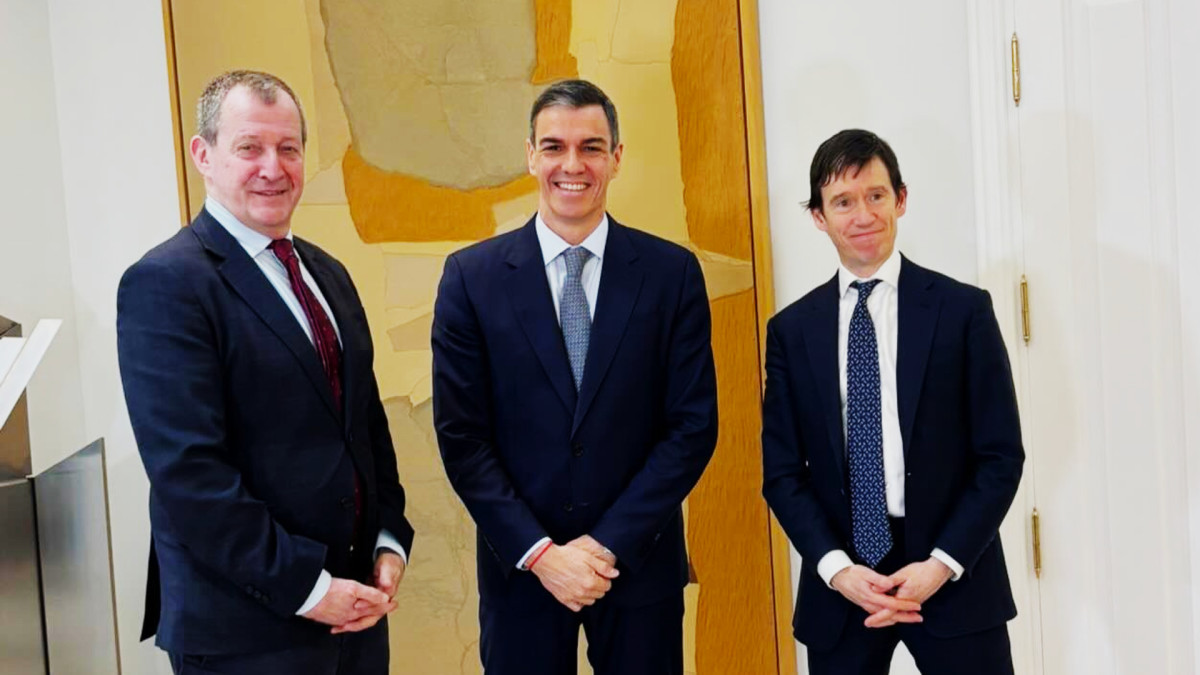
Alastair Campbell, Pedro Sánchez and the co-host of the podcast ‘The Rest is Politics’ Rory Stewart at the Moncloa.Alastair Campbell
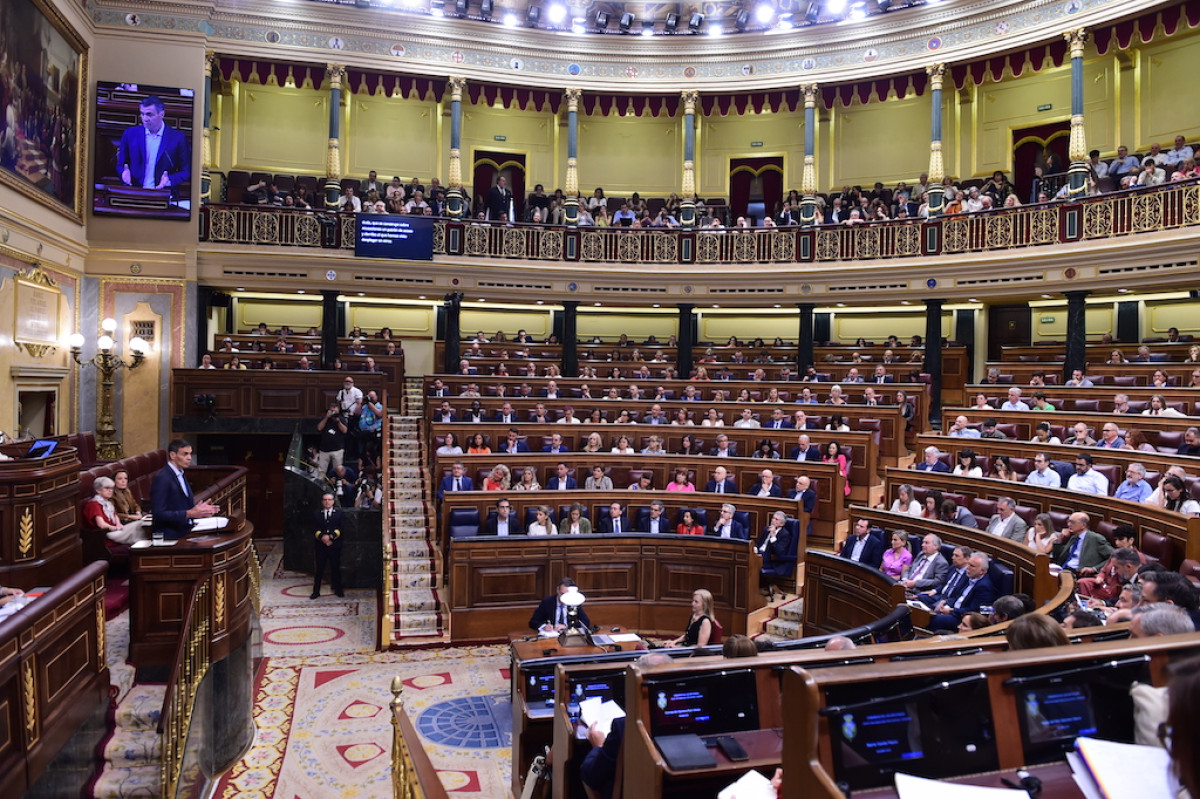
Sánchez and Feijóo facing off in Congress amid the corruption clash and the call for elections.Gustavo Valiente / Europa Press
What do you think when everyone talks about polarization in Spain?
The Moncloa will win the election whoever can unite generations, territories and ideologies without fear.
Should the left be protected? Yes. But the best way to protect it and to get more people to join it is to allow others to want to join it too. You must also understand that the left’s cause is transversal and can displace the center.
The center does not exist, but there are people who understand that the cause they consider majority can sometimes be on the left and at other times on the right. That is the voter.
The left currently has around 700,000 voters in the PP and Vox. Do you want to win them back or not? You won’t win them back by demanding they be left-wing. You’ll win them back by explaining clearly that your idea of Spain can be majority, that it has a project and a program, and that they can trust it for four more years.
Votes don’t belong to anyone. If Pedro Sánchez weren’t the Socialist candidate, the PSOE would be at 20% or 21%. He is what takes it to another dimension. He’s currently at 27%, which is fine. But the expectation is to reach 30% or 31%. Will he achieve it? That’s what we’re talking about.
I can’t say the same about Alberto Núñez Feijóo. The big question is that Feijóo could be at 31% or 32%, practically tied with Pedro Sánchez, but we don’t know if another leader could improve his result. What we do know is that the PP has a high floor.
There is also another major challenge. If you identify that the left still represents the majority cause, you must understand collaborative leadership. The entire Government must know how to strengthen its partners.
Presidentialism can be understood in party terms, but not in a parliamentary government, because the partners are left muted. Here is a simple example: everyone must understand that Junts’ situation affects them.
Junts isn’t just a decisive party on the national stage. It is and will remain so in the future if it finds its path. It’s also worth watching what the majority in Catalonia’s Parliament could look like from 2028. Technically, the options are PSC, Esquerra or Junts. There is no other platform that can form that majority.
We’re in the second half of 2026. Any thinker who uses lateral thinking knows that in 24 months what I’m saying will become common sense. This can be understood from a utilitarian perspective, but also from the total reunification policy and respect for the projects of the entire world.
For me, Aliança Catalana also feeds on the expectations generated by the PP and Vox. I say this in case it helps Junts in its debates. That doesn’t mean Junts shouldn’t act with resolve and strategic autonomy in its project. Of course they should. But it helps that the other majority find a path. Otherwise, it will be very difficult.
Both the president and the Government must understand that after every action they need to leave room for their partners to address their own audiences. Sometimes they struggle to do this, and that is a crucial element.
The first polarization to eliminate is the one that exists among the partners because at this moment they are their worst opposition.
Who understands fragmentation best will win the battle for La Moncloa?
Undoubtedly. It will be won by a free politician, capable of guaranteeing coexistence in our country and with a political project in favor of Spain. There is no problem in saying Spain. Leaders have to take a stand.
I say plurination Spain. I don’t know what others say. If you don’t like it, talk about a plural Spain or a diverse Spain, but define yourself. I call it plurination because of everything I’ve explained before.
We must guarantee democratic coexistence in the country. It is as important for Spain as for the European project. Here it is a sine qua non condition. For me, that is the decisive element for building majorities in a fragmented scenario.
“The first polarization that must be eliminated is the one that exists among the partners, because at this moment they are their worst opposition”
Let me propose a big conversation, even though right now no one seems to be thinking about it. The best campaign that the majority backing the Government, including members of the Government themselves, can run for the upcoming municipal elections is to pass the General State Budgets.
That way, their candidates for mayor and council seats will have future projects to explain. Afterwards it will be very hard to run in a general election if this is not resolved. Let’s focus only on the municipal elections: it becomes very difficult to ask for votes for four more years when citizens see a majority destroying itself on the eve of elections.
The Budgets are the first step toward that big conversation. The second involves the institutional reforms Spain deserves. I know they belong to the next legislature. In 24 months it will have been 50 years since the Constitution. Don’t worry: I’m not going to talk about constitutional reform just yet, although I want it. It will come when it has to. But we can start proposing reforms.
Who are the best people to push them? If you talk about reforms, others will have to talk about counter-reforms, something they are already doing. The idea is to advance step by step.
The Budgets cannot become a tactical instrument. They must be presented in Parliament as an exercise in building a narrative.
I lived through 2019. You don’t have to tell me about it. Afterward I directed all the campaigns of that year, the year in which Spain voted most often: municipal elections, regional elections, European elections and two general elections.
“The best campaign that can be run for the municipal elections by the government’s supporting majority, including its own members, is to pass the General State Budgets”
In 2019 there were social Budgets that were defeated and benefited everyone. What happened back then will not happen again eight years later. Those who defeat the Budgets now will be punished as much as the Government. Eight years have passed and expectations are no longer the same. Pass the Budgets and you’ll witness rock and roll.
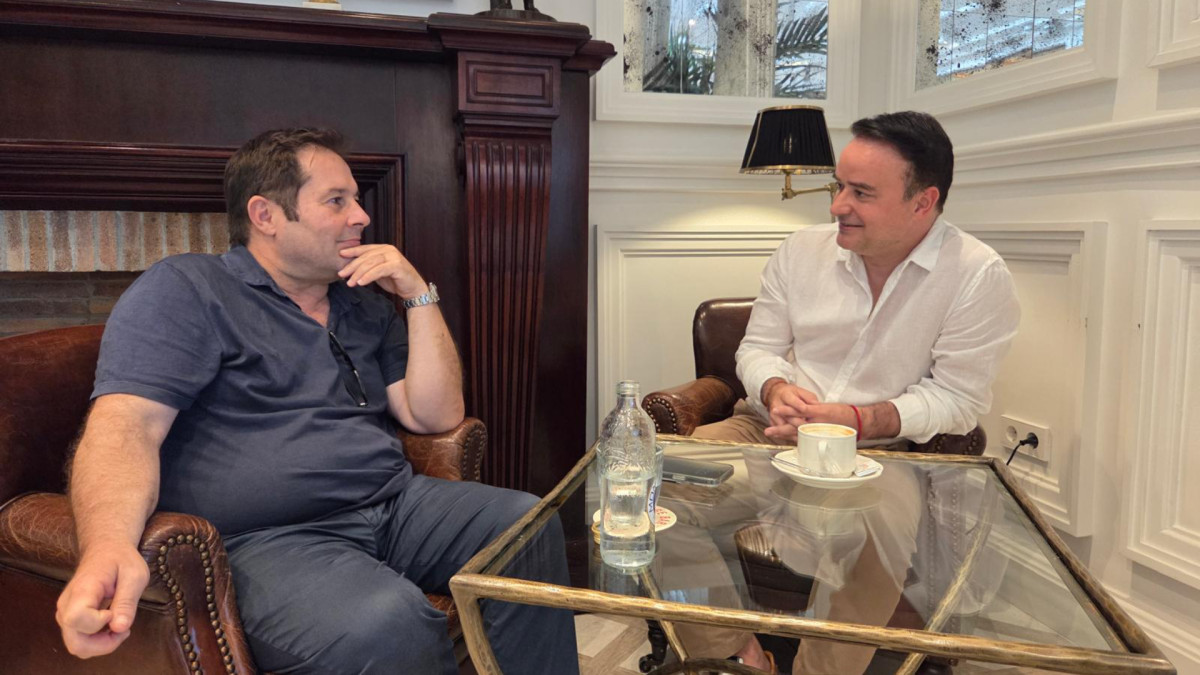
How do you interpret the relationship between national and international politics? How should leaders who want a project for Spain engage in this realm?
José Manuel Albares and Félix Bolaños would laugh if they heard what I’m going to say, because I’ve repeated it from the start in the management committees: foreign policy does not win votes, but it can cost you votes.
In Spain we elect global prime ministers. Whoever thinks otherwise is mistaken. The Spaniards understand what they are choosing and know their needs. They know their industries export to 12 or 14 countries. They know they elect European prime ministers.
“Those who defeat the Budgets now will be as penalized as the Government. Eight years have passed and the expectations are no longer the same”
Reelection won’t come from foreign policy alone. That also has to be understood. But Pedro Sánchez’s strength in this area is natural: he served as a Brussels adviser, he was in the Balkans with Carlos Westendorp, and he has direct training and experience in trade and international politics. Just speaking with him makes it clear that, by far, he is the best prime minister we have had in this area.
Why wouldn’t we capitalize on that strength from the very first minute? It is what Spaniards demanded and what they will also require from whoever seeks to defeat him.
However, reelection depends on domestic politics, not foreign policy. Relying solely on international strength to secure it would be a mistake. They know this.
After a period of brutal dehumanization, the task is to return to the human factor. It is about getting to know Pedro, without any pretensions: as a father, as a husband, as a brother, as a person. We know him very little.
We must do something no one has done before. This is not political marketing: it is life. Spain is a country to live in, and that is the path. The rest are strengths you already have and that Spaniards recognize.
Others will have to step up. The majority must ask: is he a free politician? Can he guarantee coexistence? Does he have a project in favor of Spain?
After so many presidents and so many campaigns, the business of current affairs has three components. The first is misinformation campaigns that seek to polarize, fragment and destabilize. They do not necessarily do it in one direction: it does not matter who governs. Their aim is to destabilize states.
The second component is legacy media. Agenda Pública is part of that. They do their job, they have a method, and we need them to build the democracy we want. But they can also swallow a subprime piece of information.
“After a brutal dehumanization period, it’s time to return to the human factor. It’s about meeting Pedro, without complexes”
The third component is the battle of bots and algorithms. Against those three forces we must reclaim the human factor. That requires an effort that goes far beyond being on TikTok or social media, though those platforms are also necessary.
It’s natural to demand accountability from our presidents. And when a president has eight years in office and asks for four more, the demand should be even higher.
Sometimes we forget that success has many curves. The toughest of all is the curve of success itself. You may fall, but to rise again you must do twice as much as before.
If Pedro Sánchez fulfills Pedro’s expectations, if he pushes himself to take the presidency to a completely different level and if he offers that record, he will have to do double what he did in 2018 and 2023. But he will succeed.
Conversely, Alberto Núñez Feijóo must stop being a conventional player. First he must do what Pedro Sánchez did in 2018: become a free politician. It’s very important. He must demonstrate that he can guarantee coexistence and offer a project in favor of Spain.
The motion of censure that gave rise to that government was, above all, a motion about democratic coexistence. 90% of Basque and Catalan deputies voted in its favor. When I speak of Basques and Catalans I could also speak of Extremadura, my second homeland in professional terms. I do not discriminate against any territory.
I like to speak specifically of Basques and Catalans because for a long time they were denigrated, also through misinformation campaigns. They form part of the common project, like every people. Whoever wants to govern must have a clear idea of Spain.
From there, Spain is much more aligned than it seems, and the left can win the next general elections.
Would you return to politics?
I’m already in my second act. After everything I lived through, five years ago I promised myself that when I was asked questions like this, I wouldn’t give the typical evasive answer. I’ll be frank.
When these things happen, they usually talk about it at home. If the proposal is sincere, you appreciate it from the person who makes it. Often you don’t even know if you’ve been proposed or not. Everything remains in a haze and in private.
“If someone asks you if you can go back to bat or throw that three-pointer again, it’s an honor”
But I take these possibilities seriously. If someone asks you if you can go back to bat or throw that three-pointer again, it’s an honor. Still, many matters, at least during my second act, should remain private.
My obligation at the moment is the Redondo Group. For many reasons.
Thank you very much.
