
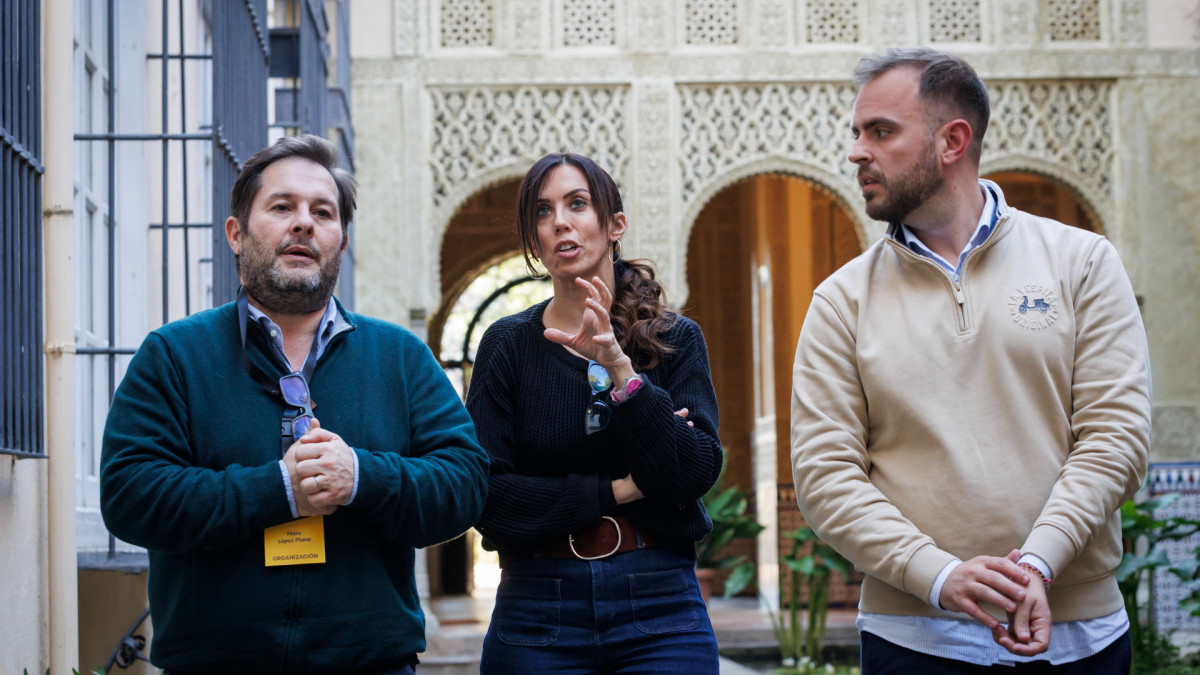
Granada hosted this week the first edition of the Next Gen Forum, an initiative by Agenda Pública and TALEÑTO ESPAÑA, where institutional representatives and business leaders from the millennial and zeta generations shared assessments of some of Spain’s challenges for the coming decade. The sessions, held in the Carmen de los Mártires palace, were conducted behind closed doors and following the Chatham House rules, fostering dialogue among attendees.
Some of its protagonists, such as mayors Marta Farrés (PSC) and Alberto Escribano (PP), have shared their assessments after the sessions in special conversations that we will publish over the coming week. Farrés (born 1981) and Escribano (born 1989) analyze some of the challenges they face from their administrations, such as housing or immigration, from the perspective of local power in two prominent cities in Catalonia and the Community of Madrid.
The ideological distance between the mayors does not prevent them from having a constructive dialogue. Photo: Agenda Pública / Álex Cámara
Is the municipal administration ready to face the consequences (DANA events, heat waves) of climate change?
Alberto Escribano (A. E.): The municipal administration, no. But that should not be our role. For that there are agencies and entities with prestige and track record, regardless of the autonomous community. They are of a high level and they have to take charge, because if every city hall had its own emergency corps, in the end it would be a waste of resources and we would not be able to respond.
Each one has to know very well what it is supposed to do.
Marta Farrés (M. F.): On the emergency front I completely agree. But we, for example in Sabadell, are indeed preparing the city to adapt to climate change. That is something we will have to address.
Something as simple as giving schoolyards shaded spaces, for instance, is not something that would necessarily fall to us, but in the end you end up doing it and it ends up being replicated in different places. When we design public space, we think about what happens when it rains a lot, what happens when there is a lot of sun, what happens with the trees when it is very windy. That shift in city design is something that affects us and has to be introduced gradually.
A. E.: In our case we experienced in 2019 —in one of the first DANA events that was widely discussed— a flood. Arganda is built on a ravine, the main street turned into a river and it destroyed everything. The city was not designed for such rainfall.
Since then, a borehole has been created —they call it “the conduit”—that looks like a metro tunnel. And, in this case, it was built by the Canal de Isabel II. For us it would be impossible to shoulder that cost and that project. We must prepare, yes, but there are investments and actions that must fall to other administrations.
And facing the migration challenge?
M. F.: Immigration is here to stay. What we must do is adequately size public services to provide support and to be able to respond to the fact that we are more numerous.
“As the mayor of a large city very close to the metropolitan area, I’m not worried about growing for the sake of growth. I’m worried about growing without having the public services to handle that growth.”
Not long ago I had a discussion on this tied to housing, which is closely linked. As the mayor of a large city near the metropolitan area, I’m not worried about growing simply for growth. I’m worried about growing without having the public services to cope with that growth. If it’s done well, if we have the public services and design the spaces well and how we do it, I’m not afraid.
A. E.: In my case I come from a city that has lived since the early 2000s with a migration rate probably among the highest in the entire Community of Madrid. A large flow from Romania: in Arganda, in 2000, of a population of 40,000, 14,000 came from Romania.
It’s true that in those years there wasn’t as much controversy or discussion as now. The city understood it: everyone is integrated and there have been no problems. In fact, people came to work; today they run their own businesses; their children are practically of our generation and have gone to school with us. That is, people fully integrated.
The problem, as Marta says, is that being so close to Madrid, the pressure has been brutal. There was a defining moment: when the metro arrived. Since then, the benefits are clear, but we also faced a massive influx of people. Land ran out and now housing is a major topic, but the bureaucratic procedures or approving a general plan are endless.
It’s true that we talk about it and that all politicians discuss it, but it does not translate into practice: it doesn’t translate into real changes in laws.
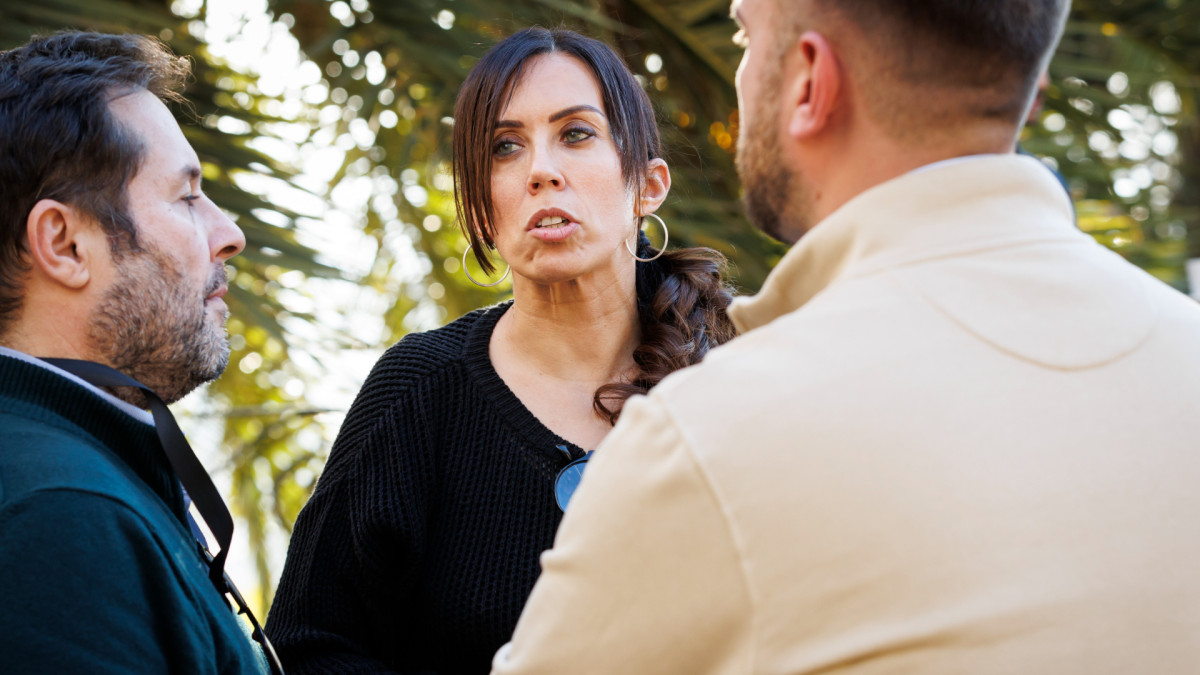
Speaking about immigration, the Sabadell mayor focuses on the management of public services. Photo: Agenda Pública / Álex Cámara
And on housing?
M. F.: For me it is the leading issue of social exclusion in my municipality right now. The problem is housing, and we have to try everything, everywhere and with everyone. There is no single solution when the problem is so complex.
Here, all administrations must bring every resource to bear, including the private sector. Build more public housing, but also bring in private; create affordable rental housing; try to push more rentals, but also purchases. For example, in Catalonia we are now strongly backing rental policies. I am one of those who believes we must also reclaim ownership again.
We have to diversify everything we can think of and try to solve it through many channels, because there will be no magic wand: there is no single solution or single public policy that fixes it. There must be many public policies at once.
A. E.: I don’t know how the housing problem is solved. We are seeing that almost no one knows. What I do know is that, as with many other debates, in Spain this is not addressed in a serious way; instead, everything becomes politicized in a negative sense. It’s normal for it to be politicized, because we are politicians, but any solution proposed by one side is ultimately shot down by the other.
“As in many other debates, in Spain the housing issue is not addressed seriously, but everything becomes politicized in the wrong sense”
On the other hand, the rental market has been wrecked. This topic is also discussed out of fear that has spread. I don’t see it as a real problem in the way it is often framed. And perhaps here I’m going somewhat against what my party says: when we talk about occupancy or tenants who don’t pay, yes, there is and it is a problem. Those who suffer can see their life opportunities ruined, especially if they are a retiree who cannot meet payments. But that has produced a collective psychosis: that no one rents housing, that everything stops, and out of fear no one acts. That is harming all of us. In Arganda there is a lot of construction, but once we finish building all that is currently under construction and on urban land, there will be no more.
M. F.: And rehabilitation. It is very important to rehabilitate. We always think about new construction. I come from a city that can still grow, but we have to rehabilitate part of the housing stock that is not being used, or that is used but the occupant wants to move because the building is not in good shape.
That is why I say: we have to play on all fronts, new construction and rehabilitation. And even then I don’t know if we’ll succeed, because it is very complicated.
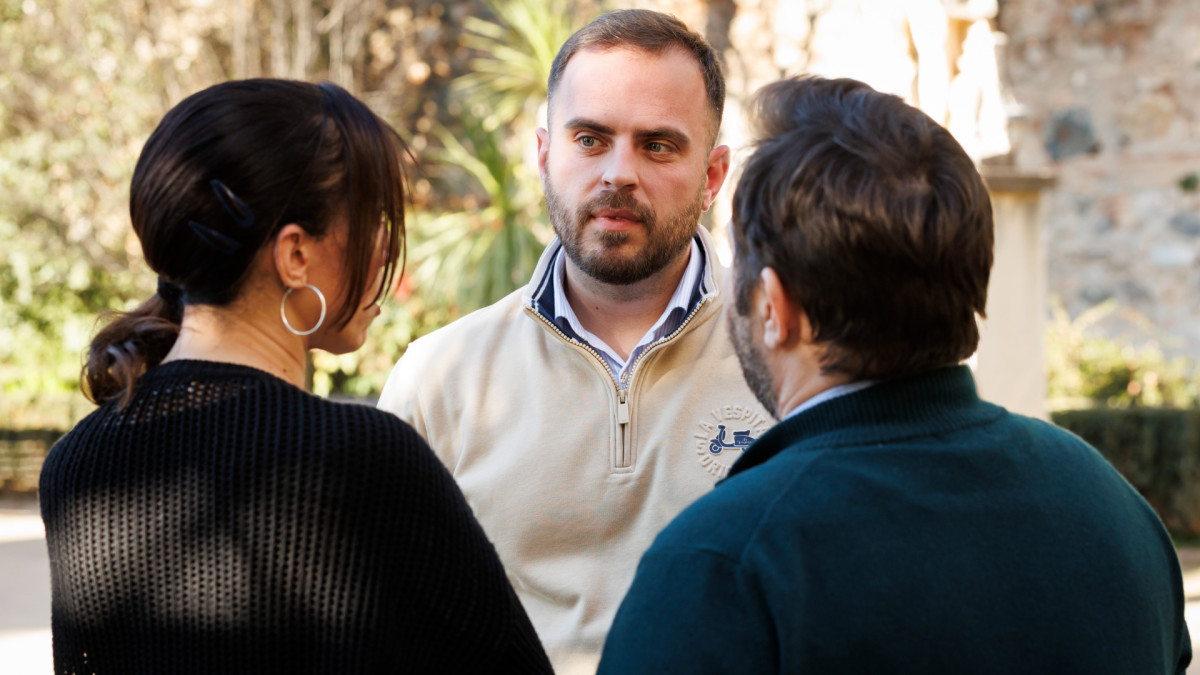
The Arganda mayor laments that some debates lack a more constructive focus. Photo: Agenda Pública / Álex Cámara
Both are metropolitan. Do you think there should be a metropolitan government in Madrid or Barcelona?
A. E.: I’m very much loyal to the identity of my city. Arganda has grown a lot, surpassing 60,000 inhabitants, but it still retains a strong small-town soul, a distinctive identity and a very strong history.
If we understand “metropolitan” as, for example, being able to go from Arganda to Alcalá on a road that connects us directly and we don’t have to pass through Puerta del Sol, so to speak, then yes. But that implies a change in thinking: metropolitan planning. I don’t care whether we’re talking about roads or intercity bus lines. Right now we are not connected between neighboring towns; everything is radial toward the capital. If that is the case, I agree.
M. F.: We do not need governance from above. I agree that what is needed is to distribute the cake differently. Acknowledging that the capitals are very important: in my case, being near Barcelona, I want Barcelona to do well, but not everything goes through Barcelona. More and more it goes through those surrounding cities.
“The solution no longer comes from centrality but from connecting more between municipalities, in a more transversal way, and less with a radial scheme centered on the capital”
Marta Farrés
That means investments have to change. And, coming from a region like Catalonia, if we go too far in that direction we risk losing the Government. It’s more about changing the concept than creating new governance structures.
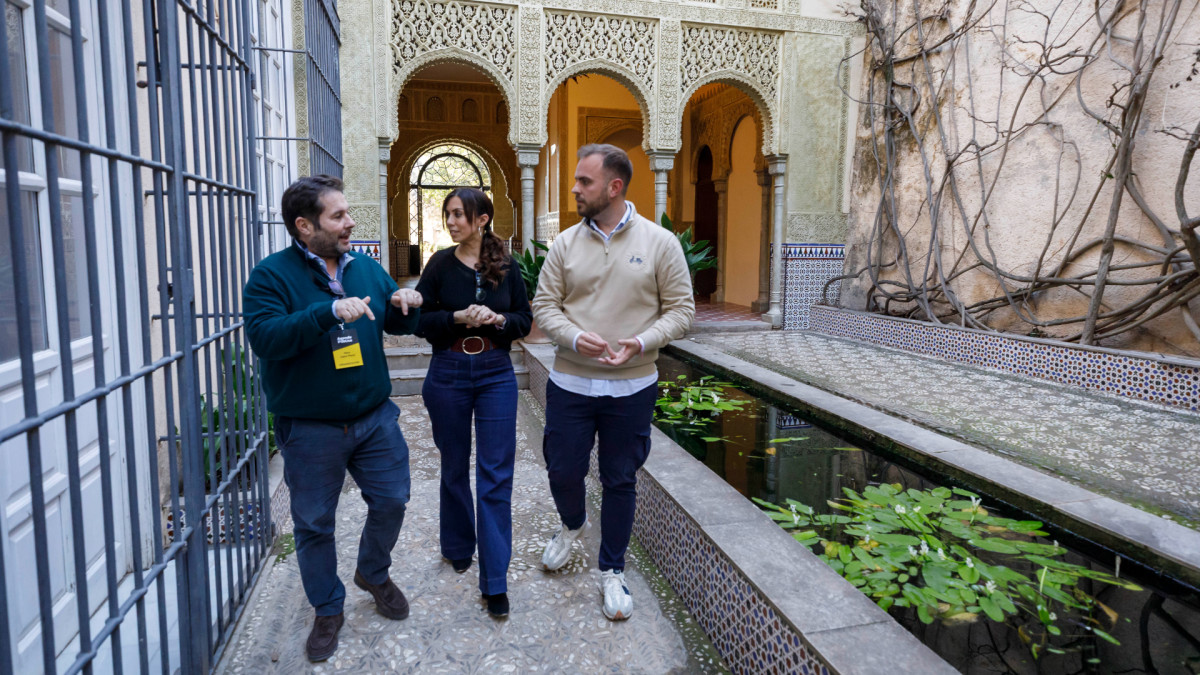
The two mayors and Marc López Plana converse at the Carmen de los Mártires palace (Granada). Photo: Agenda Pública / Álex Cámara
How does the national political climate affect local politics?
A. E.: I’ve been a deputy in the Assembly. It’s not national, but it has a strong national focus, especially in Madrid. Since becoming mayor, I have shed much of my ideological stance, because you realize that the problems you have to fix are not usually solved through ideology.
“Seen from the outside, at a distance, you understand that what is being discussed is good for Twitter, but it isn’t helping people at all”
Seen from the outside, with some distance, you realize that what is being discussed looks good for Twitter, but it isn’t helping people at all. That, besides polarizing society, also makes people view politics with detachment. Being a mayor changes you a lot.
M. F.: I always say I get along better with a mayor for being a mayor than for belonging to different parties. That unites us a lot.
Municipal politics is a different reality. There you confront real problems and where you must give real solutions: where you lay it on the line. I believe that if local politicians had the tools to fix things, people would trust politics again, because municipal politics is tremendously useful and, honestly, is where most transformation happens.
A. E. G.: In the Forum Next Gen, the example of the garbage tax has emerged. It has caused serious problems, in my view, in all municipalities, because each has implemented it differently. A lot of them are going to be overturned.
Where there is PP governance it has been challenged by the PSOE; where PSOE governs it has been challenged by PP. We’ve made a muddle. There were policies that indeed should be done from above. If it’s for everyone, it’s for everyone, but we cannot be like this. And I think that’s a perfect example.
Thank you very much to both of you.
