
In the past few hours, headlines, statements, and posts on social media about Schengen, Ceuta, and the announcement by Italy to temporarily restore controls for those arriving from Spain have proliferated. As is often the case when the migration debate bursts onto the political agenda, legal concepts, political decisions and simply false claims mingle together. This article does not aim to provide an exhaustive explanation of how the Schengen Area works. For that, there are far better sources: from the Schengen Borders Code itself, which regulates when and how temporary internal border controls can be reintroduced, to the European Commission’s page, which maintains an up-to-date list of all temporary controls currently in force in the various Member States. That listallows to verify that the temporary reintroduction of internal border controls is today a relatively common practice in Europe and affects numerous countries for very different reasons.
“Schengen becomes an instrument at the service of anti-immigration discourses that, far from offering management alternatives, contribute to generating confusion about how it works”
The aim here is much more modest: to offer five keys that allow a better understanding of what Schengen is, what it is not, what happens in the Ceuta (and Melilla) case, and why some of the statements being made these days do not stand up to a minimally careful reading of European rules. The exercise seems especially necessary when Schengen becomes an instrument at the service of anti-immigration discourses that, far from providing management alternatives, contribute to generating confusion about how it works. Because the damage is not limited to this debate: it also contributes to eroding confidence in one of the main achievements of European integration: the free movement of people.
Schengen does not mean the absence of controls
It is worth starting by noting that Schengen does not entail the permanent disappearance of interior border controls. The free movement of people is one of the greatest achievements of European integration, but it has never implied that States renounce entirely the possibility of controlling their borders when exceptional circumstances arise. Therefore, the Schengen Borders Code provides mechanisms that allow for temporary reintroduction of interior border controls. The Article 25 authorizes a member State to do so for an initial maximum of thirty days (extendable in certain circumstances) when it considers that there exists a serious threat to public order or internal security. In addition, the Article 29 contemplates a different scenario: when serious and persistent deficiencies in the external border controls put at risk the overall functioning of the Schengen area, the Council, on proposal of the Commission, may recommend the coordinated reintroduction of interior border controls as a last-resort measure to protect the system as a whole. What Italy has done, therefore, is not a “suspension of Schengen” in the strict sense, but a temporary suspension that is one of the mechanisms provided by Schengen itself to respond to situations deemed exceptional.
Moreover, it is important to understand that the fact that the Code allows for the reintroduction of controls does not mean that they must be deployed in only one way. The decision to reintroduce them is political (and takes legal form); the way to apply them is an operational and security decision, which must adapt to the nature of the threat and the context of each border. In some cases, controls are systematic; in others, they are random or based on police intelligence. Reintroducing controls does not mean closing a border.
Germany provides a good example of this. In September 2024 it decided to reintroduce controls at all its land borders, and to date those controls remain in force. However, this has not meant the end of Schengen or the interruption of free movement. In places as symbolic as Strasbourg and Kehl, where a tram links France and Germany, mobility remains the norm, and it is not common to see the police conducting (even if they could) identity checks.
“Schengen has demonstrated a remarkable capacity for adaptation and has survived successive temporary reintroductions of controls”
That example recalls two things. First, that Schengen has demonstrated a remarkable capacity for adaptation and has survived successive temporary reintroductions of controls. Second, that this resilience should not lead us to complacency. Each new reintroduction of controls adds pressure on one of the most visible achievements of the European project. Schengen has resisted so far, but the normalization of measures that began as exceptional raises questions about the future of free movement in Europe.
Reintroducing controls does not mean closing the border
One of the concerns that has surfaced in recent days is whether the people who are planning to travel to Italy could be affected. The short answer is: probably very little. This is, surely, the most common misunderstanding. When a State reintroduces controls at its interior borders it does not close the border nor automatically prevent people from entering. What it does is regain the possibility of controlling who crosses that interior border. That means authorities can identify travelers, check their documentation, or verify whether they meet the legal conditions to enter or stay in the territory. Speaking of a “closure of Schengen” or a “suspension of free movement” is, therefore, incorrect.
In Italy’s case, if it finally decides to reintroduce controls for arrivals from Spain, it is most likely that these will materialize at ports and airports. Passengers on flights or ferries from Spain could encounter an additional check upon arrival. That check can be organized in different ways: from diverting passengers to the area where passport controls for third-country travelers are usually carried out to —which is usually the most common solution— deploying police officers at the disembarkation gates to perform document checks in a selective manner.
For the vast majority of travelers, this means some inconvenience, perhaps a few extra minutes of waiting, but little else. Moreover, these checks do not have to be carried out on everyone traveling on the same plane or ship. Authorities can decide to carry out systematic checks or random checks, depending on risk assessment and available resources. And here arises an important issue that deserves a specific reflection. When checks stop being systematic and become selective, the inevitable question is to whom is checked and according to what criteria. We will return to this issue, which opens the debate on discrimination, later. On the other hand, those traveling by road from Spain to Italy should not be directly affected by an Italian decision, since the Franco-Spanish border would not be the subject of that measure. But we will come back to this later as well, because the France–Italy border has had controls for years.
The temporary reintroduction of controls is a routine practice
Listening to some statements in recent days, one could think that Italy was doing something unprecedented. The reality is quite different. The temporary reintroduction of interior border controls has become a relatively common practice within the Schengen area. At present, there are eight EU countries that have temporarily reintroduced border controls. Among these countries is precisely Italy.
In fact, Italy has maintained for months security-related controls on its border with Slovenia due to the international situation; and indeed, a few days ago the country notified the temporary reintroduction of controls on its border with France for a weekend on the occasion of the Festival dell’Alta Felicità, held in the Susa Valley. In other words, the same legal instrument can be used to manage a migratory episode, a terrorist threat, or a music festival.
This diversity shows that the Article 25 of the Schengen Borders Code is not a sanction against another Member State, but a risk-management tool available to all of them, which also has its limits. The relevant question, therefore, is not whether a State can reintroduce controls, but how frequently we resort to this mechanism and whether we are turning an exception into a practice that becomes increasingly permanent.
“The relevant question is not whether a State can reintroduce controls, but how frequently we resort to this mechanism and whether we are turning an exception into an increasingly permanent practice”
In the current situation, however, what has been truly striking has not been the announcement of a possible temporary reintroduction of controls, but the political and media reaction that accompanied it. First, because it was presented as a novelty or extraordinary measure, when it is part of the ordinary instruments provided by the Schengen Borders Code itself. Second, because it highlights a worrying lack of European solidarity. Facing a situation that affects an external border of the Union, some voices have responded by proposing to lift controls against Spain before asking how to support a Member State that is managing a border that is, in reality, shared by all.
This lack of solidarity is no small detail. Schengen is based on a double trust: the trust that all States will adequately protect the external borders and the trust that, when one of them faces a situation of exceptional pressure, the rest will respond through cooperation rather than retreat. When the immediate response is to reimpose interior border controls, the message conveyed is that the responsibility lies solely with the border state. That does not strengthen Schengen; it weakens it.
This dynamic also fits into a broader geopolitical context, in which immigration has become an instrument of pressure in relations with third countries and, at the same time, a powerful tool for political mobilization within the Union itself. It is no accident that those who have amplified the announcement the most are actors of the European far right, using an ordinary Schengen mechanism to strengthen an anti-immigration discourse and, in passing, feed distrust toward one of the most visible achievements of the European project.
There is no Schengen for EU nationals and another for non-nationals
Some media outlets have also echoed the idea that Italy could reintroduce controls “to prevent the entry of immigrants coming from Spain.” In reality, things do not work that way. Schengen regulates the crossing of interior borders; it does not establish a regime that differs according to nationality or origin of the people. If Italy decides to reintroduce controls with Spain, these potentially affect all people crossing that interior border: Spaniards, but also Italian citizens returning home and nationals of third countries. The border reappears for control purposes and those crossing it can be subject to a documentary check.
Naturally, the control does not have to develop identically for everyone. European law allows for differentiated procedures according to the traveler’s legal status. This already happens at Schengen’s external borders, where EU citizens typically have specific access or automated biometric control systems — ‘eGates’ — that speed up the passage. This speeds up the control, but does not eliminate it: EU nationals are subject to identity verification and document validity checks, even if the process can be resolved in a few seconds.
Another question is how people are selected to be checked when checks are not systematic. A State can decide to check everyone or to perform random checks. What is much more problematic is systematically selecting whom to check solely by their physical appearance, skin color, or an assumed ethnic profile. The way these checks are carried out must be regulated by objective criteria — the argument that they “look foreign” is not valid — and must offer sufficient guarantees against discriminatory practices.
“Parte de la campaña favorable a la salida del Reino Unido se construyó sobre la idea de recuperar el control de las fronteras frente a “los otros”” “Part of the campaign in favor of leaving the United Kingdom was built on the idea of reclaiming border control against ‘the others’.” A good example of how border issues are often misinterpreted is the Brexit case. Part of the campaign in favor of leaving the United Kingdom was built on the idea of reclaiming border control against “the others.” However, once Brexit was consummated, it was the British citizens themselves who began queuing at the controls for third-country nationals upon entering the European Union. They then discovered, with surprise and sorrow, that, from the EU’s perspective, they had become “the others”.
Ceuta already has a specific regime
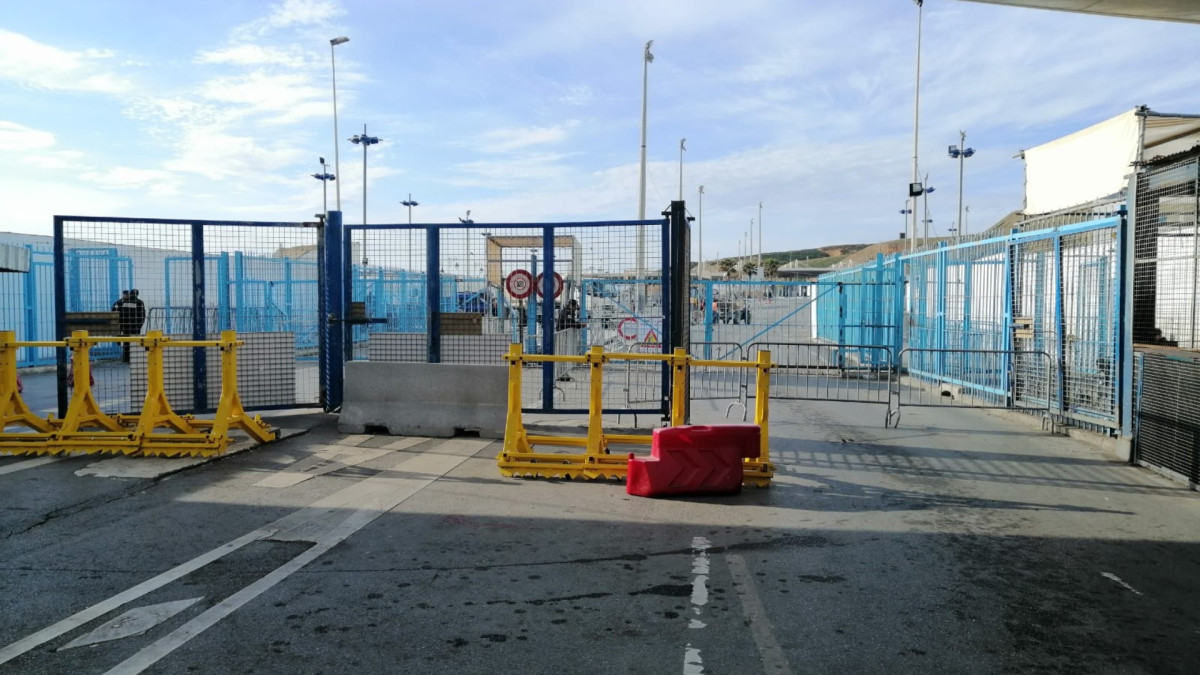
Another frequent misunderstanding is thinking that someone who enters Ceuta automatically enters the rest of the Schengen space. And the truth is that this is not the case. Ceuta and Melilla are part of Spain and of the Schengen space (as confirmed by the Commission in 2022 in response to a parliamentary question), but they maintain a specific regime. Among other particularities, there is a documentary control to exit towards the rest of the Schengen territory. Therefore, people who arrive irregularly in Ceuta cannot move freely to the Peninsula without passing through that control. It is an exception known for decades and precisely designed to manage the uniqueness of both cities.
Coda: the real debate is not immigration
If the debate were really about immigration, the questions would be other. We would ask why, after more than twenty years of externalization of migratory control, we continue to witness episodes like Ceuta. We would analyze to what extent a model based on strengthening external borders, increasing expulsions, and delegating much of migratory control to third countries has demonstrated its limits. And we would discuss whether continuing to deepen that same strategy can yield different results. However, that debate hardly exists.
In fact, it is striking that those who most forcefully demand the “Send them back!” that was heard in the European Parliament just a few months ago, or advocate more expulsions — now popularized under the term ‘deportations’, an uncritical translation of the English ‘deportation’ that also imports the mental framework driven by Donald Trump and forgets the heavy historical burden the word carries in Europe—, more returns and greater control of the outer borders rarely question the model on which those policies are based. Expelling requires readmission agreements; returning requires operational cooperation; strengthening borders implies trusting neighboring countries to contain migratory movements. In other words, many of the proposals championed today by the European far right do nothing but deepen the same model whose fragility has just been put back on display. It is not only about importing a word; it also imports a political framework and a way of understanding migration policy that is foreign to the European legal tradition.
“The underlying issue is not immigration. It is the European Union’s ability to preserve one of its main political achievements: a common space of rights, freedoms, and mutual trust.”
The underlying issue, therefore, is not immigration. It is the European Union’s ability to preserve one of its main political achievements: a common space of rights, freedoms, and mutual trust. Schengen was never merely an agreement to remove border controls. It was, above all, the expression of an idea of Europe: a political community in which the free movement of people ceased to be an exception and became a right. The trust among Member States progressively replaced the logic of national borders.
Today that project is under a double pressure. On one hand, external actors who have understood the strategic value of migration management as a lever of pressure on the European Union. Morocco, Turkey, Belarus, or Russia have demonstrated, at different times and with varying intensity, that migratory movements can become yet another element in geopolitical negotiation. But that pressure only proves effective because it finds a resonance within the Union itself.
The nativeist and euro-sceptic discourses have turned every migratory episode into an opportunity to question Schengen, free movement, and, ultimately, European integration itself. Migration is used as an argument to erode trust in a common space of rights, even though viable alternatives to the existing model are rarely offered. That is, probably, the most worrying aspect of the current debate. Not because immigration is discussed —which is necessary in any democracy— but because it is done by substituting analysis with fear and complexity with slogans. Migration becomes the scapegoat for a wide range of problems, while deliberately avoiding debate on the policies implemented over the last two decades.
And in the meantime, the damage accumulates. Not only the quality of public debate deteriorates. Also the protection of the rights of all people who live in and move around the European Union is weakened, and one of the most visible pillars of the European project is eroded. Because Schengen is probably the most everyday expression of European citizenship. When it is instrumentalized to feed anti-immigration discourse or rights violations, what ends up being questioned is not only a part, but the whole: the very idea of the European Union as a shared space of rights, freedoms, and solidarity.
