
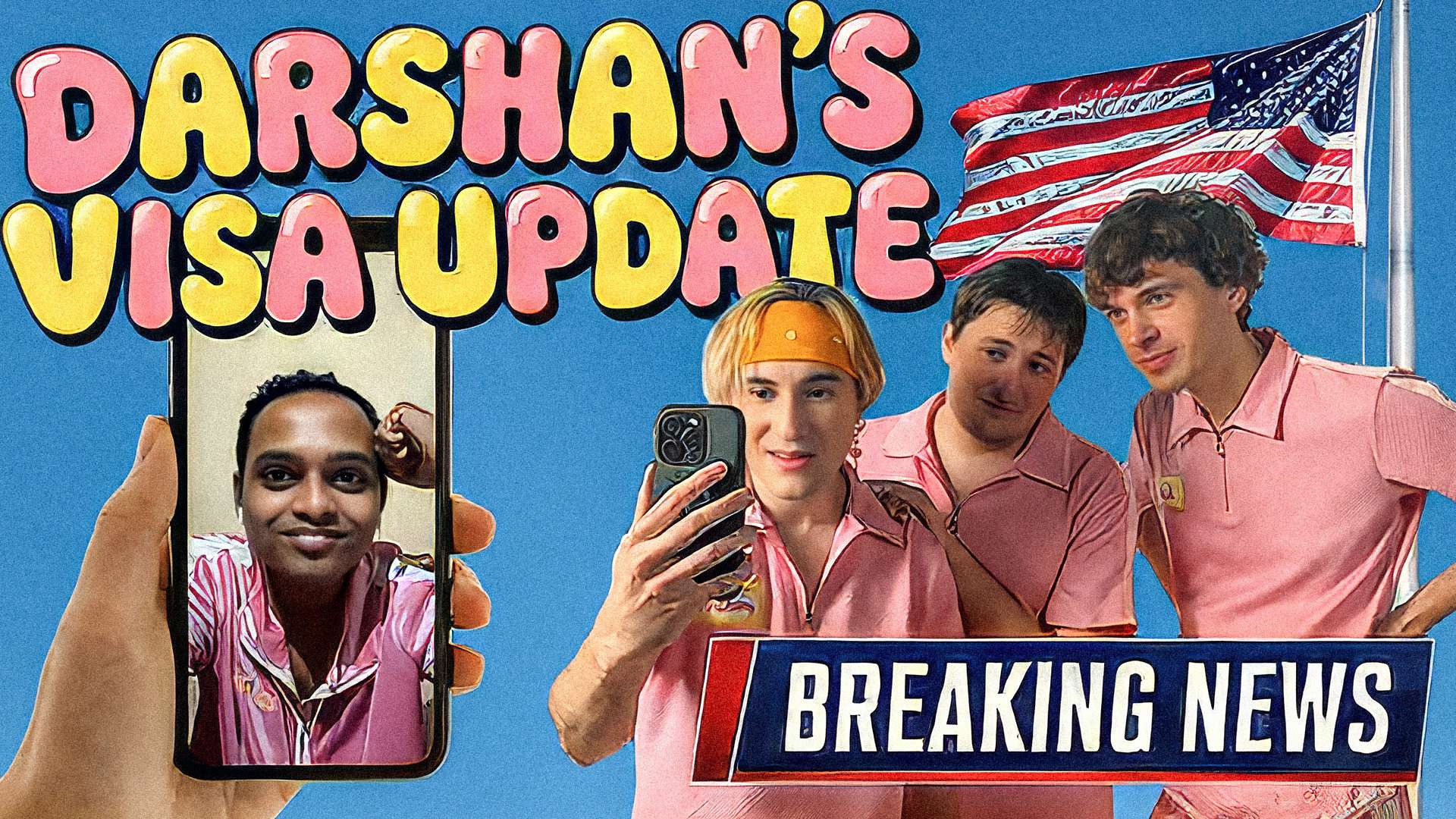
After cultivating a following around his immigration ordeal, Darshan Magdum is finally able to reach the United States.
Darshan Magdum, a member of the viral boy band Boy Throb, has announced that his U.S. visa has been approved.
“The visa is mine!” Magdum cried during a FaceTime chat with his bandmates on Monday. A native of India, Magdum has been at the heart of Boy Throb’s ascent to stardom due to his battles with the U.S. immigration system.
Clad in pink velvet tracksuits, Boy Throb began releasing reimagined versions of popular songs in October 2025 to demonstrate they were a legitimate group so that Magdum could obtain a visa and perform with them in the United States. Earlier in the year, to Sabrina Carpenter’s “Manchild,” the band performed: “Oh I’d like Darshan to be in the USA, oh I need him here by New Year’s Day.” In the cadence of Taylor Swift’s “The Fate of Ophelia,” the group sang: “It’s about to be the greatest night you’ve dreamed of, the fate of Darshan’s visa.”
In January, the ensemble issued a spoof of the Christmas classic “Here Comes Santa Claus,” which outlined the grueling process of applying for the O-1 visa. “Our petition’s been filed and is awaiting its review. USCIS will adjudicate in 15 business days. Adjudicate means a formal ruling; we hope it goes in our favor. Once Darshan’s visa is approved, there remains one hurdle: a trip to the Mumbai consulate for an interview.”
The O-1 visa is a U.S. nonimmigrant visa reserved for individuals with “extraordinary abilities.” In FY 2024, there were more than 20,000 O-1 visa applications and over 1,000 denials, with application costs ranging from roughly $8,000 to more than $10,000.
The outcome is a win for Magdum, who initially sought a visa in December 2025 but was rejected after the U.S. government—along with some online observers— questioned the band’s legitimacy. To demonstrate they were a real group, Boy Throb launched its nationwide “Rehearsal Tour.” Magdum frequently appeared at their concerts via Zoom, which helped generate demand for his visa to be approved so the group could perform together in person.
“We all assumed I’d be in the U.S. by spring, where we planned to finally become a full‑time boy band touring the country, sharing our music, and meeting all of you wonderful people,” Magdum explained in a video from April. “But the government’s delay of my visa has set us back considerably.”
“This case truly drew my attention because they recognized talent and ideas, yet fame arrived before the formal acknowledgment of ability,” noted Jonathan Grode, the Pennsylvania-based immigration lawyer who filed additional documents for Magdum’s visa, The Guardian. “It raises a fundamental question: how is fame manufactured?”
It also raises questions about why the immigration system is so intricate and costly. Pursuing a legal move to the United States can cost applicants and employers thousands of dollars in government fees, paperwork, and legal assistance, with no guarantee of visa approval. The Cato Institute notes that in 2024, U.S. Citizenship and Immigration Services (USCIS) collected roughly $7 billion in immigration fees. They also found that between 2003—when USCIS was created—and 2022, the total length of USCIS immigration forms increased from 193 pages to 701.
While Magdum’s visa was ultimately granted, millions of people worldwide are turned away from U.S. visas each year. One result of the Boy Throb narrative is that many Americans have become more aware of how unnecessarily complex the immigration system is. Regrettably, we will never know whether those who are barred from immigrating possess talents as remarkable as Magdum’s, since they were never given the chance to try.
