
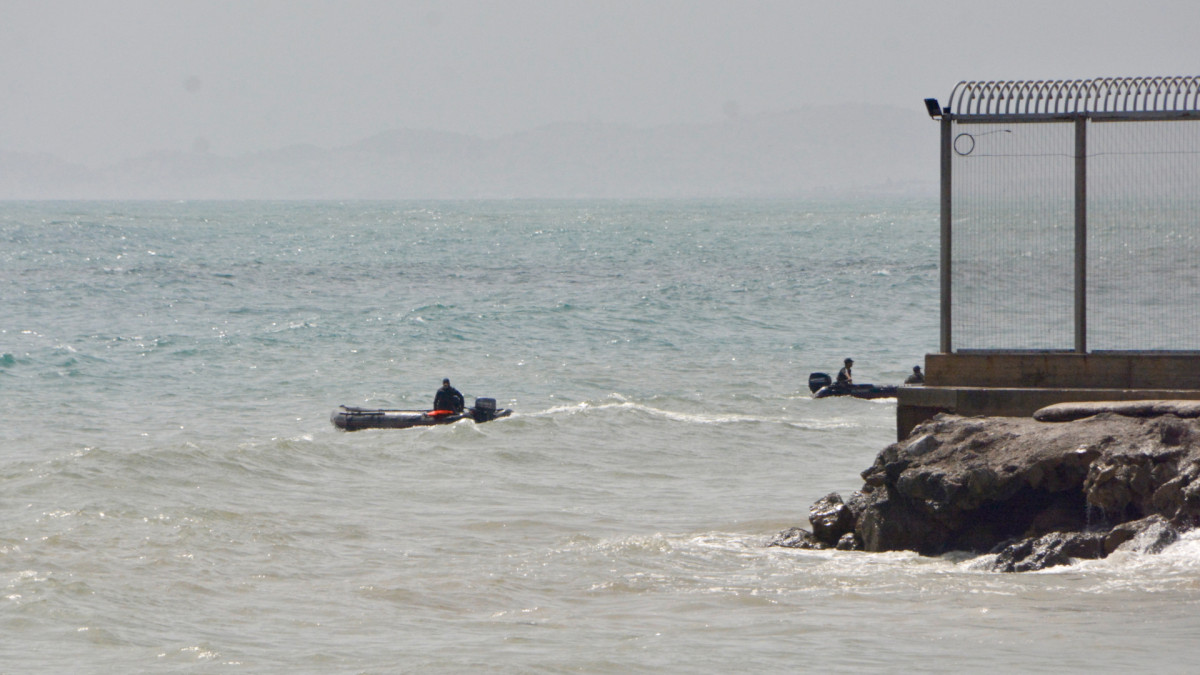
Following the Ceuta mass migration episode, a number of questions still linger. Agenda Pública enlisted prominent analysts to share their perspectives on how and why this unfolded, what it implies for Spain’s ties with Morocco, and why so many conspiracy theories gained traction online afterwards. This piece examines migration, geopolitics, and misinformation. Here are the insights these analysts provided.
Riccardo Fabiani
Riccardo Fabiani, Project Director, North Africa at International Crisis Group:
At this point, there is enough indication to suggest Morocco played a role in the Ceuta crisis, though pinning down the precise sequence remains challenging. The surge appears to have been organized online through digital groups and seems largely spontaneous in character. Simultaneously, Moroccan security services likely anticipated the event (they monitor online chatter). There are migrants’ testimonies alleging they were urged by security personnel to head toward Ceuta, and there are videos showing officers observing passively as migrants were unloaded from trucks or queued for Ceuta. There is also the 2021 precedent, when a comparable situation was almost certainly directed by Morocco.
“We can only speculate, but I think Morocco facilitated the crisis rather than fabricating it in Rabat, using it to convey a signal to Spain.”
We can only speculate, but I think the crisis was facilitated by Morocco, not manufactured by Rabat, and exploited to send a message to Spain. The signal could have related to Ceuta’s unsettled status, serving as a reminder from Morocco that it regards the city as occupied territory, and as a response to pressure from various US and Israeli right-wing officials and intellectuals who urged Morocco to act in Ceuta to “punish” Madrid for its support of the Palestinians and its stance during the Iran conflict. Yet, this remains a hypothesis and there is no way to prove it.

Intissar Fakir
Intissar Fakir, Senior Fellow at Middle East Institute:
We still lack a single, definitive explanation. The drivers seem to be a blend of harsh economic conditions, misinformation circulating on social networks, and possibly smuggling networks aiding the movement. The unresolved question remains whether Morocco’s border authorities were genuinely overwhelmed by an unprecedented, tightly timed mass movement or whether they deliberately allowed it to unfold. These two scenarios lead to different conclusions. If this represents an extraordinary failure of operation, we must assess Morocco’s resilience and whether the country is nearing the limits of its border-management system. If, instead, this was a deliberate move, we must examine the incentives for using migration as a tool in foreign policy.
It underscores once more how central migration is to the bilateral relationship. The emphasis has been on curbing irregular migration, and Morocco’s leverage grows as its border-policing role expands. Thus, whether intentional or not, the episode forces Spain and Europe to confront the consequences of externalizing border management.

Sabina Henneberg
Sabina Henneberg, Senior Fellow at The Washington Institute for Near East Policy:
Conspiracy theories are inherently difficult to pin down, but in this case several elements may have converged. The Spanish Supreme Court ruling on sea-crossings by migrants and the strains in US–Spain relations could be coincidences that helped feed claims of American and Israeli involvement in the surge. Yet other social-media trends, including analyses by Rubin and the Diaz-Balart Appropriations Bill report, likely reflect broader shifts in Morocco–United States ties (tied, of course, to Morocco’s relationship with Israel) rather than any direct manipulation of a migrant crisis. Additionally, the spread of misinformation about Ceuta on social media appears to have fueled these theories, so it isn’t surprising that messages linking the United States and Israel have circulated online.

David May
David May, Research Manager and Senior Research Analyst at Foundation for Defense of Democracies:
Israelis and their supporters saw in the Ceuta crisis an opening to spotlight Spain’s perceived hypocrisy: condemning Israel while Madrid maintains historic colonial links. This followed years of Prime Minister Pedro Sánchez and other Spanish officials waging diplomatic pressure against Israel and criticizing the Jewish state over alleged abuses. Since Israel appeared to benefit from the volatility, conspiracy theories—and even a Spanish minister—suggested that Jerusalem played a role. This line of thinking relies on familiar antisemitic tropes of Jewish malevolence and covert influence, arguing that Israel could coerce tens of thousands of Moroccan youths to overwhelm a Spanish possession. In reality, those theories are unfounded, and critics ought to address Spain’s policies and regional dynamics that actually contributed to the Ceuta crisis rather than blaming Israel.

Federico Santi
Federico Santi, Senior Analyst, Europe at Eurasia Group:
A lack of resources and attention on the Spanish side probably played a part; it’s hard to imagine an influx of this scale without at least an implicit consent or involvement from Moroccan authorities, which only intervened belatedly. Early anecdotal evidence appears to corroborate this. This episode adds to a pattern showing how Spain is exposed to and reliant on familiar pressure tactics, and it highlights Spain’s isolation within the EU. It’s not a problem unique to Spain: we’ve seen similar dynamics in Tunisia (with Italy), and in Turkey (with Greece). More broadly, internal EU divisions and short-term electoral considerations prevent the union from adopting a more strategic migration approach, and from using its economic and diplomatic weight to press neighboring countries to curb irregular migration more effectively, with the human costs that follow.
