
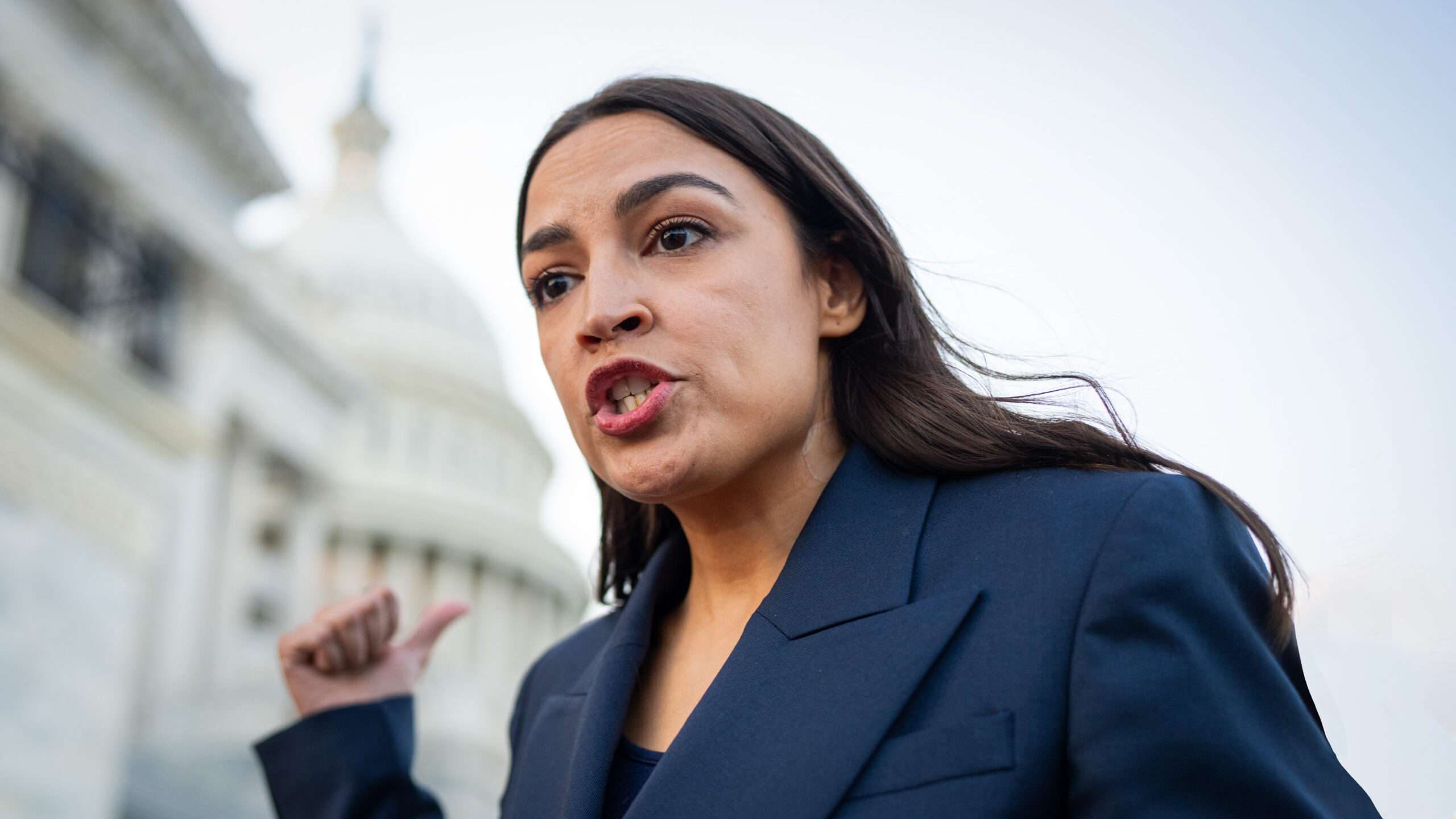
Would President AOC turn away from woke culture? I doubt it.
Representative Alexandria Ocasio-Cortez (D–N.Y.) drew surprised looks this weekend by brushing aside her earlier zeal for culturally progressive positions that could jeopardize electoral support.
“I have a local city council member who repeats this line: ‘Woke 1 was crazy,'” AOC said with a laugh. She was alluding to a tweet by Chi Ossé, a New York City councilman, who used the same remark to explain why he had previously argued that a white man should not be the next speaker of the City Council.
Put plainly, that stance comes off far too casual. While it’s encouraging that many progressives have distanced themselves from several—though certainly not all—of their most harmful proposals, no one should be naïve enough to take these shifts at face value. Moreover, it’s rather evasive to pretend that “Woke 1” was a misfortune that happened by chance—like a hurricane or an earthquake—and that there was nothing else one could do but endure it?
In truth, AOC and Ossé resemble a scene from Anchorman’s Ron Burgundy, lamenting with a casual sip of beer about their team’s outrageously violent, murder-filled clash—“that escalated quickly”—despite their obvious calm. Maybe Woke 1 didn’t involve Steve Carell stabbing someone with a trident, but the period was nonetheless wildly chaotic, and importantly, political figures such as AOC did nothing to intervene. She was more than complicit in it.
In 2019, AOC posted a video criticizing New Yorkers who preferred growing cauliflower to yucca in community gardens as complicit in colonization. (Neither cauliflower nor yucca is native to New York.) In 2022, she weighed in on the debate over the gender-neutral term Latinx, chiding fellow Democrats for moving too quickly to abandon inclusive language, even as polls consistently showed many Latino voters disliked the term and would be less likely to back Democrats who used it. And she said it was offensive for Secretary of State Marco Rubio to claim that cowboy culture originated in Spain; AOC credited “African enslaved peoples” with this contribution. That comment came five months ago.
Those are just a few striking examples of AOC actively participating in woke discourse and advocating for positions that many would deem excessive.
It’s true that broader debates about the excesses of wokeness inevitably involve competing definitions of what qualifies as woke. In earlier years, people tended to label the phenomenon political correctness and focused largely on speech-related cultural policing—virtue signaling, the idea of safe spaces, microaggressions, and cancel culture. But since political correctness can feel clunky and woke is a punchier, single-syllable word—better for headlines—the latter term ultimately gained traction. Wokeness also became linked to far-left policy aims that extend beyond culture and speech, such as questions about policing, immigration, and various quasi-democratic elements of the U.S. government (the Senate, the Supreme Court, the Electoral College, and so on). The policing dimension, in particular, has come to symbolize woke overreach, as the aftermath of George Floyd’s death spurred a backlash against policing that some argue went too far and became a platform for proponents of thought-policing, while opportunists profited.
Undoubtedly, the cultural pendulum has swung back toward restraint, and it’s noticeable that left-wing media figures, activist students, and online mobs no longer wield the same force to enforce orthodoxy or exact punishment for dissent. Many Democratic politicians attribute their hesitance to challenge such forces as a key reason for their significant losses of power.
Yet there’s a certain meta quality to labeling this era as “Woke 1” and proclaiming that it’s over—the line that this is a bygone chapter that they’d never revisit. It feels like a wink to the audience, a promise that the mistakes won’t recur, and a plea for trust that never fully resolves the question.
At best, AOC’s newly displayed ambivalence toward woke politics represents a weak stance, one she would likely abandon with enthusiasm should the cultural pendulum swing back in that direction.
