
The real aim isn’t to chase precision, but to prompt agitated conservatives to protest historical references that make them uneasy.
The true objective isn’t about sharpening factual accuracy; it’s to provoke restless conservatives to complain about parts of the past that unsettle them.
My wife and I still reminisce about touring the Petersburg battlefield in Virginia, where about 100,000 Union troops under Ulysses S. Grant laid siege to roughly 20,000 Confederate soldiers commanded by Robert E. Lee. It stands as the Civil War’s longest engagement, persisting for 292 days. The ferocious trench warfare produced around 70,000 casualties as Union forces severed supply lines to the Confederate capital in nearby Richmond, hastening the South’s defeat.
There was nothing humorous about this brutal slice of American history, of course, but we found the National Park Service film oddly entertaining for its unmistakably pro-Southern stance. In particular, the narrator invoked the phrase “advancing Yankee hordes,” which left two Pennsylvanians like us with a somewhat strange impression, given our different upbringing and perspective on these events. Our tour occurred 43 years ago, so I suspect the video has since been revised to reflect newer sensibilities.
We did not, however, become upset or complain to management. It added local color. People have a knack for arguing about history, as we somehow believe that steering the past’s narrative will yield a future aligned with our own preferences. For years, we’ve watched progressive critics attempt to shape history by reducing America’s great achievement of advancing human liberty to its darkest moments (slavery, Jim Crow laws, the Trail of Tears).
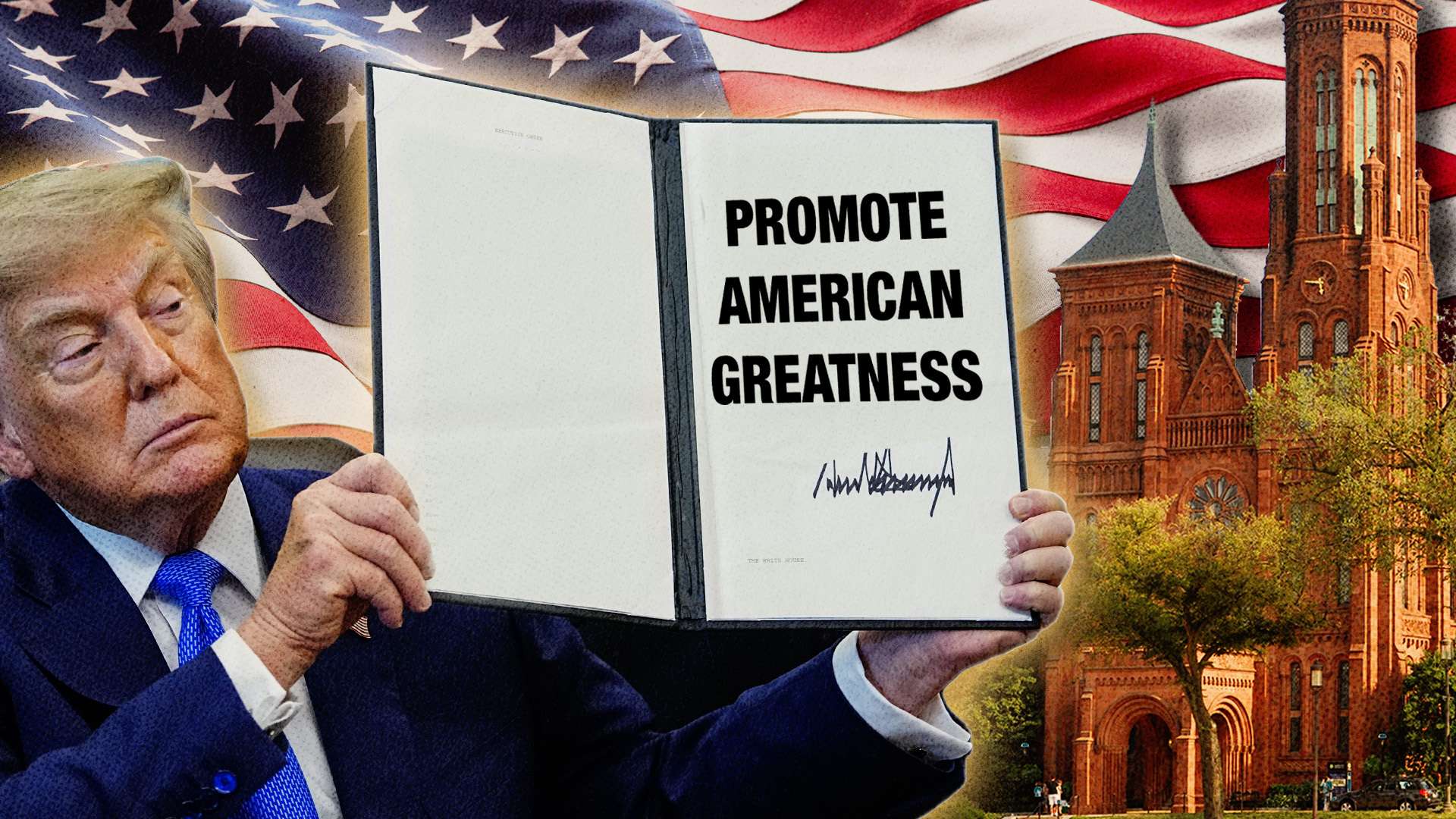
And now right-wing revanchists are pursuing the same tactic, aiming to erase even the mere mention of our nation’s most sordid chapters. In his executive order last year, President Donald Trump cited examples of museum exhibits that leaned toward political correctness. He then stated: “It is the policy of my administration to restore federal sites dedicated to history, including parks and museums, to solemn and uplifting public monuments that remind Americans of our extraordinary heritage.” The Smithsonian Institution will supposedly promote “American greatness.”
The effects of that executive order are becoming visible in concrete policies. Attentive visitors to the parks have reported new signs from the Department of the Interior urging people to scan a QR code or visit a website to identify “any signs or other information that are negative about either past or living Americans or that fail to emphasize the beauty, grandeur, or abundance of landscapes or other features.” The second clause strikes me as odd. I’ve wandered through many National Parks and I can’t recall ever seeing a sign that belittled the surrounding beauty.
Aims that aren’t about accuracy, but about nudging agitated individuals to protest historical references that make them uncomfortable. “Should rangers at Harriet Tubman Underground Railroad National Monument refrain from speaking negatively about slavery? Should rangers at Manzanar National Historic Site avoid discussing the internment of Japanese Americans during World War II?” asked Theresa Pierno, chief executive of the National Parks Conservation Association.
I’ve visited Manzanar and spoke with camp survivors. It’s hard to study what happened without naming those who allowed it to occur, including President Franklin Delano Roosevelt, who signed the enabling executive order, and California Attorney General (and later Chief Justice of the U.S. Supreme Court) Earl Warren, who advocated removing Japanese nationals and Japanese Americans from their homes. The nation formally apologized in 1988, so is it permissible for park officials to reference that apology or not?
Ironically, the National Park Service’s website currently treats the internment in a fair and factually accurate manner, even though this history doesn’t provide solemn and uplifting sentiments that bolster American greatness: “Many of the anti-Japanese fears arose from economic factors combined with envy…Other fears were military in nature; the Russo-Japanese War proved that the Japanese were a force to be reckoned with, and stimulated fears of Asian conquest—’the Yellow Peril.’” Let’s hope no one in the administration catches wind of this explanation.
To appease the administration and its cadre of easily offended critics, perhaps Manzanar should stop branding itself as a “site of conscience,” and instead present it as a pleasant resort crafted to give the California Issei a peaceful retreat in the remote desert. Or maybe the Tubman monument could stop dwelling on African Americans’ enslavement and instead emphasize the jobs they were purportedly provided on large plantations. I am joking, of course—history should be told as accurately as possible, warts and all.
Trump has also “ordered signs outside the National Museum of American History warning visitors that American historical accounts inside aren’t accurate, in his telling,” according to USA Today. This president seems unable to accurately describe ongoing events—such as the intermittent conflict with Iran—so I can’t rely on him as the judge of our nation’s history.
I suspect that forty-odd years from now, after Trump has faded into distant memory, others may look back with a wry smile at our current civil war over how history is described.
This column was first published in The Orange County Register.
