
A quiet upheaval is unfolding in K-12 schooling, driven by families and educators who feel fed up with the status quo.
Jessica Zivkovic recognizes that sentiment. “Ultimately I reached a point where I realized we needed a complete overhaul,” she explains, “and I couldn’t spark the change from within the system.”
Several states are pushing school choice to its limit. “There are many eyes fixed on Florida right now,” notes Tiffany Thenor. “We’re somewhat trailblazers of this universal voucher approach.”
In Florida, around 14 percent of students enroll in charter schools while roughly 15 percent rely on state vouchers or education savings accounts, and traditional public schools are gradually shedding pupils. It resembles a balloon slowly losing air. And the teachers’ union calls it reckless.
“What we’re observing in Florida feels like an abandonment of public schooling,” says Andrew Spar, president of the Florida Education Association.
Yet the momentum isn’t waning.
Is this glimpse into the future of American education?
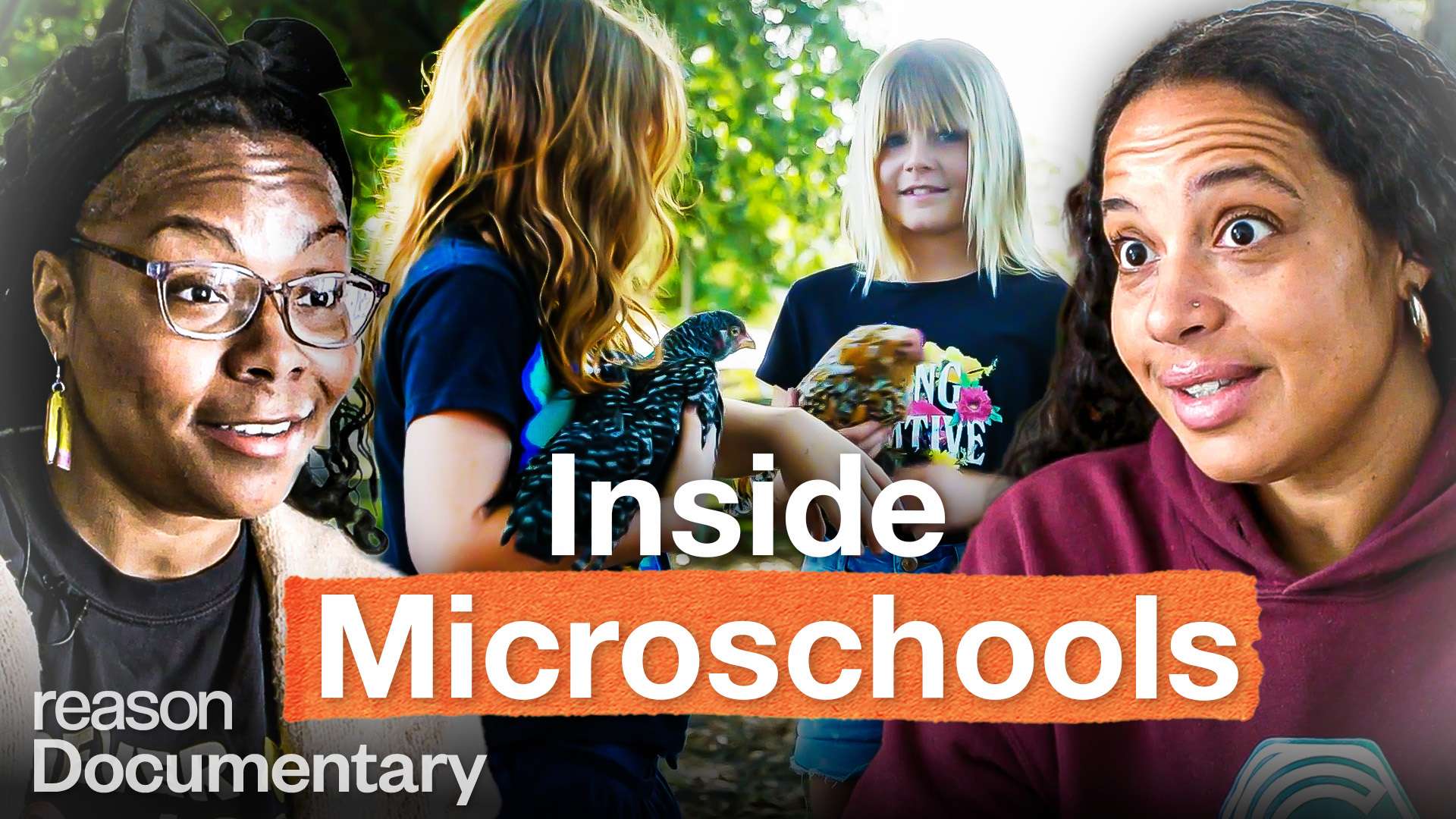
The students at WonderHere in Lakeland, Florida begin their mornings with farm chores, gardening, and outdoor play. “I like my school. It’s enjoyable. I appreciate that we have animals and we can play outside,” says Eva, one pupil. William, another student, adds that farm life “teaches you to be more responsible”—that if you mishandle something, “it could put some animals at risk.”
WonderHere was launched a decade ago by public school teachers Tiffany Thenor and Jessica Zivkovic. Zivkovic recalls the moment she knew the system was broken: “I was teaching second grade at another school when our administration announced they didn’t want crayons, scissors, coloring pages, or any form of art in the classroom—just paper and pencil. And this was for seven-year-olds.”
She likens it to a scene from the film Matilda: “It felt as though Miss Trunchbull was coming down the hall, and you had to stash all your bright colors and crafts away because they weren’t allowed. Those moments showed me how broken the system was.”
They began WonderHere as a private school. Today, it operates from two renovated residences on a 10-acre lot. The curriculum integrates Montessori approaches, the child-centered Reggio Emilia philosophy, and Finland’s academic standards. The Lakeland campus hosts just 120 students.
“We maintain a 12-to-1 student-teacher ratio,” Thenor notes, “which enables our teachers to tailor learning for each student, hold one-on-one meetings daily, and ensure students take notes and observe their learning patterns and interests.”
WonderHere began accepting state vouchers in 2023 after Florida opened them to any student seeking an alternative to their zoned school. Thenor says 95 percent of their Florida students now rely on a voucher.
“Receiving the Florida Empowerment Voucher has been a tremendous blessing for us,” says Zivkovic. “From the outset, WonderHere wasn’t intended to be exclusive to families who could pay.”
Florida’s vouchers, valued at roughly $8,000, nearly cover WonderHere’s annual five-day tuition of $9,000.
Colossal Academy in Fort Lauderdale also participates in the “microschool” movement, recreating the feel of a one-room schoolhouse with children of varying ages learning together. State vouchers make it possible for more families to enroll their children here.
“It has truly been a lifeline,” says parent Sadiqa Glusman. “We wouldn’t be able to afford sending our child here otherwise.”
The vouchers cover about half of Colossal’s full-time tuition. By comparison, the average nationwide private secular day school tuition sits around $49,000 annually. In contrast, about three-quarters of microschools nationwide charge under $10,000, according to a National Microschooling Center survey.
“Today’s budding schooling models are nothing like conventional private schools,” says Kerry McDonald, author of Joyful Learning: How to Find Freedom, Happiness, and Success Beyond Conventional Schooling.
“School-choice mechanisms unquestionably make alternative education options more financially attainable for more families, which prompts more households to explore what’s available and encourages more potential founders to respond to the demand by opening new schools or spaces,” McDonald adds.
Families can also use funds from their education savings accounts at home-school “co-ops,” which gained popularity when public schools closed during the COVID era. McDonald notes that “many of these new schools and hybrid learning communities—and homeschool collaboratives…sprung up nationwide, often started by former public-school teachers who left the classroom during COVID or soon after and began building learning communities centered on individualized, flexible, student-focused education.”
The nationwide homeschooling rate has been rising at about 5 percent annually, more than doubling the rate before the pandemic. Microschooling is expanding as well, serving an estimated 750,000 U.S. students, though the line between microschooling and homeschooling can be blurry. A RAND Corporation 2025 report notes that microschools disproportionately serve students with learning differences whose needs aren’t adequately met in traditional settings.
Colossal Academy’s founder, Shiren Rattigan, is a former Chicago public-school teacher who launched the venture as a pandemic-era homeschool pod.
“It was March 2020, and people didn’t know what to do,” she recalls. “We began with four students, and I figured, if you pay me less than a Montessori school would charge, I can still make a living and only oversee a few children.” The kids asked, ‘Can we go to the beach?’ and I replied, ‘Sure, jump in the car.’ They then asked, ‘Can we start gardening?’ and I said, ‘Whatever you need.’ That experience opened my eyes to the possibilities—everything around us could become a classroom.”
The curriculum blends in-person instruction with self-directed, virtual components.
Rattigan maintains that the model is particularly suitable for students who don’t thrive in traditional settings, “for example, highly energetic boys who resist sitting still—because they shouldn’t have to. The learning environment must accommodate, forgive, and grant grace to students who need to move.”
Last year, 70 percent of Florida students attended district-run public schools. That figure is down from 86 percent two and a half decades ago, meaning traditional public schools have far less funding to work with.
Spar notes that public schools have borne the financial burden. “Somewhere between $260 million and $280 million was withheld from public schools because the voucher program required more money.”
Florida State Senator Don Gaetz (R–Pensacola) supports school choice but became a prominent critic of how Florida has administered its voucher and ESA program after a state auditor flagged various accountability issues. At a Senate committee hearing, Gaetz observed: “They can’t locate 30,000 students they’re funding. That’s $270 million we’re paying for students who can’t be found.”
Gaetz introduced a bill to separate voucher and ESA funding from district-school budgeting to improve tracking. “I proposed the measure because, as a passionate advocate of school choice, I wanted to ensure that the rollout of the Family Empowerment Scholarship didn’t tarnish the concept of school choice,” says Gaetz, a former school superintendent.
In certain cases, public schools receive state money to educate students who also receive vouchers. Gaetz contends that “$1 to $2 million” may have gone toward funding ESAs for students who do not exist. One private school is accused of accepting voucher funds for students who never attended. The state auditor estimates the state failed to recover between roughly $10 million and $59 million in overpayments.
“Mixing all the funds created a cascade of accounting and financial-management problems,” Gaetz asserts.
Some school-choice supporters oppose Gaetz’s bill on the grounds that separating voucher funding could invite cuts. Gaetz remains unfazed: “We have a Republican governor who supports school choice, a Republican House that backs school choice, and a Republican Senate that favors school choice. Who should we fear?”
Spar argues that public schools aren’t playing on a level field. “Today in Florida there are 1,408 pages of public-school law that every public school must follow. Compare that with charter schools—under 100 pages—and vouchers—fewer than 20. The system doesn’t feel fair.”
Gaetz has pushed a deregulation bill for public schools, but Spar also seeks tighter rules for private schools.
“Shouldn’t they be obligated to tell parents what kinds of teachers operate there? Do the teachers hold college degrees? Are they state-certified?” Spar asks. “That kind of licensing and regulatory rigidity is precisely what WonderHere and Colossal sought to escape.”
Rattigan emphasizes accountability to clients. “If I’m not delivering what families want, they walk away. Then I must adapt, whereas failing traditional public schools continue to receive funding. In a failing public setting, they don’t shut down; they merely get more money.”
During our visit to Colossal, students spent part of the day tending the garden and preparing stir-fry. They also study art, music, photography, and even how to pilot a drone. Additional regulation and licensure would hinder such programs and raise operating costs.
“Experts in their fields want access to young learners, which the traditional setting often limits,” says Rattigan. “We establish the connections and teach the teachers, because subject-matter experts may not know how to work with children.”
Rattigan notes she can experiment and drop programs quickly if they fail. “If a student wants drones, they’ll tell me on Tuesday; by Thursday we have drones; by the following Tuesday we’ve got a teacher on board and we’re teaching drones. It’s rapid and actionable.” The same speed vanishes in a more regulated environment. “In a conventional public school, I’d have to go to my principal, then obtain district approval, and only after that would an entire grade begin drones—perhaps not even for the four students who asked.”
Asked about accountability, Rattigan pushes back: “This is a new market. You can’t apply old standards to evaluate something new. That’s true for anything. When you build something fresh, you must devise new metrics to decide what constitutes success. In our school, we prize rigor. Students take standardized tests, but we’re in a moment of innovation—can we use the same outdated yardsticks to gauge something that is brand new?”
Voucher and ESA recipients do undergo some standardized testing for tracking, yet the outcomes do not influence a private school’s rating or funding in the way they do for traditional public schools.
“We do not view those exams as high-stakes,” Thenor remarks. “They’re simply one more data point.”
The WonderHere founders argue that the government’s fixation on standardized tests has produced a one-dimensional, stifling climate they aim to disrupt.
“The Department of Education wants accountability and cohesion because it yields easily measurable data, easy progress monitoring, and a clear pass/fail signal,” explains Zivkovic. “But accountability comes at a price. Our children—humans, after all—cannot be treated like disposable products in a factory if they don’t meet certain quality measures.”
Florida bets that competition between public and private schools will render standardized tests less decisive in judging school performance; families will be the arbiters instead.
Gaetz bluntly observes: “It used to be that you moved into a community where you knew which school your child would attend by virtue of your zone. Now that’s no longer the case. We face a volatile and unpredictable market. Districts will have to decide whether they’ll function as empty shells sustaining unions or as providers of services and goods to parents, teachers, and students.”
And that appears to be the trajectory. Many district-run public schools have responded to the competition by rebranding as magnet schools and promoting specialized programs in arts, science, or other disciplines. Spar’s own daughter bypasses her assigned high school to attend one with a robust dance program. When asked if he supports that kind of choice, Spar replies that he does so wholeheartedly. “We’re not advocating for scrapping vouchers or charter schools. We’re not in that position. The question is: should public schools be allowed to experiment too?”
Gaetz, for his part, argues in favor of exactly that. “Public schools do face more regulation, and I support substantial deregulation in the sector. A major deregulation bill is advancing through the legislature this year.”
And at least one Florida public school plans to borrow lessons from the private sector. WonderHere will operate two K-1 classrooms inside a struggling public school next academic year. “Parents will opt in, will embrace the learning environment the way WonderHere families do. We won’t use letter grades or report cards, we’ll do far less paper-based work, we’ll let kids play outside, and we might even keep chickens if I can manage it,” Thenor says.
“From the start, WonderHere’s aim was to influence public education,” adds Zivkovic. “We never intended to abandon the system and simply wish it good luck. We wanted to demonstrate that an alternative mode of learning could exist.”
So what about waste and fraud? Gaetz’s bill did not pass in the Florida House, but the state Department of Education has started checking directly with districts rather than relying on parental surveys to prevent double enrollment. The nonprofit responsible for distributing funds has increased its oversight, and accounts flagged for possible double-billing dropped from about 28,000 to 6,000.
School choice in Florida remains broadly supported. Education savings accounts are the most favored form of school choice, according to recent surveys. The future of schooling appears more decentralized, agile, and, for some, micro.
“Microschooling is here to stay,” asserts Rattigan. Thenor concurs: “All these generous vouchers enable families to direct their funds toward what works best for them and their households—I think that’s a powerful right that families should always possess.” McDonald frames it more broadly: “More families are demanding a wider array of options for their children’s education, and more schooling models that reflect 21st-century realities. I’ve grown accustomed to personalization in other goods and services—now I want the same level of customization for my kids’ education.”
