
Regulatory approval could come as early as 2027.
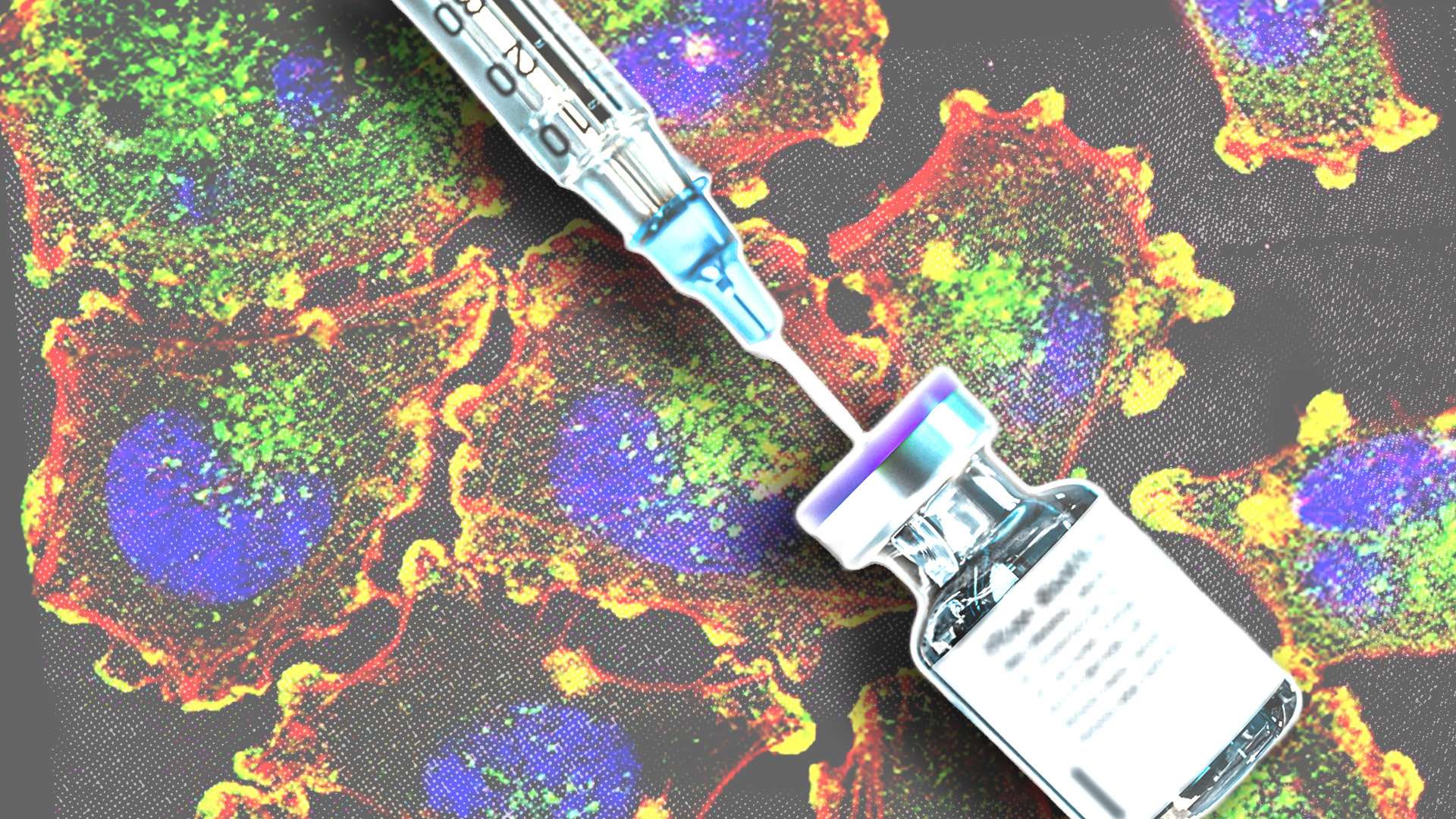
Moderna and Merck revealed today striking results from their Phase 3 trial of an mRNA cancer vaccine designed for advanced melanoma.
Scientists analyzed each tumor’s DNA to tailor vaccines to the individual. When administered, these vaccines stimulate the immune system to attack cancer cells while sparing healthy tissue. The adaptable mRNA platform allows the production of personalized vaccines for every patient within roughly six weeks.
In certain trial cohorts, the new mRNA vaccines were paired with Merck’s Keytruda, a monoclonal antibody that removes immune-checkpoint barriers, enabling immune cells to recognize and eliminate cancer cells.
Participants ranged from Stage IIB to Stage IV melanoma and had all undergone surgical removal of their visible tumors before entering the study. Approximately 112,000 Americans are diagnosed with melanoma each year, with around 8,500 deaths annually. Five-year survival stands at about 87 percent for Stage IIB and drops to roughly 35 percent for Stage IV patients. Earlier Phase 2b results indicated that the vaccine plus Keytruda lowered the risk of relapse or death by about 49 percent compared with Keytruda alone.
The developers expect to publish the full Phase 3 data later this year, and they noted that “the trial achieved its primary endpoint of recurrence-free survival (RFS) and a key secondary endpoint of distant metastasis-free survival (DMFS).”
“The encouraging result moves us into the next chapter of immunotherapy,” said Karen Knudsen, CEO of the Parker Institute for Cancer Immunotherapy, to Reuters. “This is a hopeful start—the moment where progress begins in earnest.”
Moderna and Merck are pursuing parallel mRNA cancer vaccine trials aimed at advanced cancers of the lung, kidney, and bladder. The firms believe the technology can be scaled up for commercial use. Yahoo Finance reports that Moderna’s Chief Executive Stéphane Bancel indicated regulators could approve the product as early as 2027.
