
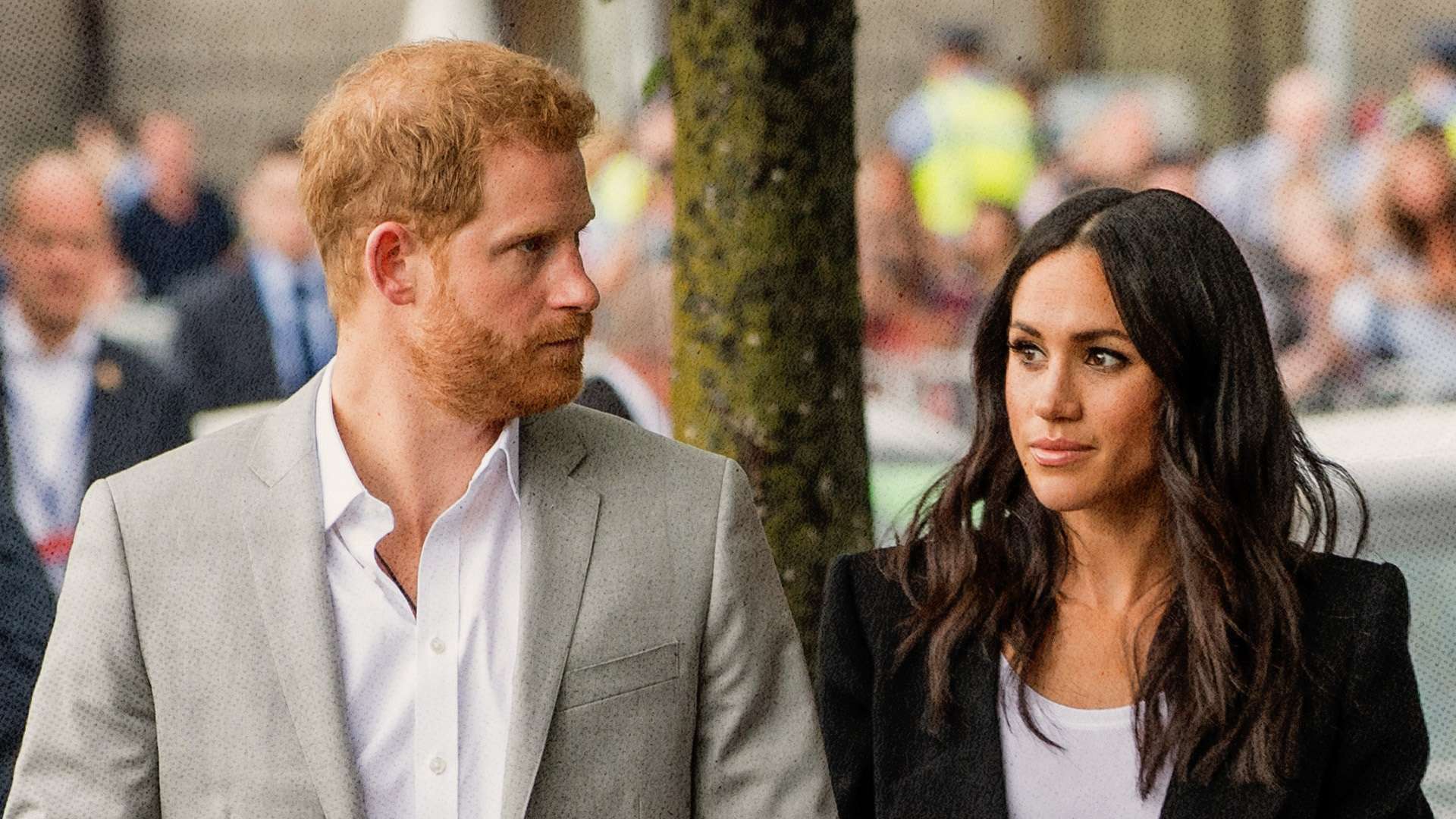
Prince Harry and his American wife, Meghan Markle, are reportedly planning to relocate back to the United Kingdom after more than six years residing in the United States. While their homecoming has already sparked discussions about a rift within the royal circle, potential opportunities for their children Archie and Lilibet to spend more time with King Charles, and the precise motives behind the move, one aspect of the debate has largely gone unnoticed: Britain’s gun-control framework.
The decision to return to Britain comes as a surprise, especially given Harry’s own past assertion that security considerations would prevent such a move.
“I can’t imagine a scenario in which I would bring my wife and children back to the U.K. at this point,” Harry told the BBC in an emotional interview last year. “Consider the risks. Consider the threats. Consider the consequences. If anything were to happen to me, my wife, or my father’s grandchildren—if something happened to them—the weight of responsibility would fall on you, you know? There’s a duty of care that’s been completely thrown out the window,” he told the BBC.
Safety concerns were a central reason for Harry and Meghan’s decision to leave Britain in 2020. After stepping back from royal duties, the couple lost their publicly funded security privileges. Harry subsequently submitted a request for a judicial review of the U.K. Home Office’s decision to strip away their security. He even offered to cover the security costs himself so as not to burden the taxpayer. The request was denied, prompting the family to relocate to the United States.
Their return reopens the debate about their security, and it certainly raises the question of why they cannot simply fund their own private armed security.
The Firearms Act 1968 imposes a strict licensing regime on firearms, while most handguns are entirely prohibited. In practice, this means that legitimate access to guns is restricted. If you live in rural areas, obtaining a shotgun license is feasible, and rifles and other firearms can be licensed for approved purposes such as hunting, pest control, and target shooting. According to the latest data, just over half a million people in England and Wales—less than 1 percent of the population—hold a firearm or shotgun certificate.
One point the government explicitly refuses to recognize as a legitimate reason for possessing a firearm is self-defence. “For many years, successive Governments have held that private possession and carriage of firearms for personal protection is likely to lead to higher levels of violence,” reads the government’s guidance. “This principle should be maintained in the case of applications from representatives of banks and firms protecting valuables or large sums of money, or from private security guards and bodyguards.” Bizarrely, this also includes pepper spray, which the Firearms Act categorizes as a weapon and prohibits entirely.
Britain is notable for its aversion to firearms to the extent that even its police force is predominantly unarmed. Only about 4 percent of officers in England and Wales are operationally equipped with firearms. Naturally, these officers are deployed to tackle the most serious crimes, not routine incidents.
At the heart of Harry and Meghan’s difficulties is a dispute over a legal framework that forbids private armed security. In the United States, private armed security is legal and constitutes a huge industry in its own right. More than 1.28 million security guards operate across the country, and with proper legal compliance, many can be armed. In Britain, self-defence is not a legally permissible reason to obtain a firearm, and even American FBI agents must obtain special government authorization to carry.
There are plenty of reasons to approach Harry and Meghan’s criticisms of Britain’s treatment with skepticism, but on security, they do have a point to some extent. Harry can hire private security, but those guards not only lack access to intelligence—British law prevents them from carrying the firearms that would enable them to provide equivalent armed protection.
The question extends beyond the royal family. If an individual faces a credible threat and is willing to pay for highly trained, vetted private security, why should the government prevent them from doing so? Like the United States, Britain ought to permit the creation of a security market. The U.K. does not have to force taxpayers to cover the cost of Harry and Meghan’s protection, but it should not maintain a monopoly on the kind of protection people are willing to buy.
