
Despite the Supreme Court’s attempts to curb their power, federal regulators still overstep their authority under the Clean Water Act.
Like many states, Utah faces a shortage of housing. Government figures indicate Utah must construct 840,000 new homes by 2055 to keep up with demand. The recent troubles faced by two developers at the hands of the federal government illustrate just how tough that goal will be to hit.
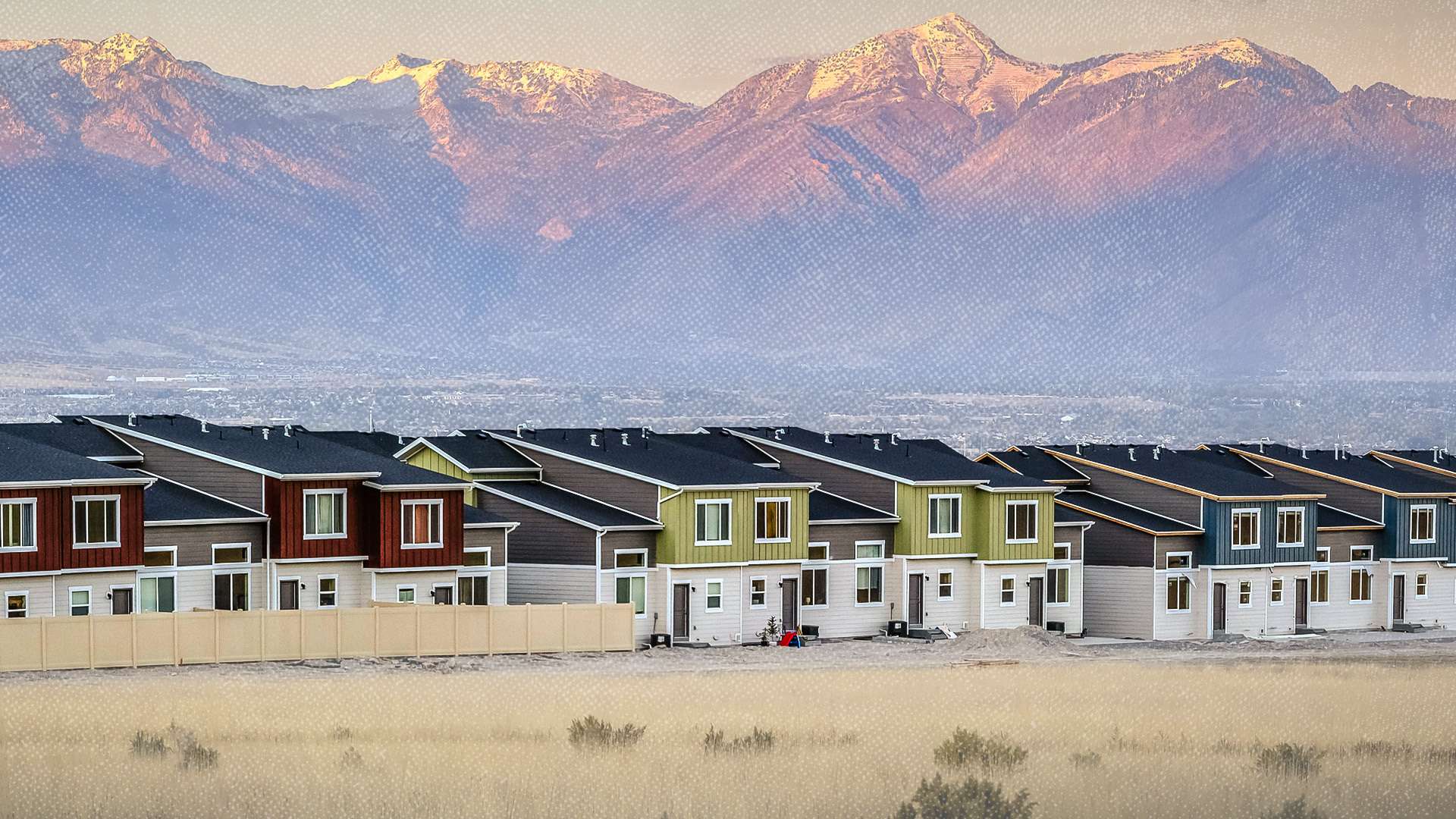
Approximately two decades ago, Lew Swain and Brent Bailey bought an undeveloped parcel just outside Willard, Utah, about an hour north of Salt Lake City. The duo gradually acquired additional land around the site, eventually amassing 142 acres in one continuous block with the aim of developing a 265-home neighborhood.
Willard was eager to see homes rise on the property. It granted approval to begin construction so long as Swain and Bailey funded upgrades to a portion of the city’s water and sewer infrastructure. The developers agreed, investing $650,000 to drill a well that would supply water to both the subdivision and the city via a water line and a storage tank they had designed. They also invested half a million dollars into engineering, water development, and other studies required to obtain the project’s permits.
However, prior to breaking ground, federal regulators halted the project with a regulation that is frequently cited and frequently weaponized: the Clean Water Act (CWA).
The CWA authorizes federal agencies—here, the Army Corps of Engineers—to regulate discharges of pollutants from point sources into “navigable waters.” In the case of the Swain and Bailey property, the Army Corps determined that construction would disturb and pollute the Great Salt Lake—the closest navigable water—located roughly nine miles to the west.
Now, with the backing of the Pacific Legal Foundation (PLF), the developers are suing the Corps in federal court, contending that it exceeded its authority.
Since its enactment in 1972, the CWA has been a flashpoint between regulators seeking to broaden their reach and property owners seeking clarity. The Supreme Court has checked regulators several times, most recently in Sackett v. EPA (2023). In that ruling, the Court held that “navigable waters” under the CWA include only those waters that are relatively permanent and possess standing or continuous flow, typically described as “streams, oceans, rivers, and lakes.” The Court also ruled that wetlands could be regulated under the CWA only if they were “indistinguishable” from navigable water and maintained a continuous surface connection with those waters. This distinction matters for what comes next.
Under the agreement with the city, Swain and Bailey were required to place their water and sewer lines in the northwest portion of their property, near a small irrigation ditch and 2.74 acres of wetlands. While the developers “carefully designed [the lines] to avoid disturbing” the ditch and wetland, “some minor disturbance is unavoidable,” according to the lawsuit. Preserving compliance with the CWA—aware that violations, even if inadvertent, can carry steep fines or imprisonment—the developers consulted the Army Corps to verify that the project would not violate the law before proceeding.
The Corps complied, issuing a map that connected this modest ditch to the Great Salt Lake, the nearest navigable water.
The connection, as mapped by the Army Corps, resembles this: Water leaves the irrigation ditch and flows into another unnamed ditch. From there, the water travels north, then west beneath Interstate 15. After a sequence of twists, turns, and an underground siphon that “artificially pipes water upgradient,” the water eventually reaches Willard Bay, a navigable portion of the Great Salt Lake.

As the lawsuit notes, “any single molecule of water originating” in the ditch “must travel 46,909 feet (approximately 8.9 miles)—if it ever even reaches Willard Bay via the tortuous pathway identified by the Corps.”
The Corps also determined that since the ditch occasionally overflowed into the wetlands on the Swain property, the wetlands were “indistinguishable” and thus regulable under the CWA. This placed the project in violation of the law. The undertaking was stopped in April when the Corps withdrew the developers’ CWA permit, three years after the pair had first reached out to the agency.
Swain and Bailey “have unfortunately…found themselves sort of caught up in a broader national issue, that being the United States Army Corps of Engineers’ steadfast resistance to the Supreme Court’s decision in
Sackett v. EPA and more broadly, its steadfast resistance to any limitation upon its Clean Water Act authority,” says Charles Yates, a PLF attorney who also played a role on the Sackett litigation team, speaking to Reason.
As Yates puts it, the “spirit of the Sackett decision” was to rein in agencies that had been using the CWA to “contrive some massive connection” to regulate private property. “The entire point of Sackett was to make things simpler for landowners.”
Yet, even with a Supreme Court ruling, federal regulators have not always adhered to it. In the three years since Sackett, the Army Corps and the Environmental Protection Agency have repeatedly overstepped their authority under the CWA, challenges to which the PLF and other public-interest law firms have
successfully pushed back against.
The Trump administration sought to constrain agencies through rulemaking. But without buy-in from the regional offices—where there appears to be a clear push to circumvent the Sackett decision—these rules are unlikely to produce meaningful impact, says Yates.
If that assessment proves accurate—and if a small ditch can be used to derail a major housing project—then lawmakers may need to rethink relying on regulations to control these agencies. Instead, there may be a case for reconsidering the very existence of the agencies themselves.
