
Between September and December 2026, the European Union is facing one of the most critical negotiations of the current EU legislative term. The Twenty-Seven want to seal an agreement on the upcoming Multiannual Financial Framework (MFF), which covers the period 2028-2034, before the year ends. 2027 will be a year marked by elections, with political dates in Italy, Spain, or Poland, but within this calendar there are elections that weigh much more than any other because of their potential to disrupt the Union: the French presidential elections in May next year, in which Marine Le Pen, the far-right candidate of the National Rally (RN), starts as the favourite after French justice reduced her disqualification sentence.
“The Irish presidency of the EU Council will be a success or a failure to the extent that, at the European Council in mid-December, the leaders are able to close or not close a deal on the next MFF”
The margin for maneuver, therefore, is very tight. The Irish presidency of the EU Council, which began on July 1, will be a success or a failure to the extent that, at the European Council in mid-December, the leaders are able to close or not close a pact on the next MFF. Before that point there is a genuine “hot autumn”, with three pivotal meetings, at which the two sides of the negotiation will try to gain the upper hand. The major gatherings are those involving the heads of state and government, who will meet for the first time on October 17.
This summit is crucial because it will allow the Twenty-Seven to assess the technical work undertaken since the European Council in June received the first negotiation box from the Cypriot presidency, a document listing allocations and figures. That document, known in EU jargon as the ‘negobox’, was thoroughly dissected by the leaders, as all diplomatic sources involved in the negotiations anticipated. It is the fate of any first negobox. From that point, capitals began to work toward refining the next negotiation box, whose definitive test will be at that mid-October summit.
Germany and the so-called ‘frugals’, the group of fiscally orthodox countries opposed to increasing their contributions to the MFF, insist on substantial cuts to the proposal that the European Commission presented in 2025. Brussels proposed an MFF of 1.98 trillion euros, the equivalent of 1.26% of the EU’s gross national income (GNI), a figure utterly inflated for the ‘frugals’, since it is about 900 billion euros more than the current MFF. However, the bulk of that increase corresponds to the interest payments on the debt of the Recovery Funds created during the pandemic. Excluding those, the size of the future MFF would be 1.15% of the EU’s GNI, compared with 1.1% of the current.
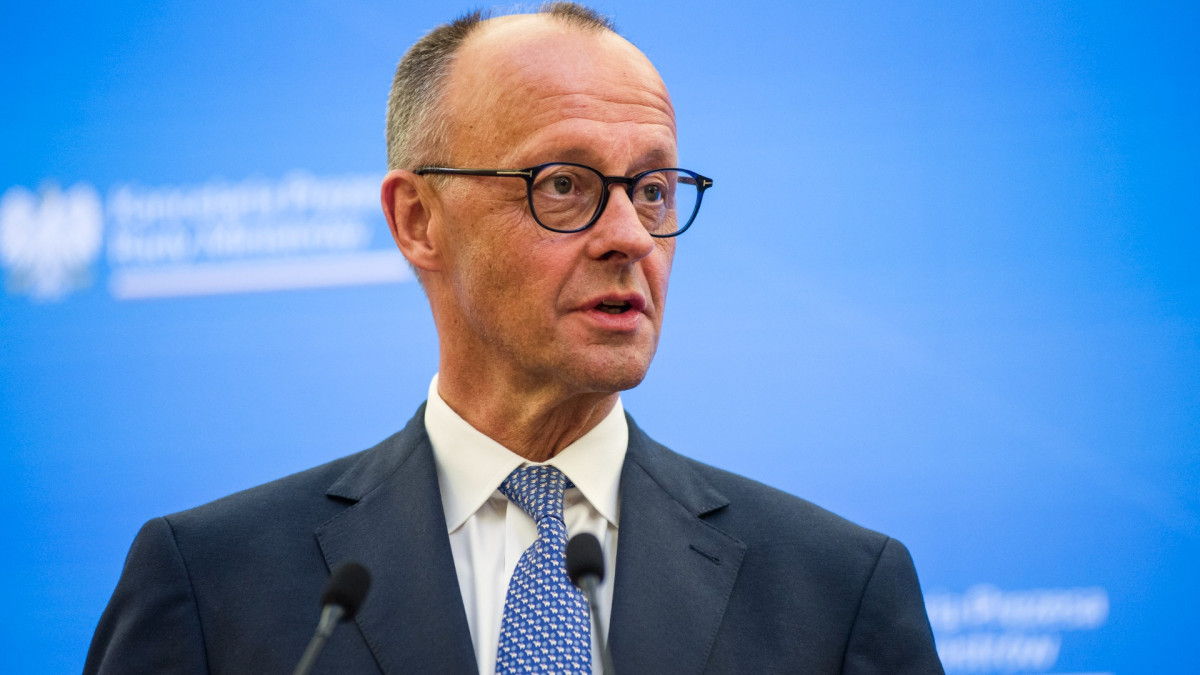
Seeking a middle ground, the Cypriot presidency of the EU Council proposed a cut of just over €30 billion, about 2% of the total, which sparked the anger of the ‘frugals’, who argued that the Cypriot delegation had not slashed enough of the Commission’s initial proposal, and thus had not listened to their positions. The government of Friedrich Merz, Germany’s chancellor, is demanding additional cuts of €400 billion.
“If there isn’t more money, and these countries do not want to contribute more funds, and the EU needs to fund new priorities such as competitiveness or innovation, then the money must be moved away from the big spending headings”
Meanwhile, the Spanish government is proposing to extend the debt of the Recovery Funds to bolster the view that European bonds are a safe asset and to remove their weight from the equation of how much each member state should contribute to the next MFF, although so far its proposal has received little backing from other capitals. Spain is part of the group of the so-called “friends of cohesion”, a bloc of member states that defend the traditional structures of the MFF, safeguarding the Common Agricultural Policy (CAP) and the cohesion policy, the two largest budget lines of the European budget, and, at the same time, the ones that the ‘frugals’ consider to hinder the modernization of the instrument. If there isn’t more money, and these countries do not want to contribute more funds, and the EU needs to fund new priorities such as competitiveness or innovation, money must be shifted away from the big spending headings. Or that is their position.
The second critical date is in mid-November, when the Irish presidency will host a summit in the country. This meeting is informal, and therefore no decisions will be taken, but it will serve to gauge progress since the October meeting and to pave the way for the key gathering. This will take place at the December European Council. The timing and the manner in which negotiations unfold will largely depend on how António Costa, the president of the European Council, manages the summits. His team has already expressed the willingness to close an agreement at that meeting before the Christmas break, but the October and November meetings will determine how realistic that scenario will be.
If no agreement is reached, the situation will become more complicated. Diplomatic sources from the ‘frugal’ member states are playing a more psychological than practical card, suggesting that, in the absence of an agreement, the EU would extend the current MFF, much smaller than the proposed one, and that, therefore, member states such as the Netherlands, Denmark or Germany have much more to gain from a blockage than from an agreement. Moving into 2027 makes the issue far more complicated than the electoral dates.
The new MFF is very different. Administrations will have to adapt to a new architecture that, according to the Commission, will be much simpler, but will also require a learning curve. From the nearly 500 programs of the current framework, there will be 27 national programs, and from the seven headings that the MFF has in the current period, it will move to four, more simplified.
