
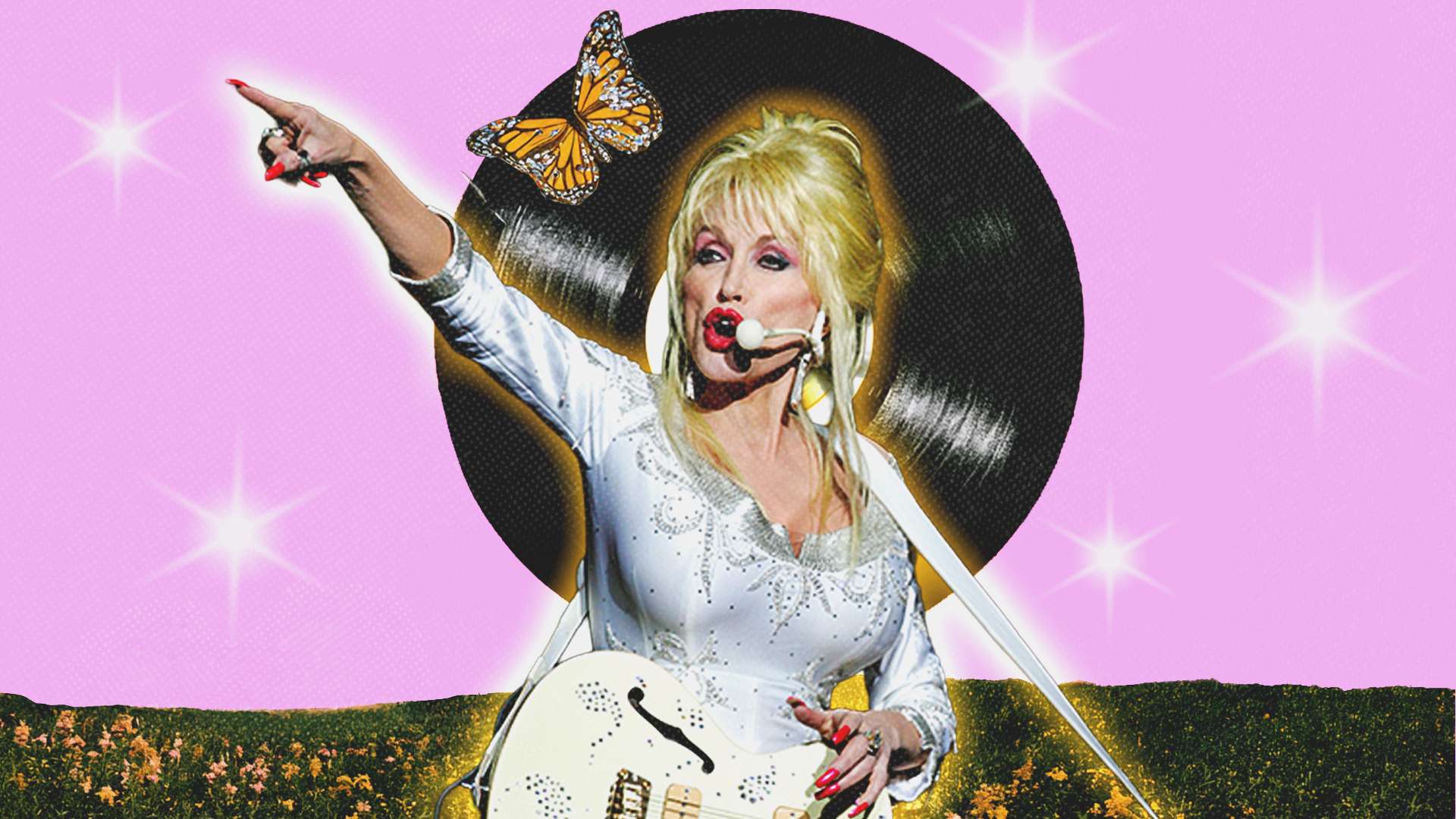
Dolly Parton: a public figure defined by contradictions, or so it seems.
Dolly Parton passed away yesterday. You’ve probably already heard the news. How could you miss it? The country icon, performer, entrepreneur, and philanthropist with lofty ambitions and towering hair occupied a unique place in American life that seemed almost to defy gravity. Who else could command the admiration of both President Donald Trump and the Democratic Socialists of America?
The question isn’t whether Parton, who died at eighty after a brief battle with cancer, pushed against cultural and political boundaries that many deem uncrossable. That point has been made by many observers. And it wasn’t mere speculation: a survey released just before her passing showed Parton with extraordinary favorability—higher than any other public figure in the poll. It was decisively lopsided. Sixty-five percent net favorability, with 70 percent viewing her positively and around 5 percent negatively. In second place, former President Barack Obama trailed far behind at 14 percent.
The question behind these numbers is why. Parton was a woman of paradoxes. She described her upbringing as that of a “barefoot little hick,” yet she ascended to the glittering realm of Hollywood stars; born into crushing poverty, she became one of the world’s wealthiest and most rhinestone‑adorned celebrities. In many respects she seemed crafted for a conservative audience—a country singer who identified as a devout Christian—yet she frequently voiced support for progressive social causes.
Perhaps the most striking contradiction lay at the core of her public persona. Over time, her ample bust and sky‑high, bottle‑blonde wigs—after all, the higher the hair, the closer to God—conveyed the impression that the girl‑voice singer was all style and no intellect. Meanwhile, she engineered some of the era’s savviest, empire‑building business moves and, by her own account, may have written “Jolene” and “I Will Always Love You” on the same day. Parton famously resisted suggestions and even refused Elvis Presley the latter song after he demanded half of the publishing rights. Of course, the track later became a global hit in Whitney Houston’s riveting rendition. Parton would later say it earned her “enough money to buy Graceland.”
“All these years the joke has been on the public,” Parton told Barbara Walters in a 1977 interview. “But it has actually been on them. I know exactly what I’m doing, and I can change it at any moment.”
That idea—that you cannot capture a person’s totality from outward appearances—offers a lens into why Parton avoided making performative politics a defining part of her public persona, particularly at a time when many celebrities feel compelled to take a stand. Some of this was practical: “I have as many Republican fans as I do Democrats,” she stated in a 2020 interview with USA TODAY. Yet there was likely something deeper: a belief that individuals resist being reduced to a single label. Dolly Parton became Exhibit A that there are more satisfying theaters of public life than the political pageantry played in Washington.
She was also rooted in a commitment to the responsibilities that accompany personal freedom and individuality. “I don’t want to be anybody else. I’m not responsible for anybody else,” she told CBS in 2023. “But I am responsible for me.”
This, too, was another paradox. She did not have children in the technical sense, yet she freely poured portions of her wealth into large charitable ventures. Her Imagination Library, for instance, has placed hundreds of millions of books into the hands of children. She launched the program in honor of her father, who struggled with illiteracy. Her resources flowed into disaster relief, education, medical research, and more. A robust sense of personal freedom, she believed, should be celebrated while acknowledging the duties that come with it. Parton clearly understood this balance and recognized that it extended beyond her own life.
That was the essence of Dolly Parton. She simply seemed so kind. Even amid extraordinary fame, vast wealth, rhinestone-studded costumes, artificial enhancements, and near-universal adulation, a chance encounter on the street might reveal a megawatt smile and a hug. It is almost unbelievable that someone with so many signals pointing toward artificiality could be so genuine at heart. The joke, again, was on the observer.
