
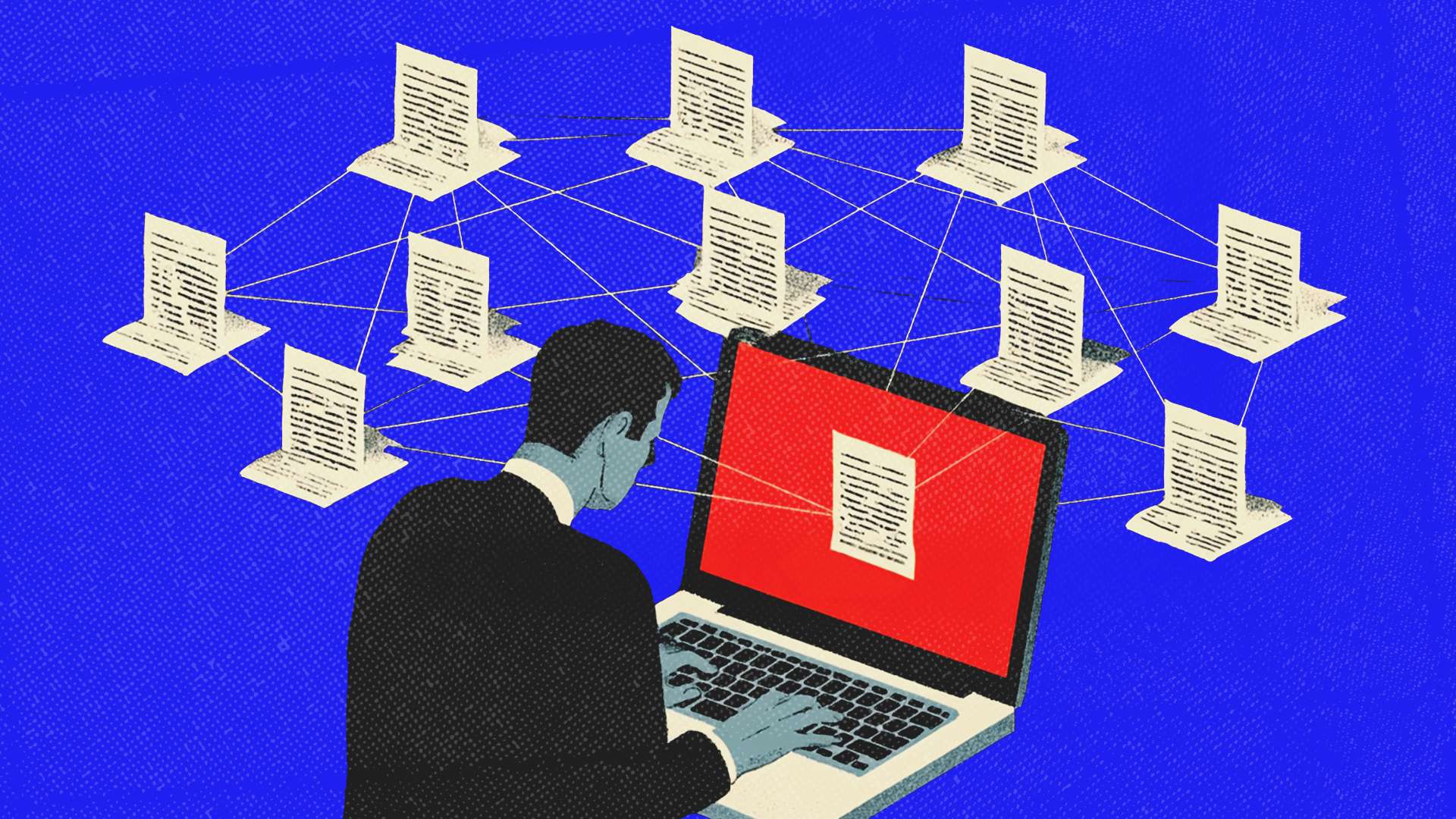
Documents obtained by Reason reveal that the CIA has been employing artificial intelligence to draft “open source intelligence” analyses, which are subsequently distributed to local police through the Department of Homeland Security’s fusion centers.
The agency’s use of AI for this purpose has been hinted at by CIA officials. Open Source Enterprise (OSE) Director Randy Nixon told Bloomberg in a 2023 interview that the agency was building a new chatbot to assist intelligence analysts, and CIA Deputy Director Michael Ellis stated at an April 2026 conference that the CIA had produced an entirely AI-generated report for the first time. The adoption of the technology appears to have accelerated markedly since those disclosures.
During this year’s World Cup, OSE was producing daily briefings on the security situation across Canada and Mexico. Reason obtained these reports through an unrelated request under the Washington Public Records Act for police bulletins related to the tournament. The documents themselves do not reveal any secrets or anything particularly shocking; they serve as an illustration of “open source intelligence,” a long-standing practice that involves combing public media for potential indicators. Yet they offer a rare glimpse into how the CIA is deploying new technologies and how U.S. intelligence agencies are integrated with local policing.
According to the methodology note accompanying each report, OSE relied on a keyword search and a keyword relevancy algorithm to pick articles from major outlets in the host countries. The agency then used a [generative AI] system to refine the selection, translate headlines, and summarize the chosen articles. OSE personnel reviewed and validated the outputs produced by the generative AI at every stage to ensure the summaries accurately reflected the underlying source material when the serial report was initially set up. The note identifies GPT-4.1—also publicly available—to be the specific generative AI model used for these briefings. In other words, CIA analysts are feeding international news items into a ChatGPT-like system and distributing the results.
These reports were forwarded to the Washington State Fusion Center, which serves as a hub for sharing intelligence among federal, state, and local law enforcement agencies. In the wake of the September 11, 2001 attacks, the Department of Homeland Security established the national fusion center network, a system that has often been criticized for wasting resources and, at times, disseminating information that is inaccurate.
It is not clear what, if anything, Washington state police did with the CIA reports. The fusion center redacted several documents provided to Reason on security grounds.
The broader picture shows the U.S. government increasingly weaving artificial intelligence into its national security framework. Immigration and Customs Enforcement (ICE) has been leveraging AI tools for facial recognition and real-time tracking of individuals, drawing on data scraped from other government agencies and private industry. The FBI recently issued a request for contractors to build AI software intended to help maintain watch lists, a development Reason initially reported.
Perhaps most consequential is the military’s use of AI for targeting, as seen in projects such as Maven, which aimed to accelerate the identification of enemy targets. After the Minab school bombing—an incident in which U.S. forces killed a number of Iranian civilians—there was early speculation that an AI program might have contributed to a miscalculation. Subsequent reporting suggested that human error was a more likely explanation, rather than a fault of the AI system alone.
As the fusion center documents illustrate, artificial intelligence is entering national security work in more routine, everyday ways. It is enabling the government to do more of what it has long aspired to do—populate fusion centers with more information and documentation—and to do so with less human labor, at least in the initial stages of analysis.
