
The U.S. government’s response hinges on a single, narrow accusation: Autistici/Inventati is merely providing email accounts that cannot be traced. Yet that accusation is enough in Washington to classify the Italian group as a terrorist organization and to bar Americans from any dealings with it.
The State Department and the Treasury, acting together, placed Autistici/Inventati on the specially designated global terrorist list on a Wednesday, a move that blocks any form of financial transaction by U.S. persons with the group. The government’s statement does not allege criminal acts carried out by the collective. Instead, officials contend that Autistici/Inventati “builds and operates the digital infrastructure” that sustains violent Antifa cells and other far-left militants around the world. The department claims this infrastructure enables these actors to spread target information, distribute tactical manuals and procedural guidance, and circulate declarations about recent attacks while preserving their anonymity and untraceability, effectively putting them beyond the reach of law enforcement.
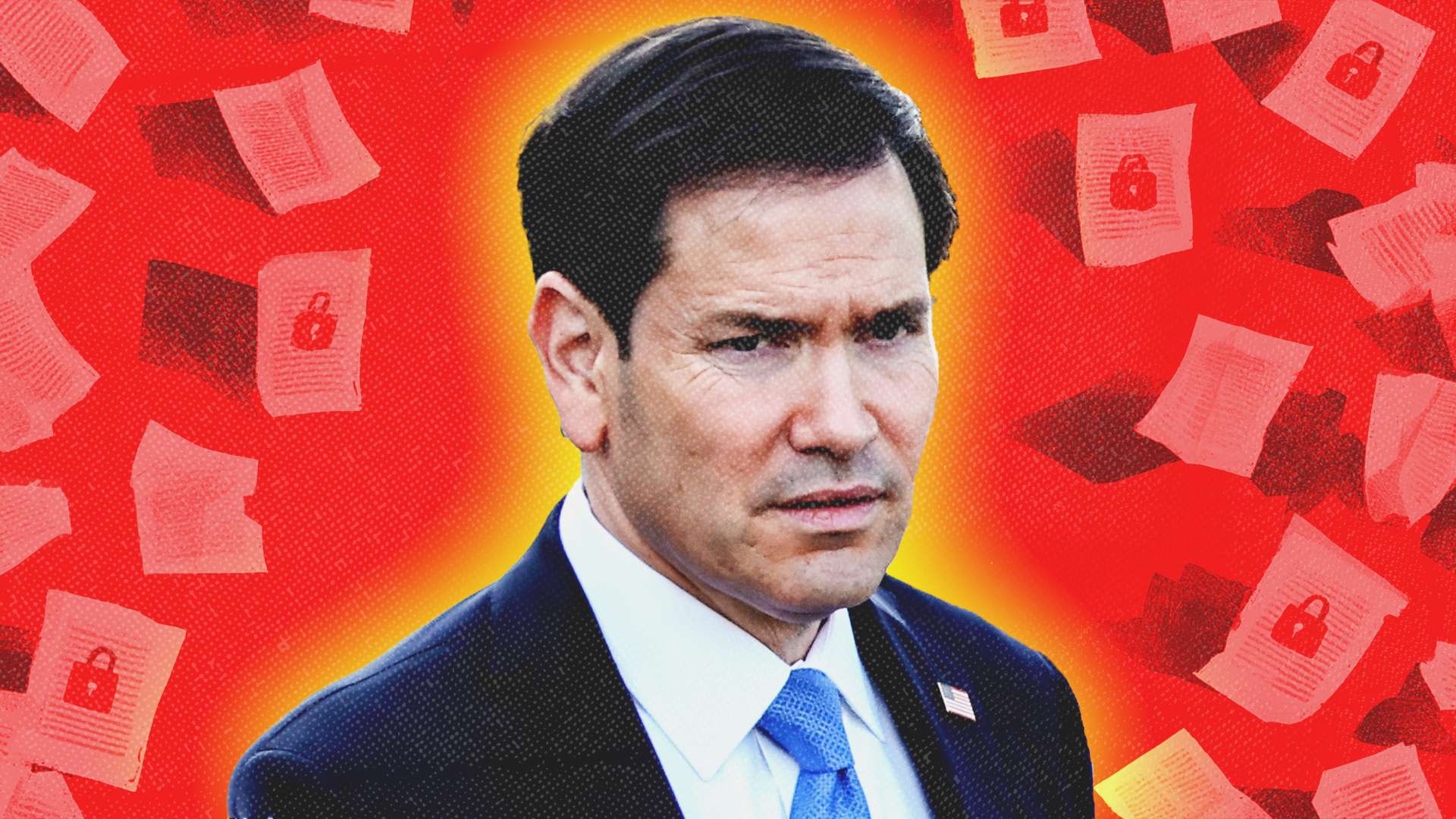
In plain terms, Secretary of State Marco Rubio is taking aim at a platform that allows users to communicate in ways the United States government cannot surveil or easily control, and he is extending punitive power precisely because the organization is based in another country—Italy. This dynamic grants the U.S. government broad latitude to enforce counterterrorism sanctions beyond its own borders.
The decision to criminalize Autistici/Inventati bears notable similarities to recent moves against the social media platform TikTok: policymakers in Congress invoked foreign-policy concerns to justify restrictions on a service used by American youths to share content that would otherwise be protected by the First Amendment. As with TikTok, one of the aims of outlawing Autistici/Inventati appears to be nudging users toward platforms that are more easily monitored and controlled by U.S. authorities.
Jillian York, who directs international freedom of expression at the Electronic Frontier Foundation, voices concern about the precedent: designating a service that functions as an alternative host—providing email, websites, and related services—simply because many people rely on it could set a troubling standard. “The idea that such an organization could be labeled a terrorist entity merely for supplying a service that many people want…is troubling,” she observes. She notes that the political climate—an administration seen by many as having a close relationship with major tech companies at a moment when public distrust of those firms runs high—casts this move in a suspicious light, even if she stops short of calling it a conspiracy.
Autistici/Inventati presents itself as a voluntary collective offering free email accounts, web hosting, videoconferencing, and other communications tools to those who can demonstrate a need and who align with the group’s anti-fascist, anti-racist, anti-sexist, anti-homophobia, anti-transphobia, and anti-militarist principles. The group asserts that, unlike commercial providers, it stores only the essential user data and does not examine the contents of users’ inboxes, a combination that appeals to people who are particularly wary of surveillance.
In response to the designation, Autistici/Inventati rejected the allegations and reaffirmed its commitment to providing digital self-defense tools and to preserving free, unmonitored communication for activists and other communities. In a bilingual statement, the platform asserted that it would not bow to pressure and would continue its work, challenging what it described as “false allegations” issued by an administration whose political motives it characterized as desperate and designed to deflect attention from violence and warmongering.
The sanction’s immediate consequences are financial in nature. By designating Autistici/Inventati, the government cuts off the organization’s ability to receive donations through any banking or card-processing system linked to the U.S. dollar network—its sole funding mechanism to cover operating costs. The designation could also pave the way for the government to seize the autistici.org domain. The U.S. has long argued that since the registries for popular domains like .com and .org are physically located on American soil, hosting sites under U.S. sanctions is itself illegal.
The practical question of whether using Autistici/Inventati’s email services becomes illegal remains unsettled. Under the International Emergency Economic Powers Act (IEEPA)—the instrument the Trump administration has employed to sanction Autistici/Inventati—certain personal communications that do not involve a transfer of value may be exempt from sanctions to protect First Amendment rights. The EFF’s lawyers emphasize that merely using these services without providing financial support does not constitute material support for terrorism. Yet, as one former Biden administration official and current Georgetown Law scholar, Peter Harrell, cautions, the legal terrain is not clear-cut and depends on how courts would interpret the context of such use.
Officials at the Treasury did not respond to Reason’s inquiry regarding how the law is being interpreted in this case. The statement from Treasury, alongside the State Department’s, links Autistici/Inventati to other actions that fit the broader administration’s foreign-policy objectives, particularly those targeting left-wing dissidents both in Europe and elsewhere.
This broad approach to foreign policy and law enforcement has become a hallmark of the current administration’s stance toward dissenters, particularly those who self-identify as anti-fascists. NSPM-7 (the National Security Presidential Memorandum) issued in the previous year directed federal agencies to give priority to threats posed by left-wing extremism. Rubio’s earlier designation of Antifa Ost—the German “hammer gang”—as terrorists preceded the Autistici/Inventati move and underscored the administration’s willingness to classify and sanction groups that are not uniformly recognized as terrorist organizations in other jurisdictions.
Rubio’s public comments framing the Autistici/Inventati designation made a stark assertion on Fox News: there would be “no refuge” for violent extremists who wage war on civil society, threaten critical infrastructure, attack political opponents, or attempt to hide their crimes from authorities. The statement his team circulated highlighted a broader objective: to disrupt and delegitimize opponents who challenge the government’s line.
The Treasury’s press release also tied the Autistici/Inventati sanctions to actions against Israel’s adversaries. Alongside Autistici/Inventati, the department announced penalties on the British group Palestine Action for “interfering with defense infrastructure and British military installations,” and on the Palestinian diaspora party Masar Badil for acting as a front for the Popular Front for the Liberation of Palestine—a designated Foreign Terrorist Organization. The Treasury’s broader narrative connected these sanctions to a wider campaign abroad, in which groups tied to the Palestinian cause and other regional actors are framed as threats to Western security.
In its own account, the State Department said that Autistici/Inventati had allowed one of its users to publicize official communiqués and calls to action for foreign terrorist organizations designated by the United States, naming Hamas, Hezbollah, Iran’s Islamic Revolutionary Guard Corps, the Popular Front for the Liberation of Palestine, and Palestinian Islamic Jihad. The claim emphasizes that even a platform offering hosting or email can become a conduit for propaganda and operational coordination for groups the United States deems extremist.
Fox News coverage of the case flagged a supposed Portland Antifa connection to Hamas and Iran’s IRGC through third-party posts. Yet such logic rests on a broader equivalence: the same channels used to disseminate material by listed terrorists also circulate messages from the officials who labeled them terrorists, a point that raises questions about proportionality and scope in counterterrorism policy.
The Treasury’s documentation goes further by noting that a designated terrorist organization has in fact used Autistici/Inventati’s services—the Kurdistan Workers’ Party (PKK). This is notable because, while the U.S. designates the PKK as a terrorist organization, American forces have collaborated with PKK members and affiliates in Syria for more than ten years. Rubio himself has met Kurdish commander Mazloum Abdi, a former PKK member, at the Munich Security Conference, highlighting the paradoxes that can arise at the intersection of military cooperation and sanctions policy.
Taken together, these developments illuminate a political reality: some individuals and groups appear acceptable to meet with top government officials, but their communications tools—especially those that promise privacy and untraceability—are deemed dangerous enough to warrant sanctions.
As policymakers continue to navigate the tension between security and civil liberties, Autistici/Inventati remains a focal point for debates about the reach of American sanctions, the protection of free expression online, and the degree to which a nation’s foreign-policy goals should shape the tools available to ordinary internet users seeking safer, more private digital communication.
