
Fresh findings about cannabis use could shift the discussion around legalization and rekindle enduring arguments for curbing regulated markets.
Cannabis has evolved considerably since Up in Smoke. While opinions differ on how potent products marketed by retailers are, it is broadly acknowledged that modern cannabis often contains higher levels of THC than in the past. Concerns about this shift were recently amplified by a study that questions the notion of cannabis’s low potential for addiction.
The research, released in JAMA Psychiatry last week, relies on data from Americans aged 18 and older gathered through the National Survey on Drug Use and Health (NSDUH). National Institute on Drug Abuse Director Nora Volkow and three co-authors report that 9.3 percent of men and 5.6 percent of women reported experiencing at least two symptoms of cannabis use disorder (CUD) in 2024, up from roughly 7.3 percent and 4.5 percent, respectively, in 2021.
The American Psychiatric Association’s Diagnostic and Statistical Manual of Mental Disorders defines CUD using 11 criteria, including a strong craving for cannabis, consuming more than intended, spending substantial time using or recovering from its effects, sacrificing other activities, usage in dangerous settings, unsuccessful attempts to reduce or quit, tolerance, withdrawal symptoms, cannabis-related issues at work or school, deterioration of interpersonal relationships, and continued use despite adverse consequences. CUD is labeled “mild” when two or three criteria are met, “moderate” with four or five, and “severe” when six or more criteria are present. To gauge CUD prevalence, the NSDUH queried respondents about experiencing any of these symptoms.
From 2021 to 2024, Volkow and colleagues report, the rate of “moderate-to-severe CUD” rose from 3.1 percent to 4.1 percent among men and from 1.7 percent to 2.5 percent among women. The rise was particularly notable among men aged 35 and older and women aged 21 and older. Overall, the 18-to-20-year-old group exhibited the highest frequency of moderate-to-severe CUD.
The study “indicates that cannabis products available today carry meaningful addiction potential,” Volkow tells Reason. “The challenge lies in the lack of comprehensive data on the specific types of cannabis people are using—including delta-9-THC concentrations and other cannabinoids—and how those factors relate to addiction risk.” Because the NSDUH dataset did not include potency information, the study cannot directly determine whether higher CUD rates correspond to increases in THC strength.
According to NSDUH, the share of Americans aged 12 and older who reported using marijuana in the past year grew from 19 percent in 2021 to 21.2 percent in 2025, while past-month use rose from 13.2 percent to 15.1 percent. Although consumption declined among those aged 25 or younger, it rose in older cohorts. Collectively, the broad availability of THC in flower, edibles, gummies, and vapes appears to have boosted the drug’s appeal, fueling intense debates about the consequences of legalization.
Addressing cannabis hazards does not require a prohibition, but it does demand careful reflection on the “principles and rules that we in a free society apply to limiting government interference in adult choices,” remarks Jonathan Caulkins, a drug-policy scholar at Carnegie Mellon University. “A policy approach that is entirely laissez-faire could end up harming millions who lead lives substantially worse off.”
That risk prompts a “real question that we as a democratic society need to grapple with,” Caulkins adds. “To what extent should the majority be asked to trade some of their enjoyment and freedom to safeguard a minority that may inflict harm on themselves, their families, and those around them through poor decisions?”
Jeffrey A. Singer, a health-policy expert at the Cato Institute and practicing surgeon, views matters differently. CUD shouldn’t “become the basis for a new moral panic,” he told JAMA. Instead, he proposed, “we should inform people about cannabis’s risks” and “not assume that today’s trends reflect the long-term effects of legalization—or that prohibition is the answer.”
Some elected officials and advocates see cannabis commercialization as an expanding problem. This fall in Massachusetts, residents will vote on whether to overturn the state’s recreational-marijuana law and restrictions on home cultivation.
Smart Approaches to Marijuana, which backs the ballot measure, is leveraging research such as the JAMA Psychiatry study to strengthen its campaign. The group’s political action committee has contributed over $1.5 million to the Coalition for a Healthy Massachusetts, the measure’s principal sponsor. If approved, possessing one to two ounces of marijuana would become a civil offense, subject to a $100 fine and seizure of the product.
Jodi Gilman, director of neuroscience at the Massachusetts General Hospital Center for Addiction Medicine, argues that the heightened abuse potential highlighted by the JAMA Psychiatry study does not warrant a renewed war on cannabis. “It’s not surprising that there are more cannabis-use disorders when the market is flooded with highly potent products,” she notes. Gilman believes people should recognize that cannabis is a powerful psychoactive substance with risks akin to those of other strong drugs, but that the best treatment for CUD isn’t incarceration; it’s approaches like motivational interviewing or cognitive-behavioral therapy.
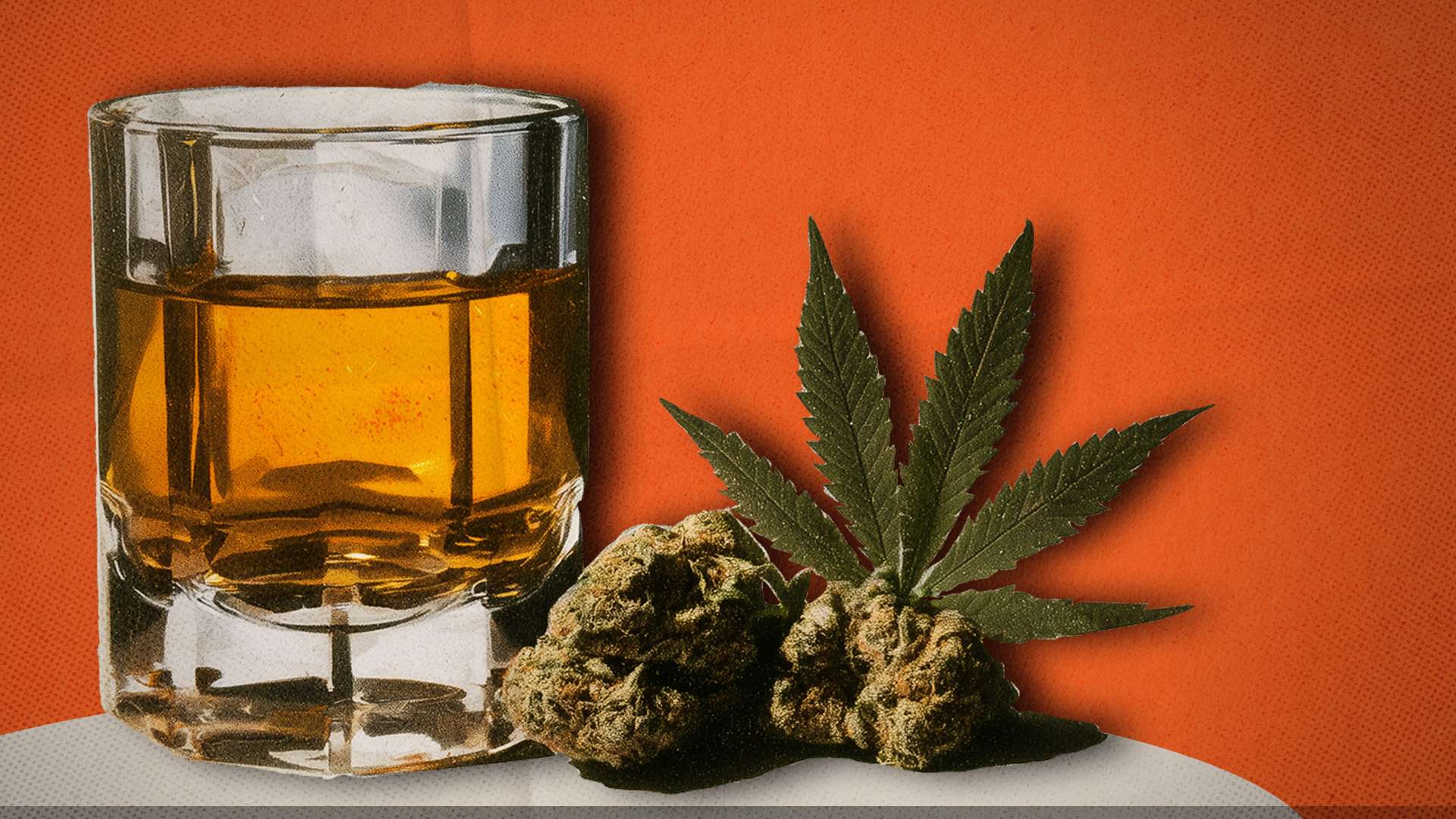
If legalization means treating marijuana similarly to alcohol, it also implies fostering responsible-use norms—an achievement that is challenging to realize under prohibition. “We don’t ban alcohol because some individuals misapply it or develop alcohol-use disorders,” Singer observes. “Adult, autonomous individuals should retain the freedom to make choices others may deem unwise, provided they do not infringe on others’ rights.”
