
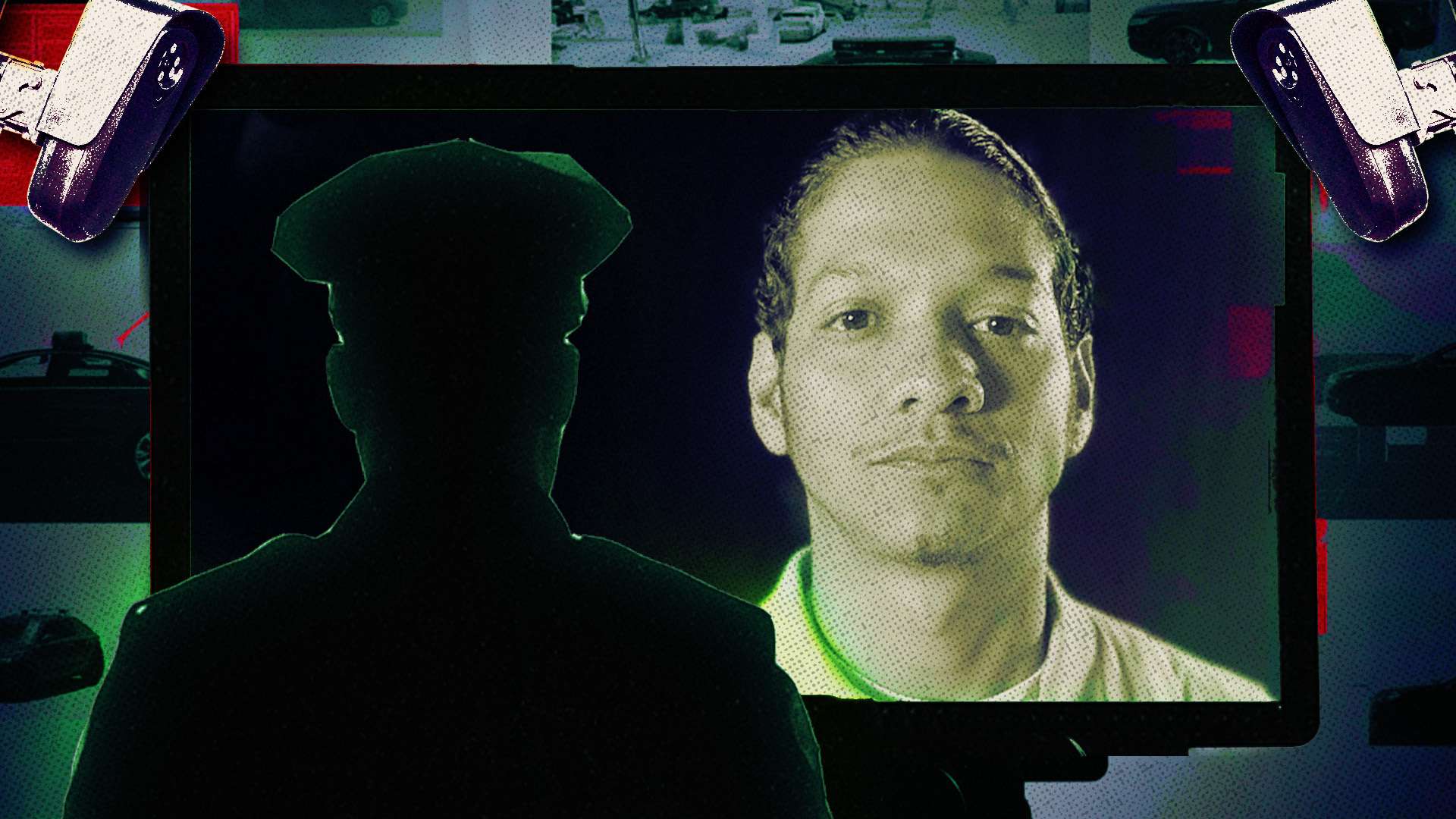
A federal lawsuit asserts that the Waukesha County Sheriff’s Office employed Flock Safety cameras without a legitimate governmental objective and did so as retaliation against a veteran for exercising his First Amendment rights.
In a private lot in Sussex, Wisconsin, on May 4, 2025, Napoleon Jones observed a traffic stop conducted by a police officer from another jurisdiction. He later told TMJ4 News, a local NBC affiliate, that the situation felt off to him and that he acted within his legal rights to approach and record the encounter from a safe distance.
Jones, a United States Navy veteran, was clearly within his rights to document the stop. Nevertheless, despite recording without interfering, Deputy Brandon Shayhorn of the Waukesha County Sheriff’s Office later detained Jones and arrested him in connection with the incident.
After the initial stop concluded, Jones went back to his car. Before he could drive away, Shayhorn activated his lights and claimed that Jones’ temporary license plate—visible in the rearview—could not be read. He demanded Jones’ driver’s license, but Jones declined, arguing that he had been unlawfully pulled over on private property. Video footage later surfaced showing the deputy opening Jones’ door and pulling him from the vehicle.
Flock being used against a citizen in retaliation for exercising his first amendment right
Jones was filming a traffic stop from a private parking lot across the street from an on-duty officer. After spotting him recording, the officer approached, harassing him and detaining him…
— Orwell Day (@OrwellDay) August 30, 2026
Jones was subsequently charged with resisting and obstructing, according to a federal lawsuit he filed against the arresting officers and the department. He spent about five hours in custody before being released without citations or criminal charges. An internal post-arrest memorandum reviewed by Reason indicated that Shayhorn’s supervisor informed him soon after the arrest that the stop had been unlawful and that he could not compel Jones to produce identification.
The following day, Jones filed a citizen’s complaint against Shayhorn for the unlawful stop and asserted that the deputy had targeted him in retaliation for recording. He then sought legal representation to pursue claims against the officers and the department for unlawful stop, detention, and arrest.
During the course of litigation, Jones’ attorney, Nate Cade, uncovered an unusual detail: a single image of Jones’ vehicle supplied by Flock Safety dated May 30, 2025. In the sheriff’s office response to Jones’ complaint, that lone photo—showing Jones’ white BMW—was introduced, prompting Cade to wonder why a photo from 25 days after the incident would appear in the record.
Further inquiry revealed more than 100 Flock searches for a white BMW in the weeks following Jones’ unlawful arrest, some conducted by Shayhorn himself, raising a clear conflict of interest. In depositions, Shayhorn and others claimed they were ordered by a lieutenant to perform these searches in relation to Jones’ citizen complaint.
“I was astonished,” Jones told TMJ4 News, explaining that he could not understand how an event at the start of May could lead to him being pulled up in the Flock system, which he understood to be used for criminal matters.
In July 2026, Jones amended his complaint to add the other officers who had searched for his vehicle without a legitimate law-enforcement purpose under the county’s user agreement. There was no Flock camera in the parking lot where Jones was unlawfully arrested, and he was not suspected of any wrongdoing when the searches occurred. Indeed, Jones contends that the department used Flock to monitor him “in retaliation for exercising his First Amendment right to record” and as a tool to identify potential offenses by him.
As automated license plate reader technology comes under increasing public scrutiny for privacy concerns, Jones’ case underscores how easily government power can be misused without proper oversight. While the officers involved are not accused of more sensational abuses—such as stalking romantic interests with the technology—the purported abuses remain troubling. If legally recording a police officer can trigger a prolonged surveillance campaign, it raises broader questions about how other protected forms of speech and action might be treated in a similar manner.
