
It establishes a precedent for introducing additional bioengineered organisms into natural ecosystems to mend ecological harm.
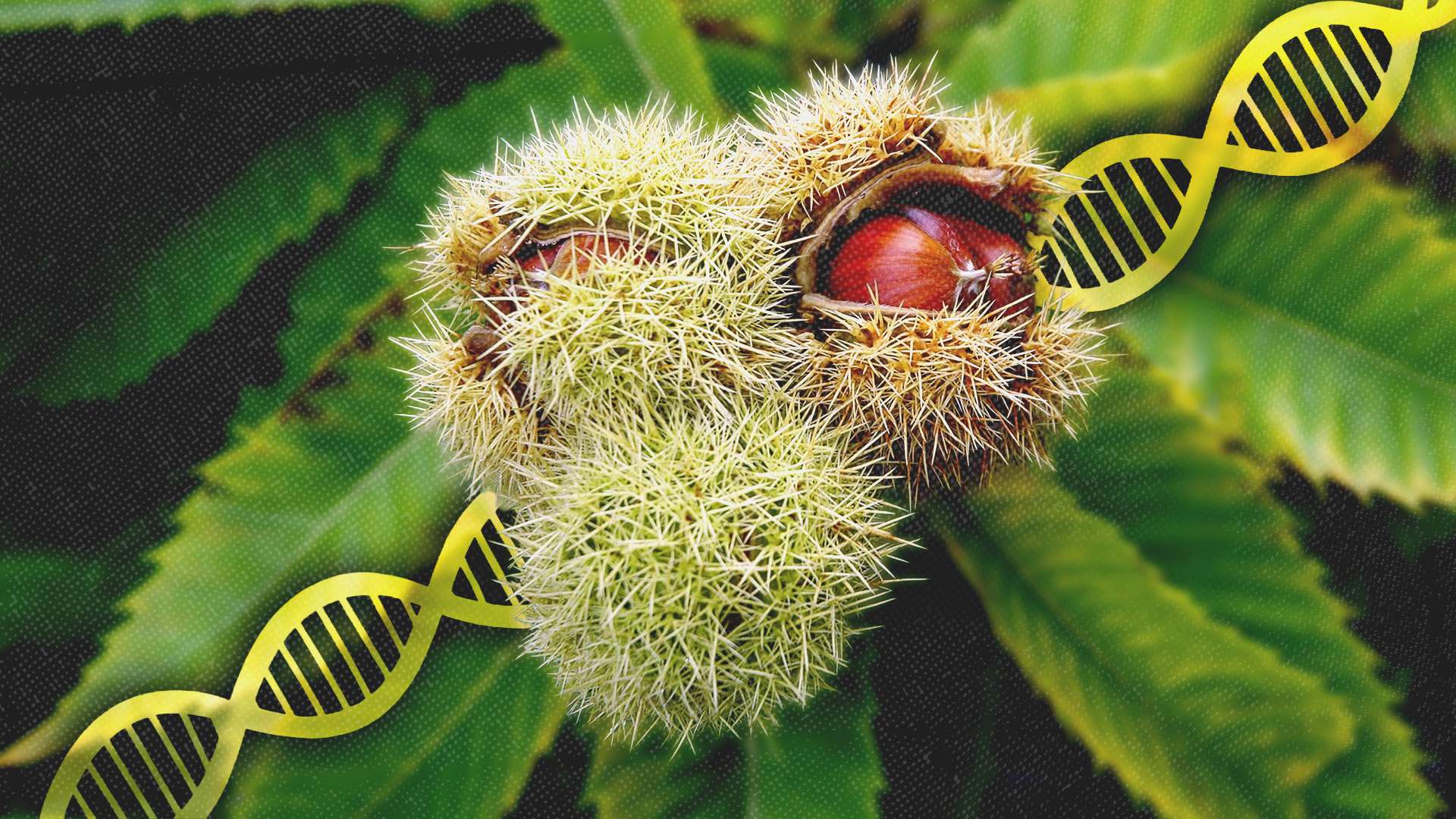
The U.S. Department of Agriculture’s regulatory arm, APHIS, moved to deregulate Darling 54—an engineered strain of the American chestnut aimed at withstanding the chestnut blight that devastated the species. Does this decision open the door to reintroducing the beloved tree into U.S. woodlands shortly? Possibly, though several scientists remain skeptical.
The blight-causing fungus was first detected at the Bronx Zoo in 1904, probably brought in via East Asian chestnut stock. American chestnuts, once numbering in the billions, spanned forests from Ontario down to Mississippi. The disease’s swift spread wiped out the native trees by the 1950s.
Engineered by scientists at the State University of New York College of Environmental Science and Forestry (ESF), Darling 54 carries an introduced wheat gene that grants resistance to blight by producing oxalate oxidase—an enzyme that breaks down the oxalate toxin generated by the fungus.
APHIS, part of the USDA, announced recently that Darling 54 is unlikely to present a higher risk of plant pests than its non-modified counterpart and thus falls outside their regulatory regime. Put simply, these trees are ecologically as safe as native chestnuts, with the added advantage of enhanced blight resistance.
Andrew Newhouse, who leads ESF’s American Chestnut Research and Restoration Project, remarked that the “Darling” chestnuts mark a meaningful advance in the broader effort to reintroduce chestnuts. They withstand blight more effectively than all other fully American chestnuts evaluated to date, potentially restoring ecological links eroded by the disease. The EPA must grant the final approval before any release to the public.
In a press release, Dr. Emma Kovak, a senior analyst at the Breakthrough Institute, stated that the blight-resistant American Chestnut represents the first engineered organism aimed at ecological restoration to be deregulated by the USDA. “This ruling creates a precedent for other GM organisms designed for release into natural ecosystems rather than farm settings,” she noted.
That is indeed encouraging news.
Yet, some researchers pursuing the restoration of chestnuts in American woodlands have voiced concerns about Darling 54. In 2023, the American Chestnut Foundation (TACF), which had initially praised ESF’s genetic engineering efforts, withdrew its support. In its APHIS comments, TACF argued that the wheat gene interferes with another gene, potentially leading to slower growth and lower survival of the modified trees. TACF also contends that the Darling 54 trees have not undergone long-term testing to confirm that their engineered blight resistance will endure over the long term. “Growth and survival penalties are likely to undermine the long-term forest competitiveness of Darling 54 offspring,” TACF researchers warned.
Commenting on the deregulation, TACF’s Director of Science, Jared Westbrook, stated, “We back the deployment of genetic technologies that can restore blight resistance.” Nevertheless, he fears that unsuccessful wild establishment of ESF’s chestnuts could fuel anti-biotech activism targeting future engineered trees.
Meanwhile, TACF persists with its long-running program to revive chestnuts by crossing American trees with blight-resistant Chinese chestnuts. The breeding process is accelerated through recurrent genomic selection, enabling researchers to pinpoint resistance genes from the Chinese lines while maintaining a substantial American chestnut heritage in the hybrids.
Because TACF’s chestnuts are produced via conventional breeding methods, they do not require federal regulatory clearance before release. When asked, Westbrook reluctantly suggested that TACF trees might be ready for restoration planting in seven to ten years.
Let us hope ESF’s trees prove highly successful in wild environments. In the meantime, may numerous chestnut restoration initiatives across the country flourish.
Disclosure: I have supported the American Chestnut Foundation as a small donor for many years.
