
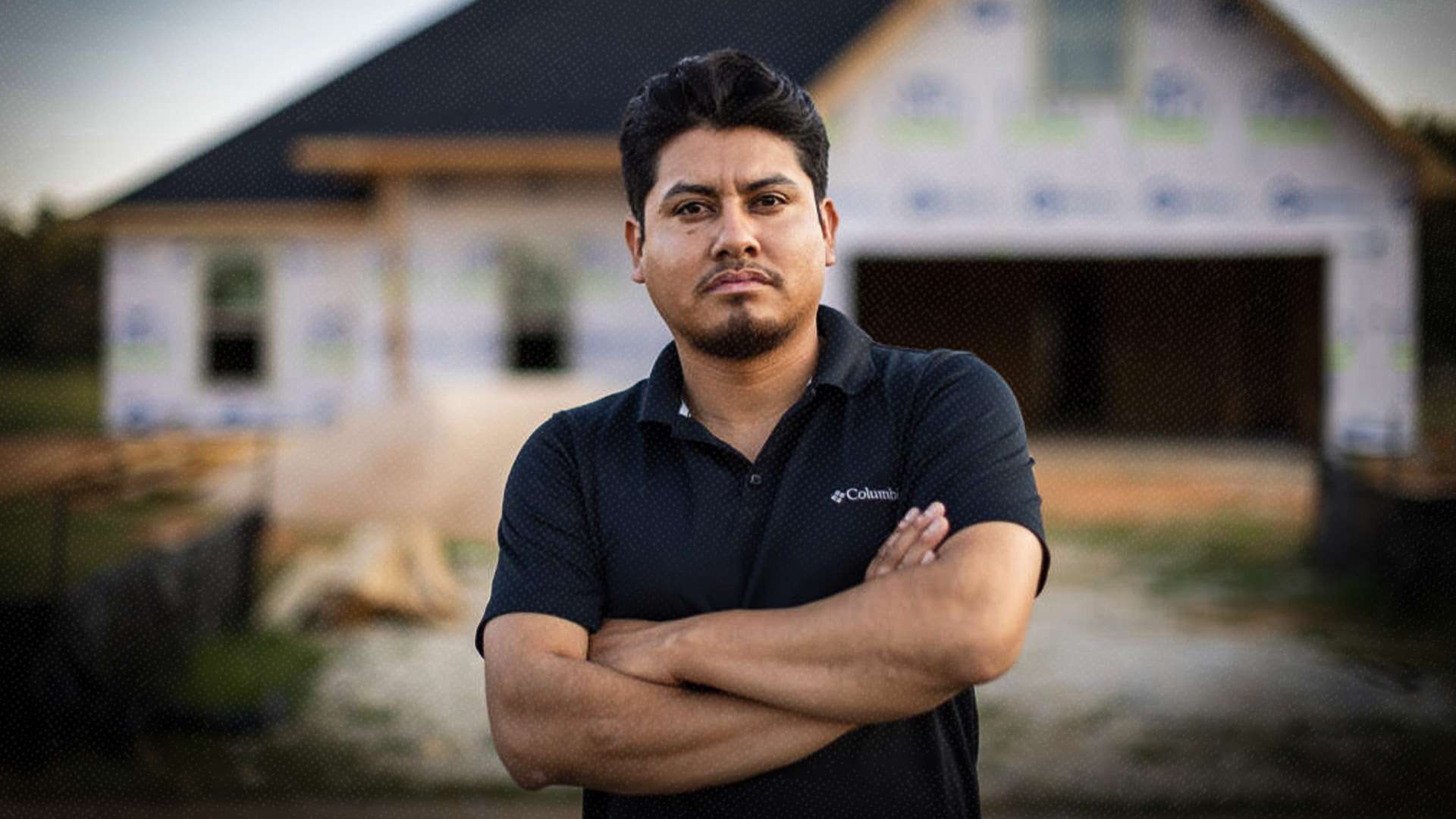
Despite holding a REAL ID, Leo Garcia Venegas has been taken into custody by federal immigration agents on multiple occasions. He is now suing to halt raids that target Latinos on private construction sites.
Leo Garcia Venegas, a U.S. citizen who works in construction, has been detained by federal immigration officers not once, not twice, but three times since the spring of 2025, despite presenting an Alabama REAL ID at every encounter. A federal judge ruled on Wednesday that his lawsuit against the Trump administration alleging violations of his Fourth Amendment rights may proceed.
The arrest occurred the morning of May 21, 2025, as Venegas was laying the foundation for a new residence in Foley, Alabama, located southeast of Mobile. He witnessed “five armed men in camouflage” vaulting a property line fence and charging toward the workers, according to the complaint filed in the Southern District of Alabama. Venegas began recording with his phone after one of the officers allegedly assaulted his brother, another worker on the site.
Video footage captures another officer approaching Venegas. “Yes, immigration,” the masked officer states. Venegas steps aside, attempting to capture clearer footage of his brother’s ongoing arrest. “You’re making this more complicated than you want to,” the officer remarks while shadowing Venegas. “Don’t touch me! I’m a citizen!” Venegas cries as the officer seizes him by the arm and tries to push him to the ground.
“I’ll show you my papers now! I’m a citizen!” pleads Venegas. Additional officers rush over to assist in bringing him down. “Get on the fucking ground now!” one shouts, and Venegas collapses to the ground.
While three officers held him down, one man reportedly grabbed Venegas’ wallet from his back pocket, according to the lawsuit. Despite presenting his valid REAL ID–compliant driver’s license—which requires proof of citizenship or lawful presence—the officers refused to accept it as evidence that he was legally in the country. Instead, they charged him with possessing a fake ID and placed him in handcuffs.
After pleading with the officers to verify his Social Security number for more than an hour in the hot Alabama sun, “one of the officers finally relented, made a phone call, and confirmed that [Venegas’] Social Security Number was valid,” the complaint states. Venegas was released without charges.
But a mere three weeks later, the scenario repeated itself. While working alone inside a “partially constructed home,” armed, masked federal officers entered the private property without authorization and detained Venegas once more. According to the complaint, the officers again asserted that his REAL ID could be fake and therefore insufficient to prove citizenship or legal status.
Venegas was eventually freed after officers confirmed, once again, that he is a citizen.
Represented by the Institute for Justice, a nonprofit legal organization, Venegas filed suit in September 2025, arguing that the two warrantless detentions lacked probable cause and were instead based solely on his ethnicity. In response, the Department of Homeland Security (DHS) defended the actions of the immigration officers, contending that Americans on privately owned construction sites have no reasonable expectation of privacy and that REAL IDs cannot be trusted to prove citizenship.
Yet as the case proceeds through the courts, Venegas continues to live with the impact of the Trump administration’s immigration policies. On May 2, nearly a year after his initial arrest, he was detained for a third time. Without asking questions or issuing any lawful commands, the agents confronted Venegas after parking in front of his own home, dragged him from his car, wrestled him to the ground, and placed him in handcuffs, according to his declaration following the incident. Once again, the officers refused to release him after he presented his REAL ID.
Nevertheless, Venegas’ prospects may be improving. According to an IJ press release dated September 3, a federal judge rejected the government’s attempt to dismiss the case. In the words of IJ senior attorney Jared McClain, this represented “an important first step,” allowing Venegas’ suit to progress. “We know the [DHS] believes it can raid construction sites without a warrant, round up all the workers, and disregard their government-issued IDs,” McClain stated. “Now we’ll have the chance to prove these Fourth Amendment violations.”
