
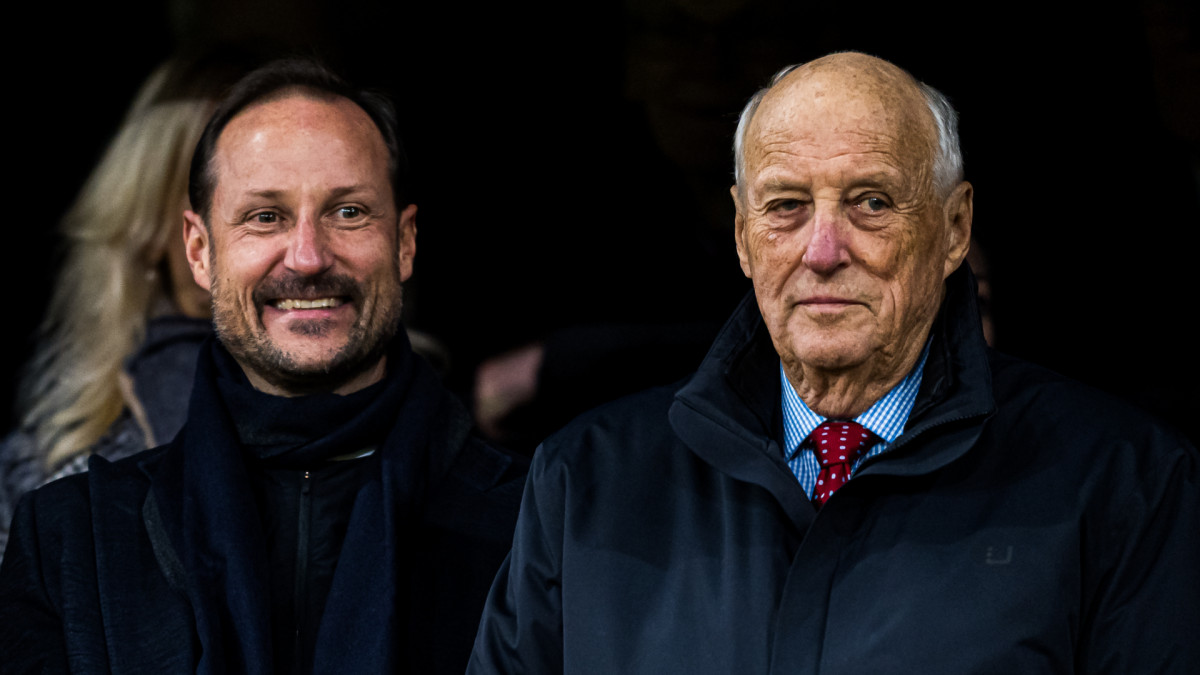
Times have changed; they don’t make them like this anymore. With the passing of King Harald V of Norway, European monarchies enter a new chapter, and with it, so does the Transatlantic relationship.
Indeed, Prince Hans-Adam II of Liechtenstein was born in February 1945, just months before the end of World War II, but he would probably admit he has no memories of the conflict. And while he is no longer on the throne, former King Juan Carlos I of Spain was born in 1938 and is also a generational contemporary of the deceased Norwegian monarch. King Harald V was born on February 21, 1937, and as a three-year-old he came to the United States in 1940 with his mother Crown Princess Märtha and his siblings, Ragnhild and Astrid, as child refugees fleeing war in Europe.
President Franklin D. Roosevelt welcomed the Norwegian royals who made a home in the now famous Pooks Hill in Bethesda, Maryland. During a visit by President Clinton to Oslo in 1999, King Harald V remarked in his toast reflecting on his time in the United States,
“I personally, feel a special affinity for the United States, which dates from my childhood. Following the occupation of Norway in 1940, my mother accepted an invitation from President Roosevelt to take refuge in the United States. One thing I remember quite clearly is standing right behind President Roosevelt when he was sworn in for his fourth term.”
King Harald V did not seek a life in the limelight, but he certainly rose to the occasion. As an American, my first and only real memory of the man in public life was when he delivered remarks in August 2011 at a one-month anniversary remembrance for those who were killed in terrorist attacks in Norway that July, which took the lives of 77 people, many of them young adults and children. In his remarks, King Harald V said something particularly beautiful and poignant worth remembering:
“I remain convinced that the belief in freedom is stronger than fear. I remain convinced in the belief of an open Norwegian democracy and society. I remain convinced in the belief in our ability to live freely and safely in our own country.”
The man gave a masterclass in courage in an uncertain time. He knew his people were hurting, and as he briefly choked up during an earlier part of his speech, he made it clear that he felt their pain.
You can teach someone how to deliver a speech, but you can’t teach heart. You can teach protocol, but you can’t teach leadership. In that address, King Harald V showed the world what it meant to lead with heart.
“You can teach someone how to deliver a speech, but you can’t teach heart. You can teach protocol, but you can’t teach leadership.”
Of Europe’s current reigning monarchs, only four others lived in the United States for a time, King Harald V’s son, King Haakon VIII is a University of California, Berkeley, graduate. Then there is Denmark’s King Frederik X who spent time at Harvard University; Prince Albert Il of Monaco who studied at Amherst College in Massachusetts; and King Felipe VI of Spain, who received his master’s degree at Georgetown University. Notably, King Felipe VI is the only one of the living monarchs who – like King Harald V – has specifically lived in Washington, D.C.
The torch has now been passed to a new generation of European royalty with their own lived experiences on both sides of the Atlantic. Hopefully this new generation of royals will continue to lead as he did: with heart, humility, and trust in their people.
Here in the United States, I doubt the passing of King Harald V will garner as much attention as did the passing of Queen Elizabeth II. But I hope it serves as a reminder of what good friends we have across the Atlantic, and how lucky we are to have such friendships.
The king is dead, long live the king.
