
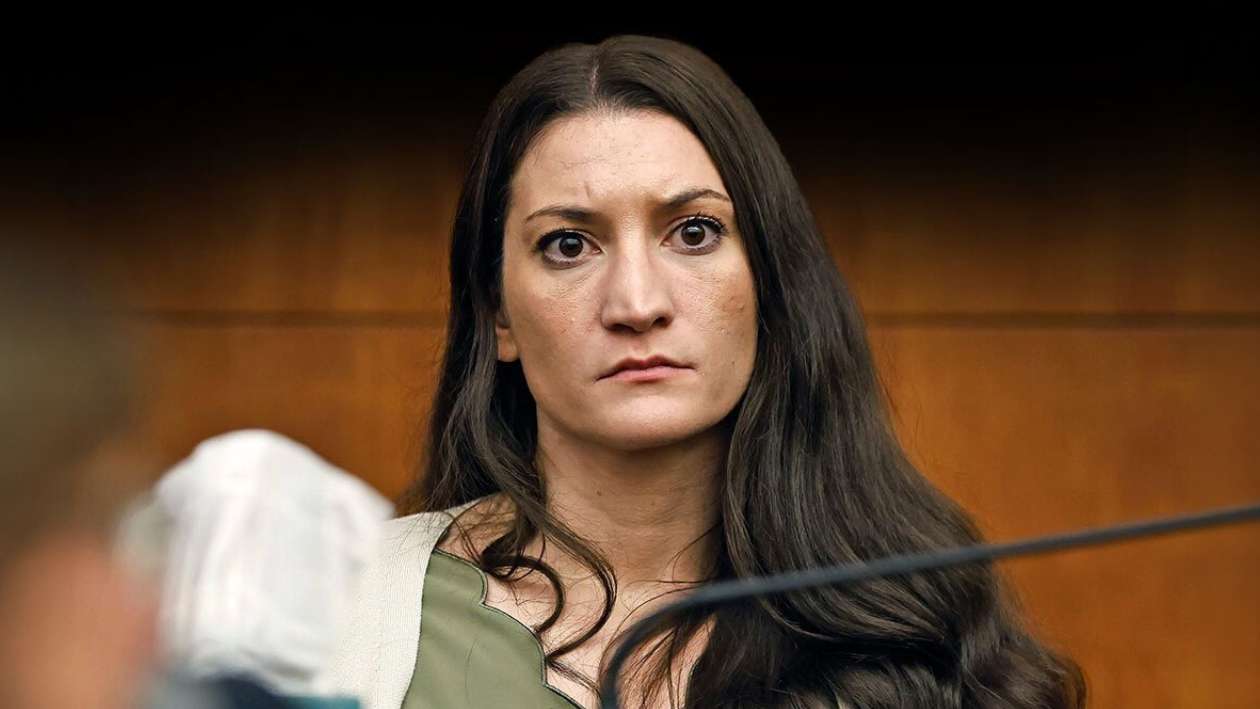
In the arena of public opinion, ambiguity is in short supply. But those who followed the trial know that the reality is far from neat.
A jury finished with a near-tie on Friday in the case of Lindsay Clancy, the 36-year-old Massachusetts mother charged with the murder of her children. Accused is technically correct in a legal sense. Yet it feels inadequate in everyday terms, because the record makes clear that in January 2023 she killed Cora, Dawson, and Callan Clancy, her three young children. She does not dispute the fact.
The jurors’ task, instead, was to weigh her state of mind. It is also hardly disputed that Clancy was mentally distressed in the lead-up to the killings—she had pleaded for help from those around her, visited the emergency room, tried to admit herself to a mental health facility, and said she was terrified of being alone. A long list of medications had been prescribed to her. By many accounts, she was flailing. Was she ultimately driven into a state of psychosis? Or was she simply overwhelmed by severe anxiety and depression?
Without clairvoyance, how on earth was a jury supposed to determine which account was likelier to be true? Even all the evidence in the world cannot place a juror inside Clancy’s mind at the exact moments she killed her children.
The distinction matters. Contrary to many popular narratives, mental illness alone is not legally enough to acquit someone by reason of insanity, the defense Clancy presented at trial. Even a sociopath recognizes that murder is immoral; he just doesn’t care. A person who is deeply depressed may take a life while unstable, but she still understands that it is wrong.
Someone who acts during a psychotic break, however, often cannot grasp that very concept, because their brain has diverged so far from ordinary reality and descended into delusion. Such defendants would thus not be criminally responsible. Clancy’s defense attorney, Kevin Reddington, contended she suffered from postpartum psychosis—a severe, rare condition separate from postpartum depression—after the birth of her third child, leaving her momentarily unable to appreciate the unlawfulness of her conduct and unable to conform to the law. The prosecution, for its part, accepted that she was unwell but argued that she could still distinguish right from wrong.
The government, at times, appeared somewhat desperate. In a notably awkward moment, prosecutor Shanan Buckingham asked Susan Clancy—Lindsay Clancy’s former mother-in-law, who testified for the defense—whether she was “aware that murder is considered a mortal sin.”
Still, both sides presented experts who tried to bolster their competing theories. The prosecution called psychologist Kirk Heilbrun and FBI psychiatrist Gregory Saathoff, both of whom expressed doubt about Clancy’s claim of hearing a masculine voice directing her to kill her children. Heilbrun proposed an “altruistic filicide” theory—that she killed her children because she believed it would be best for them—before she would go on to attempt suicide. She later leaped from a second-story window at her Duxbury, Massachusetts, home and is now paralyzed.
The defense’s experts, naturally, painted a different picture. Clancy “was clearly psychotic on that day,” asserted forensic psychiatrist Phillip Resnick, a leading figure in U.S. filicide cases who has evaluated such matters for decades. “It was almost as if she were a puppet with someone else pulling the strings.” Paul Zeizel, a clinical and forensic psychologist who first met Clancy in the hospital eleven days after the killings, agreed. Clancy “had said she heard a male voice ordering her, telling her that she didn’t have any choice,” he testified, “but she had to kill her children, and then kill herself.”
All told, it was an extraordinarily difficult question for a jury to decide. The deadlock reportedly rested at 11–1. Based on correspondence the jury sent to the judge, the panel seemed to lean toward acquittal, which would have sent her to a state psychiatric facility rather than prison. “When you have a situation where you have not one, but two notes that indicate that this individual has acknowledged doubt but refuses to apply it to the verdict as the law states,” Reddington said, “you are not being honest.” Judge William Sullivan recharged each juror on the meaning of reasonable doubt, which requires an acquittal if, after weighing all the evidence, there is no firm moral conviction of guilt. Sullivan ultimately declared a mistrial after the panel could not reach a consensus.
If you survey the loudest commentators in the court of public opinion, where this case was also argued, ambiguity is rare. Clancy has been depicted as both monster and victim; there has been little middle ground. Those who witnessed the trial understand that reality is less satisfying. It is entirely plausible to wrestle with whether Clancy was psychotic that day and still vote for acquittal.
The many observers who followed Clancy’s trial pressed for answers to a particular few questions: What kind of mother kills her own children? Was she someone left adrift by the medical system and betrayed by a partner? Or was she a person overwhelmed by a fraught mental state with something evil coursing through her? Who is Lindsay Clancy?
Those were not so much inquiries for concrete answers as they were rhetorical. More crucially, the trial was never designed to settle them in any event.
