
The future is always a territory of uncertainty, but not entirely arbitrary. Daily, a multitude of small or large events act as signals, perhaps scattered, informing us about what may happen. Reality is probabilistic and presents a multitude of possible scenarios, with greater or lesser propensity to come true. Nothing is just black or white. Understanding these nuances and what conditions them makes us more capable of evolving our opinions in a world that is continually changing.
From Agenda Pública we want to think about the future in partnership with our analysts. To that end, we have harnessed the most advanced technology to put artificial intelligence at the service of forecasting the future. Together with The Forecasting Machine (TFM), a leading platform in synthetic forecasting, we will subject the most incisive questions to algorithmic forecasting. With the help of technology and the most advanced models, we will analyze the present reality, all those variables that could alter it, and we will monitor it in real time. The result will be probable scenarios on which Agenda Pública and its experts will contribute the criteria and analysis to unpack what could lead us to each scenario and what implications it has for politics, the economy, and society as a whole.
To put it plainly: TFM analyzes the factors that can determine each scenario, tracks news and open sources in real time, and asks various artificial intelligence models to produce independent forecasts. Then it aggregates these estimates into a single probability, which updates when new relevant signals appear. That probability is updated as new events capable of changing the scenario emerge. In the contents of Future Agenda we will analyze the forecasts issued to TFM, explaining their causes, origins, and relevance.
“Daily, a multitude of small or large events act as signals, perhaps scattered, informing us about what may happen”
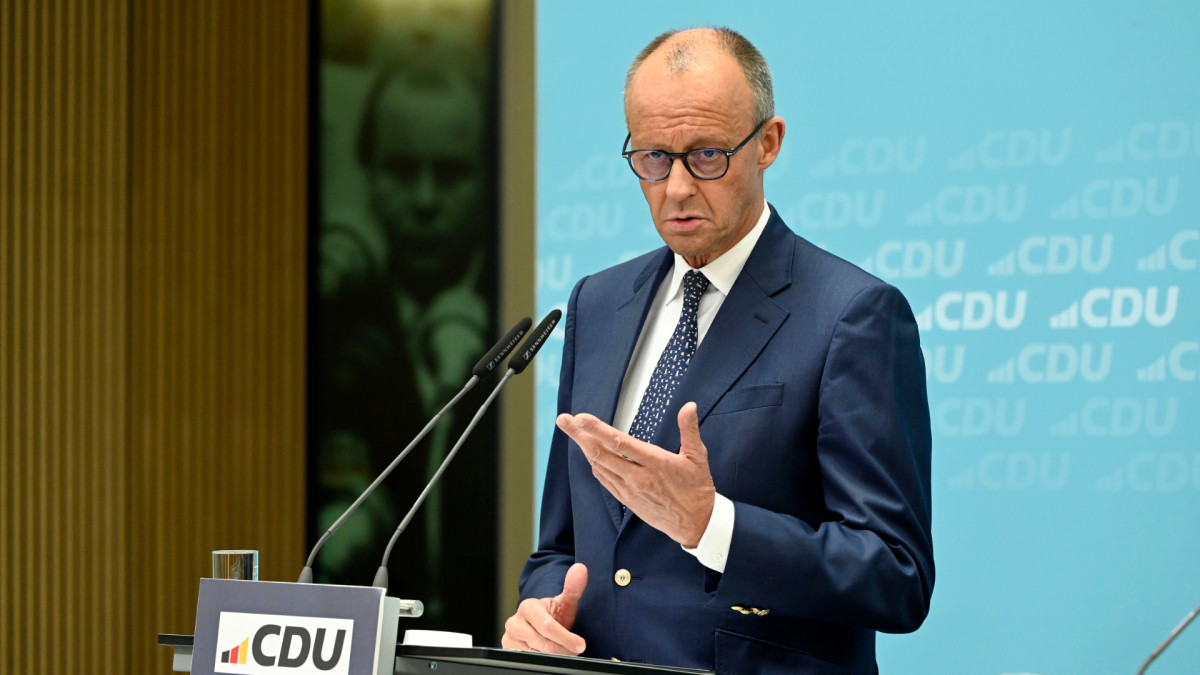
Let us look at an example of how these predictions work and how they should be interpreted. For several months now, there have been rumors that the CDU, the party of German Chancellor Friedrich Merz, could push for his resignation. The economic pressure, the international context, and the management of the coalition government have pushed a Merz who took office on May 6, 2025 to the limit. Therefore, since July 29, 2026 we have used TFM to determine the probabilities that the Christian Democrat leader will reach the end of his term in 2029. In the last month there have been no major variations: the “yes” has been the more likely option, at about 60% versus 40% for “no”.
However, on September 3 there was a major turn in Germany that increased Merz’s probability of sustaining the chancellorship by 13%. That day, Germany’s GDP growth forecasts were revised upward and even doubled. Moreover, the day before his government had approved a 10,000 million euro tax reform with cuts for families.
These are two relevant and positive signals for the chancellor: an improvement in macroeconomic expectations and a difficult political decision approved within the grand coalition, so one could have expected that rise. Nevertheless, Merz’s position has become a little more unstable after it became known the following day that some voices in the CDU were considering asking him to step aside if tomorrow’s results in Saxony-Anhalt are poor.
“Two relatively unusual and positive pieces of news for the chancellor: an upward macroeconomic revision and a difficult political decision approved within the grand coalition, so one could have expected that increase”
In Agenda Pública we have tried to explain what isn’t working well in the German economy, but the political front is also very uncomfortable for a Merz navigating turbulent waters. Even so, and despite early electoral forecasts being relatively frequent in Germany — as the one that forced his predecessor Olaf Scholz — it seems slightly more likely that the current chancellor will serve out the term.
The same logic can be applied to much more serious and less probable geopolitical scenarios.
In this category is the possibility that Russia enters into a military conflict with any NATO member country in the coming years. However, the possibility is by no means remote, as The Forecasting Machine places it at 22% before 2030. In this case, only a direct military conflict—a defined armed exchange attributable to Russia and a NATO country—for example, an attack with casualties, the downing of a manned military aircraft, or a naval battle—will be considered, and not drone incursions, cyberattacks, sabotage, or threats that do not provoke a sustained military response. We are talking about taking a step beyond the label of “hybrid warfare” and moving toward conventional war.
This week we have explained that there are several moves in Moscow that deserve attention. Egor Kuroptev, a Russian analyst and director of the EK Strategic Communications Center, explained them in “The CIA Visit to Moscow Is Only the Tip of the Iceberg.” Indeed, John Ratcliffe, director of the U.S. intelligence agency, visited the Kremlin last August. This move, together with others Kuroptev details, such as the fact that there is questioning around whether President Putin can afford to end the war in Ukraine, should be understood in the same context as the failed drone attack at Leipzig Airport (Germany).
“The internal political logic of the country” has become “more dangerous” according to Kuroptev, and that volatility is also reflected in the low, but by no means negligible, probability of a direct conflict with a NATO member country. The forecast remains contained because, since 2022, serious episodes of friction between Russia and NATO have ended up being absorbed without leading to a sustained military confrontation.
In short, these forecasts do not pretend to tell us what will happen, but to help us distinguish which scenarios gain or lose probability as reality changes. The Forecasting Machine will allow us to follow those movements, and the analysts of Agenda Pública will explain what signals drive them and what implications they may have.
