
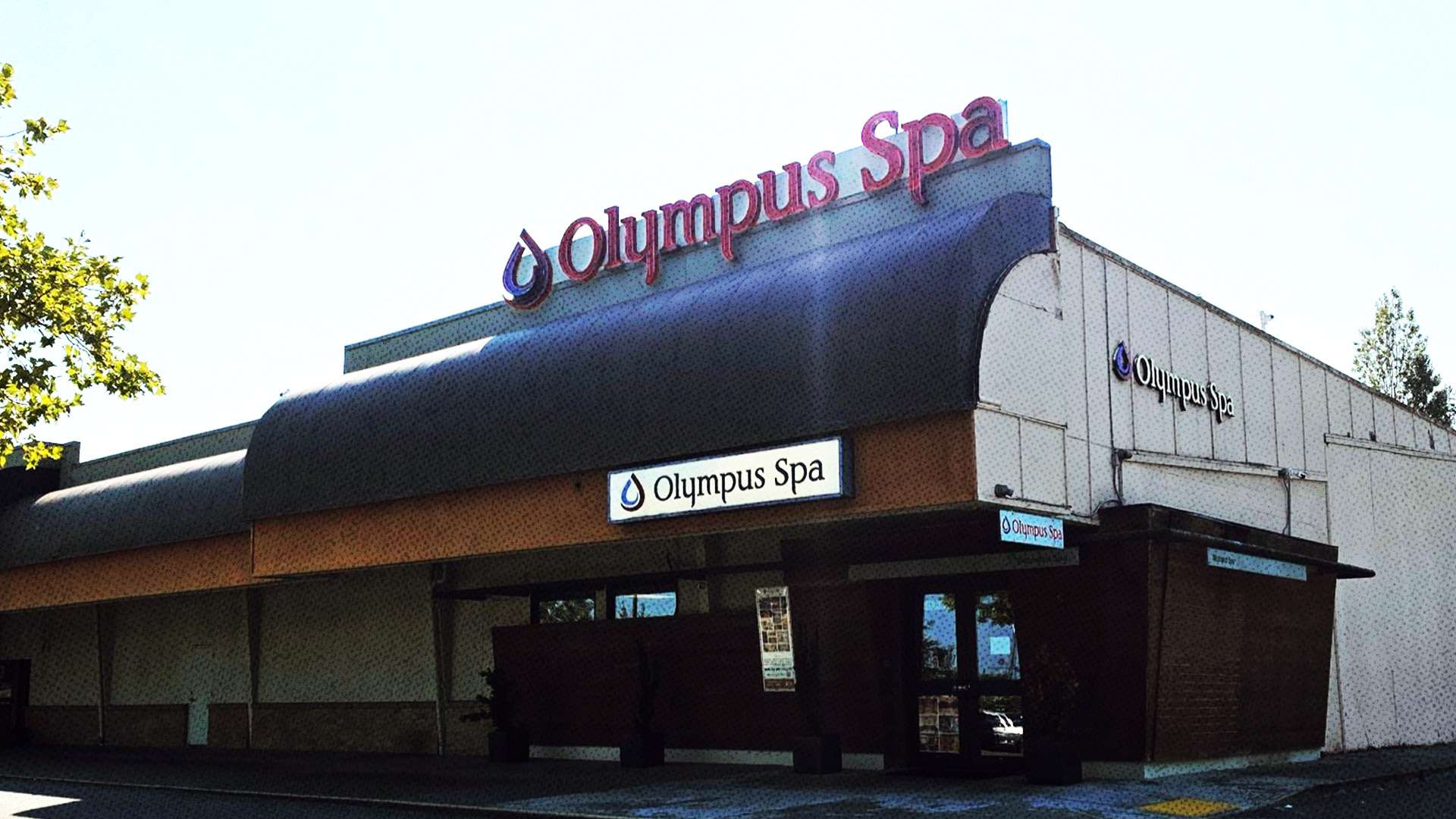
Olympus Spa, a women-only nude bathhouse in Washington state, filed suit after authorities claimed it had violated the law by denying service to a transgender woman who had not yet completed surgery. Yet the dispute reveals a legal landscape far more tangled than it first appears.
This is a case about the presence of male genitalia in a spa setting, as Judge Lawrence VanDyke of the U.S. Court of Appeals for the 9th Circuit observed in March. “You may think such phrasing has no place in a judicial opinion. You wouldn’t be mistaken. Yet as shocking as that wording might be to some readers, it is even more jarring for the unsuspecting women at Olympus Spa—some of them as young as thirteen—to be confronted with it in the environment they visit.”
VanDyke dissented from the 9th Circuit’s decision not to review Olympus v. Armstrong, a case in which an all-female Korean spa challenged a government action on First Amendment grounds. The Washington spa, according to the Washington State Human Rights Commission (WSHRC), had violated the law by turning away a preoperative transgender woman. Olympus Spa’s model centers on nudity in its pool area and on serving a single-sex clientele.
When the circuit court ruled against the spa last year, it acknowledged the case’s delicacy. “We are not oblivious to the concerns and beliefs cited by the Spa,” wrote Judge M. Margaret McKeown. “Indeed, the Spa may have other routes to challenge the enforcement action. But whatever remedy it might pursue, it cannot come from the First Amendment.”
Olympus Spa is now seeking relief from the Supreme Court. McKeown and VanDyke—whose confrontational tone drew a rebuke from twenty-seven of their colleagues—may seem fundamentally at odds. In a sense they are. Yet their opposing viewpoints also illuminate the broader complexities of a case that provokes strong reactions but for which there may not be an immediately satisfying constitutional answer.
The saga goes back to 2020. Haven Wilvich, who identifies as a “nonbinary trans woman,” filed a complaint with the WSHRC after being refused entry to Olympus Spa’s Lynnwood location for having a penis. (The spa says it accepts postoperative transgender women.) Washington’s Law Against Discrimination (WLAD) bars discrimination on a broad range of characteristics, including sexual orientation, a term the state describes as covering “heterosexuality, homosexuality, bisexuality, and gender expression or identity.”
Olympus later reached a settlement with the WSHRC in October 2021. It subsequently sued, arguing that the enforcement action violated the owners’ First Amendment rights.
That effort failed. The government’s objection to Olympus Spa’s entry policy, the 9th Circuit observed in May 2025, rested not on disagreement with the spa’s message but with the practice it described—one that WLAD makes unlawful. The court noted that Washington had adopted a broad interpretation of “sexual orientation” and that the Spa did not challenge that definition or the statute’s language, nor did it argue that the statute was vague or that its conduct did not fit WLAD’s discrimination criteria based on gender expression or identity. In short, Olympus Spa did not contest the statute itself, and the court’s role was not to rewrite it.
The spa’s petition to the Supreme Court folds back to its original line of argument. “The Spa is a cultural institution… established to preserve and convey centuries-old Korean communal-bathing traditions in an intimate, gender-segregated setting that aligns with its owners’ cultural and religious heritage,” write Olympus Spa’s attorneys, who are represented by Alliance Defending Freedom and the Pacific Justice Institute. “The Spa’s aim of spiritual renewal and cultural expression qualifies it as an expressive association, and forcing the inclusion of nude men undermines the association’s mission.”
That argument may hold theoretical appeal. In practice, it faces a tough hurdle. “In general, the Supreme Court has been reluctant to allow businesses to say, ‘We get to associate with whoever we please,’” notes Eugene Volokh, a First Amendment scholar and emeritus professor at UCLA. “That stance would, at minimum, threaten the core of anti-discrimination law or invite sweeping challenges to it. While libertarian advocates might defend such a right, the Court has repeatedly rejected that position.” This aligns with the 9th Circuit’s view that labeling a nude spa as an entity that freely chooses its associates would stretch the boundaries of the freedom of association beyond reason.”
A broader element of the spa’s appeal is the potential for religious exemptions. The owners are Christians who, according to the petition, “hold the religious belief that men and women should not be unclothed together unless they are married.” They argue that the government should grant an exemption on that basis.
Even if that line of reasoning has appeal in theory, it may still falter given the unsettled and sometimes tortured case law. But it is precisely because the legal terrain is so unsettled that the Supreme Court might be inclined to take the case.
A central pillar of the spa’s argument is that WLAD carves out an exemption for “bona fide private clubs,” such as fraternal organizations, that admit members by certain criteria. Such groups are distinct from public-access businesses and thus not bound by public accommodations laws.
Olympus Spa does not claim to be a private club. It remains largely open to the public. To press this theory, the petition leans heavily on the Supreme Court’s 2021 decision in Tandon v. Newsom. In that case, the justices held California’s COVID-19 restrictions on private gatherings unconstitutional, arguing that the government’s erratic framework made it harder for activities like in-home religious study to proceed than for retail shopping. The Court concluded that the government generally cannot impede religious activity more than comparable secular activity, unless it can survive strict scrutiny when it does so.
That line of reasoning may also face a steep climb. WLAD’s “bona fide club” exemption does not hinge on religiosity versus secular motives; rather, it turns on whether an entity is public or distinctly private. A truly private club could be exempt even if it is religious, which makes Olympus Spa’s attempt to fit into this framework seem somewhat forced.
But there may be room to maneuver. If the spa operated as a private club or as part of an Asian-interest sorority rather than as a public business, its lawyers contend, it could exclude male visitors without questions. Even if the argument does not prevail, it is a line of reasoning that might resonate with many lay readers.
A broader issue remains: does a spa’s policy of excluding a gender qualify as religious exercise—or, more pointedly, is a biological woman’s objection to being naked beside biological men exclusively religious? “If Olympus Spa wins,” Volokh says, “other spas might respond, ‘We have no religious beliefs, but we still believe men and women should be naked separately. We’re just not religious.’”
Where such outcomes leave other businesses remains to be seen. Transgender individuals deserve dignity and respect. It may also be true that, in an ideal world, spa proprietors—whether religious or not—would not need to petition the Supreme Court to avoid exposing female patrons to male anatomy. The Spa’s long-running quest, without a clearly successful path, underscores the difficult divide that sometimes exists between practical realities and legal frameworks.
Courts, after all, are not tasked with bridging that divide; they interpret the law. Last year, after the 9th Circuit’s ruling, Volokh suggested that lawmakers could amend WLAD to permit public accommodations to segregate facilities by gender as each place defines it—potentially including anatomical gender.
As we mark another year, it remains unclear whether lawmakers in Washington state will pursue such changes. If not, Volokh offers a pragmatic counterpoint: “What you’re describing is democracy, isn’t it?”
