
More items: Data center backlashes, Anthropic’s predictions on job losses, and other updates…
The classic strategy: Every parent understands that bribery can secure compliance. It seems President Donald Trump is testing this notion with the electorate.
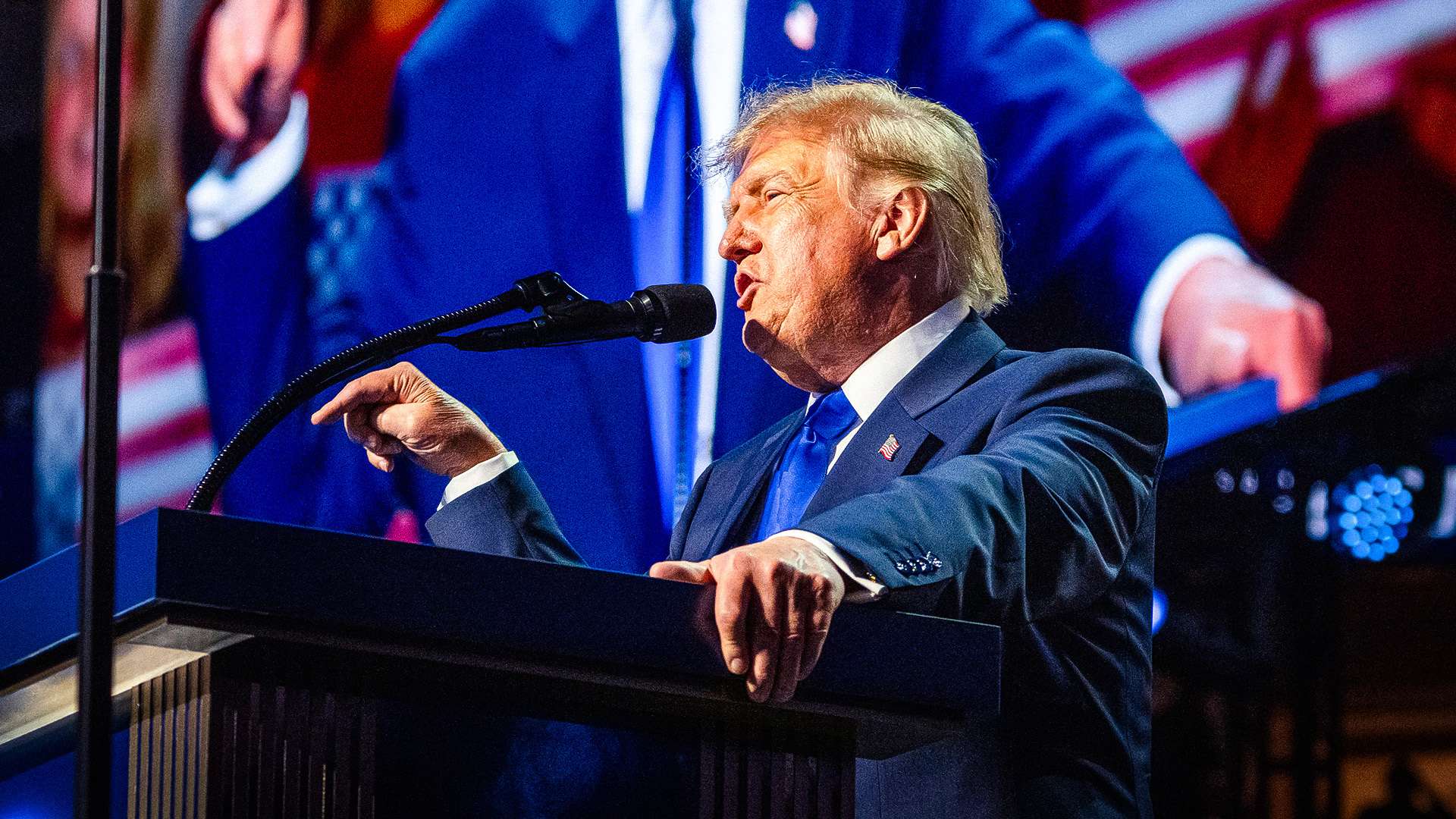
“Because we’ve done so well, and because our country is flourishing financially, that—only I can make this promise to you, and here is my pledge—if the Republicans capture both the House of Representatives and the United States Senate, I will issue a $5,000 dividend to every adult citizen in the United States,” he announced at the Republican National Committee’s midterm gathering. The price tag would top one trillion dollars.
The caveat, as he framed it, is that this money would have to be spent inside the United States. (It’s unclear how such a rule would be enforced.)
The Reason Roundup Newsletter by Liz Wolfe Liz and Reason help you make sense of the day’s news every morning.
In principle, this kind of bribery is wrong: Leaders should be promoting policies that genuinely improve lives (ideally by reducing unnecessary government meddling and limiting it to its essential functions), not dangling subsidies. (Democrats, of course, have long played the game of promising handouts, especially since the Bernie Sanders wing pushed universal programs and moved away from means testing.)
But also, the national debt crossed the $40 trillion threshold for the first time last month. We simply cannot sustain this path. Although lawmakers from both major parties seem to think the bill will never come due, that isn’t true: servicing the heavy interest on the debt has become a growing line item in the budget, crowding out other priorities. It will only worsen as the debt grows. Investors might eventually doubt the U.S. government’s ability to repay, and future taxpayers will likely shoulder the burden of present spending. It’s a troubling scenario, and neither party currently shows a clear plan to scale it back.
Additionally, if Trump actually followed through on this pledge, it would probably push inflation higher by injecting funds into the economy at once. Yet Trump remains fixated on the idea of “bribing” the public. When Elon Musk pursued tiny Department of Government Efficiency (DOGE) cuts (which ended up modest in savings), Trump openly contemplated sending that money back to Americans via a DOGE dividend. In that case, it wasn’t the worst impulse to suggest, “Hey taxpayers, let’s return some of what we collected from you.” Still, there must be consideration for the U.S. government’s broader financial health, which I would describe as precarious at best.
since becoming president again, Trump has promised:
-$5000 stimulus checks via “DOGE dividend”
-$2000 stimulus checks via “tariff dividend”
-$1000+ checks via “savings” from expiring ACA subsidies
-$5000 “dividend” if Rs win midterms
no checks have been issued https://t.co/aJaUN79WPe— Catherine Rampell (@crampell) September 10, 2026
As a matter of principle, Trump’s broader message last night rested on the claim that the economy is thriving, and that any weak spots are Democrats’ fault. “I’m driving prices downward,” he asserted, blaming Democrats for elevated prices while insisting relief is on the way. He asserted that gas prices would fall “as soon as we win the war with Iran.” This stood in sharp contrast to other Republicans who frame inflation and rising living costs as genuine problems.
Scenes from New York: “The city has announced that AI cannot be used in elementary and middle schools and has set limits on digital devices,” notes James Barron for The New York Times. “Yet the enforcement guidelines remain unclear.” The specifics of the policy are still forthcoming.
QUICK HITS
- “The surge in data-center construction has sparked a strong bipartisan backlash nationwide this year, forging unusual political alliances ahead of the November elections. Democrats hope to erode Republican support among some rural voters who typically back them. Republicans believe that, even if those voters dislike data centers, they won’t abandon the party over them,” reports The New York Times. “The stakes are especially high in Texas, which hosts more data centers than any state except Virginia and where Republicans face a major challenge to their statewide dominance in years.
- Anthropic has released an interactive model for the public to explore how AI deployment might influence the overall economy. In the most extreme scenarios, it appears knowledge workers would be hit hardest:
Anthropic’s Economics team is sharing a new model of how AI might affect economic growth, jobs, wages, and more by 2030.
Explore the scenarios, weigh in with your predictions, and compare them to responses from more than 10,000 Americans. https://t.co/AvQlEZNxR0
— Anthropic (@AnthropicAI) September 9, 2026
- “Social-media personalities Andrew and Tristan Tate were denied bail on Wednesday as they contest possible extradition to the United Kingdom on charges of rape and sex trafficking,” reports The Wall Street Journal. “U.S. Magistrate Judge Lauren Louis in Miami expressed concerns that they posed a flight risk and found no compelling reason to grant release during the ongoing case.
- The European Central Bank is lifting interest rates as inflation remains a concern.
- Last night, Providence, Rhode Island, nominated a democratic socialist, David Morales, for mayor in the Democratic primary. Morales, 27, would represent another democratic socialist in a leading city role if elected in November, joining leaders like New York’s Zohran Mamdani and Seattle’s Katie Wilson who took office this year, with Washington, D.C., potentially adding Janeese Lewis George next year.” Not a good sign!
