
Why the major questions and nondelegation doctrines bolster the legal case against Trump’s Section 338 tariffs.
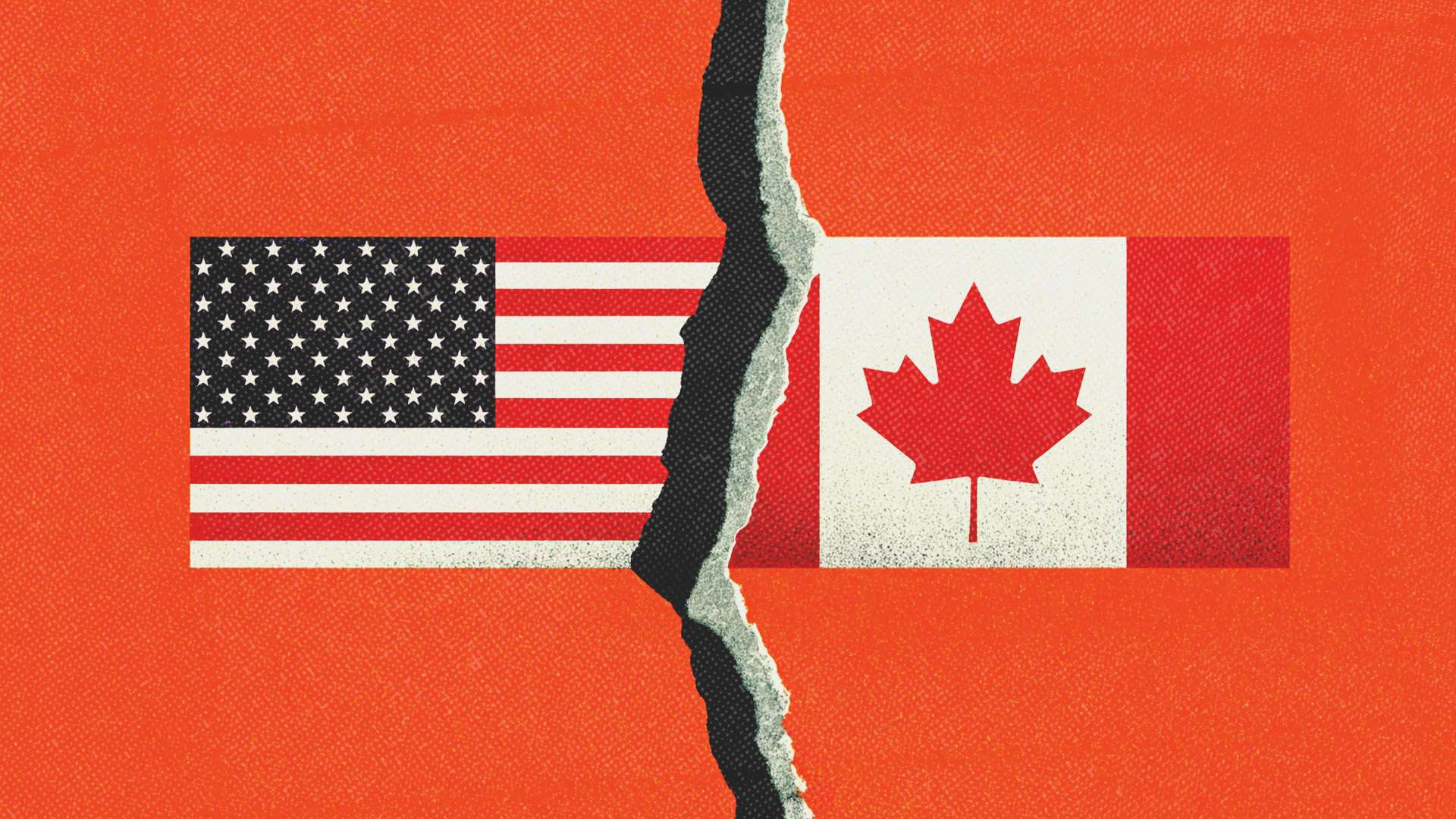
I have previously commented on the deleterious and unlawful imposition of Section 338 tariffs targeting Canadian imports under Trump, along with his more recent expansion to outright bans on certain Canadian products. In this piece, I will outline how the legal challenge to these actions gains strength from the major questions doctrine and the nondelegation principle.
Section 338 traces its roots to the notorious Smoot-Hawley tariff act of 1930, a statute widely cited for having deepened the depths of the Great Depression. There is a substantial argument that Trump’s Section 338 tariffs are illegal for two broad reasons: first, the provision itself—never before invoked—has been superseded by later enacted measures; and second, the tariffs fail to satisfy the textual criteria that the provision requires. On the supersession point, see a 2025 guest post on the Volokh Conspiracy by Philip Zelikow of the Hoover Institution. On the textual requirements, see the thoughtful analysis by Georgetown University experts Peter Harrell and Jennifer Hillman.
But suppose there remains ambiguity about whether Section 338 has been superseded and whether Trump’s tariffs on Canadian goods meet the standards highlighted by Harrell and Hillman—that these duties must respond to foreign trade policies that discriminate against U.S. products and must offset those discriminatory measures. In that case, the major questions doctrine weighs against the Administration’s position.
MQD requires that Congress articulate its intent with unmistakable clarity when authorizing executive actions with vast economic and political consequences. It proved pivotal in lawsuits challenging Trump’s expansive use of the International Emergency Economic Powers Act (IEEPA). The Federal Circuit, which hears all tariff-related appeals, alongside three Supreme Court justices, largely invalidated those IEEPA tariffs based, at least in substantial part, on MQD.
Under the administration’s reading of Section 338, the provision could be employed to levy essentially unlimited tariffs on goods from nearly any trading partner, provided that partner imposes any restrictions on U.S. imports. The restrictions would not have to be meaningfully discriminatory, nor would the tariffs have to be precisely offsetting in relation to the partner’s measures they purportedly counter. Such sweeping discretion over tariff policy signals a quintessential major question, because it bestows the president with expansive control over both the U.S. and global economies. And that reach would extend beyond U.S.–Canada trade, though the Canada relationship remains especially consequential given its scale and the close economic ties between the two nations.
The recent broadening of Section 338 restrictions by Trump further underscores the magnitude of the issues at stake. He has begun invoking Section 338 to bar — rather than merely tax — certain imports. If this interpretation stands, the authority to embargo would be nearly boundless, as long as the trading partner imposes some constraint on U.S. imports and does not roll back those constraints in response to the initial Section 338 actions. Moreover, as the analyses by Zelikow and by Harrell and Hillman indicate, there is at least a substantial question about whether Section 338 remains in force at all, and whether it truly grants the sweeping powers claimed by the Administration.
If courts were to determine that Section 338 could, in some sense, authorize Trump’s actions even in light of MQD, those actions would still face the nondelegation hurdle. The nondelegation doctrine curbs the delegation of legislative authority to the executive. As the Supreme Court underscored in the IEEPA ruling, tariffs are a power granted to Congress, not to the Presidency. Accordingly, they fall within the ambit of nondelegation constraints. The power to prohibit imports entirely similarly constitutes congressional authority tied to regulating international commerce.
Nondelegation jurisprudence from the Supreme Court is far from crystallized. Yet last year’s ruling in FCC v. Consumers’ Research held that delegations concerning the power to tax (tariffs included, presumably) must establish a definite floor and ceiling, and that clarity is even more essential when an agency action has the potential to affect the entire national economy rather than a narrow technical issue. There is no meaningful floor or ceiling in the Administration’s reading of Section 338. The asserted authority clearly affects the entire national economy.
As the Supreme Court stressed in the IEEPA decision, the president should not be empowered to “impose tariffs on imports from any country, of any product, at any rate, for any amount of time.” The Trump interpretation of Section 338 would grant precisely that. Since that ruling, the President has repeatedly sought to rely on other statutes to achieve similarly sweeping authority: Section 122 of the Trade Act of 1974 (overturned by the U.S. Court of International Trade, though under review), Section 301 of that same act (currently the subject of litigation), and now Section 338. The courts should persist in rejecting these power grabs.
Up to now, there have been no lawsuits filed challenging the Section 338 tariffs. It is my hope that such actions will appear in the near future. And when they do, plaintiffs should press major questions and nondelegation arguments, in addition to advancing other grounds.
