
The public unease over this issue seems more theatrically exaggerated than rational, given that these facilities are indispensable for powering the sectors that drive our economy and sustain state budgets.
Lawmakers typically operate inside their partisan cocoons, staking out poll-tested positions that align with the political tilt of their districts and the priorities of their party. Every so often, though, a matter arises that disturbs the public to such an extent that it crosses partisan boundaries. In those moments, the game changes entirely, as legislators scramble to mollify the so-called “people with pitchforks.”
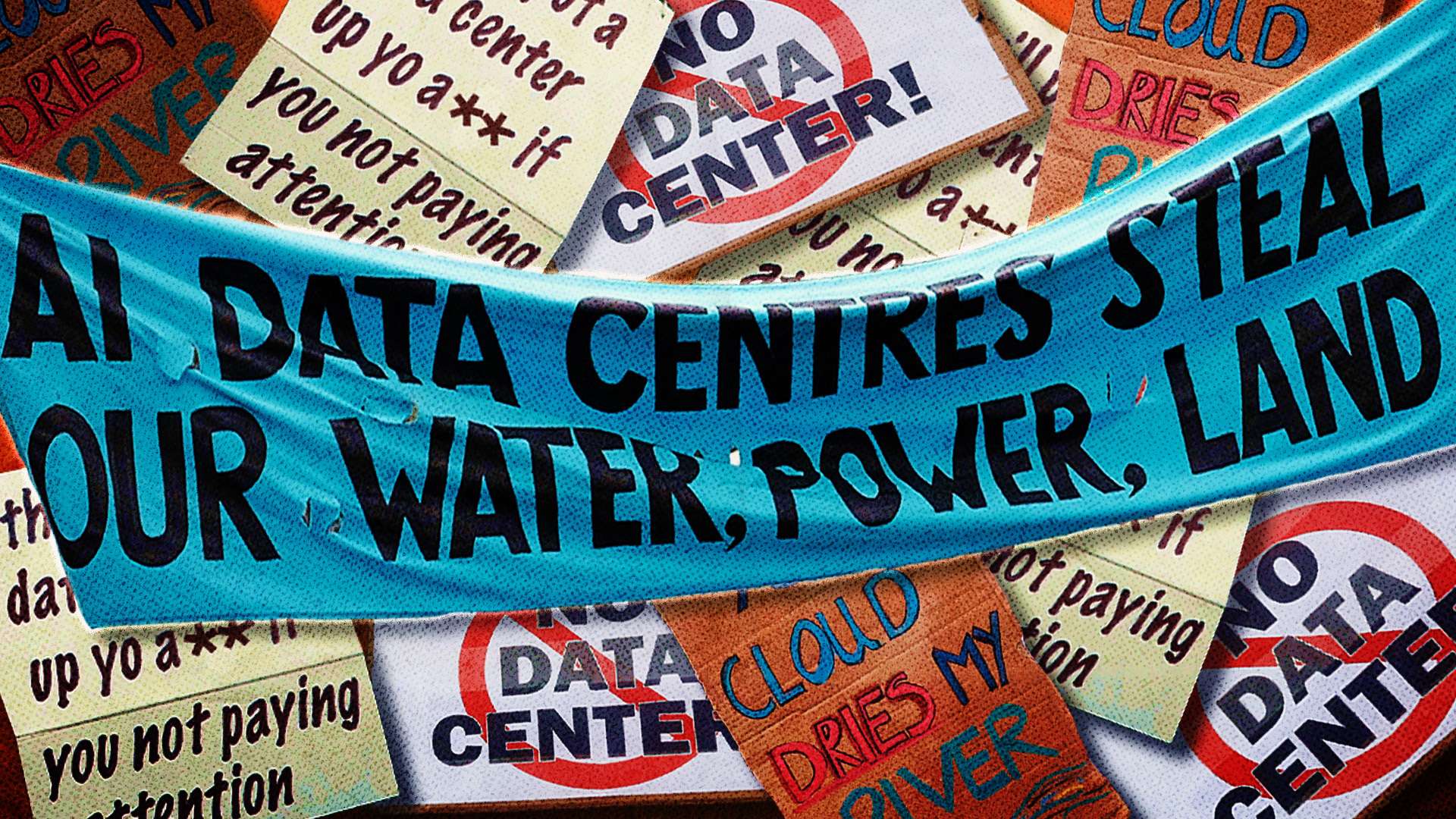
The current flashpoint concerns the erection of data centers. Voters, and thus politicians on both the left and the right, are outraged by the construction of sizable complexes that house computers, networking gear, servers, and storage systems that back the tech economy and the growth of Artificial Intelligence (AI). It’s difficult to reconcile the level of anger with the fact that these facilities are essential to fuel the industries that power our economy and fund state treasuries.
I grew up in Pennsylvania during the 1970s, in an era when the hulking remnants of the industrial revolution—massive steel mills, oil refineries, and clanging, pollution-spewing factories—cast long shadows over our towns. By contrast, these modern, clean, low-profile, and quiet facilities—though large—tend to be tucked away in orderly industrial parks near highways, distant from residential neighborhoods. If we want convenient access to advances in computing, we must come to terms with these less-intrusive facilities.
Yet a May Gallup poll showed that “53% of Americans say they oppose building a nuclear energy plant in their area, far less than the 71% opposed to data center construction.” I live near the cooling towers of Rancho Seco, which was closed in 1989 after a statewide referendum. Protests against that nuclear plant began in the late 1970s after the Three Mile Island incident. I was sent home from a nearby Pennsylvania college in the wake of that debacle, so it astonishes me that people fear ordinary data centers more than radioactive fallout.
But concerns about data centers have grown to the point of influencing Democratic primaries in the Upper Midwest. In Texas—where pouring concrete to build freeways, laying down massive natural-gas pipelines, and drilling oil wells is a source of local pride—Republican Gov. Greg Abbott recently ordered an audit of hundreds of proposed data centers, thereby introducing new regulatory hurdles that could delay or even halt several projects. The move followed the entrance of angry residents, who have shown up in large numbers at city council and planning-commission gatherings.
In the San Francisco Bay Area, some of these centers gained approval with relatively little resistance because residents there recognize their role in strengthening jobs and the broader economy. Yet the California Legislature enacted Senate Bill 886, which “requires the California Public Utilities Commission (CPUC) to establish tariffs that address costs associated with transmission, distribution, generation, and interconnection services for data centers.” Proponents argue that such measures are necessary to prevent the centers from pushing up rates for other consumers.
That claim, however, is not well-founded. The Electric Power Research Institute has found that data centers generally reduce retail electricity rates by about 4 percent, for a plainly understandable reason. Utilities bear large fixed costs—such as transmission lines and generating plants—that are spread across their current customer base. As more people disconnect from the grid to install solar, the burden on those who remain rises. Data centers take on a larger share of those fixed costs, which can lessen the cost pressure on residential and commercial customers alike.
Critics also worry about the water usage of data centers for cooling the servers, but this line of concern is also oversimplified. Data centers can draw as much water as a small city, yet they increasingly rely on recycled water and closed-loop systems that minimize water losses. They currently withdraw around 0.4 percent of the nation’s water supplies, a figure dwarfed by agriculture. The most sensible remedy is for states to begin tackling what they have neglected: building the water infrastructure essential to support a growing economy.
Every new facility project can raise siting and community-compatibility questions, and data centers are no exception. In practice, these issues are largely local zoning matters. City councils already handle traffic, noise, and lighting concerns regularly. For instance, a colossal distribution facility and warehouse built in an industrial park in my city drew little opposition. A data center isn’t fundamentally different, so what explains this sudden uproar?
“It’s remarkably easy to rake in billions when you’re living in a protected Bay Area bubble, where your physical business and your employees are removed from the people and customers who sustain you,” wrote Republican consultant Keith Naughton in The Hill this week. “It’s an entirely different game when you confront the unwashed masses and must win their consent.”
In short, the data-center frenzy seems to mirror the public’s hazy fears about the rapid spread of AI and acts as a focal point for anger directed at tech moguls and billionaire founders. That framing strikes me as somewhat silly. Nevertheless, if such unease unsettles voters, you can count on politicians to capitalize on that disquiet at every turn.
This column was first published in The Orange County Register.
