
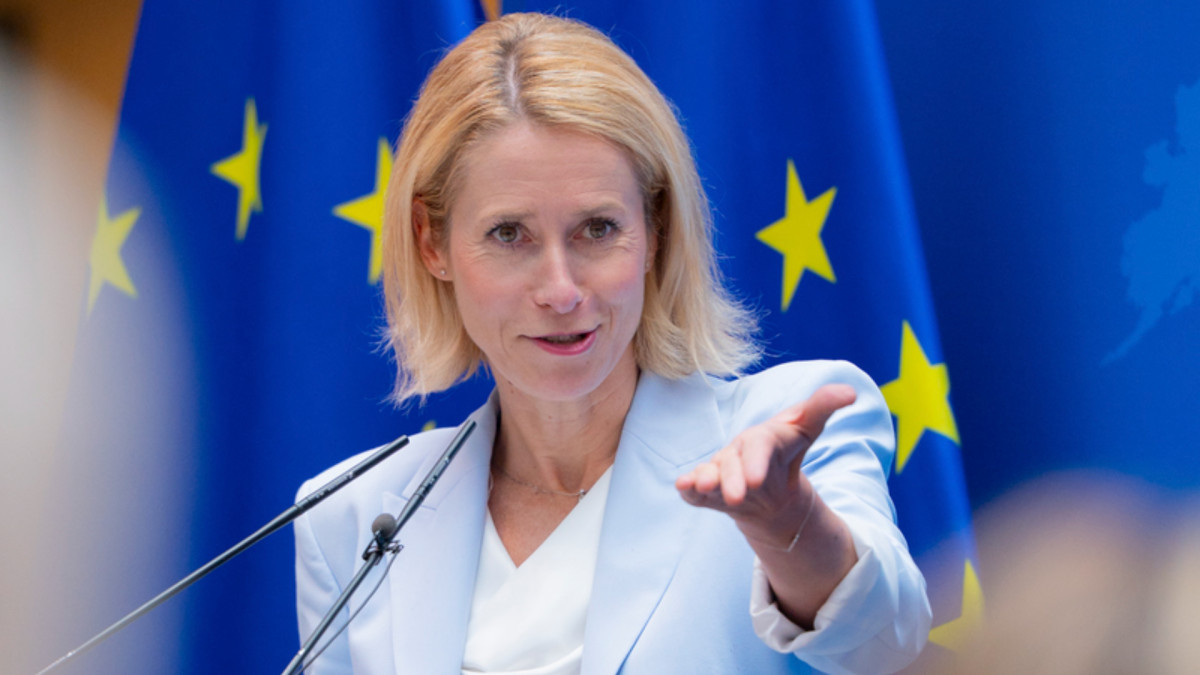
That the European Union’s foreign policy is not effective is nothing new. However, for some time in Brussels there has been talk of a grand reform of the European External Action Service (EEAS), the arm led by the high representative for foreign and security policy, the former Estonian prime minister Kaja Kallas. In recent days, the spotlight has been on a Franco-German plan to, from their viewpoint, relaunch the EEAS and, in the process, save several million euros ahead of a new multiannual financial framework (MFF) that will require some adjustments. From others’ perspective, the plan is demolition.
When the office of the high representative was created, with a service to enable him to carry out his work and his vision, tensions were already foreseeable. From the moment of its design, it had become apparent. Moreover, it is a post that touches one of the EU member states’ most sensitive points, one of the issues closely tied to national sovereignty, namely foreign policy. There are tensions that exist across all EU institutional structures, but they are amplified in the EEAS, such as the split between advocates of a more intergovernmental vision and those who favor a more centralized approach, or those who prefer a strong figure or a weak and less autonomous leadership.
“There are tensions that exist in all EU institutional structures, but they are amplified in the EEAS”
The Franco-German proposal is by no means the first reform idea in recent times. Paris had already proposed several reform scenarios, and since spring 2026 the future of the EEAS has been debated more or less openly. In March, for example, Stefan Lehne, from the think tank Carnegie Europe, argued that the service should be “merged” with the Commission. Lehne highlights the many failures that the EU’s common foreign policy has accumulated, from Gaza to the inability to play a role in Ukraine negotiations.
The events of recent years have intensified the institutional problem. Starting in 2022, with Russia’s invasion of Ukraine, Ursula von der Leyen, president of the European Commission, has devoted herself to foreign policy and has encroached on competences that, formally, fall to the high representative. While the German has disputed Kallas’s high-flying foreign policy, the president has allowed other members of her college of commissioners to undermine the high representative’s role, such as permitting Dubravka Šuica, the Commissioner for the Mediterranean, to visit Israel just days after the Israeli government had said it was breaking off channels of communication with Kallas following the disclosure that the Estonian had compared the Palestinian situation to South Africa’s apartheid.
When, in 2024, the then‑Estonian prime minister was chosen by European leaders as the high representative, it was already known in Brussels that sooner or later there would be a clash with a von der Leyen who had long been immersed in foreign policy issues. “A very small pen for two roosters,” a source explained at the time. It has not taken long for it to become evident. The relationship between the two is not good, just as it was not between von der Leyen and the previous high representative, Josep Borrell, in addition to some of the key commissioners from her previous term.
“Ursula von der Leyen has focused on foreign policy and has been encroaching on competences that, formally, fall to the high representative”
Nor does the figure of Kallas help matters. The post of high representative requires a flexible stance, a steel-trap mind, and a sharp bite to manage a forum of twenty-seven ministers who will never be fully satisfied with your work, and the Estonian has been viewed as ill‑prepared for one of the city’s most complex roles. Criticism of Kallas has become a community pastime. There is insistence that she has directed all action toward Russia and that she has ‘easternized’ an institution, the EEAS, that has traditionally been a field of influence for France, Germany, Spain and Italy.
The high representative and her inner circle believe that this is a case of cheating the underdog: the problem with European foreign policy is unanimity, not the EEAS, which sometimes reaches places where the embassies of some member states cannot. If a more effective foreign policy is desired, that is where action must be taken. It is a topic that is raised every so often. This very summer, eleven member states have again called for the removal of the veto in foreign policy, but for smaller countries this scenario is almost unthinkable: it would amount to voluntarily renouncing what is probably one of their most important levers of sovereignty.
Don’t touch anything
There is a current of thought that does not settle on any one kind of reform: simply believes that now is not the time. Brussels is a Byzantine court, accustomed to bickering over every comma and every competence. Opening an institutional debate about the EEAS’s future could be Pandora’s box, with capitals airing their likes and dislikes in a debate that would ultimately be read in only one way: who wins and who loses. That is the interpretation given to the proposals made so far: whether Kallas emerges strengthened or remains clearly under Von der Leyen’s jurisdiction, who has been accumulating power year after year since taking the helm of the European Commission in 2019.
“Opening a debate about the EEAS’s future could be Pandora’s box, with capitals airing their likes and dislikes in a debate that would end up read as who wins and who loses”
Is it truly the priority in a moment of such urgency? Shouldn’t the European Union focus on making its foreign policy stance more effective and robust without venturing into debates that are genuine bottomless pits? At the same time, wouldn’t it be wiser not to indulge in self-deception by talking about the end of unanimity that is unlikely to arrive? Shouldn’t it consist of a convergence exercise in risk perception and priorities and an improvement of loyal cooperation among all actors? Kallas has tried to steer the EEAS reform by proposing the creation of an expert group to design changes to the Service. The group has not even convened for an inaugural meeting, because, as the European Commission’s Foreign Affairs spokesperson Christian Wigand explained, the idea did not enjoy sufficient backing from the member states. The very idea of reforming the EEAS was not on the agenda at a meeting of the EU’s permanent representatives with Kallas last week.
