
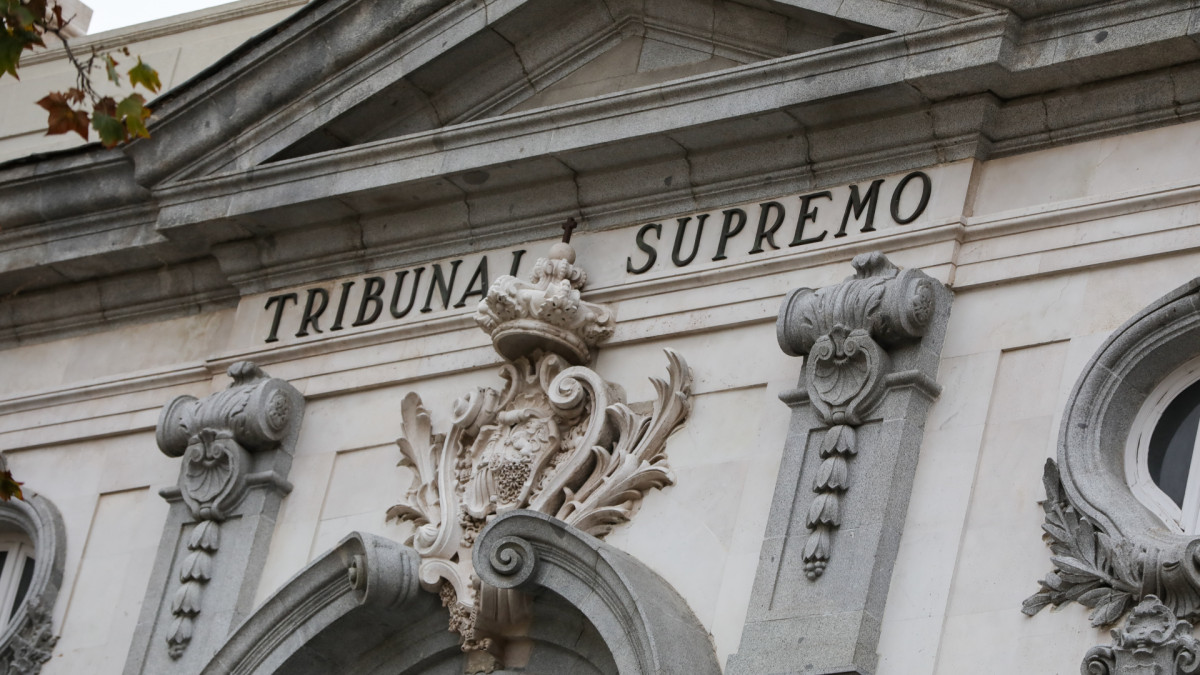
The debate over the so‑called “grandchildren’s law” has dramatically changed in nature. Although it was born as a discussion about memory, nationality and reparation, it evolved into litigation over the electoral roll and has ended up as a complex constitutional problem that places us before the dilemma of whether it is possible to differentiate, in the exercise of the right to suffrage, a group of Spaniards by the way they acquired nationality and, even more, whether such a distinction could be ordered in a Supreme Court provisional measures order.
To understand this evolution it is necessary to start from two fundamental ideas. The first is that the content of the Instruction of October 25, 2022 from the DGSJFP is juridically very debatable. And the second is that the Supreme Court’s order responds to a political strategy that has deployed the administrative‑litigation process for its purposes. Neither premise is easy to explain.
The 8.1st paragraph of Law 20/2022, on Democratic Memory —the “grandchildren’s law”— allows those born abroad whose parents, grandparents or great‑grandparents were originally Spanish and had lost or renounced nationality as a consequence of exile to opt for Spanish nationality by origin. The instruction establishes a presumption in this respect and considers that the condition of exile applies to all those who left Spain between July 18, 1936 and December 31, 1955. And this presumption is the root of the entire legal problem that has arisen since, because it is technically defendable that the Administration may have gone further than what the legislator intended and, therefore, the instruction incurs in what we call ultra vires, i.e., a defect that could determine its nullity. Declaring this loss of validity requires initiating the procedure provided for in the Law regulating the Jurisdictional Contencioso‑administrativa, subject to very concrete deadlines and procedural requirements.
“It is technically defendable that the Administration may have gone beyond what the legislator intended”
By that route, the Association for Reconciliation and Historical Truth appealed in 2022 against the instruction, precisely alleging the ultra vires, but the Madrid Superior Court of Justice (TSJ) inadmitted the appeal without ruling on the merits, holding that the association lacked legitimate interest to challenge it. And after that, the deadline (two months) for direct challenge to the instruction elapsed without anyone else challenging it (art. 46.1 LJCA), nor is there an indirect challenge (art. 26 LJCA), a more complex but possible route.
And then, how and why did the matter reach the Supreme Court in 2026? This is the second fundamental idea that must be explained. In June, the PP and Vox introduced into the public debate the doubt about the census impact of the large number of people who were acquiring nationality under the Memory Law. Encouraged by the debate, Iustitia Europa reported to the Central Electoral Board (JEC) the enrollments in CERA, which is the registry that censes Spaniards resident abroad. Later Vox also did the same, asking that the effects of this census be suspended, that is, what has ultimately been decided by the Supreme Court’s order. The JEC rejected in July the requests to suspend the enrollments or the census effects of CERA, considering that it lacked competence to review nationality or the legality of the instruction, and on July 22 that Board’s decision was challenged before the Supreme Court. Thus,
Now I will pause on the order, but it is essential to understand the background and not deny the legal doubts surrounding the instruction, which are, beyond what I have tried to explain in simple terms, highly technical matters that do not concern the effects of recognizing nationality, but how to prove the right to acquire it. This nuance is essential to understand what, in my view and that of the judge author of the dissent, constitutes the Court’s fatal overreach.
The order responds to those who, although capable of doing so, did not challenge the instruction in time and form, and suspends the effects of a nationality whose recognition is not the litigation issue posed in the appeal, and when, moreover, it is not clear that the open procedural route allows attacking the real problem, which is the “presumption of exile”.
“The order responds to those who, although capable of doing so, did not challenge the instruction in time and form, and suspends the effects of a nationality whose recognition is not the litigation issue raised by the appeal, and when, moreover, it is not clear that the open procedural route allows attacking the real problem, which is the ‘presumption of exile’.”
Procedural rules are a corset. True. A corset that provides legal certainty to the system so that a procedure cannot deviate from its object and a judicial body cannot transform the legal problem the parties present. That corset also prevents political actors from manipulating judicial proceedings for ends that are not legal, and that is why there are rules on standing to sue before the courts. But corsets loosen. Sometimes they come undone. And reading the order, that is the impression I have. That there are seams being torn.
Because the first and main problem of the order is procedural. The text itself distinguishes three phases of the legal question: acquisition of nationality, registration in the CERA and assignment to an electoral district. But in defining the subject of the litigious matter it excludes the first. In other words, it acknowledges that the main legal problem cannot be addressed. And it cannot, beyond what the order states, because an inappropriate route has been used. And yet, it suspends one of the main effects of nationality: voting and standing for elections.
“It recognizes that the principal legal issue cannot be addressed […] and, nevertheless, suspends one of the main effects of nationality: voting and standing for elections”
And, of course, we can only agree with the Supreme Court. Who votes and who does not affects the very essence of the democratic system. And that is precisely the reason that should have led to the opposite solution. We should not accept that a case is “manufactured,” forcing a challengeable administrative action —the JEC’s decision—, to admit that the case does not allow, procedurally, questioning the presumption of the instruction and, at the same time, in that plainly inappropriate procedure, suspend one of the few fundamental rights that the Constitution recognises almost exclusively to Spaniards (Art. 13.2 CE). The electoral integrity, whose actual put‑at‑risk is not demonstrated by anyone — that more voters do not per se adulterate an election — serves, through the legal concept of periculum in mora, which must always be present to issue a precautionary measure, to suspend a fundamental right for a portion of the citizenry, without sufficiently explaining the legal authorization and the proportionality required for such an intense restriction of a fundamental right, and introducing a distinction between Spaniards that could infringe Art. 14 CE.
The equality of suffrage, the cornerstone of the constitutional democratic system, protects the value of the vote, not an expectation about who the other voters will be. And the truth is that today, in Spain, the right to vote is no longer the same for all Spaniards. I do not believe that nationality and suffrage are inseparable in all circumstances, but I think that is another debate that perhaps we should address at some point. But I do believe that the disentangling of that binomial requires clear normative provisions in the Constitution that do not exist today. Is it possible to establish conditions for the exercise of suffrage by absent residents? Of course, but when limiting a fundamental right, the organic legislator must foresee them. Not a precautionary measure, no matter that the Supreme Court issued it.
