
The immigration system has a baffling and opaque stance toward people who have performed sex work abroad.
Escort Gigi Lenoir recently drew widespread attention online after posting a chilling caution. A friend of hers who works in the sex industry was singled out at a U.S. border crossing, shown printed copies of her own website, and forbidden from entering the United States for five years. “Women who put their faces out there should tread carefully. Facial-recognition technology has spiraled out of control,” Lenoir wrote, describing sex workers who display facial photos in public promotions. The message circulated rapidly, triggering discussions among sex workers about safeguarding their digital footprints.
Omg one of my friends was detained at the border and DENIED entry to the USA for 5 years. She used to be face out and they basically had her whole website printed out and interrogated her. Ladies that are face out, be careful. Facial recognition is out of control
— Gigi Lenoir BIRTHDAY MONTH (@exploregigi) July 13, 2026
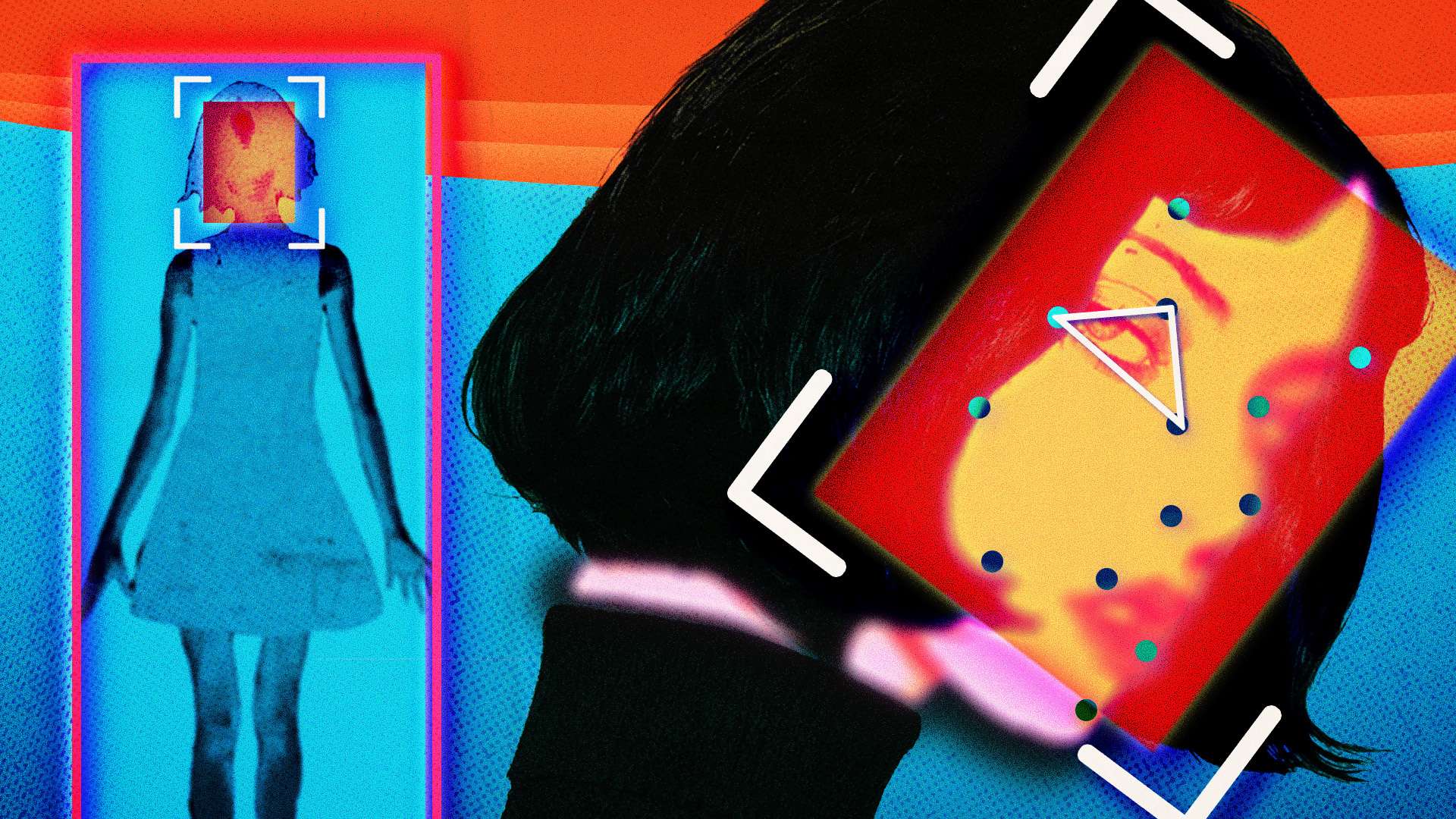
As a former official in the State Department who dealt with immigration matters, I have been trying to determine whether the government truly uses facial-recognition technology to identify foreigners who have engaged in sex work online. An American sex worker recounted a border encounter that hinted she had been flagged by a computer system. When I inquired, a representative of Customs and Border Protection (CBP) did not deny that the agency employs facial recognition to pick out sex workers.
Reports of new forms of border harassment under the second Trump term have become commonplace. Some accounts are chilling or saddening due to their absurdity or outright cruelty. Others read as if they mask a deeper structural transformation. Yet the government’s stance on sex work remains aligned with a long-standing, perplexing U.S. policy framework.
U.S. immigration law’s treatment of sex work is not anchored in concerns about exploitation, harm, or even a coherent definition of what constitutes legality. While the statute bars entry through a vague moralistic lens on immorality, it also grants special talent visas to well-known OnlyFans creators. Faced with pressure to intensify enforcement across every metric and equipped with tools of questionable usefulness, border officers tend to target more visible or controversial groups: those perceived as unpopular radicals and alleged “low-tier” performers.
The American sex worker I spoke with holds dual citizenship and was returning to the United States from the other country where she is also a citizen. Because she is a U.S. citizen, deportation was not an option. Nevertheless, she was subjected to a prolonged secondary screening at the border and could not obtain a clear explanation for why she was being detained. The other people waiting included single men from the Middle East, families and couples from Latin America and Africa, and women with a “glossy influencer” look from her homeland, she recalls.
After an extended wait, a man in a suit questioned her without disclosing his agency. Despite her U.S. citizenship, the interviewer persisted in using the language of her other nationality, as if testing her proficiency. He rummaged through her luggage and inquired about her travel history, earnings, and exact whereabouts. From my perspective within government circles, what occurred at the border suggested that she had been flagged by a computer program for involvement in sex work.
CBP does not refute that such practices exist, though it stops short of a definitive confirmation.
“U.S. Customs and Border Protection leverages technology—including biometric methods—to support lawful border security operations, verify traveler identity, and enable legitimate travel in accordance with applicable laws and policies. Any inspection or enforcement action at the border is based on the totality of the circumstances and conducted in line with CBP authorities, privacy safeguards, and civil rights and civil liberties protections,” a CBP spokesperson told me. “Under the Immigration and Nationality Act, an alien arriving in the United States to engage in prostitution, or who has engaged in prostitution within ten years prior to the date of admission, may appear to be inadmissible.”
This is not a scenario in which the U.S. government is actively pursuing a robust, systemic effort to combat sex trafficking or sexual exploitation. If anything, the Trump administration appears to have redirected officers away from sex-trafficking cases toward broader immigration enforcement tasks.
The law surrounding immigration and sex work contains numerous overlapping and vague terms like “prostitution” and “commercialized vice,” tied to notions of public morality or the belief that sex workers are inherently problematic and unwelcome in the country. These terms can apply even to individuals who conducted fully legal sex work in their home nations. The same immigration framework is comfortable with the production of pornographic content, treating participants in those industries like other entertainers, unless their activities cross a nebulous boundary labeled “commercialized vice.”
This lack of precision has led courts to ease the process of overturning bans on entry for sex workers. A landmark immigration case, Matter of Hranka, concerned a Canadian citizen who was deported from the U.S. in 1975 for sex work performed in Detroit. The Board of Immigration Appeals concluded that the government should grant visitor waivers to individuals with such backgrounds on even the slightest merits.
Ironically, the system has begun to reward some of the most successful online performers—Notably OnlyFans creators and other digital influencers—with O-1 visas for “extraordinary ability.” Several immigration lawyers told the Financial Times earlier this year that social media influencers now comprise a large portion of those considered eligible, since metrics like followers and engagement can be used to demonstrate talent as an entertainer. The woman recounting her border experience viewed it as a reflection of sex-work realities and the hypocrisy embedded in government enforcement.
“There’s a stark difference between the experiences of high-end, privileged clients and those who hustle on the street for a living,” she observes.
She also described the ongoing dialogues among sex workers about the boundaries of digital safety.
“Many of these young women are basically following a script laid out by others. They hide their faces to conform to the common practice, and to some extent, that might provide some protection—for example, from a stalker,” she explains. “The government and its tools operate on a different plane. The tools attempt to measure facial proportions even when faces are blurred. And most blur effects aren’t strong enough to offer meaningful protection.”
“A large portion of these women run platforms such as OnlyFans, Fansly, and ManyVids,” she adds. “That setup is linked to an ID. To preserve genuine privacy as a sex worker, you may have to go fully face-out, with no tattoos, and operate through secure channels/cryptocurrencies rather than mainstream platforms.”
These vulnerabilities are inherent to maintaining any online presence, and staying anonymous becomes increasingly hard in a world where new global laws aim to tie digital footprints to verified identities, ostensibly to deter sexual exploitation. After all, a hypothetical sex worker in Europe who intends to start an OnlyFans account could potentially expose themselves to U.S. government scrutiny in the process. The prospect of being tracked by a government in a country where you do not live and do not intend to work is disquieting.
The U.S. immigration system is operating in a progressively unsettled fashion. It is unclear what constitutes legal or illegal behavior, or what type of information the government collects about people. The resulting disarray yields inconsistent standards, benefiting the wealthiest and most well-connected, as illustrated by the O-1 visas awarded to certain online personalities. That irony stands out: rather than establishing clear, fair border practices for everyone, the push toward automated systems and algorithms risks making immigration processes more arbitrary and biased.
