
Just as a lone holdout can stand as a bulwark against wrongful conviction, obtaining a unanimous verdict is, by design, a notably difficult objective.
Who faces trial for the deaths of Cora, Dawson, and Callan Clancy?
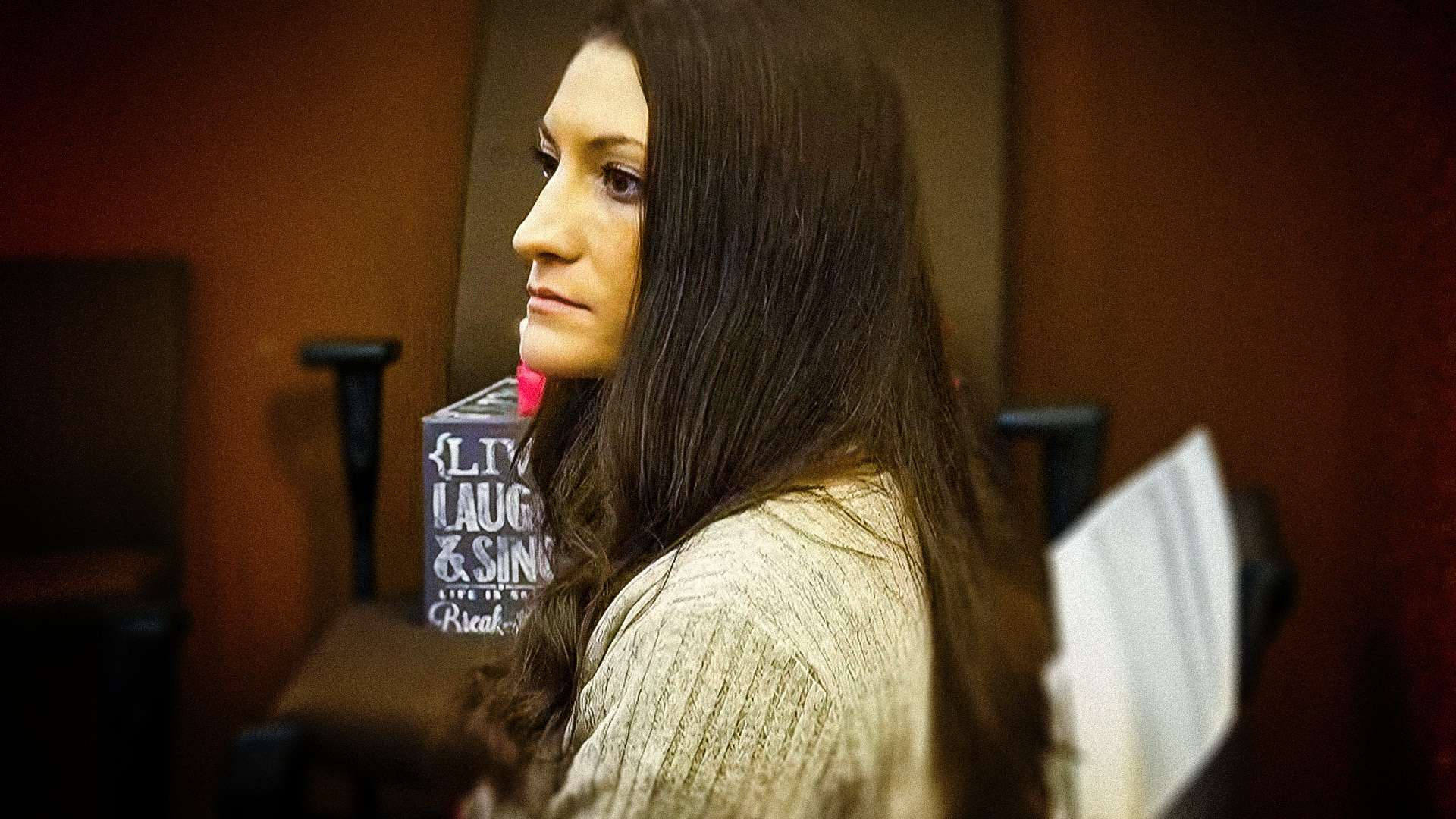
In technical terms, no one. The case of Lindsay Clancy—the Massachusetts mother who admitted to killing her children but pleaded not guilty by reason of insanity—ended in a mistrial after the jury remained deadlocked 11–1, unable to reach a unanimous decision on whether the 36-year-old mother should be held criminally responsible. Prosecutors have not yet announced whether they will pursue a retrial.
Yet that lone holdout juror has taken on a broader role in public discourse. Michael Desronvil stood as the sole vote to convict Clancy after days of deliberation. Consequently, he has become a focal point of scrutiny, this time in the court of public opinion.
First to emerge was the news that the juror—then unnamed—had been charged with a misdemeanor in 2021 for allegedly assaulting his then-wife; the charge was dismissed after the alleged victim chose not to testify. Additional reporting revealed Desronvil had an active restraining order connected to allegations that he attacked his nephew, and that eviction proceedings were underway. The Boston Globe later disclosed his identity through online photos, court records, and an interview with a fellow juror.
Much of the discussion surrounding Desronvil—and arguably the impetus for the coverage—revolves around whether he misrepresented information on his jury questionnaire. The brief form asks, among other things, whether the prospective juror (or anyone in his household or family) has ever been arrested, charged with a crime, or subject to a court order. “I can’t see how they would have allowed him to sit on this jury,” commented Michael Coyne, NBC10 Boston’s chief legal analyst, which was the outlet that first reported on Desronvil’s background.
Determining whether Desronvil lied is nearly impossible. The questionnaire is confidential, and, according to the Massachusetts government, is “destroyed by the court as soon as practicable after [a juror is] excused.”
Not every part of the matter, however, remains opaque. Notably, we know that none of the above allegations—distasteful as they may be—disqualified him from serving. Under Massachusetts law, a person cannot be impaneled if they “have been convicted of a felony in the last 7 years” or are “currently charged with a felony.” Perhaps Desronvil should have faced a misdemeanor assault conviction. But he was neither charged with nor convicted of a felony. So neither disqualification applies.
Which prompts questions: Why engage in this scrutiny in the first place? Would anyone be subjecting Desronvil to this level of public examination—and to the dissecting of his personal life—had he voted to acquit? And, perhaps most crucially, how do the allegations against him pertain to the way he cast his vote?
During the trial, the jurors’ debate was evidently heated. The closed-door process stretched across multiple days, with the panel repeatedly signaling that it could not reach agreement. This tension culminated in a note to the judge near the end. “The note indicates that the juror has acknowledged doubt but refuses to apply it,” Judge William Sullivan said on September 4, addressing Clancy’s defense attorney, Kevin Reddington. “That note does not indicate that the juror refuses to follow the law.”
Desronvil now presents a narrative that he rejects publicly, a narrative shaped by his name becoming a matter of public record. “I didn’t have any doubts,” he stated in a message posted to X by his attorney, Edward Andrew Paltzik. “As I tried to explain different possible theories during deliberation, I kept getting cut off as if I had doubts based on the evidence presented. Based on all the physical evidence, key witnesses, and what the prosecution presented, I believed there was enough proof that she (Clancy) knew exactly what she was doing and planned.”
That view sits squarely within the bounds of reasonable discussion. The case turned on jurors attempting to put themselves in Clancy’s mindset on the day she killed her children. Was she profoundly depressed yet lucid? Or was she engulfed in a psychotic episode, unable to distinguish right from wrong or comply with the law? It was, in effect, an unanswerable query. People will inevitably reach different conclusions.
The Lindsay Clancy Jury Was Tasked With an Impossible Question
Desronvil’s divergence from the rest of the jurors does not render his service illegitimate. This is exactly how juries are intended to function. A holdout who declines to sign off on a guilty verdict can serve as a safeguard against a wrongful conviction. In criminal cases, obtaining unanimity is deliberately a tough standard to meet.
That reality helps explain why the American Bar Association recommends, for instance, that felons be excluded from juries only if they “are in actual confinement or on probation, parole, or other court supervision” — after which they should be eligible to serve. The counterargument is that individuals who have interacted with the justice system may hold biases against the government that impede impartial verdicts. Yet juries are intended to be a genuine cross-section of the community, not a narrow slice.
Such cross-sections can surprise us. Desronvil faced a criminal accusation, yet he happened to be the lone juror in Lindsay Clancy’s trial to align with the state. If you had sat on that panel, you might have arrived at a different conclusion. I might have, too. And I would still prefer living in a world where jurors do not feel compelled to abandon their own beliefs simply because they are outnumbered.
