
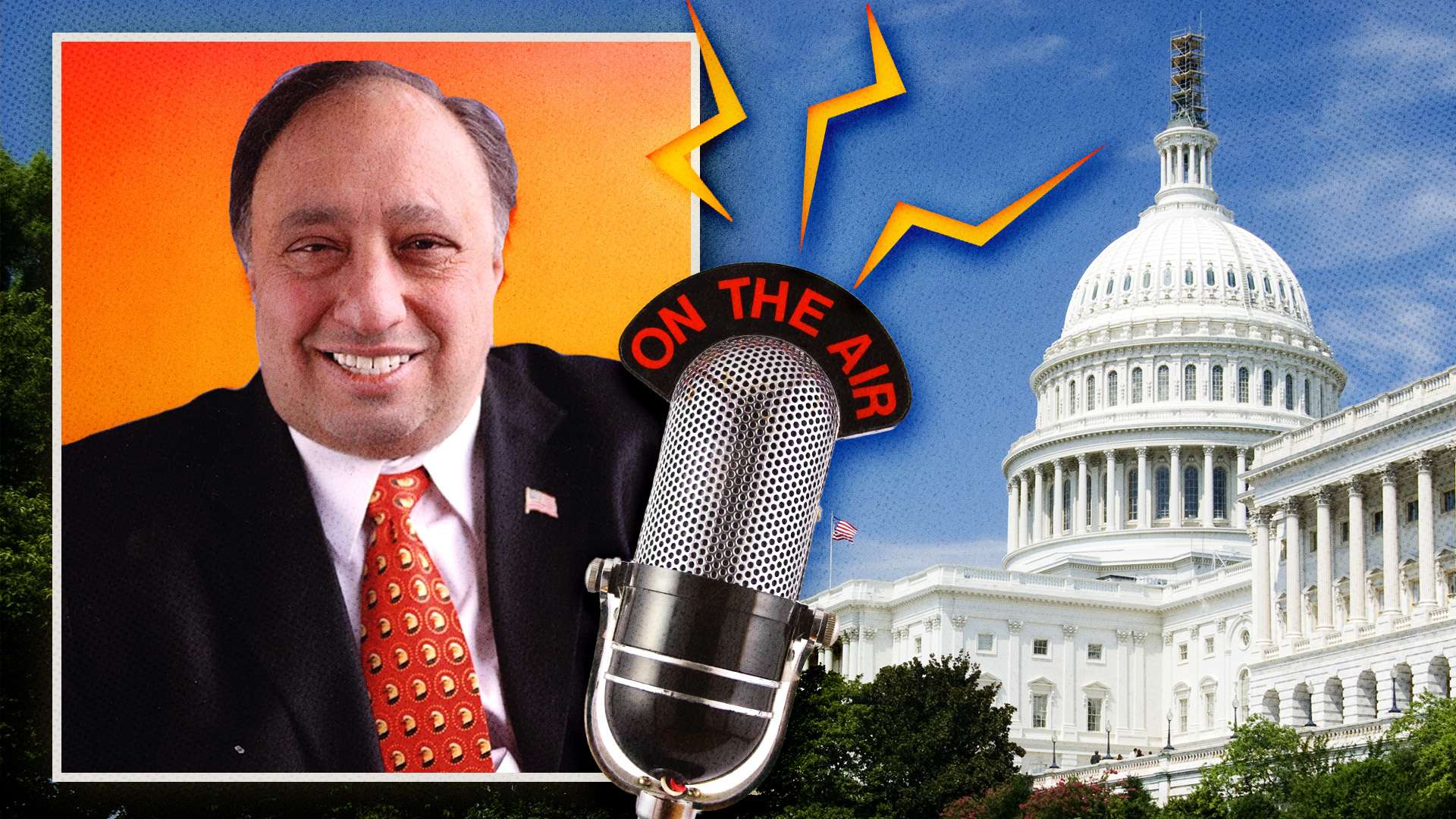
Efforts to mandate AM radios in vehicles have united Ted Cruz with Bernie Sanders.
As the nation weighs questions about Iran policy and the trajectory of artificial intelligence, lawmakers have found common ground on what appears to be a more immediate matter: mandating AM radio hardware in motor vehicles.
Earlier this week, the House approved the AM Radio for Every Vehicle Act, which would compel the Transportation Department to issue a rule “requiring AM radio capabilities to be standard in all new passenger vehicles.” The regulation would take effect for major manufacturers within two years after its publication.
As The Atlantic‘s Jacob Stern has observed, the drive to embed AM radios in cars has bridged ideological divides since 2023, uniting figures as varied as Sen. Ted Cruz (R–Texas) and Sen. Bernie Sanders (I–Vt.). An earlier version of a bill mandating AM radio in vehicles stalled in the Senate, but proponents in both chambers are now revisiting the issue.
The measure sets up a confrontation between automobile manufacturers and the broadcasting sector.
Automakers are not fond of the proposal. It would compel firms that have already discarded AM radios in their electric vehicles (EVs) to undertake meaningful modifications to their production lines and designs. (Tesla has eliminated both FM and AM radios from entry‑level models.) According to The Wall Street Journal, “Many carmakers have said that currents from EV motors can interfere with AM broadcast signals and have removed radio receivers from newer models as a result.” Moreover, an industry‑funded study by the Center for Automotive Research estimated it would cost automakers $3.8 billion to mitigate interference between EVs and AM radio, even as the industry contends with higher fuel prices, tariffs, and competition from Chinese manufacturers.
Yet the broadcasters seem to be winning more allies in Washington. Barrett Media reports that John Catsimatidis, the WABC radio host, grocery‑store magnate, and Marty Supreme actor, has spent “more than three years” pushing for the bill, including direct meetings with President Donald Trump and several lawmakers.
Catsimatidis argues the legislation is essential for public safety. “There is this outer space situation where all these satellites, which give us GPS, could all go kaput in one day,” he told Barrett Media. “We’d have zero communications. Your electric car, you could take it and shove it, because it’s not going to be able to go anywhere.”
The National Association of Broadcasters has also voiced support for the measure, describing its passage in the House as “a significant step forward for the millions of Americans who rely on AM radio for lifesaving emergency information, trusted news and a vital connection to their communities.” And Cruz offered his own nostalgic justification for such a rule during earlier debates, noting that “Rush Limbaugh would not exist without AM radio.”
AM broadcasting has its share of admirers, who point to baseball broadcasts, talk programming, and routine traffic updates that have long served Americans coast to coast. Yet sentimentality and broadcasters’ profits are not compelling reasons to impose additional mandates on car manufacturers. If the GPS could ever fail, you can always store a personal emergency radio in your glove compartment—no mandate required.
