
Minnesota’s Bakken Museum honors the spark of imagination that births new ideas.
Nestled beside one of Minneapolis’s scenic lakes, the Bakken Museum stands as an quirky tribute to human creativity and ingenuity, with a backstory almost as captivating as its exhibits.
The museum follows a loose thematic thread around electricity. Displays trace the evolution of electrically powered medical devices, including prosthetics and pacemakers. Guests can try replicas of some of Ben Franklin’s static electricity experiments, while paying attention to safety notes about avoiding shocks.
That real-world science bleeds into fiction in a gallery devoted to early experiments that likely inspired Mary Shelley to author Frankenstein. A genuinely eerie theatrical rendering of the tale is fully animatronic, fittingly featuring a creature brought to life by the power of electricity.
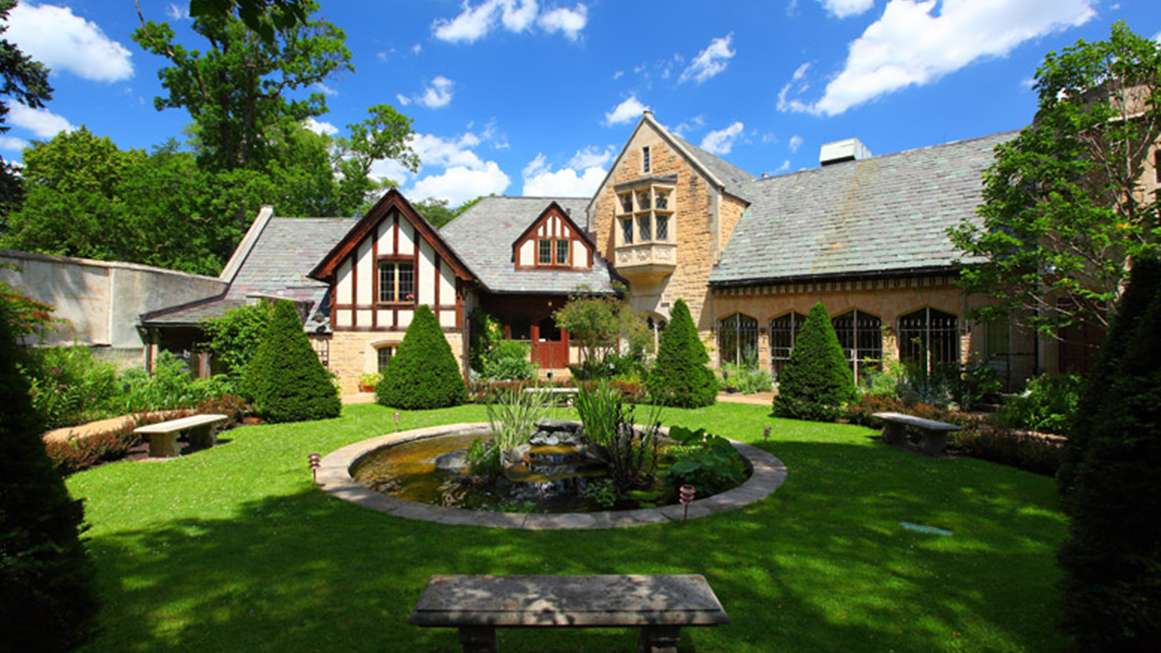
What adds to the appeal is the fact that the entire museum resides in a gorgeous Gothic/Tudor mansion surrounded by gardens, a detail that enhances its charm as does the story of the museum’s origins. Built in 1930, the house has passed through several owners, including Richard Cornelius, the inventor of the beer tap. In 1976, Earl Bakken, the inventor of the world’s first wearable pacemaker, purchased the property and began using it to display his collection of early electro-medical artifacts.
Unorthodox and memorable, the Bakken Museum celebrates the spark of imagination that brings new ideas to life, whether in a laboratory or on the page.
